
Welcome to the essential unit on Vehicle Construction, Systems, and Technical Inspection for your Polish Category C HGV licence. This module covers the critical technical knowledge you need to understand how heavy goods vehicles operate and, most importantly, how to ensure they are safe and compliant before every journey through thorough pre-trip inspections. Mastering these concepts is vital for passing your theory exam and for safe, responsible professional driving.
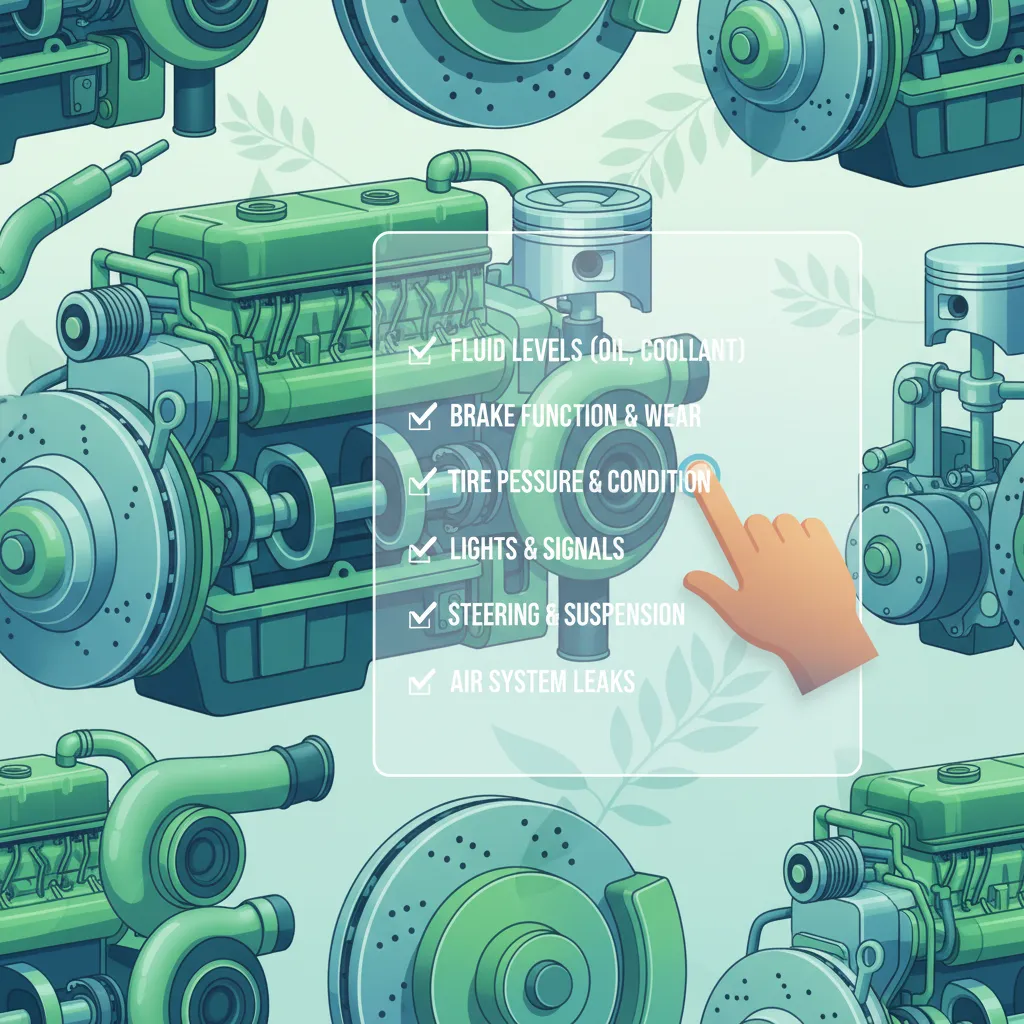
Browse all lessons that make up Vehicle Construction, Systems, and Technical Inspection. Each lesson focuses on specific topics, learning objectives, and core concepts, helping you build essential knowledge and follow a clear, structured progression toward your study goals in Poland.
This lesson introduces the fundamental principles of the diesel engines that power Category C vehicles. It covers key concepts such as torque, horsepower, fuel injection, and the role of turbocharging in generating power efficiently. Learners will also analyze how the powertrain transfers energy to the wheels and understand the practical application of engine braking as a primary method for controlling vehicle speed, especially on long descents, to reduce wear on service brakes.
This lesson provides an in-depth look at the transmission and drivetrain systems in heavy trucks. It explains the differences between manual and automated manual transmissions and details the function of components like the clutch, drive shafts, and differential. Learners will study effective gear shifting strategies that account for load and terrain, ensuring efficient power delivery, improved fuel economy, and reduced mechanical wear on the entire drivetrain system.
This lesson is dedicated to the critical braking systems of heavy goods vehicles. It provides a detailed explanation of the air brake system, including the compressor, air tanks, and brake chambers, and highlights the safety function of the dual-circuit design. Learners will also differentiate between various types of auxiliary braking systems, such as engine brakes and retarders, and understand their role in managing speed and preventing service brake overheating on steep gradients.
This lesson explores the key components responsible for vehicle stability and control. It compares different suspension technologies, like traditional leaf springs and modern air suspension, and explains their impact on ride quality and load handling. Learners will also study the principles of hydraulic power steering and the importance of correct wheel alignment, as well as understand how different axle configurations affect load distribution and maneuverability.
This lesson details the critical pre-trip inspection routine that every professional driver must perform. It provides a step-by-step checklist for visually inspecting essential components such as tires, brakes, lights, and fluid levels to identify potential safety hazards. Learners will understand the importance of verifying that mirrors are correctly adjusted, emergency equipment is present, and cargo securing points are intact, thereby ensuring the vehicle's roadworthiness and preventing roadside failures.
Explore high-intent keywords and long-tail search topics learners use when researching Vehicle Construction, Systems, and Technical Inspection. These terms reflect how people search for reliable study materials, structured explanations, and unit-level theory preparation support in Poland.
Find clear answers to the most common questions learners ask about Vehicle Construction, Systems, and Technical Inspection. Understand how the unit is organized, what learning goals it supports, and how it contributes to your study progression with structured explanations and practical guidance tailored for learners in Poland.
The Polish Category C theory exam tests your comprehensive knowledge of operating heavy goods vehicles safely and legally. Understanding how key systems like the engine, brakes, and transmission work helps you comprehend their limitations, maintenance needs, and how they affect driving dynamics. This knowledge is crucial for answering questions about vehicle behaviour, safety, and compliance.
During a pre-trip inspection, you must systematically check vital systems including brakes (air leaks, pressure), tires (pressure, tread, damage), lights, steering, suspension, fluid levels (engine oil, coolant, brake fluid), and the securement of the vehicle's structure. A thorough check ensures the vehicle is safe and compliant for immediate use.
Heavy Goods Vehicles primarily use air brake systems, which rely on compressed air to activate the brakes. These systems are more powerful and complex than the hydraulic systems in cars, often including features like dual circuits for safety and specialized components such as air dryers and retarders. Understanding their operation and common faults is vital for safety and the theory exam.
A retarder, sometimes called an engine brake or auxiliary brake, is a system that helps slow the vehicle down without heavily relying on the main service brakes. This is particularly useful for managing speed on descents, reducing brake wear, and preventing overheating of the brakes. It's an important system to understand for managing speed and safety with heavy loads.
While the core principles of checking brakes, tires, lights, and fluids remain constant, the specific items on a pre-trip inspection checklist can vary based on the HGV's configuration, such as the presence of a trailer, specialized equipment (like a crane or tipper), or specific cargo requirements. However, the fundamental goal of ensuring roadworthiness is universal.
Yes, the Polish Category C theory exam includes a significant number of questions related to vehicle construction, systems, and maintenance. A lack of understanding in these areas can certainly lead to failure. This unit provides the necessary knowledge to confidently tackle these sections of the exam.
All included lessons
Lessons in Vehicle Construction, Systems, and Technical Inspection
See who benefits most from studying Vehicle Construction, Systems, and Technical Inspection. This overview explains how the unit supports different learning needs, what level of knowledge is helpful before starting, and how it fits into the overall study path in Poland.
This unit is specifically designed for individuals preparing for the Polish Category C heavy goods vehicle (HGV) theory exam. It is essential for new professional drivers needing to understand vehicle mechanics for the first time, as well as experienced drivers looking to refresh their knowledge on modern HGV systems and inspection protocols to ensure exam readiness.

Dive into our curated curriculum designed for Polish driving license aspirants. Select a course, follow its guided modules, and master every aspect of traffic rules and road signs necessary to pass your theory exam with confidence.
Polish Theory CurriculumExplore all units and lessons included in this driving theory course.
Dive into our curated curriculum designed for Polish driving license aspirants. Select a course, follow its guided modules, and master every aspect of traffic rules and road signs necessary to pass your theory exam with confidence.
Polish Theory Curriculum