
Explore detailed explanations of Polish road signs, from warning signs (e.g., A-7) to prohibition signs (e.g., B-20), along with their practical use. Also learn the rules of road markings and traffic signals, which are essential for passing the driving theory test in Poland.
Our collection breaks down mandatory Polish road signs, complex traffic light sequences, and essential road markings to ensure you understand every signal on the road. These expert guides help you prepare for the official driving theory test by clarifying complex signage requirements and specific traffic conventions used across Poland.
The introduction of the F-23 sign in early 2026 has brought specific regulations for designated middle lanes in built-up areas. This guide clarifies the correct way to use these lanes for turning and merging, helping you avoid fines and hazardous driving patterns that often appear as traps in the Polish theory exam.
The A-30 sign serves as a vital warning for drivers to prepare for unexpected hazards that fall outside standard category signs. This guide clarifies how the sign is paired with supplementary plates to indicate risks like blind or deaf pedestrians, and outlines the mandatory safety behaviors required by Polish traffic law. You will learn the legal expectations for driver conduct to ensure you are fully prepared for hazard perception questions in your theory exam.
Learners often struggle to differentiate between binding regulatory signs and mere safety advice, which can lead to confusion during the official theory exam. This guide clarifies the specific role of Polish B-33 prohibitive signs versus international speed recommendations, helping you distinguish between legal mandates and situational safety advice. You will learn to identify key sign types, understand their legal weight, and recognize why adjusting your speed to road conditions remains a fundamental requirement of the Polish driving system.
This collection offers detailed explanations of all official Polish road signs, including warning, prohibition, and information signs. Master crucial road markings and traffic rules to confidently pass your driving theory test and ensure safe operation on Polish roads.

The introduction of the F-23 sign in early 2026 has brought specific regulations for designated middle lanes in built-up areas. This guide clarifies the correct way to use these lanes for turning and merging, helping you avoid fines and hazardous driving patterns that often appear as traps in the Polish theory exam.
Updated on Oct 1, 2026
The A-30 sign serves as a vital warning for drivers to prepare for unexpected hazards that fall outside standard category signs. This guide clarifies how the sign is paired with supplementary plates to indicate risks like blind or deaf pedestrians, and outlines the mandatory safety behaviors required by Polish traffic law. You will learn the legal expectations for driver conduct to ensure you are fully prepared for hazard perception questions in your theory exam.
Updated on Sep 25, 2026
Learners often struggle to differentiate between binding regulatory signs and mere safety advice, which can lead to confusion during the official theory exam. This guide clarifies the specific role of Polish B-33 prohibitive signs versus international speed recommendations, helping you distinguish between legal mandates and situational safety advice. You will learn to identify key sign types, understand their legal weight, and recognize why adjusting your speed to road conditions remains a fundamental requirement of the Polish driving system.
Updated on Aug 25, 2026

Learn what the red 'X' symbol on dynamic Variable Message Signs (VMS) means on Polish roads. This article clarifies that the sign indicates a specific lane is closed and explains the significant legal consequences, including heavy fines and penalty points, for non-compliance, vital knowledge for your Polish driving theory test.
Updated on Jul 5, 2026

Navigate Poland's roads with confidence by understanding the key differences between the emergency detour sign (black circle on yellow) and the bypass or ring road sign (white 'R' on green). This guide focuses on the official Polish interpretation, helping you avoid common mistakes on your theory test and in real-world driving.
Updated on Jun 20, 2026

Navigate Poland's roads with confidence by understanding the yellow square road sign featuring a black circle. This essential guide explains its function as an emergency detour indicator for highways and main routes, helping you avoid common mistakes and pass your theory exam. Learn how to follow the indicated path correctly and ensure safe transit during road disruptions.
Updated on Jun 10, 2026

Unlock the confusion surrounding Polish road signs C-13 (cycle path) and C-16 (pedestrian path) when they are presented together. Learn how the orientation of the dividing line on these signs dictates whether a path is shared or separate, and critically, who has priority in each scenario. This knowledge is vital for passing your Polish driving theory exam and ensuring safe interactions on mixed-use paths.
Updated on May 16, 2026
This article will demystify the B-33 speed limit sign in Poland, explaining how it functions as a prohibitory sign that overrides general speed regulations. You'll learn why these specific signs are critical for the theory exam and how to interpret their requirements to drive safely and legally. Understanding these nuances is key to succeeding in your Polish driving theory test.
Updated on May 15, 2026

As Poland introduces mandatory countdown timers, or 'sekundniki', at traffic signals starting in 2027, learner drivers must understand their function. This article breaks down how these timers will change intersection behaviour, improve traffic flow, and contribute to safer driving, directly impacting your preparation for the Polish driving theory exam.
Updated on May 15, 2026

Navigate Poland's roads with confidence by understanding the critical B-series prohibitory signs. This guide breaks down common restrictions like speed limits and entry bans, explaining their legal implications under Polish traffic law. Mastering these signs is essential for passing your theory test and ensuring safe, compliant driving.
Updated on May 15, 2026
Prepare for your Polish driving theory exam by thoroughly understanding prohibitory signs, starting with the critical 'Zakaz Wjazdu' (B-2) marker. This article breaks down what this sign prohibits, common situations where it's used, and potential exceptions, ensuring you can confidently interpret and act upon these important traffic controls to drive safely and pass your test.
Updated on May 15, 2026
When driving in Germany, you may encounter a unique 'red dot' signage system designed to help you navigate around traffic jams on the autobahns. This article explains that this is not a regulatory or warning sign, but an organizational tool to direct you onto an alternative route. Learning to recognize and follow these signs will help you avoid prolonged delays and ensure a more efficient journey through Germany.
Updated on May 7, 2026

This article delves into the crucial meaning of the Polish D-42 'Obszar Zabudowany' (Built-up Area) sign, a key topic for your Polish driving theory exam. You will learn why this sign automatically enforces a 50 km/h speed limit and the severe penalties, including fines up to 5,000 PLN and potential license revocation, for violations. Understanding and respecting the D-42 sign is essential for safe driving and passing your theory test.
Updated on Apr 29, 2026

Prepare for international driving by understanding German orange arrow signs, often seen on autobahns to suggest alternative routes during congestion. This article clarifies their advisory nature, contrasting them with mandatory signs you learn for the Polish theory exam, ensuring you can make informed decisions when driving abroad.
Updated on Apr 27, 2026
Delve into the essential D-series informational signs in Poland, specifically signs D-1 for priority roads and D-3 for one-way traffic. This guide will clarify their meanings and how they dictate right-of-way and traffic direction, preparing you thoroughly for the Polish driving theory test by ensuring you can confidently interpret these critical guidance signals.
Updated on Apr 27, 2026

Navigate Polish roads with confidence by understanding the essential informational signs related to parking and special zones. This guide clarifies the meaning of signs D-18 (Parking), D-40 (Residential Zone), and D-44 (Paid Parking Zone), explaining their implications for drivers. Mastering these signs is vital for safe driving practices and for succeeding in the Polish driving theory exam.
Updated on Apr 27, 2026

Gain a clear understanding of Poland's 'Droga z Pierwszeństwem' (Priority Road) and 'Ustąp Pierwszeństwa' (Yield) signs. This essential knowledge will help you confidently navigate intersections, understand right-of-way rules, and avoid common errors on your Polish driving theory test. Master these fundamental concepts to drive more safely and effectively on Polish roads.
Updated on Apr 23, 2026

Learn the critical distinctions between the Polish A-16 warning sign and the D-6 pedestrian crossing sign. This guide explains your legal responsibilities when approaching these areas, including the mandatory speed reduction and yielding requirements. Understand the significant penalties, such as hefty fines and accumulating penalty points, especially the 'recydywa' (repeat offender) system in Poland, which can lead to immediate license suspension.
Updated on Apr 22, 2026

Prepare effectively for your Polish driving theory exam by learning to group and memorize road signs. This guide delves into practical techniques for understanding different sign categories, such as warning, informational, and prohibitory signs, and how their context impacts driving rules. Mastering these methods is essential for retaining information and ensuring you can apply it correctly during your exam.
Updated on Apr 14, 2026
Navigate the complexities of Polish road signage with confidence. This article breaks down key directional, priority, and informational signs, including specific types like E-17a (Miejscowość) and D-series signs. Understanding these symbols is vital not only for safe driving on Polish roads but also for correctly answering questions on your theory driving test, ensuring you can apply the rules effectively in real-world situations.
Updated on Apr 14, 2026

Bus drivers in Poland must possess a thorough understanding of specific road signs and markings that govern public transport operations. This guide details signs for bus lanes like P-22 and D-12, bus stops such as P-17, D-15, and D-16, and parking restrictions including P-19, P-20, and P-21. Familiarizing yourself with these elements is crucial for passing your Polish theory exam and ensuring safe, compliant driving.
Updated on Apr 11, 2026
Prepare thoroughly for your Polish driving theory exam by understanding the specific rules for public transport lanes and associated signage. This guide breaks down critical signs such as P-22 and D-12, explaining their purpose and how they impact traffic flow. Mastering this knowledge ensures compliance with Polish traffic law and helps you avoid common exam pitfalls.
Updated on Apr 11, 2026

Navigating Polish intersections requires a clear understanding of priority rules, particularly the differing obligations imposed by the mandatory Stop sign (B-20) and the Yield sign (A-7). This article will break down the legal requirements for each sign, explaining precisely when and how you must act to ensure safety and compliance with Polish traffic law. Mastering these distinctions is vital for success in your driving theory exam and for safe driving.
Updated on Apr 11, 2026
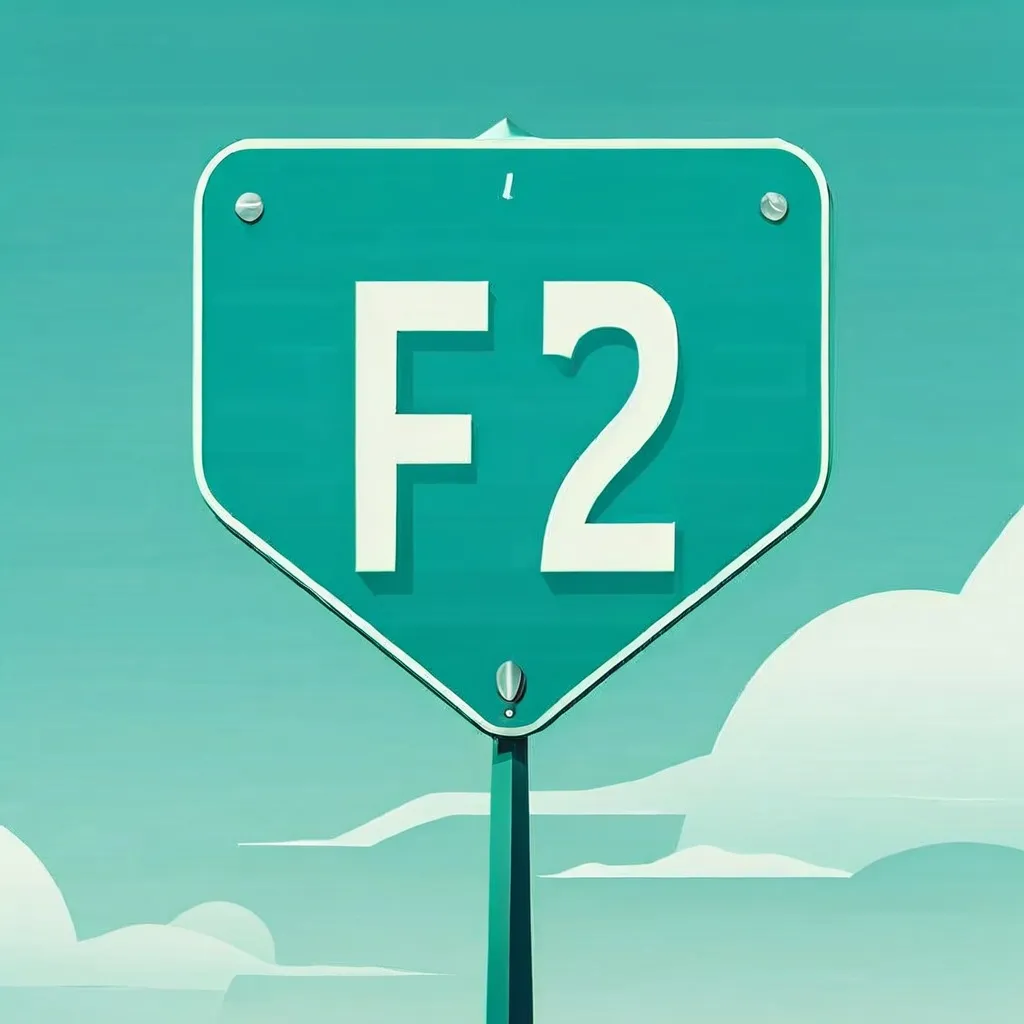
Learner drivers in Poland must understand the new F-23 sign and its implications for the multifunctional middle lane. This article clarifies its purpose for traffic entry and exit, highlights the critical prohibition of overtaking, and explains its role in improving traffic flow and safety in built-up areas, essential knowledge for the theory exam.
Updated on Apr 11, 2026
Discover other categories connected to Polish Road Signs and Road Markings. These sections help you explore additional topics, expand your understanding of driving theory in Polish, and build a more complete picture of the rules and situations tested during the exam.
Find answers to common questions learners ask about Polish Road Signs and Road Markings. This section helps clarify difficult concepts, highlight critical exam information, and support your preparation for the Polish driving theory exam in Poland.
Polish road signs are divided into: warning signs, prohibition signs, mandatory signs, information signs, direction signs, and supplementary plates. Each category has a specific meaning and purpose on the road.
These codes identify specific signs within the Polish road system. For example, A-7 means 'give way', and B-20 means 'stop'. Knowing these codes helps with learning and preparing for the driving theory test.
Road markings, such as lines on the road, define traffic rules, indicate lanes, parking spaces, pedestrian crossings, and more. Understanding them is essential for safety and avoiding fines.
Road signs such as 'give way' or 'priority road' take precedence over some road markings. However, at intersections, you must always consider both signs and markings, as well as general right-of-way rules.
Yes, signals given by an authorized police officer or traffic controller take precedence over all road signs and traffic lights.
Access a structured overview of all article categories to enhance your Polish driving licence theory preparation. Choose a topic area like road signs, traffic rules, or specific maneuvers to focus your learning and ensure you cover all necessary material effectively before your exam.
Polish Theory Article Categories