
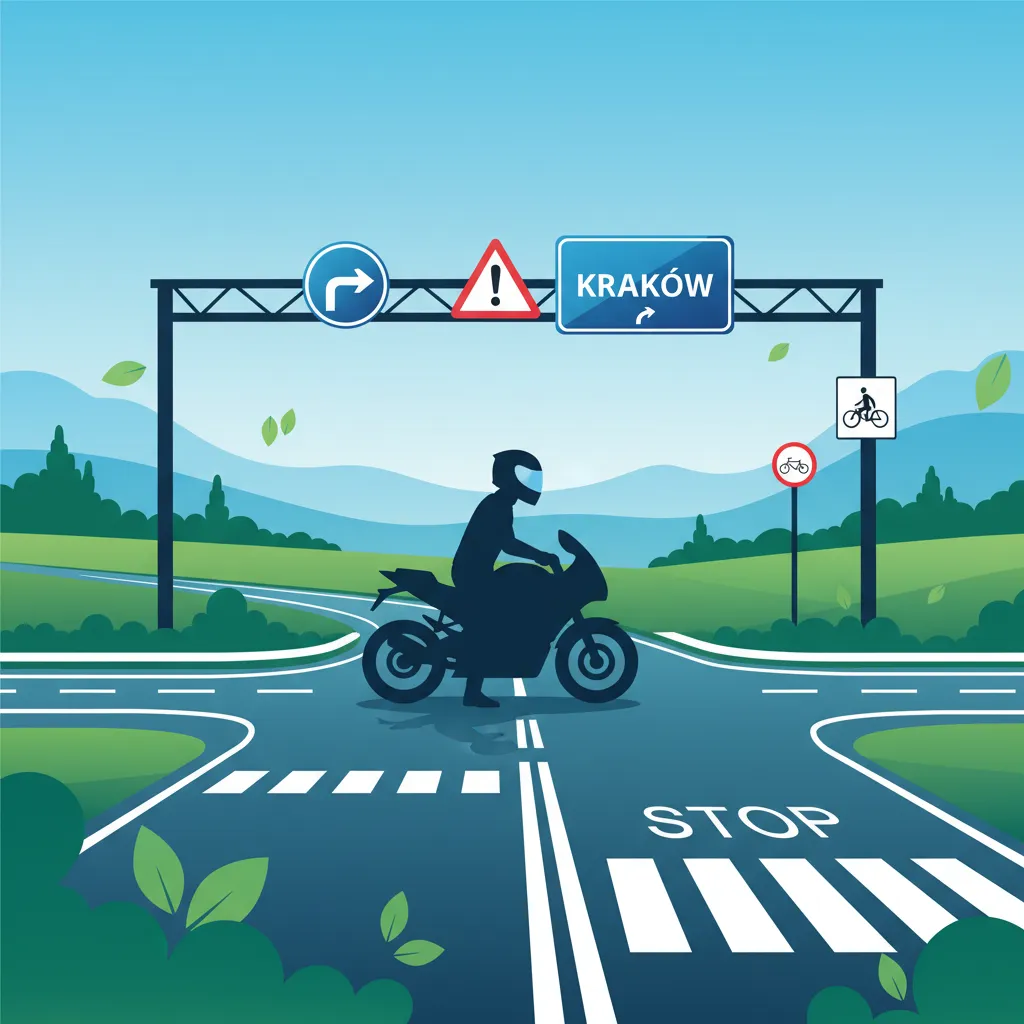
Navigate Poland's roads safely by mastering its comprehensive system of road signs, markings, and surface indicators. This unit breaks down regulatory, warning, and informational signs, paying special attention to those crucial for motorcyclists, like lane usage and hazard warnings. You'll also learn to interpret complex road markings and understand the unique challenges they present to two-wheel riders.
Browse all lessons that make up Road Signs, Markings, and Surface Indicators. Each lesson focuses on specific topics, learning objectives, and core concepts, helping you build essential knowledge and follow a clear, structured progression toward your study goals in Poland.
This lesson examines the family of regulatory signs that dictate mandatory actions and prohibitions on Polish roads, emphasizing how each sign influences motorcyclist behaviour. Learners will explore the stop, give way, speed limit, and no overtaking signs, understanding the legal obligations they impose. The lesson also highlights signs that specifically affect motorcycles, such as lane restrictions, ensuring riders recognize and obey regulations unique to two-wheel traffic.
In this lesson, learners study warning signs that alert drivers to potential hazards, focusing on those that are particularly relevant to motorcyclists. The content includes signs indicating curves, slippery surfaces, animal crossings, tram tracks, and construction zones, each requiring specific riding adjustments. The lesson teaches riders how to interpret these signs to anticipate hazards, adjust speed appropriately, and maintain a safe distance from potential dangers.
This lesson focuses on informational signs that provide drivers with essential data for navigation and travel planning. Learners will explore signs indicating distances, highway exits, service areas, and speed zone changes, learning how these signs impact route selection and riding strategy. The lesson also addresses the interpretation of direction arrows and road number signs, enabling riders to integrate sign information into effective journey planning and maintain situational awareness.
This lesson examines the variety of pavement markings that define lane structures, traffic flow, and special zones on Polish roads. Learners will study solid and broken lines, lane division markings, and the distinct symbols for bicycle lanes, bus lanes, and tram tracks, all of which affect motorcyclist positioning. The lesson also addresses surface texture indicators that signal changing road conditions, enabling riders to maintain correct lane discipline.
In this lesson, learners explore the temporary signs that appear during road construction or maintenance activities, focusing on how they alter normal traffic patterns. The content covers signs indicating lane shifts, temporary speed limits, detour routes, and equipment zones where workers are present. The lesson emphasizes the importance of slowing down, staying alert, and obeying temporary regulations to navigate safely through work zones while ensuring compliance.
Explore high-intent keywords and long-tail search topics learners use when researching Road Signs, Markings, and Surface Indicators. These terms reflect how people search for reliable study materials, structured explanations, and unit-level theory preparation support in Poland.
Find clear answers to the most common questions learners ask about Road Signs, Markings, and Surface Indicators. Understand how the unit is organized, what learning goals it supports, and how it contributes to your study progression with structured explanations and practical guidance tailored for learners in Poland.
For motorcyclists in Poland, critical signs include speed limit signs (especially varying limits in urban and rural areas), priority signs at intersections, signs indicating road surface changes or hazards (like uneven surfaces or tram tracks), and regulatory signs related to lane usage. Understanding these helps anticipate dangers and comply with traffic laws.
While most road markings apply equally, motorcyclists need to be particularly aware of lane position and shared spaces. Markings like tram tracks, different types of lane lines (solid vs. dashed), and dedicated lanes require careful interpretation. Motorcyclists must ensure they are in a safe lane position and aware of how these markings might affect grip or require specific maneuvering, especially in wet conditions.
Yes, Poland uses signs that highlight potential risks relevant to all vehicles but which can be amplified for motorcyclists. These include warnings about sharp curves, slippery surfaces (especially in wet or icy conditions), uneven road surfaces, and the presence of tram tracks or railway crossings. Awareness of these signs allows riders to adjust speed and vigilance accordingly.
Surface indicators, such as coloured tarmac used for cycle lanes, bus lanes, or pedestrian zones, signal specific usage rules. For motorcyclists, understanding these zones is crucial to avoid riding in restricted areas and to be aware of potential conflicts with other road users. Different textures or patterns on the road surface can also indicate a change in road condition or a specific hazard.
Thoroughly study all the official Polish road signs and understand the meaning of common pavement markings. Practice with mock tests that focus specifically on identifying signs and interpreting scenarios involving road markings. This unit provides the foundational knowledge, and dedicated practice with exam-style questions is key to success.
Temporary signs and markings, often indicated by orange or yellow colours, are used to manage traffic during roadworks or events. They are crucial because they override permanent signs and can indicate changes in road layout, speed limits, or diversions. Motorcyclists must pay close attention to these temporary changes to navigate safely and avoid unexpected hazards.
All included lessons
Lessons in Road Signs, Markings, and Surface Indicators
See who benefits most from studying Road Signs, Markings, and Surface Indicators. This overview explains how the unit supports different learning needs, what level of knowledge is helpful before starting, and how it fits into the overall study path in Poland.
This unit is essential for all aspiring Category A motorcycle license holders in Poland who need to pass the official theory exam. It is particularly beneficial for learners who find road signs and markings confusing or who want to ensure they understand the specific visual cues that affect motorcycle safety and traffic law compliance.

Dive into our curated curriculum designed for Polish driving license aspirants. Select a course, follow its guided modules, and master every aspect of traffic rules and road signs necessary to pass your theory exam with confidence.
Polish Theory CurriculumExplore all units and lessons included in this driving theory course.
Dive into our curated curriculum designed for Polish driving license aspirants. Select a course, follow its guided modules, and master every aspect of traffic rules and road signs necessary to pass your theory exam with confidence.
Polish Theory Curriculum