
This unit is crucial for Category C licence holders, focusing on the essential skills of load management and cargo securement. You'll learn how to correctly distribute weight to meet legal limits, maintain vehicle stability, and understand the impact of load on handling. Mastering these principles is vital for safe operation and passing your Polish theory exam.
Browse all lessons that make up Load Management and Cargo Securement. Each lesson focuses on specific topics, learning objectives, and core concepts, helping you build essential knowledge and follow a clear, structured progression toward your study goals in Poland.
This lesson introduces the legal framework governing vehicle and axle weight limits in Poland and the EU. Learners will understand how to determine a vehicle's maximum permissible payload and interpret official load charts and documentation. The content covers the importance of correct weight distribution to avoid exceeding individual axle limits and explains the serious legal and safety consequences of operating an overloaded vehicle.
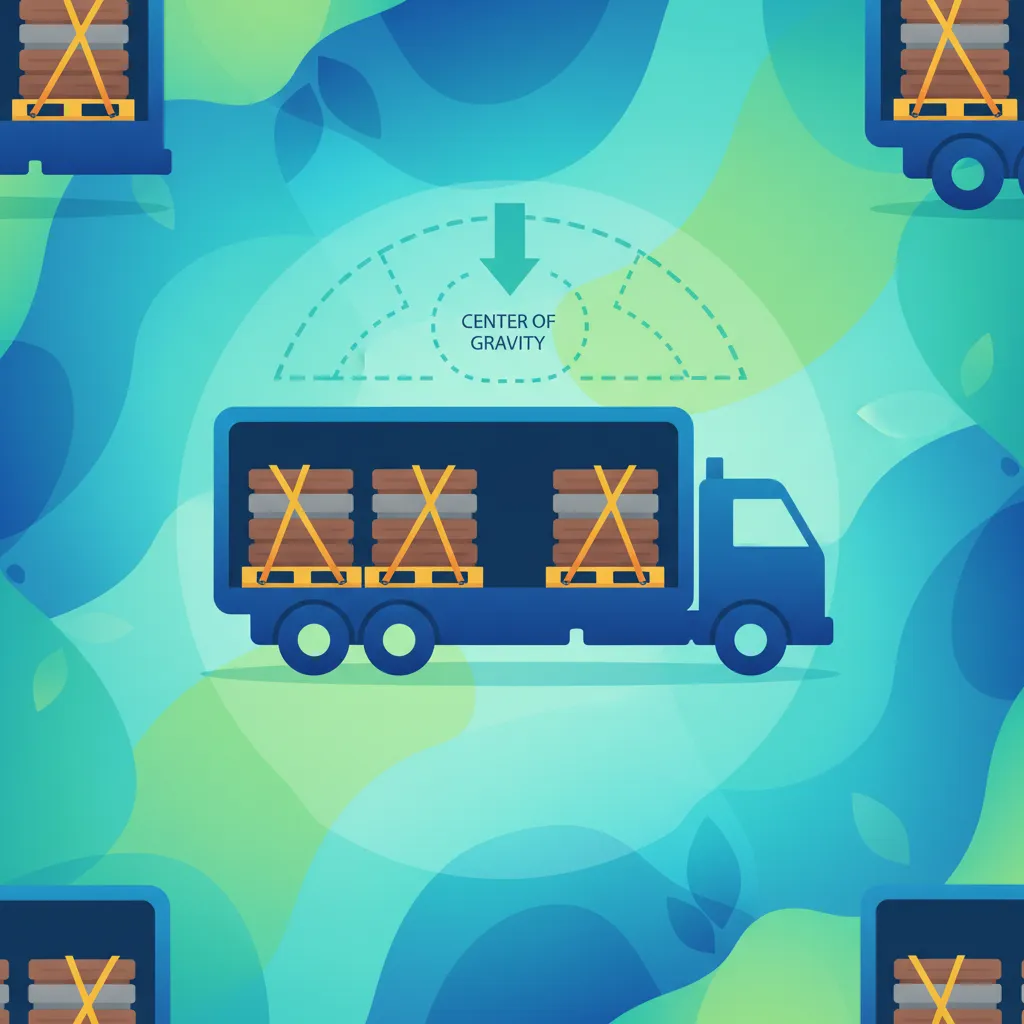
This lesson focuses on the crucial concept of the center of gravity (CoG) and its direct impact on truck stability. It explains how the height and lateral position of the load's CoG can affect the vehicle's susceptibility to rolling over, especially during cornering or sudden maneuvers. Learners will study principles for positioning and stacking cargo to maintain the lowest possible CoG, thereby enhancing dynamic stability and overall driving safety.
This lesson provides a practical guide to the various methods used to secure cargo effectively. It details the correct application of tie-down straps, chains, and other lashing equipment, explaining the principles of tension and restraint angles. Learners will also explore techniques such as blocking and bracing for different types of freight and understand how to use equipment like friction mats to increase stability, all in accordance with European cargo securement standards.
This lesson explores the dynamic relationship between cargo weight and a vehicle's performance. It explains how increased mass raises kinetic energy, significantly lengthening braking distances and requiring earlier, more gradual brake application. Learners will also analyze how a heavy or poorly distributed load alters the vehicle's handling characteristics, particularly during cornering, and understand the necessity of adjusting speed and driving style to compensate for these effects.
This lesson outlines the essential legal paperwork associated with freight transport. It details the purpose and content of key documents like the load manifest, cargo declaration, and official weight certificates. Learners will understand their legal responsibility to verify that all documentation is accurate and complete before departure, and the importance of maintaining proper records for potential inspections by transport authorities or for cross-border customs procedures.
Explore high-intent keywords and long-tail search topics learners use when researching Load Management and Cargo Securement. These terms reflect how people search for reliable study materials, structured explanations, and unit-level theory preparation support in Poland.
Find clear answers to the most common questions learners ask about Load Management and Cargo Securement. Understand how the unit is organized, what learning goals it supports, and how it contributes to your study progression with structured explanations and practical guidance tailored for learners in Poland.
Common mistakes include miscalculating weight distribution across axles, underestimating the impact of the center of gravity on stability, and not understanding the correct methods for securing different types of cargo. Ensure you study all lessons thoroughly to avoid these pitfalls.
An improperly secured or unevenly distributed load can significantly alter a truck's center of gravity and overall stability. This can lead to longer braking distances, especially during emergency stops, and can make the vehicle unstable, increasing the risk of skidding or jackknifing. Understanding load dynamics is crucial for safe braking.
The center of gravity (CG) is the point where the weight of the load is concentrated. A higher CG makes the vehicle more prone to tipping over, especially during cornering or sudden maneuvers. A lower, well-balanced CG improves stability and handling. Understanding how your load affects the CG is vital for safe driving.
Yes, Poland, like other EU countries, adheres to regulations that mandate specific methods for securing various types of cargo, from loose materials to heavy machinery. These regulations often refer to European standards like EN 12195. This unit covers the general principles and common methods you need to know for the theory exam.
For the theory exam, you should be aware of the general requirements for load documentation, which typically includes information about the cargo, its weight, origin, and destination. For specific international transport, CMR consignment notes are essential. This unit touches upon the legal obligations for load documentation.
All included lessons
Lessons in Load Management and Cargo Securement
See who benefits most from studying Load Management and Cargo Securement. This overview explains how the unit supports different learning needs, what level of knowledge is helpful before starting, and how it fits into the overall study path in Poland.
This unit is designed for aspiring professional truck drivers preparing for the Polish Category C theory exam. It's particularly beneficial for those who need to understand the specific regulations and safety implications of transporting goods, ensuring they can operate HGVs safely and legally.

Dive into our curated curriculum designed for Polish driving license aspirants. Select a course, follow its guided modules, and master every aspect of traffic rules and road signs necessary to pass your theory exam with confidence.
Polish Theory CurriculumExplore all units and lessons included in this driving theory course.
Dive into our curated curriculum designed for Polish driving license aspirants. Select a course, follow its guided modules, and master every aspect of traffic rules and road signs necessary to pass your theory exam with confidence.
Polish Theory Curriculum