
The Stop sign, officially designated as B-20 in Poland, is a fundamental regulatory sign that impacts right-of-way and road safety. It requires drivers to bring their vehicle to a complete halt before entering an intersection, railway crossing, or other designated area. This pause is essential for ensuring you can safely assess traffic conditions and yield to others who have priority.
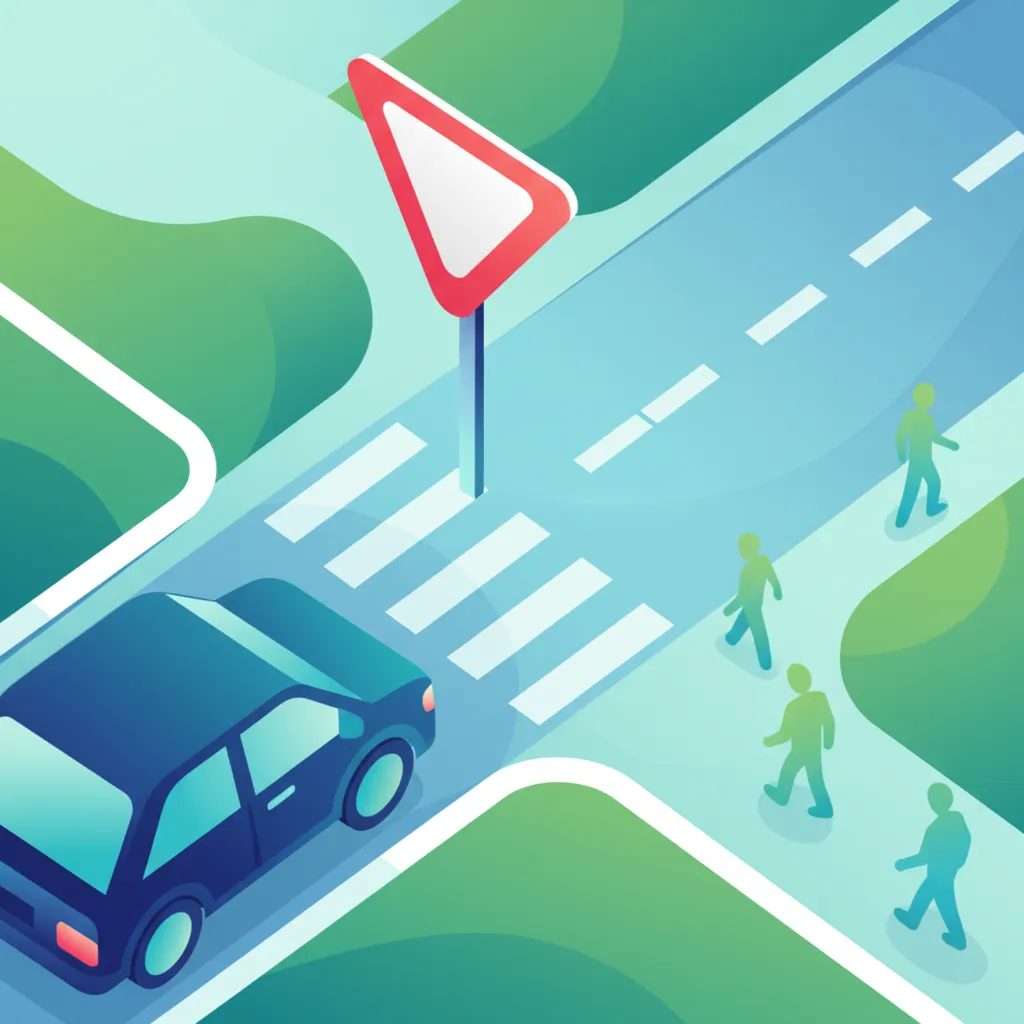
Theory topic content overview
Read the full theory topic guide for Stop Sign (B-20) Rules with structured, easy-to-scan content built for learners in Poland. This detailed section explains the exact rule, meaning, traffic context, comparison points, and exam logic behind this Polish driving theory topic so you can study faster, understand the concept more clearly, and avoid common interpretation mistakes on the theory test.
The B-20 Stop sign is one of the most unambiguous and critical regulatory traffic signs in Polish traffic law. It doesn't merely suggest caution; it imposes a strict, mandatory obligation on every driver approaching it: you must bring your vehicle to a complete and full stop. This sign indicates you are approaching a road where other traffic has priority, often an intersection, railway crossing, or other conflict point where a precise assessment of conditions is crucial.
In Poland, the official interpretation of the B-20 sign means:
This dual requirement makes the B-20 sign a cornerstone of road safety and a frequently tested concept in the Polish driving theory exam.
The purpose of the B-20 Stop sign goes beyond just assigning right of way. It is designed to create a mandatory safety pause, forcing drivers to:
For the Polish driving licence theory test, understanding this absolute obligation is vital. Examiners often present scenarios where a "rolling stop" or simply slowing down is subtly offered as an option. Remember, the B-20 demands a full halt, without exception.
Performing a correct stop at a B-20 sign involves more than just pressing the brake pedal. It requires precise positioning and observation:
A common point of confusion for drivers and a frequent focus in the Polish driving theory exam is the distinction between the B-20 Stop sign and the A-7 Yield sign (often referred to as "Ustąp pierwszeństwa" in Poland). While both signs concern priority rules and require drivers to yield, their core obligation differs significantly:
Misinterpreting these two signs can lead to serious traffic violations in Poland and dangerous situations. Always remember: B-20 means STOP, A-7 means YIELD (and stop if needed).
Let's look at how the B-20 Stop sign applies in various Polish road conditions:
Krzyż św. Andrzeja), or before any stop line.Learners in Poland often make specific errors when encountering the B-20 Stop sign:
In Poland, the B-20 Stop sign can be accompanied by additional road signs known as tabliczki that provide further context:
Understanding these nuances of the B-20 sign within the Polish road system is not just for passing the exam; it is vital for safe and compliant driving daily.
The B-20 Stop sign in Poland is a simple yet powerful command: STOP COMPLETELY, THEN YIELD. Make this your unwavering mental model. Never treat it as a suggestion or a mere slow-down point. A full, decisive stop, followed by thorough observation and safe yielding, is the only correct response. This commitment to the complete stop at every B-20 sign will ensure your safety and adherence to Polish traffic regulations, both in your driving theory exam and on the road.
The B-20 Stop sign in Polish traffic law is a mandatory regulatory sign requiring drivers to bring their vehicle to a complete halt before entering an intersection or priority road. The stop must occur at the stop line or, if absent, at the optimal point providing maximum visibility without obstructing traffic. After stopping, drivers must yield right-of-way to all users on the priority road. This rule is distinct from the A-7 Yield sign, which allows proceeding without stopping if the path is clear. Understanding this distinction and executing the correct stopping procedure is essential for passing the Polish driving theory exam and ensuring road safety.
A short set of high-value points that capture the most important ideas from this theory explanation.
The B-20 Stop sign imposes a mandatory obligation to come to a complete halt before entering a priority road or intersection, regardless of traffic conditions
You must stop before the stop line (P-12) or at the optimal point where you have clear visibility without obstructing priority traffic
After stopping, you must yield right-of-way to all road users on the priority road, including vehicles, cyclists, and pedestrians
The B-20 Stop sign fundamentally differs from the A-7 Yield sign: B-20 always requires stopping, while A-7 only requires stopping if necessary
This absolute stop requirement is frequently tested in the Polish driving theory exam and is a cornerstone of road safety
When a stop line exists (P-12), stop before it; when absent, stop at a point with best visibility that does not obstruct priority traffic
The stop must be complete and absolute - all wheels must be momentarily stationary, not a rolling stop
Polish traffic law states: 'Zakaz wjazdu na skrzyżowanie bez zatrzymania się przed drogą z pierwszeństwem'
Tabliczki T-6c or T-6d may accompany B-20 and indicate the exact course of the priority road through the intersection
At unguarded railway crossings with B-20, stop at the Krzyż św. Andrzeja (St. Andrew's Cross) if no stop line is present
Performing a 'rolling stop' - slowing significantly without fully halting all wheels, which is a traffic offence
Stopping in the wrong position - either too far back limiting visibility, or over the stop line obstructing priority traffic
Only checking for vehicles after stopping, while forgetting about cyclists and pedestrians who also have priority
Confusing the B-20 Stop sign with the A-7 Yield sign, leading to failure to stop when a full halt is required
Assuming a lull in traffic means the road is clear without performing a proper full stop and observation
Start with a short, direct summary of Stop Sign (B-20) Rules before reading the full explanation below.
A Stop sign (B-20) means you must come to a complete and full stop before the stop line, or if none exists, at a point where you have a clear view of crossing traffic without obstructing it. After stopping, you must yield to all vehicles and pedestrians on the road you are entering or crossing, only proceeding when it is entirely safe and clear to do so.
Review the most important terms, rule signals, and traffic concepts linked to Stop Sign (B-20) Rules.
Explore related theory topic pages connected to Stop Sign (B-20) Rules and continue with the next useful rule explanation.
See the common search queries learners use when trying to understand Stop Sign (B-20) Rules in Poland.

Continue your preparation by exploring specific Polish driving theory topics in detail. Review each section to reinforce your understanding of traffic rules, road signs, and safe driving practices. Our comprehensive explanations are structured to support your learning journey and help you confidently approach the official driving licence theory exam.
Polish Driving Theory TopicsTheory topic content overview
A short set of high-value points that capture the most important ideas from this theory explanation.
The B-20 Stop sign imposes a mandatory obligation to come to a complete halt before entering a priority road or intersection, regardless of traffic conditions
You must stop before the stop line (P-12) or at the optimal point where you have clear visibility without obstructing priority traffic
After stopping, you must yield right-of-way to all road users on the priority road, including vehicles, cyclists, and pedestrians
The B-20 Stop sign fundamentally differs from the A-7 Yield sign: B-20 always requires stopping, while A-7 only requires stopping if necessary
This absolute stop requirement is frequently tested in the Polish driving theory exam and is a cornerstone of road safety
When a stop line exists (P-12), stop before it; when absent, stop at a point with best visibility that does not obstruct priority traffic
The stop must be complete and absolute - all wheels must be momentarily stationary, not a rolling stop
Polish traffic law states: 'Zakaz wjazdu na skrzyżowanie bez zatrzymania się przed drogą z pierwszeństwem'
Tabliczki T-6c or T-6d may accompany B-20 and indicate the exact course of the priority road through the intersection
At unguarded railway crossings with B-20, stop at the Krzyż św. Andrzeja (St. Andrew's Cross) if no stop line is present
Performing a 'rolling stop' - slowing significantly without fully halting all wheels, which is a traffic offence
Stopping in the wrong position - either too far back limiting visibility, or over the stop line obstructing priority traffic
Only checking for vehicles after stopping, while forgetting about cyclists and pedestrians who also have priority
Confusing the B-20 Stop sign with the A-7 Yield sign, leading to failure to stop when a full halt is required
Assuming a lull in traffic means the road is clear without performing a proper full stop and observation
Start with a short, direct summary of Stop Sign (B-20) Rules before reading the full explanation below.
A Stop sign (B-20) means you must come to a complete and full stop before the stop line, or if none exists, at a point where you have a clear view of crossing traffic without obstructing it. After stopping, you must yield to all vehicles and pedestrians on the road you are entering or crossing, only proceeding when it is entirely safe and clear to do so.
Review the most important terms, rule signals, and traffic concepts linked to Stop Sign (B-20) Rules.
Explore related theory topic pages connected to Stop Sign (B-20) Rules and continue with the next useful rule explanation.
See the common search queries learners use when trying to understand Stop Sign (B-20) Rules in Poland.
Continue your preparation by exploring specific Polish driving theory topics in detail. Review each section to reinforce your understanding of traffic rules, road signs, and safe driving practices. Our comprehensive explanations are structured to support your learning journey and help you confidently approach the official driving licence theory exam.
Polish Driving Theory TopicsUse this exam-focused revision tip to understand how Stop Sign (B-20) Rules is likely to appear in theory questions for learners in Poland. This section helps you identify the most testable part of the rule, avoid common traps, and remember the concept more effectively during Polish driving theory exam preparation.
In the Polish driving theory exam, pay close attention to questions involving the B-20 Stop sign, especially the requirement for a 'complete stop'. Examiners often present scenarios where a rolling stop or merely slowing down is an option. Remember, the B-20 always demands a full halt, unlike the A-7 Yield sign, which allows continuous movement if the path is clear.
Read direct answers to the most common learner questions about Stop Sign (B-20) Rules in Poland. This FAQ focuses on rule confusion, practical meaning, comparison with similar concepts, and the exact uncertainties that appear most often in Polish driving theory revision and exam preparation.
The key difference is that a Stop sign (B-20) always requires a complete halt of the vehicle, regardless of whether there is crossing traffic. A Yield sign (A-7) only requires you to slow down and give way if there is traffic to which you must yield, allowing you to proceed without stopping if the road is clear.
You must stop before the stop line (a solid white line) if one is present. If there is no stop line, you must stop at a point where you can clearly see crossing traffic without hindering it, typically at the edge of the intersecting roadway.
Yes, the B-20 Stop sign mandates a complete stop regardless of traffic conditions. This is a crucial aspect of the rule and is often tested in the Polish driving exam.
A 'complete stop' means bringing your vehicle to a full halt for at least a moment, with your wheels ceasing to roll, before slowly proceeding. Merely slowing down or a 'rolling stop' is a violation of the rule.
Failing to stop at a B-20 sign is a serious traffic violation in Poland, which can result in significant fines and penalty points on your driving license, as well as increasing the risk of a collision.
Yes, a B-20 Stop sign can also be placed before railway crossings, tram tracks, or other locations where there is a clear danger or requirement to yield to intersecting traffic, demanding the same complete stop.
The B-20 sign indicates that you must yield priority to all traffic on the road you are about to enter or cross. It is one of the highest-priority 'give way' signs, removing any right of way you might otherwise have.
Build custom practice sessions tailored precisely to your needs. Focus on areas requiring improvement, review specific Polish road signs, or master complex traffic rules to ensure full preparation for your official driving license exam.