
Road markings are your silent guides on the road, applied directly to the surface to steer your driving. This section covers a wide array of markings, from simple lane dividers to complex instructions for pedestrians, cyclists, and vehicles. Understanding these horizontal signs is crucial for obeying traffic rules, ensuring smooth traffic flow, and passing your theory exam with confidence.
An explanation of how Road Markings (P) road signs apply in real traffic situations in Poland. Learn where these signs are typically placed, what drivers are expected to do when they appear, and how correct reactions help you stay safe, avoid fines, and succeed in your Polish driving theory exam.
Road markings are ubiquitous and essential for directing traffic flow in virtually every driving scenario. You'll encounter single dashed lines (P-1) to indicate where overtaking is permitted, while solid lines (P-2, P-3, P-4) prohibit crossing. Unilateral crossing lines (P-3) specifically warn against crossing from one direction. Edge lines (P-7a, P-7b) define the road boundary, especially important in low visibility or at night. Directional arrows (P-8a, P-8b, P-8c) at junctions guide you into the correct lane, and guiding arrows (P-9) warn of upcoming bends. Pedestrian (P-10) and bicycle crossings (P-11) are critical zones where you must yield. Stop lines (P-12, P-13, P-16) indicate where to halt, with P-13 and P-14 often paired with traffic signals or signs. The yield triangle (P-15) is a visual cue to give way. Bus stop markings (P-17) and BUS lane markings (P-22) indicate specific zones for public transport. Parking signs (P-18, P-19, P-20) detail where and how you can park, while reserved spaces (P-20, P-24) are for specific users. Excluded surfaces (P-21) are areas you must not enter, and speed bump markings (P-25) alert you to upcoming road humps. Pedestrian paths (P-26) and bicycle paths/directions (P-27) delineate specific routes for these road users. These markings are fundamental for safe navigation, lane discipline, and respecting the rights of way of all road users.
An overview of the key learning outcomes when studying the Road Markings (P) road sign category. Understand the main concepts, sign meanings, and traffic situations covered here so you can recognise patterns, answer theory questions more confidently, and build a solid foundation for safe driving in Poland.
Road markings are vital horizontal traffic signs that provide real-time guidance and enforce Polish traffic rules directly on the road surface. Mastering these essential road signs is crucial for your driving theory test, as they dictate lane use, indicate hazards, and manage traffic flow. Study their meanings and recognition patterns to navigate safely and pass your exam.

The P-1 Single Dashed Line: Your guide to safe lane changes and overtaking in Poland.

P-2 Solid White Line: Never Cross This Road Marking

Master the Unilateral Crossing Line (P-3) for safer Polish roads.

The P-4 Double Solid Line: A Strict Barrier You Must Not Cross

Master the P-5 Double Dashed Line for Reversible Lanes

Understand the P-6 Warning Line: Your Signal to Prepare for Restriction Ahead

The P-7a Intermittent Edge Line: Your Guide to Road Boundaries

The P-7b Solid Edge Line: Stay on the Roadway, Not the Shoulder!
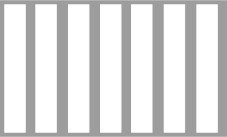
Understand the P-10 'Pedestrian Crossing' Road Sign and Your Obligations

Understand the P-11 Bicycle Crossing Road Sign and Cyclist Priority
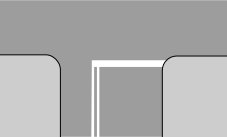
The P-12 Absolute Stop Line: You MUST stop here, no exceptions!
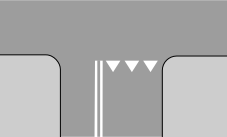
The P-13 'Conditional Stop Line' – Know When to Stop and Yield!
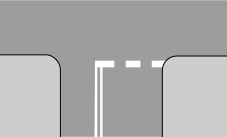
Know When to Stop: The P-14 Conditional Stop Line Explained

P-17 Bus Stop Line: What This Zig-Zag Marking Means for Drivers

The P-18 marking clearly defines legal parking spaces.

The P-19 Parking Lane Line clearly separates parking areas from the main road.
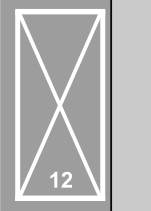
What Does the P-20 Reserved Parking Space (Envelope) Sign Mean?

Prepare to yield: Understand the P-15 floor yield triangle road marking.

The P-16 'STOP' road marking means you must stop – even without a vertical sign!
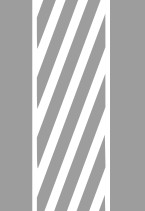
The P-21 'Excluded Surface' Marking: What It Means and How to Treat It
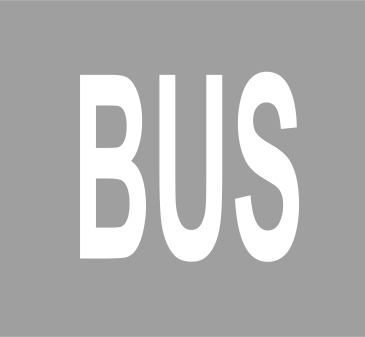
The P-22 'BUS' marking indicates a dedicated lane for public transport and authorized vehicles.
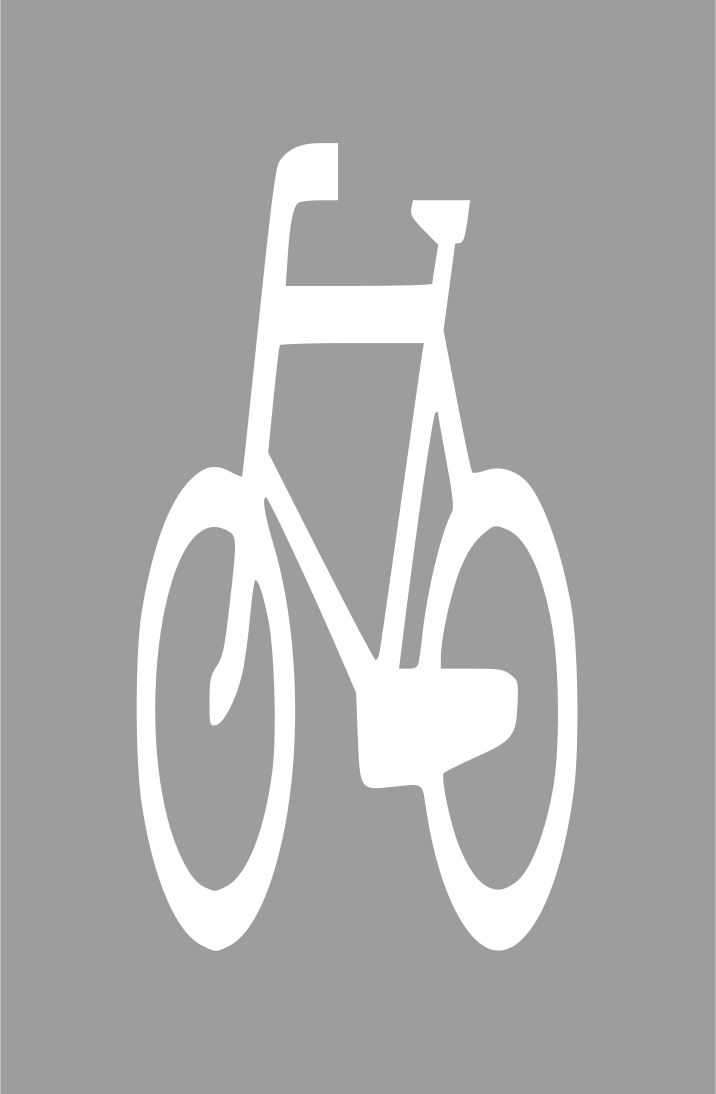
Recognise the P-23 Bicycle Symbol for Safe Cycling and Driving
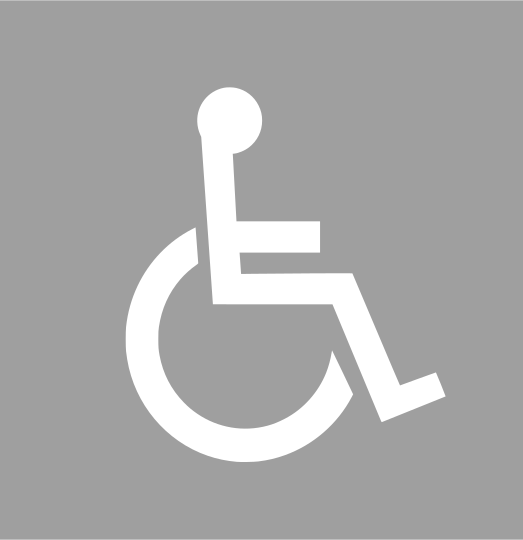
The P-24 Disabled Parking Sign: Reserved Parking for Those Who Need It

Understand the P-25 Marking: Your Signal for Speed Bumps Ahead!
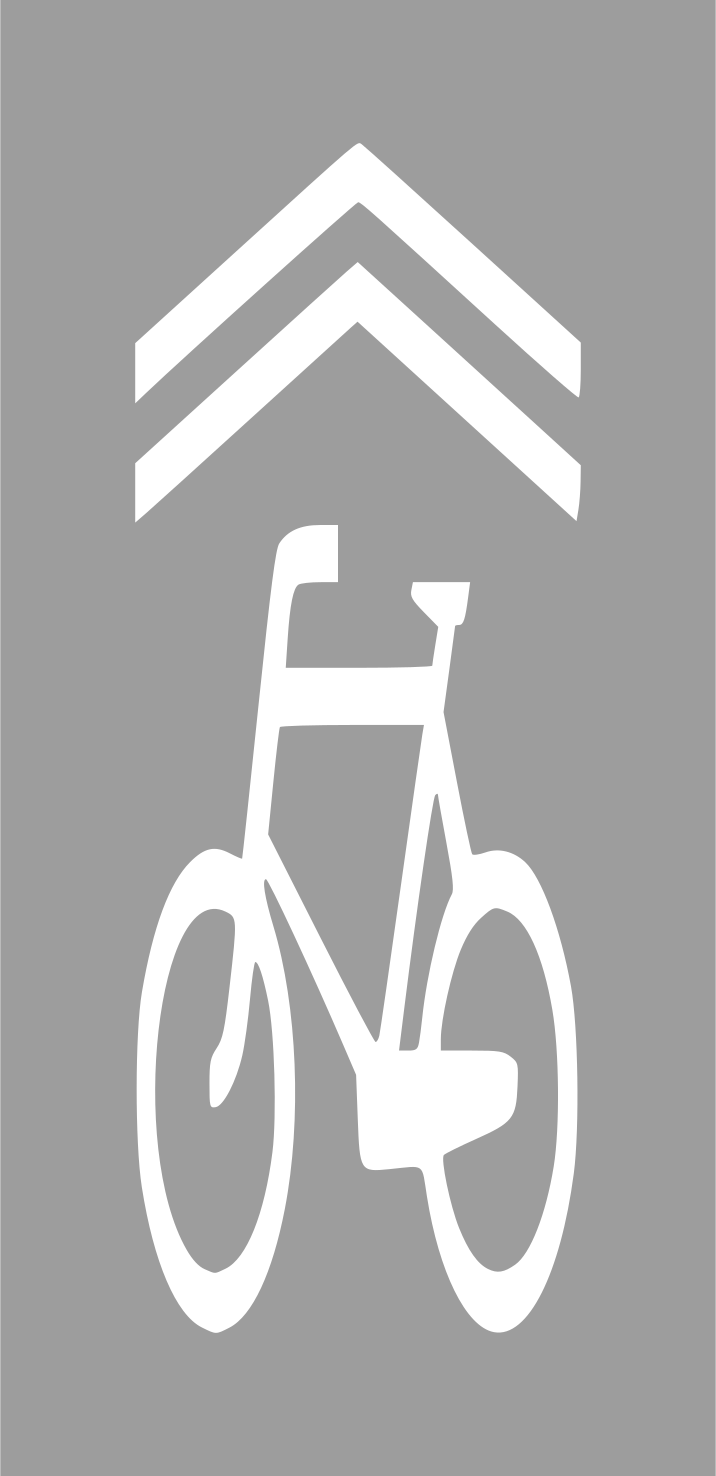
The P-27 Bicycle Direction and Path marking guides cyclists and informs drivers.
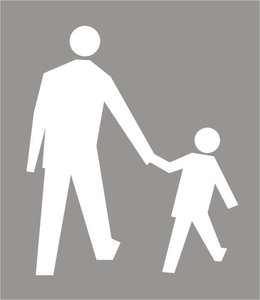
P-26 Pedestrian Path Symbol: A Zone Strictly for Walking
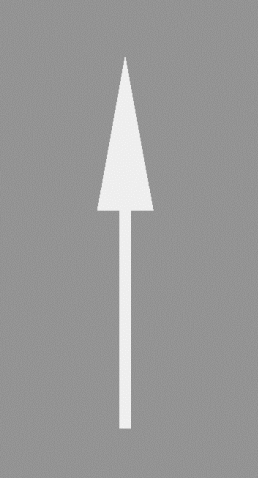
P-8a Straight Ahead Arrow: You Must Go Straight!
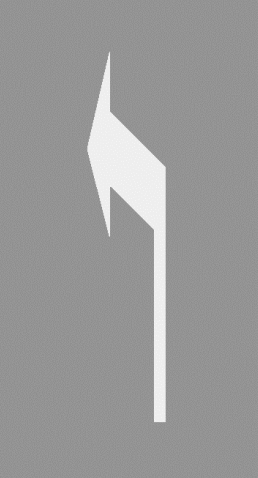
The P-8b Directional Arrow sign means you MUST turn in the direction shown.
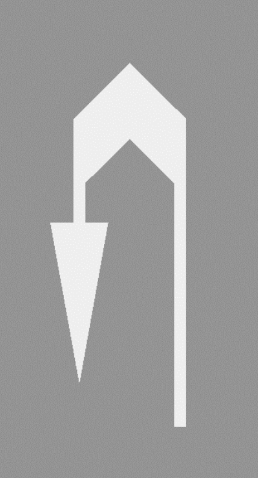
The P-8c sign means this lane is exclusively for U-turns.

The P-9 Guiding Arrow: Prepare to Merge as Your Lane Ends
Clear answers to common questions about the Road Markings (P) road sign category. Use this FAQ to review tricky rules, understand how these signs appear in exam scenarios, and remove confusion that often leads to mistakes in the Polish driving theory exam in Poland.
A single dashed line (P-1) indicates that you may cross it to overtake or change lanes when it is safe to do so. A single solid line (P-2) means you should not cross it; it typically separates opposing traffic flows or marks the edge of the carriageway. Always check for other signs or signals that might modify these rules.
Both the 'STOP' text marking (P-16) and absolute stop lines (P-12) require you to come to a complete stop before entering the intersection or crossing the line. Conditional stop lines (P-13, P-14) usually indicate where to stop if required by a traffic light or sign; you may proceed if the way is clear and no signal or sign prohibits it.
Yes, road markings are legally binding traffic signs and are just as important as vertical signs (like the STOP sign or speed limit signs) and traffic signals. They provide continuous guidance and often reinforce or clarify the instructions given by other traffic controls. You must always obey both.
In situations where road markings appear to contradict a traffic sign or signal, the general rule is to obey the more restrictive or the vertically displayed sign/signal. For example, if a solid line prohibits lane changes but a sign indicates a lane must exit, follow the sign. Always prioritize safety and observe the most immediate and explicit instruction.
Directional arrows (P-8a, P-8b, P-8c) painted on the road surface show you which direction(s) you must or may travel from your current lane. Straight ahead arrows mean you must go straight if you are in that lane. Arrows indicating a turn mean you must turn if you are in that lane. Arrows for a U-turn indicate that a U-turn is permitted from that lane. These markings are crucial for navigating complex intersections correctly.
After reviewing road sign categories, dive into individual traffic sign groups. Each group page offers detailed explanations and practice questions to reinforce learning. This will ensure comprehensive preparation for your Polish driving theory exam.
Polish Road Sign Categories