
This unit delves into the technical heart of buses, exploring their classifications, dimensions, and critical systems like engines, transmissions, and advanced braking. Understanding these components is vital for safe operation and passing your Polish Category D theory exam.
Browse all lessons that make up Vehicle Characteristics & Systems. Each lesson focuses on specific topics, learning objectives, and core concepts, helping you build essential knowledge and follow a clear, structured progression toward your study goals in Poland.
This lesson introduces the various classes of passenger vehicles under Category D, detailing differences between standard, articulated, and minibuses. It covers key dimensional parameters like length, wheelbase, and turning circle that affect urban navigation. Learners will also understand passenger capacity calculations and weight distribution for safe, compliant operation.
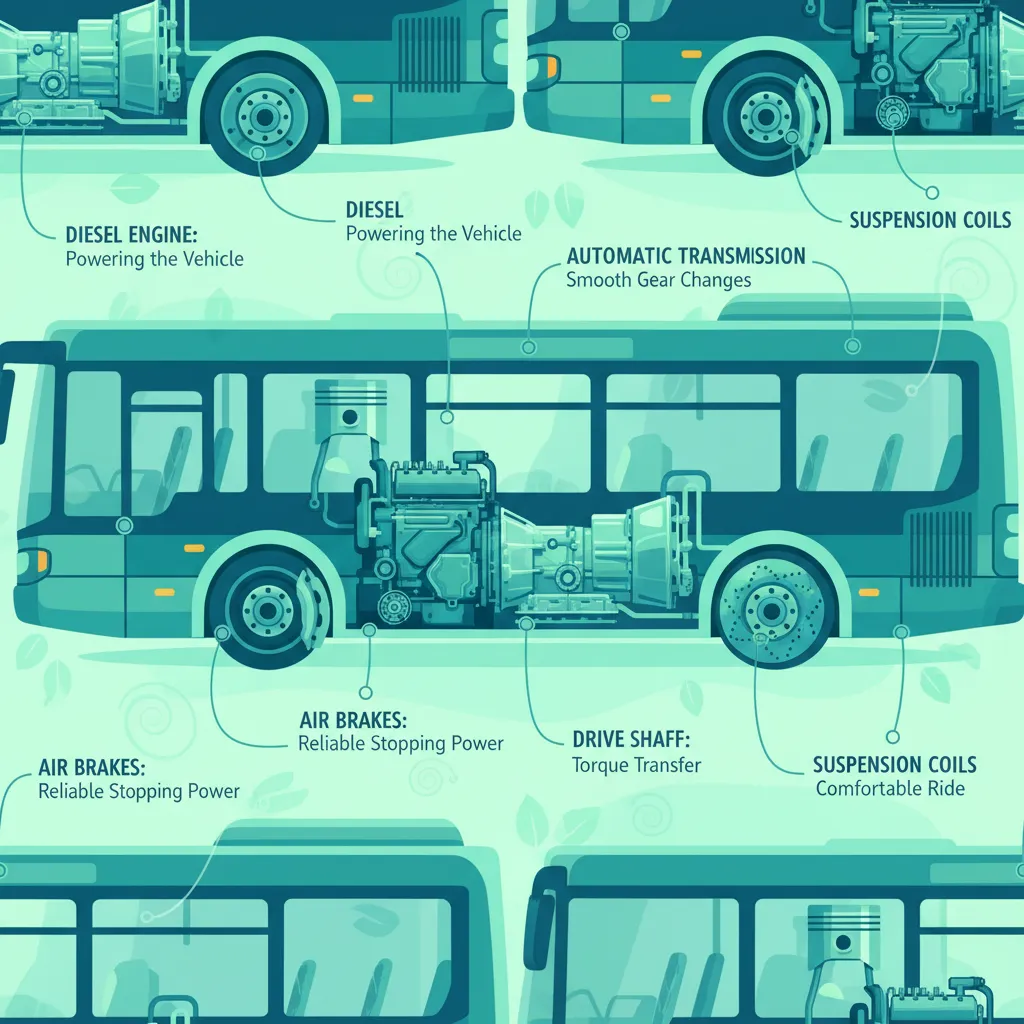
This lesson provides an overview of powertrain technologies in modern buses, including diesel, hybrid, and electric systems. It covers the function of engines and transmissions and their impact on acceleration and fuel economy. Emphasis is placed on understanding emissions standards like Euro 6 and the principles of efficient power management.
This lesson covers the braking mechanisms specific to large passenger vehicles, focusing on air brake systems and retarders. Learners will understand the components and operation of service and parking brakes, as well as the function of ABS and ESC. It also addresses strategies for emergency braking and the importance of regular maintenance for optimal performance.
Explore high-intent keywords and long-tail search topics learners use when researching Vehicle Characteristics & Systems. These terms reflect how people search for reliable study materials, structured explanations, and unit-level theory preparation support in Poland.
Find clear answers to the most common questions learners ask about Vehicle Characteristics & Systems. Understand how the unit is organized, what learning goals it supports, and how it contributes to your study progression with structured explanations and practical guidance tailored for learners in Poland.
Air brakes utilize compressed air to apply braking force, which is standard on most buses due to their power and reliability for heavy vehicles. Traditional hydraulic brakes use fluid pressure. Understanding air brake components like the compressor, reservoir, and valves is key for the Cat D theory exam.
A retarder is an auxiliary braking system that slows the vehicle without using the main service brakes. It helps reduce wear on brake pads and prevents overheating, especially during descents or prolonged braking. Knowing the types of retarders and their function is important for your Polish theory test.
Knowing a bus's dimensions is crucial for navigating tight spaces, tunnels, and bridges, while understanding passenger capacity relates to vehicle load and stability. This knowledge is tested in the Category D theory exam to ensure drivers are aware of their vehicle's operational limits.
Modern buses often feature Electronic Stability Control (ESC), Anti-lock Braking Systems (ABS), Traction Control Systems (TCS), and sometimes Advanced Emergency Braking Systems (AEBS). Familiarizing yourself with their purpose is vital for the theory exam.
While you don't need to be a mechanic, understanding the basic principles of diesel engines, common in buses, and how they connect to the transmission and drivetrain is beneficial. The exam focuses on how these systems affect driving performance and safety.
Malfunctioning braking systems pose a severe risk, potentially leading to loss of control, inability to stop, and serious accidents. The theory exam emphasizes the importance of regular checks and understanding how to identify potential issues with air brakes and other systems.
All included lessons
Lessons in Vehicle Characteristics & Systems
See who benefits most from studying Vehicle Characteristics & Systems. This overview explains how the unit supports different learning needs, what level of knowledge is helpful before starting, and how it fits into the overall study path in Poland.
This unit is specifically designed for individuals pursuing a Polish Category D bus driver's license. It is essential for aspiring professional bus drivers who need a thorough understanding of vehicle mechanics and safety systems to pass the theory test and operate buses safely.

Dive into our curated curriculum designed for Polish driving license aspirants. Select a course, follow its guided modules, and master every aspect of traffic rules and road signs necessary to pass your theory exam with confidence.
Polish Theory CurriculumExplore all units and lessons included in this driving theory course.
Dive into our curated curriculum designed for Polish driving license aspirants. Select a course, follow its guided modules, and master every aspect of traffic rules and road signs necessary to pass your theory exam with confidence.
Polish Theory Curriculum