
Uncontrolled intersections (often called "skrzyżowania równorzędne" in Poland) are junctions without traffic lights, signs, or road markings to direct traffic. In Poland, navigating these intersections safely requires applying general right-of-way principles and vigilant observation. This page explains the key rules, focusing on the "priority to the right" rule and other critical considerations for making safe decisions in real traffic.
Theory topic content overview
Read the full theory topic guide for Priority at Uncontrolled Intersections with structured, easy-to-scan content built for learners in Poland. This detailed section explains the exact rule, meaning, traffic context, comparison points, and exam logic behind this Polish driving theory topic so you can study faster, understand the concept more clearly, and avoid common interpretation mistakes on the theory test.
An uncontrolled intersection, known in Polish as a skrzyżowanie równorzędne, is a junction where the right-of-way is not explicitly regulated by traffic lights, road signs (like 'STOP' or 'Ustąp pierwszeństwa'), or road markings. Instead, drivers must apply general traffic rules based on their position and the actions of other road users. These intersections are common in Poland, particularly in residential areas, smaller towns, and older parts of cities, making understanding their rules crucial for all drivers.
Misinterpreting priority at uncontrolled intersections is a significant cause of accidents and a frequent source of errors in the Polish driving theory exam. These junctions demand heightened awareness and precise decision-making. Successfully navigating them demonstrates not just knowledge of rules but also the ability to anticipate hazards and react safely under pressure – skills essential for real-world driving in Poland.
The fundamental principle governing vehicle priority at a skrzyżowanie równorzędne in Poland is the "priority to the right" rule, or zasada prawej ręki.
Here's how it works:
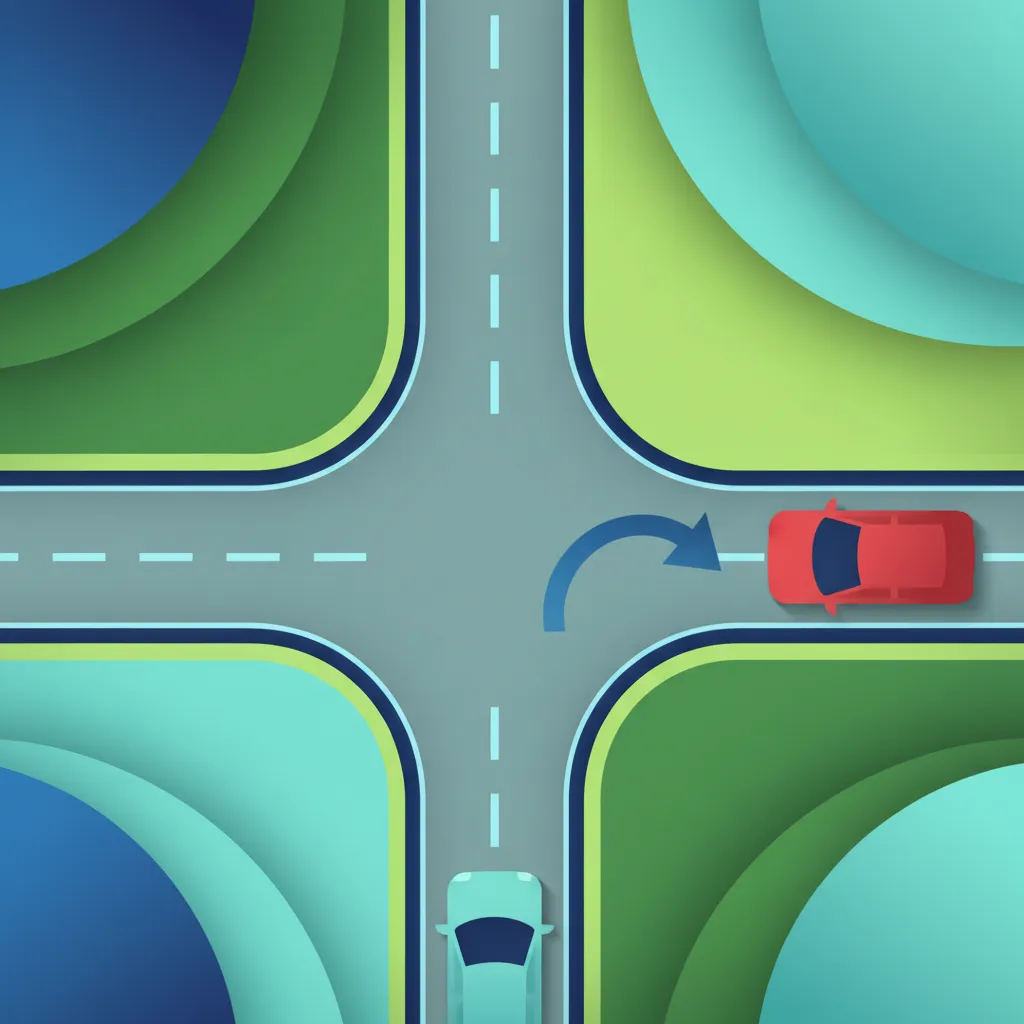
Even if you have priority over vehicles on your left, when you intend to turn left at a skrzyżowanie równorzędne, you must yield to:
This means that while vehicles from your right have overall priority, your left turn creates a new conflict point with oncoming traffic, which usually takes precedence over your turn in Polish traffic law.
A critical distinction in Polish traffic law, especially relevant for uncontrolled intersections, concerns trams (pojazdy szynowe).
Successfully navigating skrzyżowania równorzędne requires more than just knowing the rules; it demands acute situational awareness:
Learners often make specific errors at these junctions in Poland:
When facing a skrzyżowanie równorzędne in Poland, adopt a mindset of "anticipate, observe, and prepare to yield."
By consistently applying these principles, you will navigate uncontrolled intersections safely, confidently, and correctly, whether during your Polish driving theory exam or on the road.
Uncontrolled intersections in Poland operate under the 'priority to the right' rule, meaning you must yield to any vehicle approaching from your right. Trams enjoy special overriding priority regardless of direction, which is a frequent exam trap. When turning left, you must also yield to oncoming vehicles going straight or turning right. Always approach these junctions slowly, scan thoroughly, and be prepared to stop, especially when visibility is poor. Road size does not determine priority—only the formal rules and situational observation matter.
A short set of high-value points that capture the most important ideas from this theory explanation.
At uncontrolled intersections (skrzyżowania równorzędne), you must always yield to vehicles approaching from your right side
Trams have overriding priority over all other vehicles regardless of their direction of approach
When turning left, you must yield to oncoming traffic going straight or turning right
Without signs or markings, road size or appearance does not grant priority—only the 'priority to the right' rule applies
Approach every uncontrolled intersection with reduced speed and be prepared to stop completely
Scan left, then right, then left again to identify all conflicting vehicles before proceeding
Only trams override the priority-to-the-right rule; between two trams, the priority-to-the-right rule applies
The A-5 warning sign indicates an uncontrolled intersection ahead
Emergency vehicles with blue flashing lights always have priority regardless of other rules
Even if a pedestrian crosses incorrectly, you must avoid a collision
Forgetting that trams have overriding priority and failing to yield to them
Assuming a larger or wider road has inherent priority without signs or markings
Neglecting to yield to oncoming traffic when making a left turn at the intersection
Not approaching with sufficient caution when visibility is limited by buildings, parked cars, or weather
Assuming other drivers will yield without verifying their intentions through observation
Start with a short, direct summary of Priority at Uncontrolled Intersections before reading the full explanation below.
At uncontrolled intersections in Poland, the general rule is to yield to any vehicle approaching from your right side. This applies unless a tram is involved, which typically has priority regardless of its direction. Always approach these junctions with caution, prepared to stop, especially when visibility is poor or other drivers' intentions are unclear.
Review the most important terms, rule signals, and traffic concepts linked to Priority at Uncontrolled Intersections.
Explore related theory topic pages connected to Priority at Uncontrolled Intersections and continue with the next useful rule explanation.
See the common search queries learners use when trying to understand Priority at Uncontrolled Intersections in Poland.

Continue your preparation by exploring specific Polish driving theory topics in detail. Review each section to reinforce your understanding of traffic rules, road signs, and safe driving practices. Our comprehensive explanations are structured to support your learning journey and help you confidently approach the official driving licence theory exam.
Polish Driving Theory TopicsTheory topic content overview
A short set of high-value points that capture the most important ideas from this theory explanation.
At uncontrolled intersections (skrzyżowania równorzędne), you must always yield to vehicles approaching from your right side
Trams have overriding priority over all other vehicles regardless of their direction of approach
When turning left, you must yield to oncoming traffic going straight or turning right
Without signs or markings, road size or appearance does not grant priority—only the 'priority to the right' rule applies
Approach every uncontrolled intersection with reduced speed and be prepared to stop completely
Scan left, then right, then left again to identify all conflicting vehicles before proceeding
Only trams override the priority-to-the-right rule; between two trams, the priority-to-the-right rule applies
The A-5 warning sign indicates an uncontrolled intersection ahead
Emergency vehicles with blue flashing lights always have priority regardless of other rules
Even if a pedestrian crosses incorrectly, you must avoid a collision
Forgetting that trams have overriding priority and failing to yield to them
Assuming a larger or wider road has inherent priority without signs or markings
Neglecting to yield to oncoming traffic when making a left turn at the intersection
Not approaching with sufficient caution when visibility is limited by buildings, parked cars, or weather
Assuming other drivers will yield without verifying their intentions through observation
Start with a short, direct summary of Priority at Uncontrolled Intersections before reading the full explanation below.
At uncontrolled intersections in Poland, the general rule is to yield to any vehicle approaching from your right side. This applies unless a tram is involved, which typically has priority regardless of its direction. Always approach these junctions with caution, prepared to stop, especially when visibility is poor or other drivers' intentions are unclear.
Review the most important terms, rule signals, and traffic concepts linked to Priority at Uncontrolled Intersections.
Explore related theory topic pages connected to Priority at Uncontrolled Intersections and continue with the next useful rule explanation.
See the common search queries learners use when trying to understand Priority at Uncontrolled Intersections in Poland.
Continue your preparation by exploring specific Polish driving theory topics in detail. Review each section to reinforce your understanding of traffic rules, road signs, and safe driving practices. Our comprehensive explanations are structured to support your learning journey and help you confidently approach the official driving licence theory exam.
Polish Driving Theory TopicsUse this exam-focused revision tip to understand how Priority at Uncontrolled Intersections is likely to appear in theory questions for learners in Poland. This section helps you identify the most testable part of the rule, avoid common traps, and remember the concept more effectively during Polish driving theory exam preparation.
The Polish driving theory exam frequently tests scenarios at uncontrolled intersections. Pay close attention to diagrams showing trams, as they often have overriding priority. Always check both left and right, but mentally apply "priority to the right" for other vehicles. If you are turning left, you must also yield to oncoming traffic going straight or turning right.
Read direct answers to the most common learner questions about Priority at Uncontrolled Intersections in Poland. This FAQ focuses on rule confusion, practical meaning, comparison with similar concepts, and the exact uncertainties that appear most often in Polish driving theory revision and exam preparation.
An uncontrolled intersection (skrzyżowanie równorzędne) is a junction where there are no traffic lights, stop signs, give way signs, or priority road signs to indicate who has the right of way. Drivers must determine priority based on general traffic rules.
The "priority to the right" rule (zasada prawej ręki) means that when two vehicles approach an uncontrolled intersection at the same time, the driver must yield to any vehicle coming from their immediate right.
This rule is fundamental for uncontrolled intersections. However, it does not apply if specific signs are present (making it a controlled intersection) or if a tram is involved, which typically has priority regardless of its direction.
Yes, in Poland, trams generally have priority at uncontrolled intersections regardless of whether they are approaching from your right or left. Always yield to trams unless specific signage indicates otherwise.
Always slow down significantly when visibility is limited at an uncontrolled intersection. Be prepared to stop and proceed only when you can clearly see that the intersection is clear or you have safely established priority.
A frequent mistake is assuming that a larger or main-looking road automatically grants priority. Without specific signs, road size does not determine right of way; the "priority to the right" rule still applies in Poland.
In Polish, an uncontrolled intersection is referred to as "skrzyżowanie równorzędne", which translates to "equal intersection" or "same-level intersection".
Build custom practice sessions tailored precisely to your needs. Focus on areas requiring improvement, review specific Polish road signs, or master complex traffic rules to ensure full preparation for your official driving license exam.