
Navigate Poland's roads safely and pass your Category T theory exam by understanding the specific rules for agricultural tractors (ciągnik rolniczy). This guide clarifies the mandatory speed limits, the importance of road positioning, and restrictions on certain road types. Mastering these regulations is key to safe driving and a successful exam.
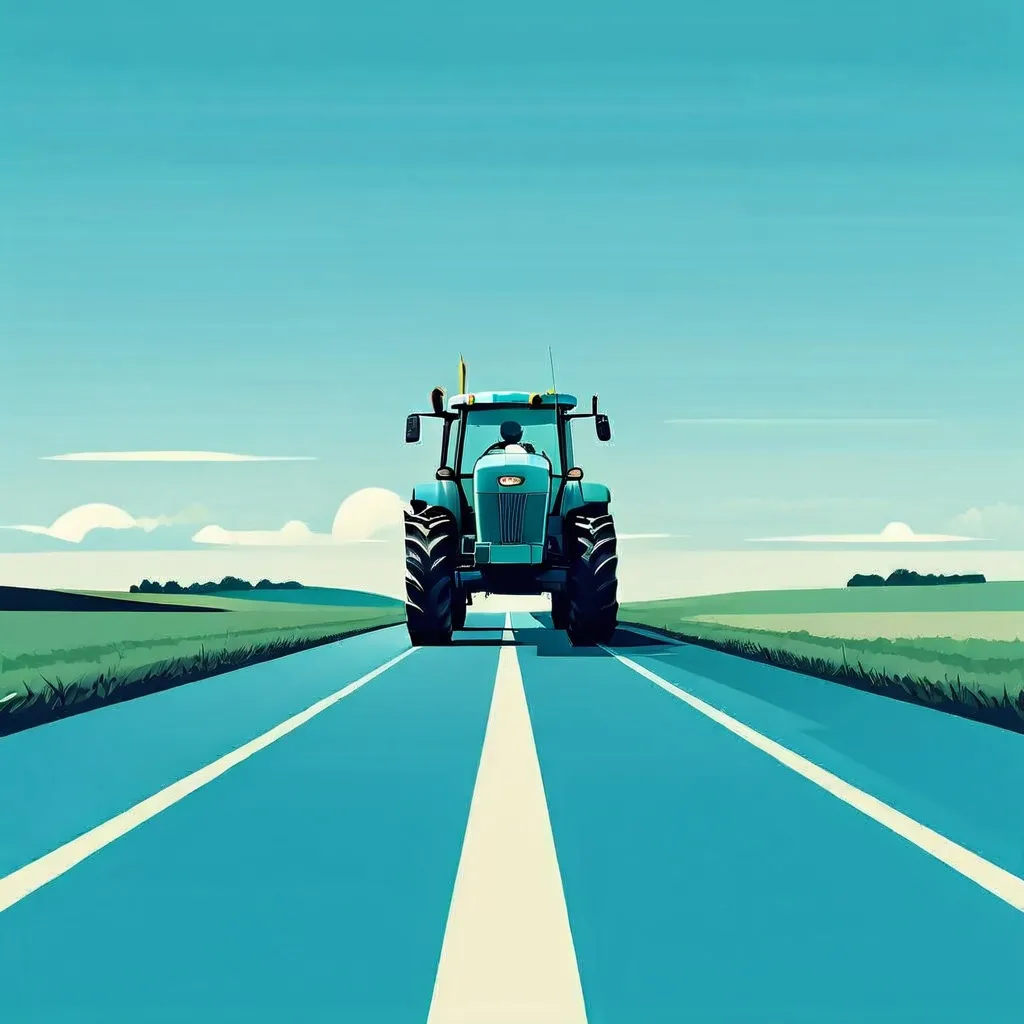
Article content overview
Driving an agricultural tractor, or ciągnik rolniczy, in Poland, especially when it's part of a Category T driving licence entitlement, comes with a unique set of rules and responsibilities. These vehicles, often characterized by their slower speeds and larger dimensions, require special consideration on public roads to ensure the safety of all road users and the efficient flow of traffic. Understanding these specific regulations is not only crucial for safe operation but is also a fundamental requirement for passing your Polish driving theory examination. This guide will delve into the key aspects of Category T driving in Poland, focusing on speed limits, road positioning, and essential knowledge to help you master this specialized area of traffic law.
The Polish driving licence system categorizes vehicles to ensure drivers possess the appropriate skills and knowledge for the type of vehicle they operate. Category T is specifically designed for agricultural tractors and other slow-moving vehicles. This licence permits the holder to drive agricultural tractors, whether independently or as part of a vehicle combination with trailers, and also covers vehicles designated for Category AM (light four-wheelers and mopeds). The minimum age for obtaining a Category T licence is 16 years, making it accessible to younger individuals who may need to operate such machinery for agricultural purposes. It's important to recognize that a ciągnik rolniczy is not just any vehicle; it's a machine that significantly impacts traffic dynamics due to its inherent characteristics.
One of the most critical aspects of driving any vehicle, and particularly slow-moving ones like agricultural tractors, is adhering to the correct speed limits. In Poland, these limits are strictly defined to prevent hazards and manage traffic flow. For an agricultural tractor, whether it is operating alone or towing a trailer, the speed limits are notably lower than for most other vehicle types. It is imperative for drivers to be aware of these limits and to adjust their speed according to the road environment and conditions.
Outside of built-up areas, the general speed limit for an agricultural tractor, even with a trailer, is capped at 30 km/h. This consistent limit underscores the vehicle's slower nature and the need for other traffic to anticipate and manage overtaking maneuvers. Within a strefa zamieszkania (living or residential zone), this limit is further reduced to 20 km/h, reflecting a shared space where pedestrian and lower-speed vehicle activity is prioritized. It is also important to note that a tractor, especially when towing a trailer carrying more than 5 people, has its speed further restricted to 20 km/h. These regulations are frequently tested in theory exams, often with specific scenarios requiring the correct speed selection.
To provide a clear overview, here is a summary of the key speed limits applicable to agricultural tractors in Poland:
| Location/Condition | Speed Limit (km/h) |
|---|---|
| Built-up Area | 30 |
| Outside Built-up Area | 30 |
| Strefa Zamieszkania (Living Zone) | 20 |
| Tractor with trailer (≥ 5 passengers) | 20 |
In Poland, as in most countries, traffic generally moves on the right side of the road. For agricultural tractors and other slow-moving vehicles, this principle is amplified by a specific obligation: to keep as far to the right as is safely possible. This is not merely a suggestion; it is a vital rule designed to facilitate the safe and efficient passage of faster-moving vehicles. By positioning the tractor to the far right, drivers significantly reduce the risk of causing traffic congestion and minimize the danger of head-on collisions during overtaking.
This rule is particularly important on roads with a single lane in each direction, where oncoming traffic needs a clear path. When approaching the crest of a hill or a curve, where visibility is limited, it is strictly forbidden to overtake a slow-moving vehicle like a tractor, emphasizing the need for the tractor driver to ensure they are as far right as possible to be seen and to allow for safe passing by those who have right-of-way. The law expects drivers of agricultural tractors to be considerate of other road users and to actively manage their position to avoid obstructing traffic.
Remember that even if you are driving at the maximum allowed speed for your tractor, if it is significantly slower than the general traffic speed, you are considered a slow-moving vehicle and must position yourself as far right as safely possible to allow others to overtake.
Agricultural tractors, due to their inherent speed limitations and potential impact on traffic, are prohibited from using certain types of roads in Poland. The most significant of these are expressways (drogi ekspresowe) and motorways (autostrady). These high-speed roads are designed for rapid, continuous movement of motorized vehicles, and the presence of a slow-moving tractor would pose an extreme hazard.
Therefore, drivers of agricultural tractors must be vigilant in observing road signage and understanding route restrictions. Entering an expressway or motorway with a tractor is a serious violation of traffic law and can lead to dangerous situations. Always ensure your planned route avoids these high-speed roadways unless specifically permitted by a sign (which is highly unlikely for agricultural tractors). The theory exam will often present questions about these prohibitions to ensure candidates understand where their Category T vehicle is legally allowed to travel.
While agricultural tractors must adhere to general traffic rules, certain signs are particularly pertinent to their operation. These signs either restrict their movement or warn other drivers about their presence.
These prohibition signs are crucial for tractor drivers. Ignoring them can lead to fines and dangerous situations. Understanding their meaning is a common exam topic, as is recognizing the signs that other vehicles might see, such as signs indicating slow-moving vehicles ahead.
When operating an agricultural tractor on Polish public roads, drivers must carry specific documentation and ensure the vehicle meets technical requirements. This is an area that frequently appears in theory exam questions, focusing on preparedness and legal compliance.
A key requirement, often tested, is carrying the correct documentation for the trailer being towed. While the registration document for the tractor itself is important, the law also mandates carrying the retention receipt for the towed trailer's registration document for the period it authorizes its use. This indicates that even if you don't have the physical registration for a trailer, a valid document confirming its authorized use is necessary. Furthermore, ensuring the tractor has successfully passed its last technical inspection is a prerequisite for legal operation. This highlights that compliance is not just about driving correctly, but also about maintaining the vehicle in a roadworthy condition.
Be prepared for exam questions that test your knowledge of required documents for agricultural tractors and their trailers. Failure to carry the correct paperwork can result in penalties.
Operating an agricultural tractor, especially with a trailer, demands careful maneuvering and a heightened sense of awareness. The dimensions, turning radius, and braking characteristics of these vehicles differ significantly from standard cars. When engaging in any maneuver, such as starting from a standstill, turning, or reversing, a thorough assessment of the surrounding environment is paramount. Before moving, always check for pedestrians, cyclists, and other vehicles.
When starting from a stationary position, it is recommended to select the lowest gear and smoothly engage the clutch while gradually increasing engine RPMs. This ensures a controlled start without stalling or sudden jerking. For road positioning, remember the rule of staying as far right as possible. When navigating curves, the "road turns" technique is used, which involves steering to follow the bend of the road.
Additionally, understanding the tractor's drivetrain is important. While most driving on paved roads is done in higher gears, engaging the front-wheel drive (przednie koła napędzane) is typically reserved for situations where increased traction is absolutely necessary, such as overcoming temporary resistance or driving on challenging terrain. It is generally not recommended to engage front-wheel drive on dry, paved roads, and certainly not if the rear wheels are skidding, as this can lead to damage to the drivetrain components. Similarly, using the differential lock (blokada mechanizmu różnicowego) should be done with caution. It is primarily useful for maximizing traction on slippery or uneven surfaces but should be disengaged when turning on dry, paved roads or during high-speed maneuvers, as it can cause excessive tyre wear and strain the transmission.
Navigating intersections is a fundamental part of driving, and tractors are no exception. In Poland, understanding priority rules is critical, especially at unmarked intersections (skrzyżowania równorzędne), where the principle of yielding to the vehicle approaching from the right generally applies. However, as a slow-moving vehicle, a tractor driver must exercise extreme caution. Always be prepared to yield even when you might technically have priority, particularly if the other vehicle is large or seems to be unaware of your presence.
When entering a public road from a private property, a field, or an unpaved road, the tractor driver must always yield to all other traffic on the public road. This is a critical safety rule designed to prevent accidents caused by slow acceleration and potential blind spots. The theory exam often includes scenarios that test this specific obligation, emphasizing the responsibility of the tractor driver to ensure their entry is safe and does not impede existing traffic.
Mastering the rules for driving agricultural tractors in Poland is essential for your Category T theory exam. The examination board, adhering to Polish traffic law, frequently includes questions specifically about slow-moving vehicles. These questions often focus on speed limits, road positioning obligations, prohibited road types, required documentation, and specific maneuvering safety for tractors.
Pay close attention to questions that describe specific road conditions or scenarios, such as approaching an intersection, being overtaken, or entering a public road. These questions are designed to test your understanding of the practical application of the rules. Remember the core principles: safety, predictability, and minimizing obstruction to other road users.
Driving an agricultural tractor in Poland under a Category T licence requires a dedicated understanding of specific road rules. Adhering to the prescribed speed limits, maintaining a position as far right as safely possible, and respecting prohibitions on expressways and motorways are fundamental for safe operation and legal compliance. Furthermore, carrying the correct documentation and ensuring your vehicle is technically sound are non-negotiable aspects of responsible driving. By thoroughly understanding these regulations, as detailed in Polish traffic law and emphasized in the theory examination, you can ensure you are a safe, competent, and compliant driver on Polish roads.
Category T covers agricultural tractors and requires knowledge of specific speed limits (30 km/h generally, 20 km/h in living zones and with trailers carrying 5+ passengers), mandatory right-side road positioning to avoid obstructing traffic, and prohibitions from motorways and expressways. Tractor drivers must yield when entering public roads from private land and carry correct documentation including trailer authorization. The theory exam frequently tests these rules through scenario-based questions on speed selection, road sign recognition, and priority situations.
A short set of high-value points that capture the most important ideas from this article.
Agricultural tractors (ciągnik rolniczy) under Category T must observe a maximum speed of 30 km/h outside built-up areas and 20 km/h in strefa zamieszkania (living zones)
Tractors towing trailers carrying 5 or more passengers are restricted to 20 km/h regardless of location
Tractors are prohibited from motorways (autostrady) and expressways (drogi ekspresowe) due to their slow speed
Drivers must position the tractor as far right as safely possible to allow faster vehicles to overtake
Entering a public road from private property or field always requires yielding to all existing traffic
Speed limits: 30 km/h general, 20 km/h in residential zones and with 5+ passenger trailers
Keep right rule applies to all slow-moving vehicles to facilitate overtaking
Sign B6 directly prohibits agricultural tractors; Sign B5 prohibits heavy goods vehicles and tractors
Documentation must include the trailer's retention receipt confirming authorized use, not just the tractor's registration
Front-wheel drive should not be engaged on dry paved roads; differential lock must be disengaged when turning on dry surfaces
Assuming tractors can use expressways when clearly prohibited by road signs and traffic law
Confusing speed limits for built-up areas with those for strefa zamieszkania (different rules apply)
Entering public roads from fields or private property without properly yielding to all traffic
Using front-wheel drive or differential lock on normal paved road conditions, causing drivetrain damage
Failing to carry the trailer's retention receipt, which is required documentation for towed vehicles
Article content overview
A short set of high-value points that capture the most important ideas from this article.
Agricultural tractors (ciągnik rolniczy) under Category T must observe a maximum speed of 30 km/h outside built-up areas and 20 km/h in strefa zamieszkania (living zones)
Tractors towing trailers carrying 5 or more passengers are restricted to 20 km/h regardless of location
Tractors are prohibited from motorways (autostrady) and expressways (drogi ekspresowe) due to their slow speed
Drivers must position the tractor as far right as safely possible to allow faster vehicles to overtake
Entering a public road from private property or field always requires yielding to all existing traffic
Speed limits: 30 km/h general, 20 km/h in residential zones and with 5+ passenger trailers
Keep right rule applies to all slow-moving vehicles to facilitate overtaking
Sign B6 directly prohibits agricultural tractors; Sign B5 prohibits heavy goods vehicles and tractors
Documentation must include the trailer's retention receipt confirming authorized use, not just the tractor's registration
Front-wheel drive should not be engaged on dry paved roads; differential lock must be disengaged when turning on dry surfaces
Assuming tractors can use expressways when clearly prohibited by road signs and traffic law
Confusing speed limits for built-up areas with those for strefa zamieszkania (different rules apply)
Entering public roads from fields or private property without properly yielding to all traffic
Using front-wheel drive or differential lock on normal paved road conditions, causing drivetrain damage
Failing to carry the trailer's retention receipt, which is required documentation for towed vehicles
Explore related topics, search based questions, and concepts that learners often look up when studying PL Tractor (Cat T) Rules. These themes reflect real search intent and help you understand how this topic connects to wider driving theory knowledge in Poland.
Find clear and practical answers to common questions learners often have about PL Tractor (Cat T) Rules. This section helps explain difficult points, remove confusion, and reinforce the key driving theory concepts that matter for learners in Poland.
Outside built-up areas, the maximum speed for an agricultural tractor in Poland is 30 km/h. In a living zone (strefa zamieszkania), it is reduced to 20 km/h.
No, agricultural tractors (ciągnik rolniczy) are prohibited from using expressways (drogi ekspresowe) and motorways (autostrady) in Poland.
Drivers of tractors and other slow-moving vehicles must keep as far to the right of the roadway as possible to facilitate overtaking by faster vehicles.
Yes, a Category T driving licence in Poland also permits the operation of slow-moving vehicles (pojazd wolnobieżny) and vehicles covered by Category AM (light quadricycles, mopeds), including with trailers.
When an agricultural tractor is towing a trailer carrying 5 people, its speed must not exceed 20 km/h in Poland.
After finding your specific article, continue your targeted learning by exploring related topics or diving deeper into practice questions. Our extensive library ensures you have all the resources needed to confidently prepare for your Polish driving license theory exam. Discover more guides and solidify your understanding of Polish road rules.