
Learn the essential rules for agricultural tractor and trailer lights, reflectors, and warning signs as required by Polish law ('Prawo o ruchu drogowym'). This guide is tailored for the Polish driving theory exam, highlighting key details that candidates must know to ensure visibility and safety. Prepare to demonstrate your understanding of these vital technical requirements.
Article content overview
Ensuring the visibility and safety of agricultural tractors and their trailers on Polish roads is a critical aspect of driving law, and a frequent topic within the Polish driving theory exam. Understanding the specific lighting requirements, reflector placements, and necessary warning signs is not just about compliance with the 'Prawo o ruchu drogowym' (Polish Road Traffic Law); it's about preventing accidents and ensuring smooth traffic flow. This guide will delve into the essential technical conditions that agricultural vehicles must meet, providing you with the knowledge needed to confidently tackle exam questions on this subject and operate safely in real-world conditions.
Agricultural tractors, along with their towed implements and trailers, have distinct lighting needs that differ from standard passenger vehicles. These requirements are designed to make these often slower-moving vehicles more conspicuous to other road users, especially during periods of reduced visibility or at night. Proper functioning of all lights, from basic position lights to indicators and brake lights, is paramount for avoiding hazardous situations.
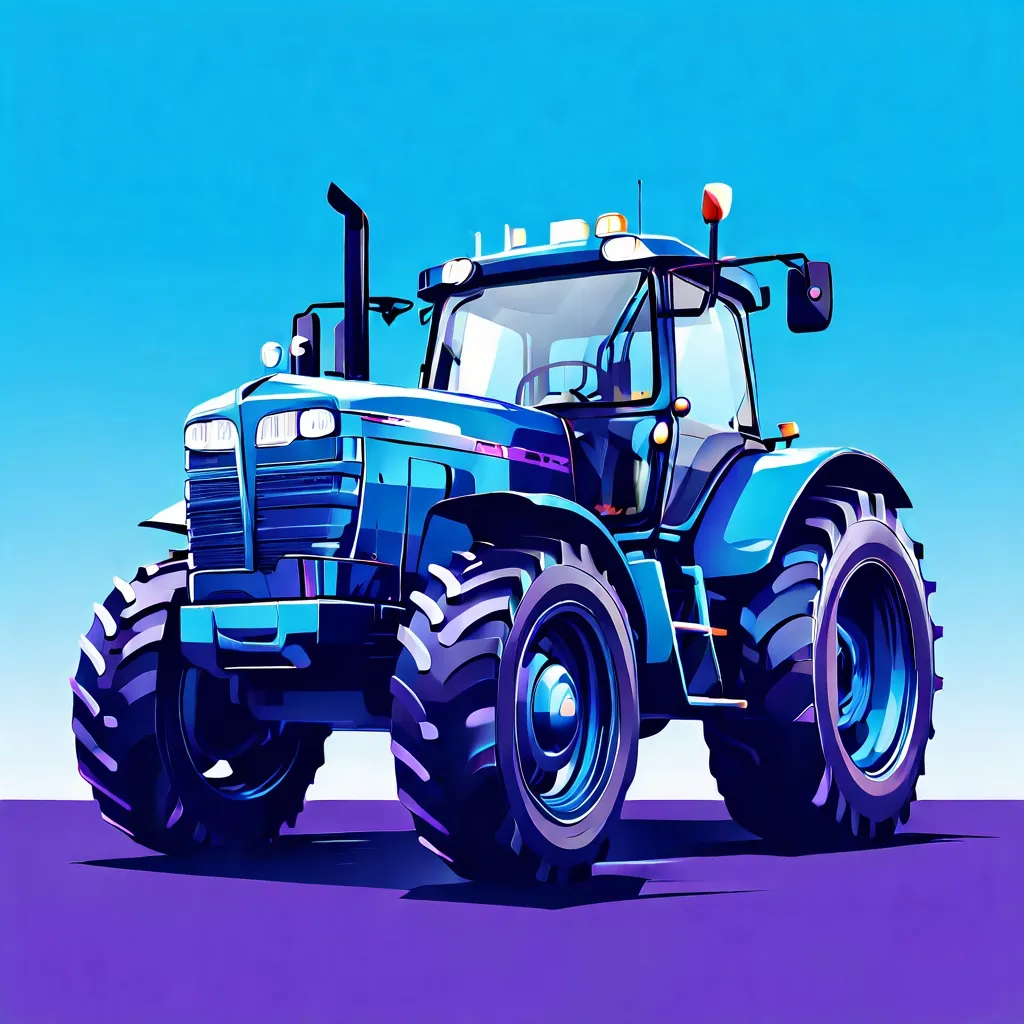
Every agricultural tractor operating on public roads must be equipped with a specific set of lights. This includes front position lights, which emit white light to indicate the vehicle's width, and rear position lights, which emit red light. Crucially, the tractor must also have headlights (dipped beam and main beam) and rear lights. The functionality of these lights is regularly checked during technical inspections, and drivers must ensure they are operational before setting off.
When an agricultural tractor is towing a trailer, the trailer itself must also meet specific lighting standards. This includes rear position lights (red), brake lights, and turn signals (indicators) that correspond to those of the towing tractor. Additionally, depending on the trailer's dimensions, further lighting may be mandated. For instance, if a trailer's width is 1.6 meters or more, it requires front position lights. This ensures that the overall width of the vehicle combination is clearly communicated to other drivers from all angles, a key factor in preventing collisions.
These lights are used to mark the vehicle's presence and dimensions when stationary or moving at low speeds, especially in low visibility conditions. Front position lights are white, and rear position lights are red.
Reflectors play a vital role in passive visibility, reflecting light from other vehicles' headlights back towards their source. For agricultural tractors and their trailers, specific reflector requirements are in place. Rear reflectors are mandatory, and while triangular reflectors are common, Polish regulations permit other shapes as well, though the triangle is a familiar standard. For trailers with a width exceeding 2.1 meters, additional side reflectors, as well as front and rear marker lights (obrysowe), are required to clearly outline the vehicle's full extent, ensuring it is visible from the sides and not just the front or rear.
Pay close attention to exam questions regarding trailer dimensions and the corresponding lighting and reflector requirements. The width of the trailer is often the deciding factor in what additional equipment is necessary.
In specific conditions, or for certain types of agricultural vehicles, additional lighting or warning devices may be required. For instance, when driving an agricultural tractor in thick fog, the use of high beam lights is prohibited, as they can reflect off the fog particles and impair visibility further. Instead, drivers should rely on appropriate fog lights and dipped beam headlights. Furthermore, a warning triangle is a mandatory piece of equipment for most vehicles, including tractors, and must be placed at an appropriate distance behind the vehicle in case of breakdown or hazard.
Beyond lighting and reflectors, agricultural tractors must also be aware of and adhere to specific road signage that may restrict their movement or alert other drivers to their presence. Understanding these signs is crucial for safe navigation and compliance with the 'Prawo o ruchu drogowym'.
Certain road signs are specifically designed to manage traffic flow by restricting slow-moving vehicles, including agricultural tractors. Signs like B-5 ("Zakaz wjazdu samochodów ciężarowych" - No entry for heavy goods vehicles) and B-6 ("Zakaz wjazdu ciągników rolniczych" - No entry for agricultural tractors) are often placed on roads with high traffic volumes where slower vehicles could cause significant congestion. Drivers of agricultural tractors must be vigilant for these signs, particularly on urban routes or main roads where their speed might impede other traffic.
While not explicitly detailed in all provided documents for the tractor itself, it's important to understand the concept of a slow-moving vehicle sign, which is often a triangular marker. In some jurisdictions, agricultural vehicles are required to display a distinctive orange triangular sign at the rear to clearly indicate they are travelling at a reduced speed. This sign serves as an early warning to faster-approaching traffic, encouraging them to adjust their speed and maintain a safe distance. While the provided documents focus more on lighting, awareness of such general slow-moving vehicle identification is beneficial for the exam.
Failure to comply with prohibition signs like B-6 can lead to penalties. Always ensure you understand the meaning of traffic signs and obey them, especially when operating larger or slower vehicles.
Operating an agricultural tractor legally in Poland requires more than just adhering to traffic rules and ensuring proper lighting. Technical documentation and compliance with vehicle condition regulations are also essential.
Agricultural tractors and their trailers must be registered, and this registration document often needs to be presented to competent authorities upon request. For instance, a driver of an agricultural tractor with a registered trailer must be able to present the trailer's registration retention receipt, which confirms its authorized use. Furthermore, vehicles must undergo regular technical inspections to ensure they meet all safety and roadworthiness standards. The frequency of these inspections varies, with initial inspections often due within three years of first registration and subsequent inspections every two years thereafter.
This is a document issued for a vehicle, confirming its registration and eligibility for use on public roads. It contains key information about the vehicle and its owner, and must be carried by the driver.
Specific technical conditions apply to trailers intended for towing by agricultural tractors or slow-moving vehicles. These trailers must meet the general technical requirements for vehicles permitted on the road, as outlined in the relevant sections of the 'Prawo o ruchu drogowym'. This includes ensuring proper functioning of braking systems, lighting, and adherence to dimensions and weight limits. For combined vehicles, such as a car (up to 3.5 tonnes GVW) and a trailer, or a bus and a trailer, the towing vehicle’s registration document may need to contain a specific annotation confirming that the combination has passed a technical inspection.
The Polish driving theory exam, particularly for categories like 'T' (agricultural tractors), frequently includes questions that test a candidate's understanding of vehicle lighting, marking, and the associated regulations. Familiarizing yourself with these technical details is crucial for success.
When preparing for the theory test concerning agricultural tractors, focus on the following areas:
Exam questions often present scenarios involving specific weather conditions or vehicle configurations. Always read the question carefully and consider all relevant regulations before selecting an answer.
To solidify your understanding of agricultural tractor regulations, including lighting and markings, it is highly recommended to practice with specific sets of questions. These practice sets are designed to simulate the actual exam environment and cover the nuances of Polish road law as it applies to these vehicles.
Article content overview
Explore related topics, search based questions, and concepts that learners often look up when studying Polish Tractor Lights & Markings. These themes reflect real search intent and help you understand how this topic connects to wider driving theory knowledge in Poland.
Find clear and practical answers to common questions learners often have about Polish Tractor Lights & Markings. This section helps explain difficult points, remove confusion, and reinforce the key driving theory concepts that matter for learners in Poland.
Agricultural tractors in Poland must be equipped with front and rear position lights, dipped beam headlights, and indicators. They also require rear reflectors and, in conditions of poor visibility, rear fog lights may be necessary.
Yes, agricultural trailers must have lights corresponding to the tractor's requirements, including position lights, brake lights, indicators, and rear reflectors. Trailers wider than 1.6 meters may require additional front position lights, and those exceeding 2.1 meters in width need front and rear marker lights.
Agricultural tractors and their trailers, being slow-moving vehicles, must display a specific triangular warning sign indicating reduced speed. Reflectors are also mandatory, with rear reflectors on trailers often requiring a triangular shape, though other shapes are sometimes permitted.
Drivers of agricultural tractors must use dipped beam headlights (światła mijania) continuously during the day and night in normal visibility conditions. Additional lights like rear fog lights should be used in conditions of poor visibility, while high beam lights should not be used in fog.
When requested by authorities, a driver must present the registration document for the agricultural tractor and a receipt for the registration document retention of the towed trailer. The tractor must also have completed its last technical inspection.
After finding your specific article, continue your targeted learning by exploring related topics or diving deeper into practice questions. Our extensive library ensures you have all the resources needed to confidently prepare for your Polish driving license theory exam. Discover more guides and solidify your understanding of Polish road rules.