
Navigate the complexities of special vehicles in Poland with this essential guide for your driving theory exam. Learn to identify 'pojazd specjalny' and 'pojazd uprzywilejowany', understand their rights of way, and grasp the priority rules that govern their movement. This knowledge is vital for safe driving and passing your Polish theory test.
Article content overview
Navigating the diverse traffic environment in Poland requires a thorough understanding of its rules, especially concerning special vehicles. These vehicles, often distinguished by their unique equipment or purpose, play a critical role in public safety and infrastructure maintenance. For anyone preparing for the Polish driving theory exam, mastering the identification and priority rules associated with 'pojazd specjalny' (special vehicle) and 'pojazd uprzywilejowany' (privileged vehicle) is absolutely essential. This article aims to demystify these concepts, providing the knowledge necessary to drive safely, legally, and to pass your theory test with confidence.
In the context of Polish traffic law, a 'pojazd specjalny' is broadly defined as a vehicle designed and equipped for a specific function that deviates from standard transportation. This category encompasses a wide array of vehicles, from construction equipment like cranes and road pavers to emergency response units and vehicles used for specialized services such as road cleaning or waste collection. Their designation as 'special' means they often operate under specific regulations and may possess unique rights or restrictions on public roads.
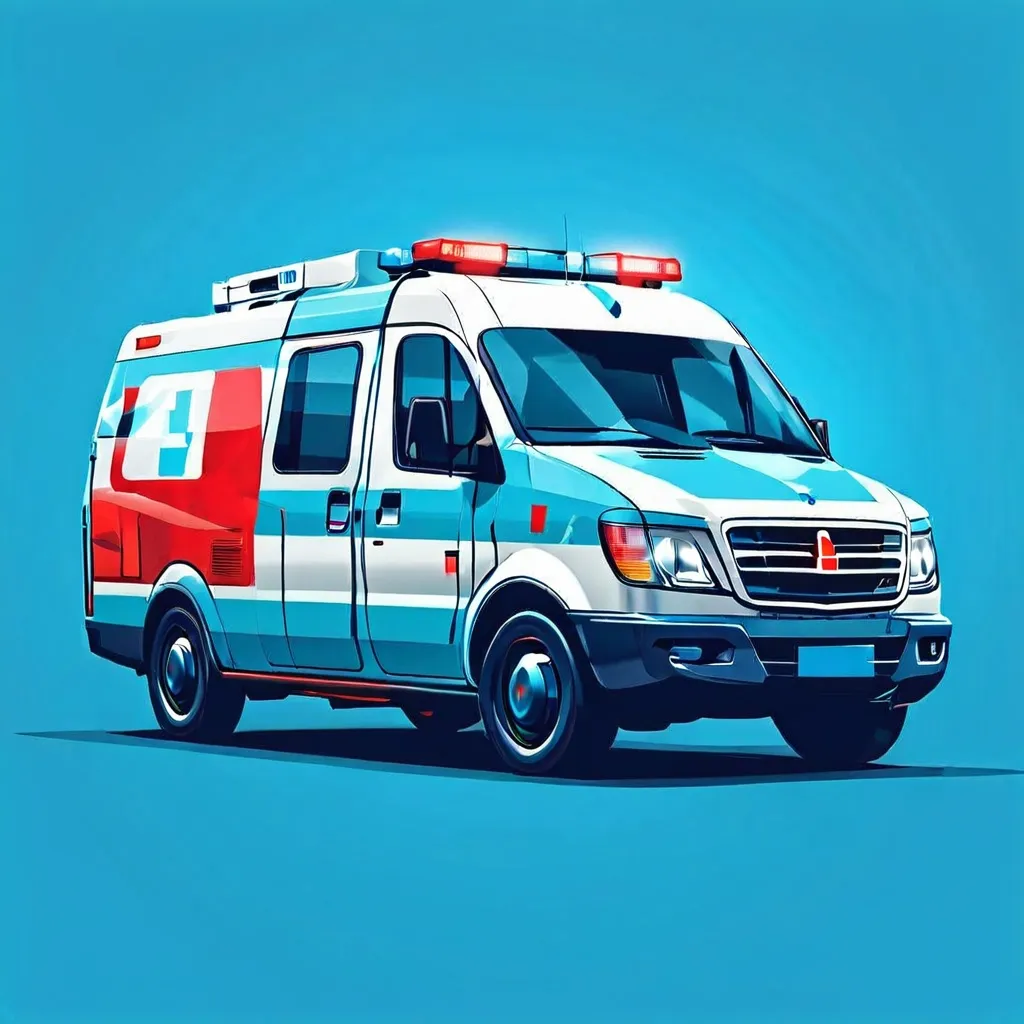
While 'pojazd specjalny' refers to a vehicle's purpose and specialized equipment, the term 'pojazd uprzywilejowany' refers to a vehicle that is actively engaged in urgent duties and is therefore granted special privileges on the road. The law clearly defines a 'pojazd uprzywilejowany' as a vehicle emitting both blue flashing lights and a variable-tone siren. These vehicles include, but are not limited to, emergency ambulances, fire engines, and police cars responding to an emergency. It is crucial to understand that not all special vehicles are privileged vehicles; the privilege is tied to their immediate operational need and the activation of their warning signals.
A vehicle emitting blue flashing lights and audible signals of a variable tone, used by emergency services or other designated authorities during urgent operations. These vehicles have priority on the road when their signals are activated.
A vehicle designed for a specific purpose, equipped with specialized machinery or features. This category includes vehicles for construction, road maintenance, emergency response (when not actively responding to an emergency with lights and sirens), and other specialized functions.
The presence of special and privileged vehicles on the road necessitates a clear understanding of priority rules to ensure safety and facilitate their operations. When a 'pojazd uprzywilejowany' is operating with its signals activated, other road users are legally obligated to yield. This is a fundamental aspect tested in the Polish driving theory exam, as failure to do so can lead to dangerous situations and accidents. The general principle is to provide a clear path for these vehicles to reach their destination as quickly and safely as possible.
When you encounter a 'pojazd uprzywilejowany' with its blue flashing lights and siren activated, your primary responsibility is to yield the right-of-way. This typically involves reducing speed, pulling over to the right edge of the carriageway if safe to do so, and stopping until the vehicle has passed. You must not overtake a privileged vehicle when its signals are active, nor should you attempt to follow it closely. The activation of these signals signifies an immediate need for unimpeded passage, and all other traffic must comply to prevent obstruction.
Remember, the privilege granted to a 'pojazd uprzywilejowany' applies ONLY when its blue flashing lights and audible signals are simultaneously active. If these signals are not activated, it is treated as a regular vehicle, and normal traffic rules apply.
The law in Poland, as outlined in the Road Traffic Act, mandates that drivers of other vehicles must immediately give way to privileged vehicles. This includes not only stopping but also taking all necessary measures to avoid hindering their progress. This duty extends to all road users, including drivers of cars, motorcycles, buses, and even cyclists. The exam often tests scenarios where drivers must decide the correct course of action when encountering such vehicles in various traffic conditions, such as intersections or narrow streets.
For 'pojazd specjalny' vehicles that are not actively responding to an emergency and therefore do not have their 'uprzywilejowany' signals activated, the rules are different. While they are specialized, they generally do not possess inherent priority rights over other traffic unless indicated by traffic signs or signals. For example, a road maintenance vehicle operating with warning lights might be present on the road, but it doesn't automatically grant it priority over regular traffic unless specific signage or temporary traffic control measures are in place.
However, drivers must still exercise caution and be aware of the operational requirements of these vehicles. Some special vehicles might need to perform maneuvers that could temporarily impede traffic, such as a crane lifting equipment or a street sweeper moving slowly. In such cases, drivers should anticipate these movements, maintain a safe distance, and proceed with caution when it is safe and permitted to pass. The key distinction remains the activation of the blue lights and siren for 'pojazd uprzywilejowany' status.
While there isn't a universal set of road signs specifically for all special vehicles, certain signs and markings can indicate their presence or regulate their operation, especially in work zones or areas where they frequently operate. The Polish road sign system includes signs that warn of potential hazards, which can include the presence of construction equipment or other special vehicles. It is important for drivers to be familiar with these warning signs and to adjust their driving behaviour accordingly.
In addition to warning signs, traffic control personnel or temporary traffic lights might be used to manage traffic flow when special vehicles are actively working on or near the roadway. The priority rules governing these temporary situations are usually communicated through these means, and drivers must adhere to the instructions of traffic controllers. Understanding the precedence of traffic signals and controllers over general traffic rules is also a vital component of the Polish driving theory syllabus.
When encountering any vehicle with flashing yellow or orange warning lights, these typically indicate a stationary vehicle or one performing specific work. While not granting priority like blue lights and sirens, they serve as a strong warning to exercise increased caution and be prepared for unexpected movements or reduced speeds.
The Polish driving theory exam frequently features questions designed to test a candidate's understanding of special and privileged vehicles. Common errors arise from confusing the two categories or misunderstanding the conditions under which priority is granted. For instance, a question might present a scenario with a fire engine that is not using its siren or lights, and candidates need to correctly identify that it does not have priority in that specific instance.
Another common pitfall involves understanding the obligation to yield. Candidates might incorrectly assume they only need to yield if it's convenient or safe for them, rather than understanding it as a legal requirement to take active steps to allow the privileged vehicle to pass. The exam also assesses knowledge of what to do when multiple emergency vehicles are present, or how to behave on different types of roads, such as motorways versus urban streets.
Beyond operational rules, the theory exam also covers the documentation drivers must carry. For vehicles registered abroad operating in Poland, specific documents are required.
This document confirms that a vehicle has passed the required technical inspections and meets safety standards. For vehicles registered in Poland, this is typically part of the vehicle's registration certificate ('dowód rejestracyjny'). For foreign-registered vehicles, appropriate proof of compliance with their country of registration's technical standards is necessary.
Exam questions may probe into what documents are necessary when driving a vehicle registered abroad in Poland. This typically includes a document certifying the vehicle's roadworthiness and proof of valid civil liability insurance. The correct answer often involves identifying the document that proves the vehicle is legally and safely fit for the road.
Mastery of the rules concerning special and privileged vehicles is not merely about passing a driving theory test; it is a critical component of ensuring road safety for everyone. By understanding the definitions of 'pojazd specjalny' and 'pojazd uprzywilejowany', recognizing the activated signals, and knowing your obligations to yield, you contribute to a smoother and safer traffic flow in Poland. The Polish Driving License Theory app is designed to equip you with this precise knowledge, covering all aspects tested in the official exam. Continuously practicing and reviewing these rules will build your confidence and competence as a driver on Polish roads.
This article distinguishes between 'pojazd specjalny' (special vehicles with specific functions like construction or road maintenance equipment) and 'pojazd uprzywilejowany' (privileged emergency vehicles), emphasizing that privilege requires simultaneous activation of blue flashing lights and a variable-tone siren. When encountering an active privileged vehicle, drivers must actively yield by reducing speed, pulling to the right, and stopping until it passes - this is a legal requirement, not optional. Special vehicles without activated signals have no automatic priority and must follow standard traffic rules, though caution is needed around their operations. The content also covers related road signs, temporary traffic controls, document requirements for foreign vehicles, and common exam scenarios testing these distinctions.
A short set of high-value points that capture the most important ideas from this article.
'Pojazd uprzywilejowany' (privileged vehicle) is only privileged when BOTH blue flashing lights AND variable-tone siren are simultaneously activated
Not all 'pojazd specjalny' (special vehicles) are privileged vehicles; special vehicles without activated signals have no automatic priority over regular traffic
When encountering an active privileged vehicle, you must reduce speed, pull over to the right edge, and stop until it passes
Construction and maintenance vehicles are special vehicles but operate under normal traffic rules unless specific signage or temporary controls are in place
Yellow or orange warning lights indicate caution and stationary work, not priority rights like blue lights and sirens
Priority for privileged vehicles requires simultaneous activation of blue flashing lights AND variable-tone audible signals - one without the other is insufficient
Special vehicles without activated signals must follow standard traffic rules and do not inherently have priority over other road users
Drivers must take active steps to yield: reduce speed, move right, and stop - not just wait for convenience
Traffic controllers or temporary traffic lights at work zones override general priority rules and must be obeyed
Amber flashing lights warn of stationary vehicles or slow-moving work; they do not grant priority like blue lights and sirens
Confusing 'pojazd specjalny' with 'pojazd uprzywilejowany' and assuming all special vehicles have priority rights
Believing that a vehicle with blue lights but no siren is a privileged vehicle with priority - both signals must be active
Assuming an emergency vehicle (ambulance, fire engine) has priority even when its lights and sirens are switched off
Failing to take active measures to yield and thinking the obligation only applies when convenient
Overlooking document requirements for foreign-registered vehicles, which may need proof of roadworthiness and valid insurance
Article content overview
A short set of high-value points that capture the most important ideas from this article.
'Pojazd uprzywilejowany' (privileged vehicle) is only privileged when BOTH blue flashing lights AND variable-tone siren are simultaneously activated
Not all 'pojazd specjalny' (special vehicles) are privileged vehicles; special vehicles without activated signals have no automatic priority over regular traffic
When encountering an active privileged vehicle, you must reduce speed, pull over to the right edge, and stop until it passes
Construction and maintenance vehicles are special vehicles but operate under normal traffic rules unless specific signage or temporary controls are in place
Yellow or orange warning lights indicate caution and stationary work, not priority rights like blue lights and sirens
Priority for privileged vehicles requires simultaneous activation of blue flashing lights AND variable-tone audible signals - one without the other is insufficient
Special vehicles without activated signals must follow standard traffic rules and do not inherently have priority over other road users
Drivers must take active steps to yield: reduce speed, move right, and stop - not just wait for convenience
Traffic controllers or temporary traffic lights at work zones override general priority rules and must be obeyed
Amber flashing lights warn of stationary vehicles or slow-moving work; they do not grant priority like blue lights and sirens
Confusing 'pojazd specjalny' with 'pojazd uprzywilejowany' and assuming all special vehicles have priority rights
Believing that a vehicle with blue lights but no siren is a privileged vehicle with priority - both signals must be active
Assuming an emergency vehicle (ambulance, fire engine) has priority even when its lights and sirens are switched off
Failing to take active measures to yield and thinking the obligation only applies when convenient
Overlooking document requirements for foreign-registered vehicles, which may need proof of roadworthiness and valid insurance
Explore related topics, search based questions, and concepts that learners often look up when studying Polish Special Vehicle Rules. These themes reflect real search intent and help you understand how this topic connects to wider driving theory knowledge in Poland.
Find clear and practical answers to common questions learners often have about Polish Special Vehicle Rules. This section helps explain difficult points, remove confusion, and reinforce the key driving theory concepts that matter for learners in Poland.
A 'pojazd specjalny' (special vehicle) in Poland is a vehicle designated for a specific task, such as road maintenance, construction, or emergency services, often distinguished by specialized equipment or markings.
'Pojazd uprzywilejowany' (privileged vehicle) refers to vehicles, usually emergency services like police or ambulances, that are actively responding to an emergency and may use special audible and visual signals (blue flashing lights and sirens) to gain priority. A 'pojazd specjalny' is a broader category that may or may not be 'uprzywilejowany'.
When using their blue flashing lights and sirens, 'pojazdy uprzywilejowane' have priority over all other road users. Drivers must immediately yield to them. For other 'pojazdy specjalne', standard priority rules generally apply unless specific regulations state otherwise.
Special vehicles can be recognized by their unique construction, specialized equipment (like cranes, tools, or large tanks), and often by specific markings or signage. 'Pojazdy uprzywilejowane' will be distinguished by flashing blue lights and sirens.
Yes, the Polish driving theory exam includes questions on recognizing and correctly yielding to special vehicles, particularly 'pojazdy uprzywilejowane', to ensure drivers understand their responsibilities and can react safely in traffic.
After finding your specific article, continue your targeted learning by exploring related topics or diving deeper into practice questions. Our extensive library ensures you have all the resources needed to confidently prepare for your Polish driving license theory exam. Discover more guides and solidify your understanding of Polish road rules.