
Driving outside built-up areas in Poland presents specific risks, from wildlife encounters to reduced visibility at night. This article delves into these challenges, explaining how to adapt your speed and maintain vigilance to navigate rural roads safely and successfully. Prepare for potential exam questions on hazard awareness and appropriate responses in these environments.
Article content overview
Driving 'poza obszarem zabudowanym' (outside built-up areas) in Poland presents a unique set of challenges that demand heightened awareness and careful adaptation from drivers. Unlike the structured environments of urban centres or the controlled flow of motorways, rural roads can be unpredictable. This article delves into the critical aspects of rural driving in Poland, focusing on the significant risks posed by animals, the impact of reduced visibility during night driving, and the general unpredictability of these routes. Mastering these elements is not only crucial for your safety but also a vital component for successfully passing your Polish driving theory examination, where hazard perception is heavily scrutinised.
When you leave the confines of a built-up area, the rules of engagement on the road change significantly. Speed limits typically increase, but this freedom comes with a commensurate increase in potential dangers. The Polish road system classifies areas outside built-up zones with different speed restrictions compared to towns and cities, aiming to balance efficient travel with safety. However, the reality of rural roads often means encountering scenarios that legal speed limits alone cannot fully account for. These include poorly maintained surfaces, blind corners, and, most crucially, the potential for sudden appearances of obstacles that require immediate and appropriate driver reaction. Preparing for these eventualities is a core part of the Polish driving theory curriculum, as demonstrated by common exam questions designed to test a driver's foresight and defensive driving capabilities.
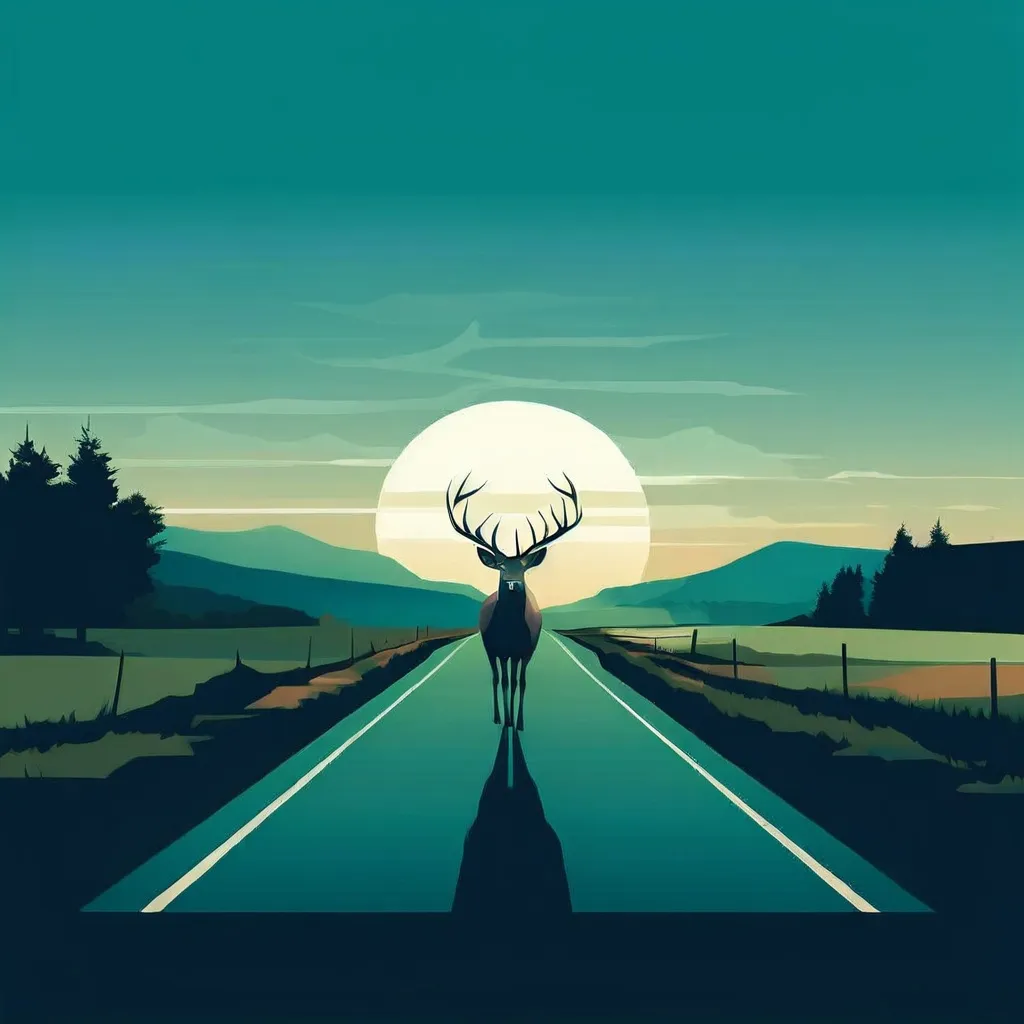
One of the most significant and often underestimated hazards on Polish rural roads is the presence of animals. From common farm animals that may have strayed from fields to wild game that frequently crosses roadways, the risk of a collision is ever-present. It's imperative to understand that animals can appear unexpectedly, often darting out from behind foliage or from fields adjacent to the road. This necessitates a constant state of vigilance from the driver.
The signs indicating potential animal presence serve as a crucial alert, but drivers must not solely rely on them. These warning signs often appear in areas where such encounters are statistically more likely, such as near forests, farmland, or known wildlife corridors. When you see these signs, or even when you don't but are driving through a rural area at dawn, dusk, or night, it is prudent to reduce your speed proactively. This reduction in speed allows more time to react and increases the effectiveness of your braking if an animal suddenly enters your path.
When driving 'poza obszarem zabudowanym' in Poland, especially at dawn, dusk, or during the night, maintain a speed that allows you to safely stop within the visible distance ahead. Be particularly attentive in areas marked with animal warning signs or near forests and farmland.
The ideal scenario is to avoid contact with animals altogether through defensive driving. However, if an animal does appear suddenly, your reaction is critical. The primary rule is to brake firmly and steer only if absolutely necessary to avoid a more severe collision, such as swerving into oncoming traffic or off the road. Swerving sharply can lead to loss of control, rollovers, or head-on collisions, which are often more dangerous than striking an animal. While avoiding the animal is the goal, maintaining control of your vehicle is paramount. After such an event, if safe to do so, you should check for any damage to your vehicle and, if an animal is injured, contact the relevant authorities if it poses a continued hazard.
Driving on rural roads after dark in Poland introduces another layer of complexity: significantly reduced visibility. Unlike well-lit urban streets, rural stretches are often unlit, meaning your headlights are your sole source of illumination. This directly impacts the distance at which you can perceive hazards. The legal speed limits outside built-up areas, which can be up to 90 km/h on single carriageway roads or 100 km/h on dual carriageways, may be entirely inappropriate under conditions of poor visibility.
Never drive at the maximum legal speed limit outside built-up areas at night on unlit roads if your headlights do not allow you to see an obstacle and stop safely before reaching it. The visible distance should dictate your speed, not just the posted limit.
The fundamental principle of safe driving, particularly in low-visibility conditions, is to match your speed to what you can see. This means that on unlit rural roads at night, your effective safe speed will likely be considerably lower than the posted limit. You must be able to stop within the illuminated distance of your headlights. This concept is frequently tested in the Polish driving theory exams, often through questions that present scenarios where you must infer the appropriate speed based on visual cues or described conditions.
Understanding the proper use of vehicle lighting is crucial for both seeing and being seen, especially on rural roads. In Poland, driving with dipped headlights (światła mijania) is mandatory during the day and night. However, on unlit rural roads from dusk till dawn, you may use high beams (światła drogowe) provided they do not dazzle other road users, including oncoming vehicles or pedestrians.
These lights are designed to illuminate the road ahead without causing glare to oncoming drivers or pedestrians. They are mandatory for use at all times in Poland when visibility is reduced or during specific periods.
These lights provide a much longer range of illumination. They are permissible on unlit roads at night but must be switched back to dipped headlights when an oncoming vehicle approaches, when you are following a vehicle, or when there is a risk of dazzling pedestrians.
It is essential to remember the rules for switching to dipped headlights when encountering other vehicles. This includes any vehicle approaching from the opposite direction, any vehicle you are following if there's a risk of dazzling them, and even rail or water vehicles if they are close enough to be affected. Failure to dim your headlights can result in a penalty and, more importantly, a dangerous situation for other road users.
Beyond animals and lighting, Polish rural roads can present a variety of other unpredictable hazards. These might include narrow, winding lanes, poorly maintained surfaces with potholes, gravel verges that are easily damaged, or unexpected changes in road width.
Drivers must maintain a posture of readiness for anything. This involves constantly scanning the road ahead and its verges, anticipating potential dangers, and being prepared to adjust your driving technique accordingly. For instance, on a road with gravel verges, you need to be especially cautious about sudden braking or sharp turns, as the less stable surface can easily lead to a loss of traction.
A recurring theme in Polish driving theory is the importance of prioritising safety over strictly adhering to speed limits when conditions warrant. While higher speed limits apply 'poza obszarem zabudowanym', this is a maximum under ideal conditions. When visibility is poor, the road surface is compromised, or there's an increased risk of encountering animals or other unexpected obstacles, drivers are expected to reduce their speed to a level that ensures control and safety. This is a key area where hazard perception skills are tested, and demonstrating an understanding of this principle is vital for exam success.
The Polish driving theory exam places significant emphasis on hazard perception. Always consider the actual road and environmental conditions when determining a safe speed, rather than solely relying on posted limits, especially when driving outside built-up areas.
To excel in the Polish driving theory exam, particularly concerning rural driving, focus on understanding the 'why' behind the rules. Questions often assess your ability to anticipate dangers and make safe decisions in complex situations. This includes recognizing the implications of different warning signs, understanding the impact of visibility on safe speeds, and knowing how to react to common rural hazards.
Mastering the nuances of driving 'poza obszarem zabudowanym' in Poland is essential for developing into a safe and competent driver. By understanding the risks associated with animals, reduced visibility at night, and the general unpredictability of rural routes, you can significantly enhance your safety and your preparedness for the challenges ahead, both on the road and in your theory exam.
Driving outside built-up areas in Poland presents unique hazards that require drivers to go beyond simply following posted speed limits. Animal encounters, particularly with farm and wild animals, demand constant vigilance and proactive speed reduction—especially near forests, farmland, and areas marked with A18a/A18b signs. Night driving on unlit rural roads fundamentally changes safe speed parameters, as you must always be able to stop within your headlights' illuminated distance. Proper use of dipped headlights is mandatory at all times in Poland, while high beams are only permitted on unlit roads when they won't dazzle oncoming traffic or pedestrians. The Polish theory exam heavily tests hazard perception in these scenarios, particularly your ability to recognise when actual conditions require slower speeds than the legal maximum.
A short set of high-value points that capture the most important ideas from this article.
Speed must always be adapted to actual visibility conditions, not just posted limits, especially at night on unlit rural roads
Animal warning signs (A18a for farm animals, A18b for wild animals) indicate areas where encounters are statistically more likely—reduce speed proactively in these zones
When an animal appears suddenly, brake firmly; only steer to avoid a worse collision since swerving can cause loss of control or rollover
You must always be able to stop within the distance your headlights illuminate on unlit rural roads at night
High beams (światła drogowe) are permitted on unlit rural roads but must be switched to dipped when meeting oncoming traffic or following another vehicle
Poza obszarem zabudowanym allows up to 90 km/h on single carriageways and 100 km/h on dual carriageways, but these are maximums under ideal conditions only
Światła mijania (dipped headlights) are mandatory for all vehicles in Poland at all times when visibility is reduced
After avoiding an animal incident, check your vehicle for damage and contact authorities if an injured animal poses a continued hazard
Reduced visibility at night means your effective safe speed will likely be considerably lower than the posted limit
On roads with gravel verges, avoid sudden braking or sharp turns as the unstable surface can cause loss of traction
Assuming posted speed limits are always safe at night without considering actual headlight illumination distance
Swerving sharply to avoid an animal, which risks loss of vehicle control, rollovers, or head-on collisions
Not switching from high beams to dipped headlights when an oncoming vehicle approaches, dazzling other drivers
Relying solely on animal warning signs rather than maintaining constant vigilance in all rural areas
Driving at maximum legal speed when visibility is poor, rather than matching speed to what you can see and stop within
Article content overview
A short set of high-value points that capture the most important ideas from this article.
Speed must always be adapted to actual visibility conditions, not just posted limits, especially at night on unlit rural roads
Animal warning signs (A18a for farm animals, A18b for wild animals) indicate areas where encounters are statistically more likely—reduce speed proactively in these zones
When an animal appears suddenly, brake firmly; only steer to avoid a worse collision since swerving can cause loss of control or rollover
You must always be able to stop within the distance your headlights illuminate on unlit rural roads at night
High beams (światła drogowe) are permitted on unlit rural roads but must be switched to dipped when meeting oncoming traffic or following another vehicle
Poza obszarem zabudowanym allows up to 90 km/h on single carriageways and 100 km/h on dual carriageways, but these are maximums under ideal conditions only
Światła mijania (dipped headlights) are mandatory for all vehicles in Poland at all times when visibility is reduced
After avoiding an animal incident, check your vehicle for damage and contact authorities if an injured animal poses a continued hazard
Reduced visibility at night means your effective safe speed will likely be considerably lower than the posted limit
On roads with gravel verges, avoid sudden braking or sharp turns as the unstable surface can cause loss of traction
Assuming posted speed limits are always safe at night without considering actual headlight illumination distance
Swerving sharply to avoid an animal, which risks loss of vehicle control, rollovers, or head-on collisions
Not switching from high beams to dipped headlights when an oncoming vehicle approaches, dazzling other drivers
Relying solely on animal warning signs rather than maintaining constant vigilance in all rural areas
Driving at maximum legal speed when visibility is poor, rather than matching speed to what you can see and stop within
Explore related topics, search based questions, and concepts that learners often look up when studying Polish Rural Road Hazards. These themes reflect real search intent and help you understand how this topic connects to wider driving theory knowledge in Poland.
Find clear and practical answers to common questions learners often have about Polish Rural Road Hazards. This section helps explain difficult points, remove confusion, and reinforce the key driving theory concepts that matter for learners in Poland.
Outside built-up areas, the general speed limit is 90 km/h on single-carriageway, two-way roads. On roads with two carriageways and at least two lanes per direction, the limit is 100 km/h. However, always adapt your speed to actual conditions, especially at night or when visibility is reduced.
Rural roads in Poland, especially 'poza obszarem zabudowanym', often have wildlife crossing. This includes both wild animals and farm animals. Drivers must be prepared for sudden appearances, particularly at dawn, dusk, and night, by reducing speed and increasing vigilance, as indicated by warning signs like A-18a (farm animals) and A-18b (wild animals).
On unlit rural roads at night, visibility is severely limited. Drivers must use appropriate lights (dipped or high beams when safe) and significantly reduce speed to ensure they can react to unlit obstacles, such as animals or poor road surfaces. Exam questions often test this understanding, emphasizing that maximum speed limits should not be used when visibility is poor.
Yes, Poland uses warning signs to alert drivers to potential animal encounters. Sign A-18a warns of farm animals, while sign A-18b warns of wild animals. Recognizing and reacting appropriately to these signs by reducing speed is crucial for safe driving and passing the theory exam.
After finding your specific article, continue your targeted learning by exploring related topics or diving deeper into practice questions. Our extensive library ensures you have all the resources needed to confidently prepare for your Polish driving license theory exam. Discover more guides and solidify your understanding of Polish road rules.