
This article provides a clear breakdown of what vehicles fall under the Polish Category T driving licence, covering agricultural tractors, slow-moving vehicles, and those in Category AM. Understanding these specific entitlements is vital for theory test success in Poland, ensuring you correctly identify vehicles and avoid common mistakes related to these categories.
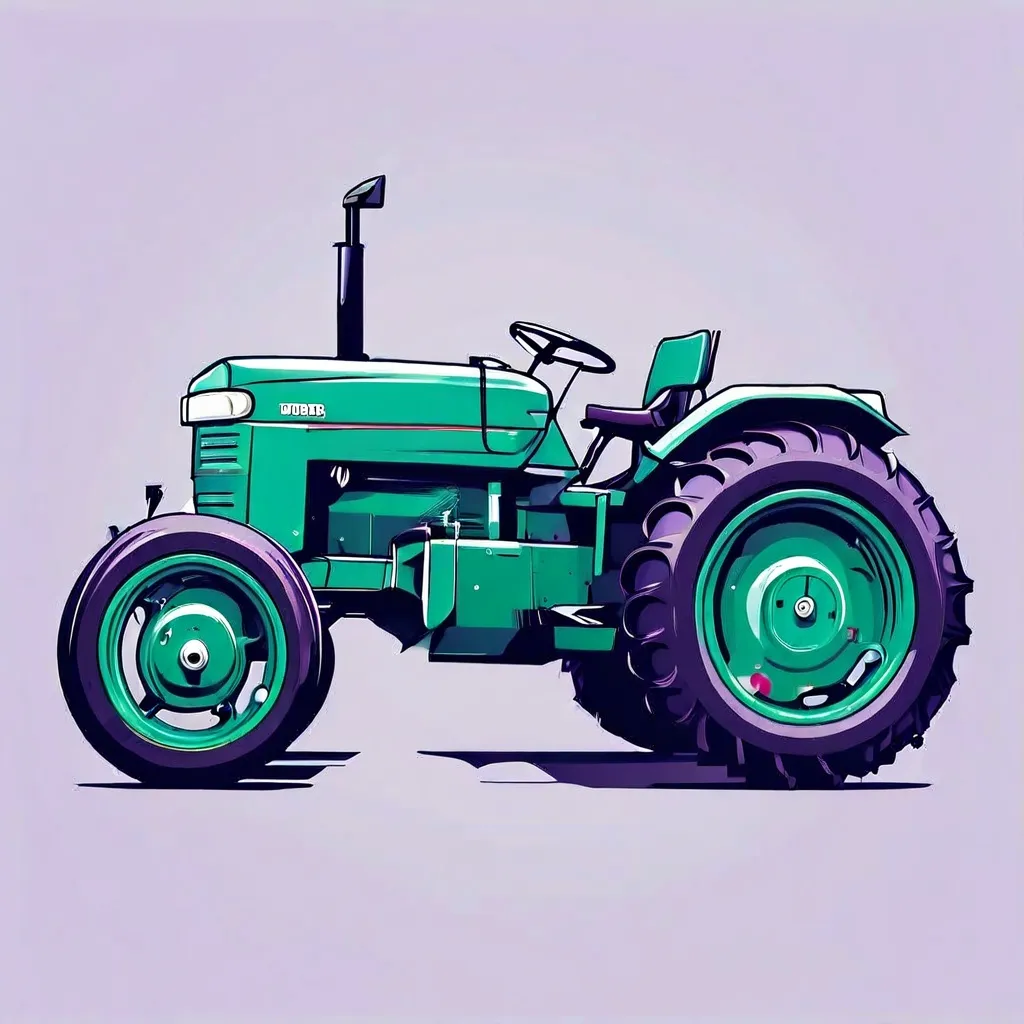
Article content overview
The Polish driving licence system categorises vehicles to ensure drivers possess the appropriate skills and knowledge for different types of machinery and road usage. Among these, Category T holds a distinct position, primarily focused on agricultural and slow-moving vehicles. Understanding the precise scope of Category T entitlements is not only crucial for legal operation of these vehicles but is also a frequently tested area in the Polish driving theory examination. Many learners find themselves confused about which specific vehicles fall under this category and how it differs from more common licences like Category B. This article aims to provide a comprehensive breakdown of Category T, clarifying its entitlements and highlighting common points of confusion to help you pass your theory test with confidence.
Category T of the Polish driving licence is specifically designed for individuals who intend to operate agricultural tractors, slow-moving vehicles, and certain vehicles classified under Category AM. This category acknowledges the unique operational requirements and road presence of these machines, which often differ significantly from standard passenger vehicles. The legislation governing road traffic in Poland, particularly the "Prawo o ruchu drogowym" (Road Traffic Law) and related regulations, precisely defines the scope of each licence category to maintain road safety and order. For Category T, the emphasis is on vehicles used for agricultural purposes or those with inherently limited speed capabilities.
The primary entitlement granted by a Category T driving licence is the ability to operate a farm tractor or a slow-moving vehicle. This extends to operating these vehicles as part of a larger vehicle combination. Specifically, a Category T licence allows you to drive:
The distinction between Category T and other driving licence categories, most notably Category B, is fundamental. Category B, the standard licence for passenger cars, has a much broader scope regarding passenger and light goods transport but offers no entitlement to drive agricultural or specialised slow-moving machinery. Conversely, Category T's focus is narrow and specific, concentrating on machinery that often operates at lower speeds and may have different road handling characteristics. It is a common error for learners to assume their Category B licence covers tractors or similar vehicles, which is incorrect under Polish law.
While Category B allows you to drive vehicles with a permissible total mass of up to 3.5 tonnes (excluding motorcycles and buses), and combinations with light trailers, it explicitly excludes tractors and most slow-moving vehicles. If you wish to legally operate a farm tractor, even on public roads for non-agricultural purposes, a Category T licence is a prerequisite. Similarly, if your work involves operating slow-moving construction or maintenance vehicles on public roads, Category T is the relevant licence. The inclusion of Category AM vehicles under Category T is a practical concession, recognising that individuals operating agricultural machinery may also need to move smaller utility vehicles.
Obtaining a Category T driving licence in Poland involves meeting specific age and training requirements, much like any other licence category. These requirements are designed to ensure that applicants are mature enough and adequately trained to handle the vehicles they will be permitted to drive.
The minimum age requirement for obtaining a Category T driving licence is 16 years old. However, for individuals who have not yet reached the age of 18, a written consent from a parent or legal guardian is mandatory. This condition is consistent with other categories suitable for younger drivers, such as AM and A1, reinforcing the principle of requiring parental oversight for minors acquiring driving privileges.
To be eligible for the Category T licence, applicants must complete a mandatory training course. This course covers both theoretical knowledge, encompassing traffic rules, road signs, and safe driving practices relevant to tractors and slow-moving vehicles, and practical driving skills. Upon successful completion of the training, candidates must pass a state examination, which includes both a theoretical and a practical component, administered by a Provincial Road Traffic Centre (Wojewódzki Ośrodek Ruchu Drogowego - WORD).
The Polish driving theory test frequently assesses a candidate's understanding of vehicle categories. Questions concerning Category T are designed to ensure drivers can correctly identify which licence is needed for specific vehicles and to prevent confusion with other categories. Expect questions that present a scenario or a specific vehicle type and ask which licence category is required to operate it legally.
A common exam question might present a scenario involving a farm tractor being used on a public road. The options could include Category B, Category T, or even other irrelevant categories. The correct answer will always be Category T. Similarly, you might encounter questions about slow-moving vehicles, such as construction machinery or specialised agricultural equipment operating on a roadway. It is vital to recognise that these fall under Category T entitlements.
Another area where learners can make mistakes is the combination of vehicles. For instance, a question might describe a tractor pulling two trailers. Understanding that Category T covers combinations of tractors with trailers, and that this applies within Poland, is key to answering correctly. The exclusion of general lorries (tir) or standard cars is also a critical distinction to remember.
As mentioned, a Category T licence also confers entitlements related to Category AM. This means that individuals holding a Category T licence are permitted to operate vehicles classified under Category AM, which include mopeds and light quadricycles. This allowance can be particularly beneficial for farmers or individuals working with agricultural machinery who may also need to use smaller, lighter vehicles for transport or commuting.
Category AM vehicles are defined as:
The ability to drive these vehicles with a Category T licence is specific to the territory of Poland. This means that while you can operate tractors and slow-moving vehicles as part of a combination with trailers within Poland, the AM entitlements, including any trailer combinations for AM vehicles, are also confined to Polish roads.
To solidify your understanding and prepare effectively for the theory exam, familiarise yourself with the following key terms related to Category T entitlements in Poland.
A thorough understanding of Category T entitlements is a non-negotiable aspect of passing the Polish driving theory examination. By correctly identifying the specific vehicles you can operate with this licence – farm tractors, slow-moving vehicles, and Category AM vehicles, including certain combinations – you will be well-equipped to answer complex questions. Always remember the crucial distinction between Category T and Category B, and be aware of the age and training requirements. Mastering these details will not only help you pass your exam but also ensure you drive legally and safely on Polish roads.
Polish Category T driving licence covers agricultural tractors, slow-moving vehicles (limited to 25 km/h), and their trailer combinations, as well as Category AM vehicles (mopeds and light quadricycles) within Poland. It is entirely separate from Category B – a standard car licence does not authorise driving tractors or slow-moving machinery. Candidates must be at least 16 years old (with parental consent if under 18) and pass both theoretical and practical exams administered by WORD. Exam questions frequently test the ability to distinguish Category T from Category B and correctly identify which vehicles require which licence category.
A short set of high-value points that capture the most important ideas from this article.
Category T licence entitles you to drive farm tractors, slow-moving vehicles (max 25 km/h), and their combinations with trailers
Category T does NOT overlap with Category B – a car licence does not cover tractors or slow-moving machinery
Category T also covers Category AM vehicles (mopeds and light quadricycles) within Poland
Slow-moving vehicles are defined as machinery that cannot exceed 25 km/h by design, used in construction, maintenance, or agriculture
Vehicle combinations with multiple trailers are permitted under Category T as long as they meet legal operational parameters
Minimum age for Category T is 16 years; under-18s need written parental consent
Light quadricycles (czterokołowce lekkie) are limited to 45 km/h, max 350 kg unladen weight, max 4 kW engine output
The WORD (Wojewódzki Ośrodek Ruchu Drogowego) administers the state theory and practical exams for Category T
AM entitlements under Category T apply only within Polish territory
Slow-moving vehicles are distinct from standard vehicles due to their inherently limited maximum speed of 25 km/h
Assuming a Category B licence allows driving a farm tractor or slow-moving vehicle – it does not
Confusing light quadricycles with more powerful quad bikes that fall under different licence categories
Thinking Category T and Category B have overlapping entitlements when they are mutually exclusive
Overlooking that AM vehicle trailer entitlements apply only in Poland, not abroad
Misidentifying an agricultural utility vehicle as a standard car requiring Category B instead of Category T
Article content overview
A short set of high-value points that capture the most important ideas from this article.
Category T licence entitles you to drive farm tractors, slow-moving vehicles (max 25 km/h), and their combinations with trailers
Category T does NOT overlap with Category B – a car licence does not cover tractors or slow-moving machinery
Category T also covers Category AM vehicles (mopeds and light quadricycles) within Poland
Slow-moving vehicles are defined as machinery that cannot exceed 25 km/h by design, used in construction, maintenance, or agriculture
Vehicle combinations with multiple trailers are permitted under Category T as long as they meet legal operational parameters
Minimum age for Category T is 16 years; under-18s need written parental consent
Light quadricycles (czterokołowce lekkie) are limited to 45 km/h, max 350 kg unladen weight, max 4 kW engine output
The WORD (Wojewódzki Ośrodek Ruchu Drogowego) administers the state theory and practical exams for Category T
AM entitlements under Category T apply only within Polish territory
Slow-moving vehicles are distinct from standard vehicles due to their inherently limited maximum speed of 25 km/h
Assuming a Category B licence allows driving a farm tractor or slow-moving vehicle – it does not
Confusing light quadricycles with more powerful quad bikes that fall under different licence categories
Thinking Category T and Category B have overlapping entitlements when they are mutually exclusive
Overlooking that AM vehicle trailer entitlements apply only in Poland, not abroad
Misidentifying an agricultural utility vehicle as a standard car requiring Category B instead of Category T
Explore related topics, search based questions, and concepts that learners often look up when studying Poland: Category T Entitlements. These themes reflect real search intent and help you understand how this topic connects to wider driving theory knowledge in Poland.
Find clear and practical answers to common questions learners often have about Poland: Category T Entitlements. This section helps explain difficult points, remove confusion, and reinforce the key driving theory concepts that matter for learners in Poland.
A Category T driving licence in Poland allows you to drive agricultural tractors or slow-moving vehicles, any combination of these with a trailer (or trailers), and vehicles covered by Category AM (light quadricycles, mopeds).
No, a Category T licence is specifically for agricultural tractors, slow-moving vehicles, and Category AM vehicles. It does not permit you to drive standard passenger cars; for those, you would need a Category B licence.
The minimum age to obtain a Category T driving licence in Poland is 16 years old, with parental or guardian consent required if you are under 18.
Yes, a Polish Category T driving licence includes entitlements for vehicles covered by Category AM, which includes mopeds and light quadricycles.
With a Category T licence in Poland, you can drive an agricultural tractor or a slow-moving vehicle combined with a trailer (or trailers). This also applies to Category AM vehicles with a trailer.
After finding your specific article, continue your targeted learning by exploring related topics or diving deeper into practice questions. Our extensive library ensures you have all the resources needed to confidently prepare for your Polish driving license theory exam. Discover more guides and solidify your understanding of Polish road rules.