
Mastering the rules regarding electric bicycles is a key component of your Portuguese driving theory exam preparation, as they are considered vulnerable road users under the law. This guide breaks down the legal definition of a 'velocipede', the critical 25 km/h limit for motor assistance, and your responsibilities as a driver when sharing the road with cyclists. You will learn how to maintain safety, respect priority, and avoid common legal pitfalls that frequently appear in IMT testing scenarios.
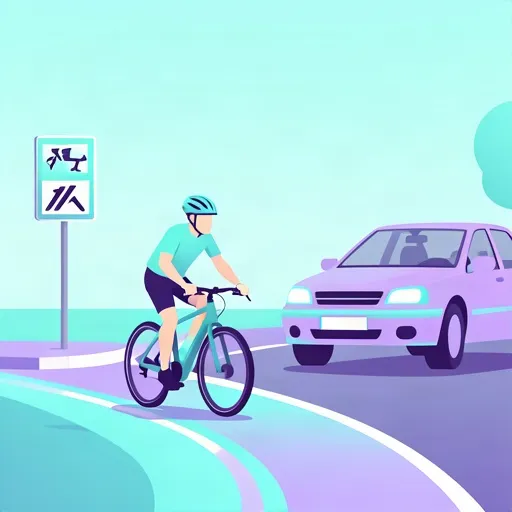
Article content overview
Navigating the streets of Portugal requires a thorough understanding of the various road users you will encounter. As an aspiring driver, you must recognize that electric bicycles are not merely trends; they are officially recognized participants in traffic, governed by specific legislation within the Código da Estrada. Understanding the legal distinction between a compliant "velocipede" and a prohibited motorized vehicle is vital for both your practical driving safety and your success in the IMT theory exam.
In Portugal, the law distinguishes between vehicles based on their power output and speed capabilities. To be classified as a "velocipede," an electric bicycle must meet precise technical criteria. Specifically, it must be equipped with an auxiliary electric motor with a maximum continuous power output of 0.25 kW. Crucially, this power assistance must be reduced progressively as the vehicle gains speed and must cut off completely when the bicycle reaches 25 km/h, or sooner if the rider stops pedaling.
If an electric cycle exceeds these technical specifications—for instance, if it can reach higher speeds or has a more powerful motor—it is no longer considered a velocipede under Portuguese law. Such vehicles often fail to meet the safety homologation requirements for public roads and are generally prohibited from circulation. For theory exam purposes, always remember that only those vehicles adhering to the 0.25 kW and 25 km/h threshold are granted the legal rights and responsibilities of a bicycle.
A bicycle equipped with an auxiliary electric motor that provides assistance only while pedaling, has a maximum output of 0.25 kW, and ceases assistance at 25 km/h. These are legally treated the same as standard bicycles.
As a driver of a motor vehicle, you share the road with cyclists who are considered vulnerable road users. When you encounter bicycles or e-bikes, your primary responsibility is to ensure their safety through defensive driving practices. This includes respecting their right to space on the road and being particularly vigilant at intersections, roundabouts, and near pedestrian crossings.
When overtaking a cyclist, the Código da Estrada mandates that you maintain a sufficient lateral distance to prevent accidents caused by wind turbulence or sudden swerving by the rider. Blocking cycle lanes or obstructing passages reserved for velocipedes is a common legal infraction and a frequent topic in exam questions regarding road etiquette. Always anticipate that a cyclist might need to move toward the center of the lane to avoid hazards, such as potholes or parked vehicle doors.
While the law does not mandate the use of a helmet for riders of standard pedelecs (electric bicycles that meet the definition of a velocipede), it is an essential piece of safety equipment that is strongly encouraged. For your theory exam, differentiate between what is legally required and what constitutes best practice. Cyclists should ensure they have proper lighting and reflectors when riding in low-visibility conditions, such as at night or in tunnels.
Remember for your theory exam: if a cyclist is using a designated "passagem para velocípedes" (bicycle crossing), you must grant them priority if the signalization requires it. Failure to respect the rights of vulnerable users is a significant point of focus for IMT testing.
To clarify the differences in vehicle categorization, the following table summarizes the legal standing of various light mobility devices often found on Portuguese roads.
| Vehicle Type | Power Limit | Speed Limit | License Required |
|---|---|---|---|
| Standard Bicycle | N/A | Human Power | No |
| Electric Velocipede | 0.25 kW | 25 km/h | No |
| Moped / Ciclomotor | Up to 4 kW | 45 km/h | Yes (AM/A) |
Theory exams frequently test your knowledge of how to behave when sharing space with these vehicles. You might face questions about when to yield, how to interpret road markings related to cycle lanes, or the specific definitions that separate a legal e-bike from an illegal motorized scooter. Always answer based on the principle of protection for the most vulnerable party on the road.
This article explains the legal classification of electric bicycles as velocipedes under Portuguese law, requiring strict adherence to a 0.25 kW maximum power output and a 25 km/h motor cut-off speed. Drivers must understand that only vehicles meeting these criteria enjoy the same rights as standard bicycles, while more powerful electric cycles are classified differently and may require licensing. The content emphasises that cyclists are vulnerable road users deserving defensive driving practices, including maintaining adequate lateral distance when overtaking and respecting priority at cycle crossings. Key exam topics include the distinction between velocipedes and ciclomotors, the procedure for safely passing cyclists, and understanding specific terminology from the Código da Estrada such as passagem para velocípedes and homologation requirements.
A short set of high-value points that capture the most important ideas from this article.
An electric bicycle qualifies as a velocipede only if its motor cuts off at 25 km/h and has a maximum continuous power of 0.25 kW
Vehicles exceeding these thresholds are classified as mopeds or ciclomotors and require a driving licence
Cyclists are classified as vulnerable road users and drivers must grant them priority at designated crossings
A lateral safety distance must be maintained when overtaking cyclists to prevent accidents from wind turbulence or sudden swerving
Electric velocipedes are legally treated the same as standard bicycles under the Código da Estrada
The 0.25 kW power limit and 25 km/h cut-off threshold define a legal velocipede in Portugal
Motor assistance must reduce progressively and cease when the bicycle reaches 25 km/h or when the rider stops pedaling
Blocking cycle lanes or obstructing passagens para velocípedes is a legal infraction
Helmet use is strongly encouraged but not legally mandated for velocipede riders
Vehicles exceeding the 0.25 kW/25 km/h limits require safety homologation for public road use
Confusing a compliant e-bike with a prohibited motorized scooter or moped due to unfamiliarity with power thresholds
Assuming cyclists must always stay on the far right of the road when they may move toward the centre to avoid hazards
Forgetting that motor assistance rules apply only while pedaling, not when the rider stops pedaling
Believing all electric bicycles require a licence, when only those exceeding velocipede limits do
Overlooking the requirement to check for designated cycle crossings and yield priority accordingly
Article content overview
A short set of high-value points that capture the most important ideas from this article.
An electric bicycle qualifies as a velocipede only if its motor cuts off at 25 km/h and has a maximum continuous power of 0.25 kW
Vehicles exceeding these thresholds are classified as mopeds or ciclomotors and require a driving licence
Cyclists are classified as vulnerable road users and drivers must grant them priority at designated crossings
A lateral safety distance must be maintained when overtaking cyclists to prevent accidents from wind turbulence or sudden swerving
Electric velocipedes are legally treated the same as standard bicycles under the Código da Estrada
The 0.25 kW power limit and 25 km/h cut-off threshold define a legal velocipede in Portugal
Motor assistance must reduce progressively and cease when the bicycle reaches 25 km/h or when the rider stops pedaling
Blocking cycle lanes or obstructing passagens para velocípedes is a legal infraction
Helmet use is strongly encouraged but not legally mandated for velocipede riders
Vehicles exceeding the 0.25 kW/25 km/h limits require safety homologation for public road use
Confusing a compliant e-bike with a prohibited motorized scooter or moped due to unfamiliarity with power thresholds
Assuming cyclists must always stay on the far right of the road when they may move toward the centre to avoid hazards
Forgetting that motor assistance rules apply only while pedaling, not when the rider stops pedaling
Believing all electric bicycles require a licence, when only those exceeding velocipede limits do
Overlooking the requirement to check for designated cycle crossings and yield priority accordingly
Explore related topics, search based questions, and concepts that learners often look up when studying Electric Bicycle Road Rules. These themes reflect real search intent and help you understand how this topic connects to wider driving theory knowledge in Portugal.
Find clear and practical answers to common questions learners often have about Electric Bicycle Road Rules. This section helps explain difficult points, remove confusion, and reinforce the key driving theory concepts that matter for learners in Portugal.
Under the Código da Estrada, an electric bicycle is classified as a 'velocipede' if it is equipped with an auxiliary electric motor with a maximum continuous power of 0.25 kW, where power is progressively reduced as speed increases and cut off entirely at 25 km/h or when the rider stops pedaling.
No. Vehicles that exceed 0.25 kW of power or provide assistance above 25 km/h do not meet the legal definition of a 'velocipede'. Consequently, they are not authorized for use on public roads as they lack the required regulatory framework for such categories.
While the law does not strictly mandate helmet use for standard electric bicycles (pedelecs) meeting the 'velocipede' criteria, it is highly recommended for personal safety and is considered best practice for all cyclists.
You must respect their priority where applicable, maintain a safe lateral distance when overtaking, and ensure you do not block cycle lanes or designated crossings for velocipedes, as these are vulnerable road users.
If you haven't found what you're looking for, use our powerful article search to explore related topics, refine your understanding of Portuguese road rules, or discover new insights for your IMT driving exam preparation. Continue building your knowledge effectively.