
Electric scooters and similar mobility devices are increasingly common on Portuguese roads, presenting unique challenges for both their riders and motorists. This guide breaks down the specific regulations defined in the Código da Estrada, focusing on technical compliance and the defensive driving behaviors necessary to safely anticipate these users at intersections and roundabouts.
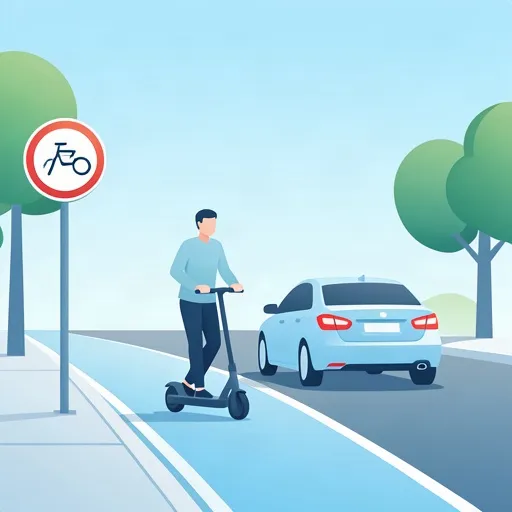
Article content overview
The rapid rise of electric scooters and other personal mobility devices (PMDs) has significantly transformed urban traffic in Portugal. As a learner driver, it is essential to understand that these devices are not just casual toys; they are subject to specific legal frameworks within the Código da Estrada. Understanding how to share the road with these users is a vital component of both your IMT theory exam preparation and your future safety as a driver.
In Portugal, the Código da Estrada provides strict definitions to distinguish between various types of two-wheeled or personal mobility transport. For the purpose of your theory exam, you must recognize that electric scooters and similar self-balancing, motor-driven devices are regulated based on their technical characteristics, primarily their motor power and maximum speed.
Under Portuguese law, a personal mobility device is generally recognized as a vehicle equipped with an electric motor with a maximum continuous power output of up to 0.25 kW and a maximum speed in flat terrain of 25 km/h. Exceeding these limits changes the classification of the vehicle, often subjecting it to more rigorous registration, insurance, and licensing requirements.
If a device exceeds these technical specifications, it may be subject to seizure, and the operator faces significant fines. For drivers, this means you are frequently sharing the road with users who are officially classified as vulnerable road users, sharing the same space as velocípedes (bicycles).
When operating a motor vehicle, your interaction with e-scooters requires heightened situational awareness. Because these devices feature small wheels and often lack a stable, protective frame, they are highly susceptible to instability caused by uneven road surfaces, such as cobblestones, potholes, or wet tram tracks.
To pass your theory exam, you must demonstrate a commitment to defensive driving. This includes maintaining an appropriate lateral distance when overtaking a cyclist or scooter rider. While the law mandates "sufficient" lateral space, a good rule of thumb is to treat them with the same caution as a motorcycle, leaving at least 1.5 meters of space whenever conditions allow.
The Código da Estrada mandates that riders of these devices follow general traffic rules, including stopping at stop signs, respecting traffic lights, and yielding correctly at intersections. However, because they are smaller and more erratic in their movements, drivers must proactively scan for them, especially in blind spots.
| Scenario | Driver Responsibility |
|---|---|
| Overtaking | Maintain a generous lateral distance; avoid side-swiping or cutting off. |
| Roundabouts | Anticipate that scooters may hug the right side, but always check blind spots. |
| Intersections | Assume the scooter might not be fully visible; look twice before turning. |
| Parking/Doors | Always check mirrors and the blind spot for approaching scooters before opening your car door. |
Common exam trap: Never assume a scooter rider will follow the rules of a larger vehicle. Even if you have the right of way, the Código da Estrada emphasizes the duty of care to protect vulnerable road users. If a situation is unclear, prioritize safety over your right of way to avoid a collision.
Portugal has made significant investments in micromobility, including the expansion of dedicated cycle lanes. Drivers should understand that blocking these lanes is not only a traffic offense but also forces vulnerable users into high-risk traffic flow. Additionally, remember that electric vehicles of all types, including certain mobility aids, may be eligible for specific identification dísticos (stickers) in certain municipalities to facilitate parking and charging.
This article covers the Portuguese legal framework for electric scooters and personal mobility devices under the Código da Estrada, establishing clear technical thresholds and vulnerable user protections. Drivers must understand that PMD riders share the same road space as cyclists and are entitled to protective lateral distance during overtaking maneuvers. The content emphasizes defensive driving practices including blind spot vigilance, the 1.5-meter minimum passing distance, and a structured five-step overtaking procedure. Key exam-relevant points include the duty of care toward vulnerable users that supersedes right-of-way claims and the specific technical specifications that define legal PMD classification.
A short set of high-value points that capture the most important ideas from this article.
Electric scooters and PMDs in Portugal are legally defined by a maximum motor power of 0.25 kW and a top speed of 25 km/h; exceeding these limits changes the vehicle classification and triggers registration requirements.
PMD riders are classified as vulnerable road users under the Código da Estrada, meaning drivers owe them a heightened duty of care comparable to cyclists and pedestrians.
Drivers must maintain at least 1.5 meters of lateral distance when overtaking cyclists or scooter users, treating them with the same caution as motorcycles.
The law requires drivers to proactively scan for scooters in blind spots since their small size makes them less visible at intersections and roundabouts.
Blocking dedicated cycle lanes is a traffic offense that forces vulnerable users into dangerous high-risk traffic flow.
PMD technical limits: maximum 0.25 kW continuous power output and 25 km/h maximum speed on flat terrain.
Lateral distance rule: leave at least 1.5 meters when overtaking any vulnerable road user including scooters.
Five-step overtaking procedure: check mirrors, reduce speed, signal early, maintain distance, return to lane only after clearing.
Always check blind spots for approaching scooters before opening car doors or making turns at intersections.
Priority rule: if a situation is unclear, prioritize safety over your right of way to protect vulnerable users.
Assuming scooter riders will always follow traffic rules like larger vehicles, when in fact they are smaller and more erratic.
Failing to check blind spots specifically for scooters before turning, because their small size makes them easy to miss.
Not reducing speed when overtaking, which reduces reaction time if the scooter rider becomes unstable.
Confusing PMD classifications by forgetting that exceeding 25 km/h or 0.25 kW changes the device's legal status and requirements.
Blocking cycle lanes believing it is only a minor infraction, when it directly endangers vulnerable road users.
Article content overview
A short set of high-value points that capture the most important ideas from this article.
Electric scooters and PMDs in Portugal are legally defined by a maximum motor power of 0.25 kW and a top speed of 25 km/h; exceeding these limits changes the vehicle classification and triggers registration requirements.
PMD riders are classified as vulnerable road users under the Código da Estrada, meaning drivers owe them a heightened duty of care comparable to cyclists and pedestrians.
Drivers must maintain at least 1.5 meters of lateral distance when overtaking cyclists or scooter users, treating them with the same caution as motorcycles.
The law requires drivers to proactively scan for scooters in blind spots since their small size makes them less visible at intersections and roundabouts.
Blocking dedicated cycle lanes is a traffic offense that forces vulnerable users into dangerous high-risk traffic flow.
PMD technical limits: maximum 0.25 kW continuous power output and 25 km/h maximum speed on flat terrain.
Lateral distance rule: leave at least 1.5 meters when overtaking any vulnerable road user including scooters.
Five-step overtaking procedure: check mirrors, reduce speed, signal early, maintain distance, return to lane only after clearing.
Always check blind spots for approaching scooters before opening car doors or making turns at intersections.
Priority rule: if a situation is unclear, prioritize safety over your right of way to protect vulnerable users.
Assuming scooter riders will always follow traffic rules like larger vehicles, when in fact they are smaller and more erratic.
Failing to check blind spots specifically for scooters before turning, because their small size makes them easy to miss.
Not reducing speed when overtaking, which reduces reaction time if the scooter rider becomes unstable.
Confusing PMD classifications by forgetting that exceeding 25 km/h or 0.25 kW changes the device's legal status and requirements.
Blocking cycle lanes believing it is only a minor infraction, when it directly endangers vulnerable road users.
Explore related topics, search based questions, and concepts that learners often look up when studying Portugal E-Scooter Traffic Rules. These themes reflect real search intent and help you understand how this topic connects to wider driving theory knowledge in Portugal.
Find clear and practical answers to common questions learners often have about Portugal E-Scooter Traffic Rules. This section helps explain difficult points, remove confusion, and reinforce the key driving theory concepts that matter for learners in Portugal.
According to the Código da Estrada, electric personal mobility devices must be equipped with a motor having a maximum continuous power output of no more than 0.25 kW.
These devices must be designed so that their speed is limited to a maximum of 25 km/h on level ground.
Yes, riders of electric scooters and similar devices are required to follow the same traffic signals, priority rules, and general road legislation as other vehicles, unless specific exemptions apply.
Drivers must treat scooter riders as vulnerable road users, maintaining a safe lateral distance when overtaking and being prepared for potential instability or sudden changes in direction.
If you haven't found what you're looking for, use our powerful article search to explore related topics, refine your understanding of Portuguese road rules, or discover new insights for your IMT driving exam preparation. Continue building your knowledge effectively.