
Drivers in Portugal are legally obligated to carry specific safety items that protect them during breakdowns or emergencies on public roads. This guide explains the correct application of the reflective vest and warning triangle, while detailing technical vehicle standards that are frequently tested in the IMT theory exam. Mastering these procedures ensures you remain both legal and prepared for unexpected situations on Portuguese roads.
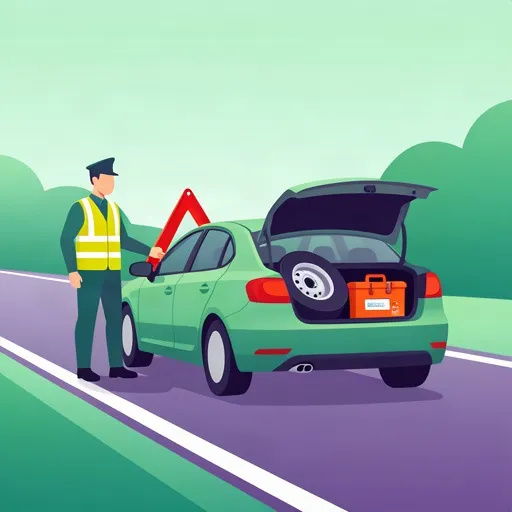
Article content overview
Ensuring your vehicle is equipped with the legally required safety gear is not just a regulatory obligation in Portugal; it is a fundamental aspect of road safety. Under the Código da Estrada, all drivers must be prepared for unexpected roadside incidents, such as mechanical failures, flat tyres, or accidents. Failing to carry these items, or failing to use them correctly, can result in significant fines and, more importantly, places you and other road users at unnecessary risk.
Whether you are a new learner or an experienced driver navigating the roads of Portugal, understanding these requirements is a frequent topic in the IMT theory exam. This guide outlines the essential equipment you must keep in your vehicle to remain compliant with Portuguese law and ready for any emergency.
Every motor vehicle that requires a driving license to be operated on public roads must be equipped with specific items. These are designed to increase visibility and warn other drivers when your vehicle becomes an obstacle or is involved in a hazardous situation.
The colete refletor is perhaps the most critical piece of equipment for personal safety. If you must exit your vehicle on a road with traffic, especially in conditions of low visibility or on a motorway, you are legally required to put on this vest before stepping out. This ensures that approaching drivers can identify you quickly, significantly reducing the risk of a secondary collision.
Many learners fail IMT exam questions by misunderstanding the placement rules for the warning triangle. The triângulo de sinalização must be placed at a distance that provides adequate warning to oncoming traffic, allowing them sufficient time to slow down or change lanes safely.
In the context of the theory exam, remember that the "30-meter" rule is a standard minimum requirement. On high-speed roads like autoestradas, you should ensure the placement is effective enough to protect yourself and your passengers while waiting for assistance.
The Código da Estrada also sets clear expectations regarding the mechanical state of your car. For instance, automobiles must possess functional red reflectors at the rear. These are not merely decorative; they are mandatory for signaling your presence to other drivers during nighttime or low-light conditions.
When purchasing a used vehicle in Portugal, do not assume that the previous owner's equipment remains valid or that insurance coverage is automatically transferred. You are responsible for ensuring that all safety gear, including your documentation and proof of insurance, is present and up to date before you begin driving.
To help you remember the core aspects of vehicle safety equipment in Portugal, the following table summarizes the legal requirements for light vehicles.
| Equipment Item | Legal Status | Primary Purpose |
|---|---|---|
| High-Visibility Vest | Mandatory | Personal visibility when exiting the car |
| Warning Triangle | Mandatory | Warning traffic of a stationary vehicle |
| Spare Tyre/Repair Kit | Mandatory | Managing flat tyres |
| Rear Red Reflectors | Mandatory | Visibility of vehicle position at night |
This article covers the mandatory safety equipment required by the Portuguese Código da Estrada for all drivers, including the reflective vest, warning triangle, spare tyre or repair kit, and rear red reflectors. The critical procedure for breakdowns involves activating hazard lights, donning the high-visibility vest before exiting, retrieving the triangle, and placing it at least 30 meters behind the vehicle where it remains visible for at least 100 meters. Learners frequently struggle with IMT exam questions on the specific triangle placement distance and the correct order of emergency procedures. The summary table reinforces that all four equipment items are legally mandatory for light vehicles, not optional additions.
A short set of high-value points that capture the most important ideas from this article.
All vehicles must carry a reflective high-visibility vest, a warning triangle, and either a spare tyre or approved repair kit
The warning triangle must be placed at least 30 meters behind the vehicle and remain visible to approaching traffic for at least 100 meters
You must put on your high-visibility vest before exiting the vehicle on any public road
Rear red reflectors are mandatory equipment and must be functional at all times
Understanding these equipment requirements is frequently tested in the IMT theory exam
Activate hazard lights immediately, then put on the vest, then retrieve the triangle, then place it 30 meters back
The vest (colete refletor) is for personal safety and must be worn before leaving the vehicle
Triangle placement distance: minimum 30 meters behind the vehicle
A spare tyre OR an approved tyre repair kit satisfies the legal requirement, but one must be present
All mandatory safety equipment must be in proper working condition, not just present
Placing the warning triangle at an incorrect distance, either too close or inconsistently remembered as 50 meters
Forgetting that the high-visibility vest must be worn before stepping out of the vehicle, not after
Assuming rear reflectors are optional or merely decorative rather than mandatory
Not verifying that a repair kit is current and approved rather than just having any tyre inflation product
Confusing which equipment is mandatory for personal safety versus vehicle safety versus both
Article content overview
A short set of high-value points that capture the most important ideas from this article.
All vehicles must carry a reflective high-visibility vest, a warning triangle, and either a spare tyre or approved repair kit
The warning triangle must be placed at least 30 meters behind the vehicle and remain visible to approaching traffic for at least 100 meters
You must put on your high-visibility vest before exiting the vehicle on any public road
Rear red reflectors are mandatory equipment and must be functional at all times
Understanding these equipment requirements is frequently tested in the IMT theory exam
Activate hazard lights immediately, then put on the vest, then retrieve the triangle, then place it 30 meters back
The vest (colete refletor) is for personal safety and must be worn before leaving the vehicle
Triangle placement distance: minimum 30 meters behind the vehicle
A spare tyre OR an approved tyre repair kit satisfies the legal requirement, but one must be present
All mandatory safety equipment must be in proper working condition, not just present
Placing the warning triangle at an incorrect distance, either too close or inconsistently remembered as 50 meters
Forgetting that the high-visibility vest must be worn before stepping out of the vehicle, not after
Assuming rear reflectors are optional or merely decorative rather than mandatory
Not verifying that a repair kit is current and approved rather than just having any tyre inflation product
Confusing which equipment is mandatory for personal safety versus vehicle safety versus both
Explore related topics, search based questions, and concepts that learners often look up when studying Mandatory Portuguese Safety Equipment. These themes reflect real search intent and help you understand how this topic connects to wider driving theory knowledge in Portugal.
Find clear and practical answers to common questions learners often have about Mandatory Portuguese Safety Equipment. This section helps explain difficult points, remove confusion, and reinforce the key driving theory concepts that matter for learners in Portugal.
Drivers are required to carry a warning triangle (triângulo de sinalização) and a high-visibility reflective vest (colete refletor). Additionally, vehicles must be equipped with a spare tyre or a manufacturer-approved tyre repair kit.
You must put on your reflective vest before exiting your vehicle if you are stopping on a road where traffic flows, especially during a breakdown or accident. This is essential for your visibility to other drivers.
The warning triangle must be placed at a sufficient distance behind your vehicle so that it is clearly visible to approaching traffic, alerting them to the hazard well in advance.
The law focuses on the driver's responsibility to have the equipment available; however, for safety, it is highly recommended that any person stepping out of the vehicle on a road with traffic wears a high-visibility vest.
Failure to carry or properly use the required safety equipment can lead to fines and may negatively impact your safety and ability to clear a breakdown situation according to traffic regulations.
If you haven't found what you're looking for, use our powerful article search to explore related topics, refine your understanding of Portuguese road rules, or discover new insights for your IMT driving exam preparation. Continue building your knowledge effectively.