
Driving in Portugal requires adherence to specific regulations regarding emergency equipment, as outlined in the Código da Estrada. This article details what you are legally required to carry in your vehicle and provides the correct procedures for handling breakdowns, ensuring you are fully prepared for both real-world driving and your IMT theory examination.
Article content overview
Driving in Portugal requires not only a solid understanding of the Código da Estrada (Highway Code) but also strict compliance with the legal requirements regarding vehicle safety equipment. Whether you are preparing for your IMT theory exam or are a new resident navigating Portuguese roads, knowing exactly what items you must carry is a fundamental aspect of legal and safe driving. Failure to carry the mandatory equipment is not just an administrative oversight; it is a punishable offense that can lead to fines and, in some cases, the inability to drive the vehicle until compliance is met.
In Portugal, every motor vehicle must be equipped with specific safety items to handle common roadside emergencies. These requirements are enforced by the Instituto da Mobilidade e dos Transportes (IMT) and the national police authorities. It is important to remember that these obligations apply to the vehicle itself; therefore, the responsibility to ensure these items are present, functional, and easily accessible rests solely with the driver or the vehicle owner.
Even if a vehicle is rarely used or kept parked for long periods, it must still comply with all safety equipment regulations if it is kept in a condition that would allow it to be driven on public roads.
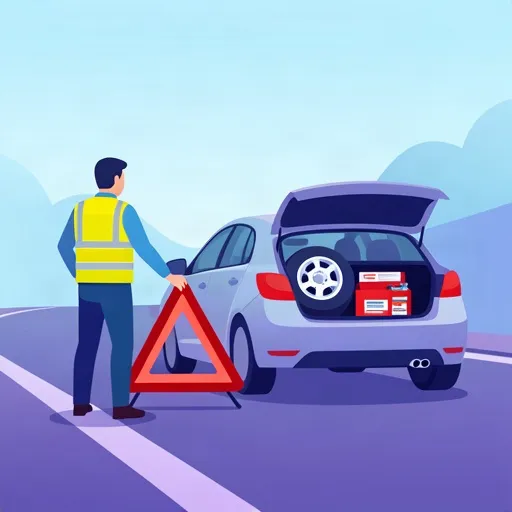
The two most critical items for your personal safety during a breakdown are the high-visibility reflective vest (colete refletor) and the warning triangle (triângulo de sinalização). According to the Código da Estrada, the reflective vest must be worn whenever a driver or passenger exits the vehicle on a public road, especially when the vehicle is stationary due to an accident or mechanical failure. This is particularly crucial on motorways (autoestradas) where high-speed traffic makes pedestrians extremely vulnerable.
The warning triangle serves as a vital signal to other road users, alerting them to the presence of a hazard ahead. It must be placed at a sufficient distance from the vehicle to provide adequate warning. In your IMT theory exam, you may encounter questions regarding the exact placement of these items; always remember that the primary goal is to ensure your visibility and the safety of other traffic.
A common point of confusion for learners involves the requirement for changing or repairing a flat tire. The law stipulates that a vehicle must be equipped with either a spare tire along with the necessary tools (jack and wrench) to change it, or an approved tire repair kit. Many modern vehicles are sold without a spare tire to save weight and space; however, if your vehicle lacks a spare tire, the onboard repair kit must be fully functional and compliant with safety standards.
While your safety equipment protects you in physical emergencies, maintaining mandatory civil liability insurance (seguro de responsabilidade civil) is the legal backbone of driving in Portugal. In the eyes of the law, every motorized vehicle that requires a driving license must be insured. If you purchase a used vehicle, never assume the previous owner’s insurance policy transfers to you; you must contract your own coverage before operating the vehicle on public roads.
The IMT theory exam often features questions designed to test your practical application of these rules. You may be asked about the necessity of reflective gear during nighttime driving or the legal obligation to possess specific reflectors on your vehicle. The key to success is to focus on the reasoning behind the rules: visibility, accident prevention, and the protection of vulnerable road users.
By ensuring you carry the mandatory safety equipment and understanding the procedures for their use, you not only increase your chances of passing the theory exam but also contribute to a safer driving environment for everyone on Portuguese roads. Always keep your equipment in an easily accessible location, never stored under heavy luggage or cargo where it cannot be retrieved quickly in an emergency.
This guide covers the mandatory safety equipment required under Portuguese law, including reflective vests for personal visibility and warning triangles for alerting other road users during breakdowns. It explains the breakdown safety procedure—activating hazard lights, donning the vest inside the vehicle, exiting cautiously, and placing the triangle at an adequate distance. The article clarifies that vehicles must carry either a spare tire with tools or an approved repair kit, and emphasises that all motor vehicles require their own civil liability insurance policy. Understanding these requirements is essential for both safe driving on Portuguese roads and passing the IMT theory examination.
A short set of high-value points that capture the most important ideas from this article.
Drivers must carry a reflective vest and warning triangle at all times when on public roads in Portugal
The reflective vest must be put on before exiting the vehicle during a breakdown or emergency
Vehicles can comply with tire requirements by carrying either a spare tire with jack and wrench, or an approved tire repair kit
All motor vehicles require mandatory civil liability insurance that does not transfer between owners
Safety equipment must be stored in an easily accessible location, never under heavy cargo
The reflective vest (colete refletor) must be worn by the driver and any passengers who exit the vehicle on a public road
The warning triangle (triângulo de sinalização) must be placed at a sufficient distance behind the vehicle to warn oncoming traffic
Insurance policies do not transfer when purchasing a used vehicle; you must contract your own coverage
Even rarely used or parked vehicles must comply with safety equipment regulations if they can be driven on public roads
IMT theory exam questions test the reasoning behind safety rules, not just memorization of requirements
Storing safety equipment in the boot under heavy luggage where it cannot be retrieved quickly in an emergency
Assuming that a tire repair kit always satisfies the requirement without checking if it is approved and functional
Believing the reflective vest is only needed at night or in poor weather conditions
Assuming a previous owner's vehicle insurance transfers automatically when buying a used car
Failing to put on the reflective vest before opening the vehicle door during a breakdown
Article content overview
A short set of high-value points that capture the most important ideas from this article.
Drivers must carry a reflective vest and warning triangle at all times when on public roads in Portugal
The reflective vest must be put on before exiting the vehicle during a breakdown or emergency
Vehicles can comply with tire requirements by carrying either a spare tire with jack and wrench, or an approved tire repair kit
All motor vehicles require mandatory civil liability insurance that does not transfer between owners
Safety equipment must be stored in an easily accessible location, never under heavy cargo
The reflective vest (colete refletor) must be worn by the driver and any passengers who exit the vehicle on a public road
The warning triangle (triângulo de sinalização) must be placed at a sufficient distance behind the vehicle to warn oncoming traffic
Insurance policies do not transfer when purchasing a used vehicle; you must contract your own coverage
Even rarely used or parked vehicles must comply with safety equipment regulations if they can be driven on public roads
IMT theory exam questions test the reasoning behind safety rules, not just memorization of requirements
Storing safety equipment in the boot under heavy luggage where it cannot be retrieved quickly in an emergency
Assuming that a tire repair kit always satisfies the requirement without checking if it is approved and functional
Believing the reflective vest is only needed at night or in poor weather conditions
Assuming a previous owner's vehicle insurance transfers automatically when buying a used car
Failing to put on the reflective vest before opening the vehicle door during a breakdown
Explore related topics, search based questions, and concepts that learners often look up when studying Mandatory Safety Equipment in Portugal. These themes reflect real search intent and help you understand how this topic connects to wider driving theory knowledge in Portugal.
Find clear and practical answers to common questions learners often have about Mandatory Safety Equipment in Portugal. This section helps explain difficult points, remove confusion, and reinforce the key driving theory concepts that matter for learners in Portugal.
You are required to carry a homologated warning triangle (triângulo de sinalização) and a high-visibility reflective vest (colete refletor) that meets European safety standards.
You must put on the reflective vest before exiting your vehicle if you have stopped on the road or hard shoulder, especially in situations like a breakdown or accident.
You must carry a spare tire with the appropriate tools to change it, or an approved tire repair kit if the vehicle is not equipped with a spare tire.
Failure to carry the legally required equipment can result in fines and is considered a breach of the traffic code, which may also be a topic addressed in IMT theory exam questions.
If you haven't found what you're looking for, use our powerful article search to explore related topics, refine your understanding of Portuguese road rules, or discover new insights for your IMT driving exam preparation. Continue building your knowledge effectively.