
Learn the essential principles for safely loading and securing cargo within your Swedish passenger car, as dictated by Swedish traffic regulations. We’ll cover why loose objects pose a significant risk, impacting vehicle stability and potentially causing harm during sudden stops or maneuvers. Mastering these cargo rules is crucial for your theory exam and for responsible driving.
Article content overview
Ensuring the safety of your vehicle and fellow road users in Sweden goes beyond just adhering to speed limits and understanding traffic signals. A crucial, yet often overlooked, aspect of responsible driving involves how you load and secure cargo within your passenger car. Loose items inside your vehicle can transform from minor inconveniences into significant hazards during transit, posing risks of injury and compromising vehicle stability. This article delves into the critical Swedish regulations surrounding the loading and securing of cargo, emphasizing why understanding these rules is vital for your driving theory exam success and, more importantly, for maintaining safety on Swedish roads. We will explore the practical implications of weight distribution and the legal requirements designed to prevent instability and potential dangers stemming from unsecured loads.
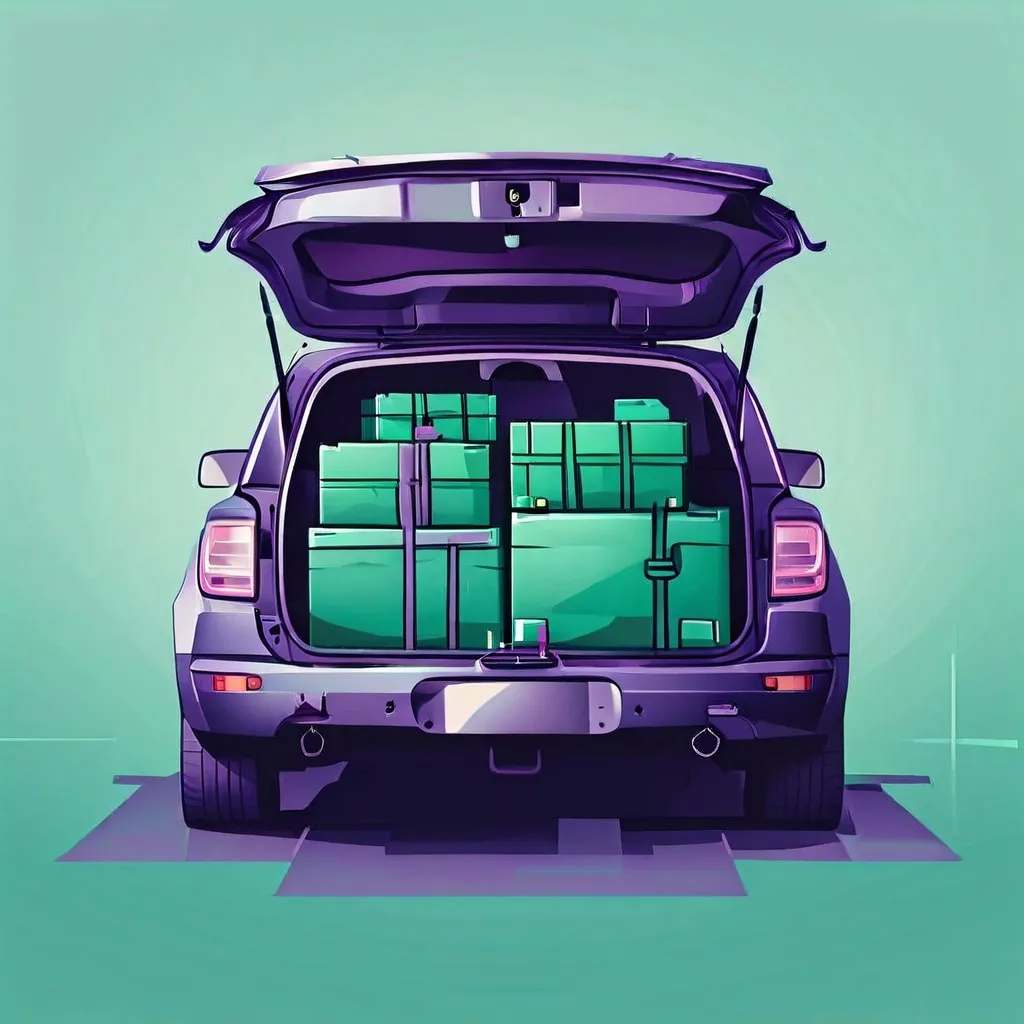
Many drivers overlook the potential threat posed by unsecured items within their car. While a stray water bottle might seem harmless, Swedish traffic law, overseen by authorities like Transportstyrelsen, considers all items within a vehicle as part of its load. During sudden braking, sharp turns, or evasive maneuvers, these seemingly innocuous objects can be propelled forward with considerable force, turning into dangerous projectiles. Such an event can distract the driver, cause injury to occupants, or even damage the vehicle's interior. It is imperative to recognize that loose items in a car hazard is a real concern, and proactive measures are necessary to mitigate this risk. The Swedish Transport Agency's guidance emphasizes that the driver is responsible for ensuring that the load, including personal belongings, does not create a danger.
The physics involved in transforming loose items into projectiles is straightforward but impactful. During a deceleration, an object not secured will continue to move at its previous speed due to inertia. If a car brakes hard, the occupants are held back by seatbelts, but unsecured items are not. This means a bag of groceries, a toolbox, or even a heavy phone can fly forward, impacting the seats, dashboard, or even the driver and passengers. This unexpected force can lead to significant injuries and, critically, a loss of control over the vehicle if the driver is startled or injured. Therefore, understanding cargo weight distribution and securement is not just about preventing damage, but about actively contributing to driving safety in Sweden.
Swedish traffic regulations provide clear guidelines on how cargo should be handled within a vehicle. These rules are designed to ensure that the vehicle remains stable and that no part of the load obstructs the driver’s view or ability to operate the vehicle safely. It's essential for all drivers to be familiar with these stipulations, especially when preparing for the Swedish driving theory test, as questions on load security are common.
The fundamental principle of Swedish car loading rules is that the cargo must be secured in such a way that it does not pose a danger to others. This means that items should not hang loosely outside the vehicle, nor should they cover essential components like license plates, lights, or reflectors. Furthermore, the load must not impede the driver's visibility or their ability to operate the vehicle's controls. These rules are clearly articulated by Swedish authorities and form a core part of the knowledge tested in the driving theory examination.
Remember that the driver is ultimately responsible for the securement of all items within the vehicle. This includes everyday items like shopping bags, sports equipment, and even items placed on seats.
Beyond the physical securing of items, Swedish law also places limitations on the number of passengers and the overall weight of the vehicle. The number of passengers must not exceed the seating capacity indicated on the vehicle's registration certificate. Crucially, passengers are counted towards the vehicle's total weight. This means that the combined weight of passengers, cargo, and the vehicle itself must not exceed the maximum permissible gross vehicle weight, also specified in the registration certificate. Exceeding these limits can lead to a loss of vehicle control, increased braking distances, and undue stress on the vehicle's components, all of which are significant safety concerns.
While this article primarily focuses on internal cargo, it's worth noting that external loads, such as those carried on roof racks or towed trailers, also have specific regulations. For instance, the total width of a vehicle, including any extra load, must not exceed 260 cm, and the load should not extend more than 20 cm beyond each side of the vehicle. Similarly, the total length of a vehicle combination (including trailers) has a maximum limit. While these are more pertinent to trailer towing, they highlight the Swedish emphasis on managing the dimensions and stability of any load carried by a vehicle.
Applying these Swedish regulations in practice requires a mindful approach to packing and securing your vehicle. It's about anticipating potential hazards and taking preventative measures.
Proper weight distribution is key to maintaining vehicle stability. Heavy items should ideally be placed as low and as close to the center of the vehicle as possible. This helps to keep the vehicle's center of gravity low, reducing the risk of tipping, especially during cornering or on uneven surfaces. Avoid loading all heavy items to one side or too far back, as this can lead to unbalanced handling and increased susceptibility to crosswinds. For everyday driving, this means placing heavier grocery bags on the floor of the rear seat or boot, rather than stacking lighter items on top of them.
For larger or heavier items, using appropriate securing devices is essential. This could include cargo nets, tie-down straps, or cargo organizers. These tools prevent items from shifting during transit, significantly reducing the risk of them becoming projectiles or causing the vehicle to swerve unexpectedly. Even seemingly secure items, like luggage in the boot, can shift if not properly braced or tied down. Always check that any securing devices are robust and correctly fastened before setting off. This proactive approach to securing cargo is a hallmark of safe driving and a direct reflection of Transportstyrelsen cargo rules.
Never place very heavy or sharp objects directly on the parcel shelf or rear window ledge, as these are not designed to withstand significant impact and can easily break, causing injury.
Certain items, due to their nature or potential for damage, should never be transported loosely. This includes anything sharp, heavy, or prone to spillage. Tools, sports equipment, and even rigid containers should be secured to prevent them from rolling around or becoming dangerous in the event of a sudden stop. Similarly, any liquids should be transported in robust, leak-proof containers, ideally placed in a manner that prevents them from tipping over. The principle remains consistent: anything that can move freely and cause harm must be made stationary.
The Swedish driving theory exam places significant importance on understanding and applying road safety rules, and load security is no exception. Examiners want to ensure that future drivers are aware of the potential dangers of unsecured loads and know how to mitigate them.
Theory test questions related to load security often focus on identifying hazards, understanding driver responsibility, and applying the basic rules of securing items. You might encounter scenarios asking what action you should take if you notice a loose item in your car, or what constitutes a dangerous load. Some questions may present images of a car's interior and ask you to identify potential hazards. It's crucial to remember the core principles: the load must not be a danger, it must not obstruct the driver, and the vehicle's weight and dimensions must not be exceeded.
A common mistake for learners is underestimating the force with which loose items can be propelled. Many assume that items in the boot are always safe, forgetting that during heavy braking, even items in a closed trunk can shift significantly. Another pitfall is not considering the weight of passengers as part of the total vehicle load. Always think about the cumulative weight and how it affects your vehicle’s handling. Familiarizing yourself with the dangers of unsecured items in a car Sweden can help you answer these questions accurately and confidently.
Mastering the rules around securing cargo in your Swedish car is not just a requirement for passing your driving theory test; it's a fundamental aspect of responsible driving. By understanding the risks associated with loose items and adhering to Swedish regulations on weight distribution and securement, you contribute significantly to your own safety and the safety of everyone on the road. Always prioritize securement, be mindful of weight limits, and remember that a well-loaded vehicle is a safer vehicle.
Swedish traffic law treats all items inside a vehicle as part of the load, making the driver legally responsible for securing everything from groceries to briefcases. Loose items transform into dangerous projectiles during sudden stops due to inertia, and can cause injury, distract the driver, or damage the vehicle interior. Weight distribution matters significantly - heavy items should be placed low and centered to maintain vehicle stability and prevent tipping. Swedish regulations also set limits on total vehicle weight, passenger capacity, and external load dimensions, with external cargo width capped at 260 cm and extension limited to 20 cm per side. Understanding these principles is essential for both safe driving and passing the Swedish driving theory exam.
A short set of high-value points that capture the most important ideas from this article.
In Sweden, all items inside the vehicle are legally considered part of the load, including personal belongings like water bottles and shopping bags
Loose items become dangerous projectiles during sudden braking because inertia causes them to continue moving while the vehicle stops
The driver bears full legal responsibility for securing all items within the vehicle, not just obvious cargo
Heavy items should be placed low and centered to keep the vehicle's center of gravity low and maintain stability
Exceeding weight limits or passenger capacity directly increases braking distance and reduces vehicle control
The combined weight of passengers, cargo, and the vehicle must not exceed the Gross Vehicle Weight (GVW) specified on the registration certificate
Very heavy or sharp objects must never be placed on the parcel shelf or rear window ledge, as these surfaces cannot withstand impact
External loads must not exceed 260 cm total width and may not extend more than 20 cm beyond each side of the vehicle
Passengers are counted towards the vehicle's total weight alongside cargo
Cargo must never obstruct the driver's visibility or impede access to vehicle controls
Assuming items stored in a closed boot are automatically safe - even secured trunks allow items to shift significantly during hard braking
Underestimating the force of loose items - a water bottle or phone can cause injury or damage at highway braking speeds
Neglecting to consider that passengers contribute to the vehicle's total weight when calculating load capacity
Placing heavy objects on the parcel shelf, believing it provides adequate support
Forgetting that cargo includes everyday items, not just deliberately loaded goods, and treating everyday belongings differently from 'real' cargo
Article content overview
A short set of high-value points that capture the most important ideas from this article.
In Sweden, all items inside the vehicle are legally considered part of the load, including personal belongings like water bottles and shopping bags
Loose items become dangerous projectiles during sudden braking because inertia causes them to continue moving while the vehicle stops
The driver bears full legal responsibility for securing all items within the vehicle, not just obvious cargo
Heavy items should be placed low and centered to keep the vehicle's center of gravity low and maintain stability
Exceeding weight limits or passenger capacity directly increases braking distance and reduces vehicle control
The combined weight of passengers, cargo, and the vehicle must not exceed the Gross Vehicle Weight (GVW) specified on the registration certificate
Very heavy or sharp objects must never be placed on the parcel shelf or rear window ledge, as these surfaces cannot withstand impact
External loads must not exceed 260 cm total width and may not extend more than 20 cm beyond each side of the vehicle
Passengers are counted towards the vehicle's total weight alongside cargo
Cargo must never obstruct the driver's visibility or impede access to vehicle controls
Assuming items stored in a closed boot are automatically safe - even secured trunks allow items to shift significantly during hard braking
Underestimating the force of loose items - a water bottle or phone can cause injury or damage at highway braking speeds
Neglecting to consider that passengers contribute to the vehicle's total weight when calculating load capacity
Placing heavy objects on the parcel shelf, believing it provides adequate support
Forgetting that cargo includes everyday items, not just deliberately loaded goods, and treating everyday belongings differently from 'real' cargo
Explore related topics, search based questions, and concepts that learners often look up when studying Cargo Safety in Swedish Cars. These themes reflect real search intent and help you understand how this topic connects to wider driving theory knowledge in Sweden.
Find clear and practical answers to common questions learners often have about Cargo Safety in Swedish Cars. This section helps explain difficult points, remove confusion, and reinforce the key driving theory concepts that matter for learners in Sweden.
Unsecured cargo can become dangerous projectiles during braking or collisions, causing injury to occupants and potentially leading to loss of vehicle control. It can also obstruct the driver's view or impede their ability to operate the vehicle.
Official rules for loading passenger cars in Sweden are primarily governed by Transportstyrelsen. Key regulations cover how the load must be secured, its placement, and ensuring it does not obstruct visibility or vehicle operation.
Yes, passengers are considered part of the vehicle's load. Their combined weight, along with other cargo, must not exceed the vehicle's maximum permissible total weight as stated in the registration certificate.
Yes, cargo should not extend more than 20 cm from each side of the vehicle. The total width of the vehicle, including any load, must not exceed 260 cm.
Understanding and applying cargo securing principles is part of the Swedish driving theory exam, as it relates to safe driving behaviour and adherence to traffic laws designed to protect all road users.
Continue your learning journey by exploring more detailed articles and guides. Clarify specific traffic rules, understand complex road signs, or review safe driving practices. Our extensive content library supports your Swedish driving license theory preparation.