
Pedestrian crossings are designated zones designed to help people cross the road safely. As a driver in Sweden, it's vital to know your responsibilities, recognize different types of crossings, and understand how to interact safely with pedestrians to prevent accidents and avoid penalties. This section will guide you through the essentials.
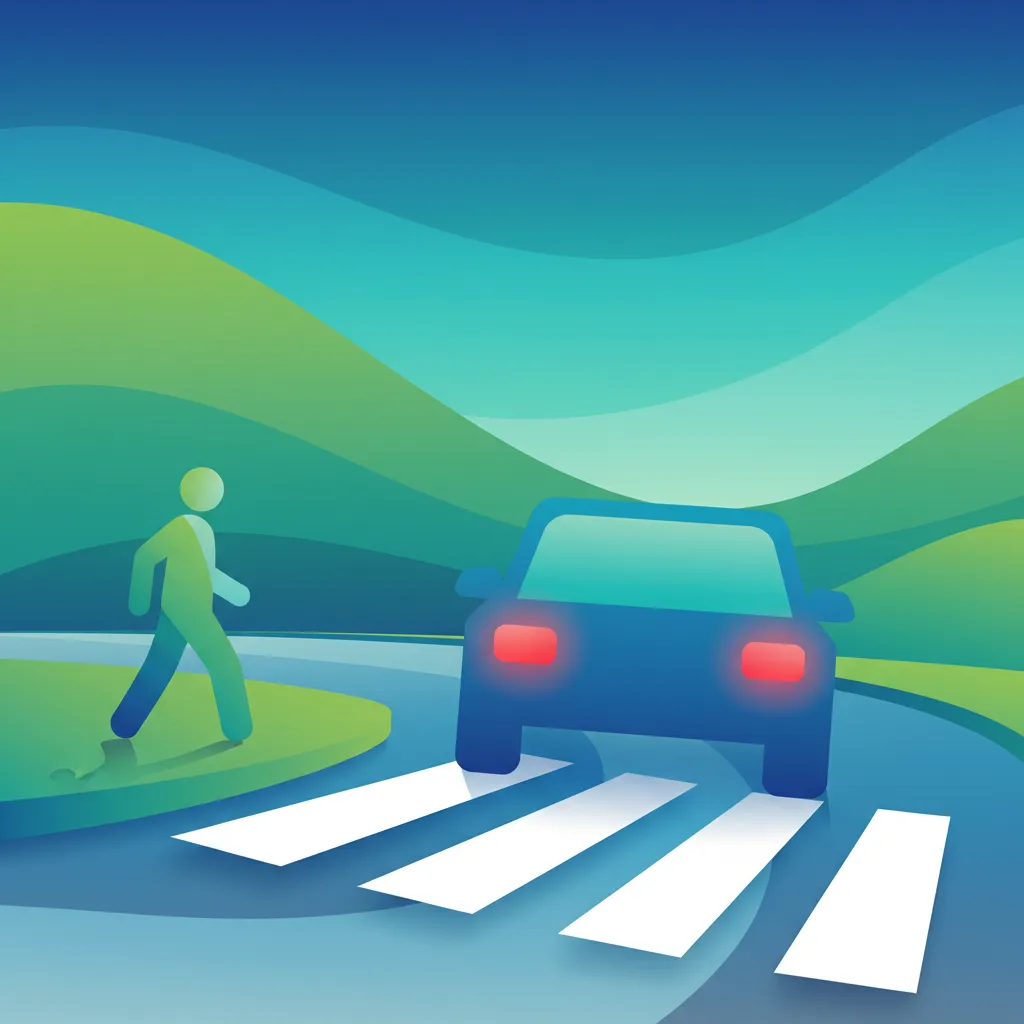
Theory topic content overview
Read the full theory topic guide for Pedestrian Crossing Rules with structured, easy-to-scan content built for learners in Sweden. This detailed section explains the exact rule, meaning, traffic context, comparison points, and exam logic behind this Swedish driving theory topic so you can study faster, understand the concept more clearly, and avoid common interpretation mistakes on the theory test.
Pedestrian crossings, known in Sweden as övergångsställen (plural) or övergångsställe (singular), are specially designated areas on the road designed to provide a safe space for pedestrians to cross. For drivers, understanding the rules and responsibilities at these crossings is paramount for safety, passing the Swedish driving theory test, and navigating traffic effectively. The core principle revolves around prioritising vulnerable road users.
Övergångsställe)?An övergångsställe is a marked section of a road where pedestrians have a legal right to cross. These crossings are identified by specific road markings, typically wide white stripes parallel to the road (often called "zebra crossings" in English-speaking countries), and may also be accompanied by blue rectangular signs featuring a walking person. In Sweden, these markings and signs clearly indicate to drivers that they are approaching an area requiring increased caution and a readiness to yield.
The primary purpose of an övergångsställe is to organise the interaction between vehicles and pedestrians, thereby significantly reducing the risk of accidents.
Understanding and correctly applying the rules at pedestrian crossings is not just about avoiding penalties; it's a critical component of road safety, especially for vulnerable road users like pedestrians, children, and those with reduced mobility.
övergångsställen are very common in the Swedish driving theory test. Questions often test your understanding of yielding rules, speed management, and observation skills.Övergångsställen in PracticeSuccessfully navigating pedestrian crossings requires a combination of observation, anticipation, and adherence to specific rules.
övergångsställe. This gives you more time to react, allows you to stop safely if necessary, and signals your intent to other drivers.Väjningsplikt): In Sweden, drivers have a väjningsplikt (duty to yield) to pedestrians who are on the crossing or are clearly about to step onto the crossing. This means you must stop and allow them to cross safely before proceeding.övergångsställe itself obstructs the crossing and can be dangerous for pedestrians.While the general rule for pedestrian crossings is clear, certain conditions and distinctions are crucial for a driver in Sweden:
övergångsställen: These are the most common and are marked only by road markings and/or signs. Here, the driver's duty to yield is absolute when pedestrians are on or about to enter the crossing.övergångsställe designated purely for pedestrians, cyclists generally do not have the same immediate priority unless specific signage (cykelöverfart or cykelpassage) indicates otherwise, or if they are crossing as part of a turn where vehicle priority rules might apply. Always remain cautious, as cyclists are also vulnerable.övergångsställe in a quiet Swedish town. You see a person standing on the pavement, looking towards the crossing. They haven't stepped onto the road yet.
övergångsställe. One child suddenly breaks away and runs towards the crossing without looking.
övergångsställe.
övergångsställe on the road you are turning into. A pedestrian is already on the crossing.
väjningsplikt towards pedestrians on the crossing is absolute.Swedish driving instructors and examiners frequently observe the following mistakes:
övergångsställe is extremely dangerous and illegal, as it obscures your view and puts pedestrians at severe risk.övergångsställe itself, forcing pedestrians to walk around your vehicle or into traffic.When you see an övergångsställe sign or road markings, adopt a mindset of "pedestrian first." Slow down, scan wide, and be ready to stop. Your primary responsibility as a driver in Sweden is to protect vulnerable road users. Proactive observation and a willingness to yield are not just rules to remember for your theory test, but fundamental habits for safe and responsible driving on Swedish roads. Always drive at a speed that allows you to stop safely for any pedestrian interaction.
Swedish pedestrian crossings (övergångsställen) are marked areas where drivers must yield to pedestrians on the crossing or clearly intending to cross. Drivers have a väjningsplikt requiring them to reduce speed, stay highly attentive, and stop when necessary. This applies even when turning—pedestrian priority is absolute. Key mistakes to avoid include failing to anticipate, approaching too fast, and overtaking stopped vehicles at crossings. Safe driving at pedestrian crossings requires proactive observation and a pedestrian-first mindset.
A short set of high-value points that capture the most important ideas from this theory explanation.
Pedestrian crossings in Sweden are called övergångsställen and drivers must yield to pedestrians on or clearly about to enter the crossing
The väjningsplikt (duty to yield) requires you to stop and allow pedestrians to cross safely before proceeding
Always reduce speed significantly when approaching any crossing to allow reaction time and safe stopping
Never overtake a vehicle that has stopped at a pedestrian crossing—there is likely a pedestrian you cannot see
Scan both pavements for approaching pedestrians before reaching the crossing, not just the crossing itself
Övergångsställe means pedestrian crossing; väjningsplikt means duty to yield
At unregulated crossings, yield is absolute when pedestrian is on or clearly about to step onto the crossing
At signalised crossings, pedestrians only have priority with a green light for them
Do not stop on the crossing markings—keep your vehicle completely clear of them
Children, elderly, and anyone near schools, bus stops, or shopping areas require extra attention
Failing to anticipate and only braking once a pedestrian is already on the crossing
Not reducing speed sufficiently when approaching, resulting in longer stopping distances
Only looking straight ahead and not scanning the pavements for approaching pedestrians
Overtaking a vehicle that has stopped at a crossing, which is extremely dangerous
Stopping on the crossing itself instead of before it, forcing pedestrians to walk around the vehicle
Start with a short, direct summary of Pedestrian Crossing Rules before reading the full explanation below.
Pedestrian crossings, known as 'övergångsställen' in Sweden, are marked areas where drivers must be prepared to yield to pedestrians. This means reducing speed significantly, maintaining high attentiveness, and stopping to allow pedestrians to cross safely when they are on the crossing or clearly indicating their intent to cross. Always prioritize vulnerable road users.
Review the most important terms, rule signals, and traffic concepts linked to Pedestrian Crossing Rules.
Explore related theory topic pages connected to Pedestrian Crossing Rules and continue with the next useful rule explanation.
See the common search queries learners use when trying to understand Pedestrian Crossing Rules in Sweden.

Dive deeper into specific theory topics, review detailed explanations of road rules, and reinforce your understanding of Swedish traffic regulations. Continue your preparation for the driving licence exam by exploring each core concept in detail.
Explore Driving Theory TopicsTheory topic content overview
A short set of high-value points that capture the most important ideas from this theory explanation.
Pedestrian crossings in Sweden are called övergångsställen and drivers must yield to pedestrians on or clearly about to enter the crossing
The väjningsplikt (duty to yield) requires you to stop and allow pedestrians to cross safely before proceeding
Always reduce speed significantly when approaching any crossing to allow reaction time and safe stopping
Never overtake a vehicle that has stopped at a pedestrian crossing—there is likely a pedestrian you cannot see
Scan both pavements for approaching pedestrians before reaching the crossing, not just the crossing itself
Övergångsställe means pedestrian crossing; väjningsplikt means duty to yield
At unregulated crossings, yield is absolute when pedestrian is on or clearly about to step onto the crossing
At signalised crossings, pedestrians only have priority with a green light for them
Do not stop on the crossing markings—keep your vehicle completely clear of them
Children, elderly, and anyone near schools, bus stops, or shopping areas require extra attention
Failing to anticipate and only braking once a pedestrian is already on the crossing
Not reducing speed sufficiently when approaching, resulting in longer stopping distances
Only looking straight ahead and not scanning the pavements for approaching pedestrians
Overtaking a vehicle that has stopped at a crossing, which is extremely dangerous
Stopping on the crossing itself instead of before it, forcing pedestrians to walk around the vehicle
Start with a short, direct summary of Pedestrian Crossing Rules before reading the full explanation below.
Pedestrian crossings, known as 'övergångsställen' in Sweden, are marked areas where drivers must be prepared to yield to pedestrians. This means reducing speed significantly, maintaining high attentiveness, and stopping to allow pedestrians to cross safely when they are on the crossing or clearly indicating their intent to cross. Always prioritize vulnerable road users.
Review the most important terms, rule signals, and traffic concepts linked to Pedestrian Crossing Rules.
Explore related theory topic pages connected to Pedestrian Crossing Rules and continue with the next useful rule explanation.
See the common search queries learners use when trying to understand Pedestrian Crossing Rules in Sweden.
Dive deeper into specific theory topics, review detailed explanations of road rules, and reinforce your understanding of Swedish traffic regulations. Continue your preparation for the driving licence exam by exploring each core concept in detail.
Explore Driving Theory TopicsUse this exam-focused revision tip to understand how Pedestrian Crossing Rules is likely to appear in theory questions for learners in Sweden. This section helps you identify the most testable part of the rule, avoid common traps, and remember the concept more effectively during Swedish driving theory exam preparation.
In the Swedish driving theory test, pay close attention to scenarios involving pedestrian crossings ('övergångsställen'). Questions often focus on your responsibility to yield, when to slow down, and avoiding stopping on the crossing itself. Remember: pedestrian safety is paramount, and anticipating their movements is key.
Read direct answers to the most common learner questions about Pedestrian Crossing Rules in Sweden. This FAQ focuses on rule confusion, practical meaning, comparison with similar concepts, and the exact uncertainties that appear most often in Swedish driving theory revision and exam preparation.
In Sweden, a pedestrian crossing, called an 'övergångsställe', is a specifically marked area on the road where pedestrians generally have priority. It is identified by white stripes (zebra stripes) on the road and sometimes by specific signage.
You must stop for pedestrians who are already on the 'övergångsställe' or clearly indicating their intent to step onto it. Always be prepared to stop well in advance and ensure they can cross safely before you proceed.
At marked pedestrian crossings ('övergångsställen'), pedestrians have priority over vehicles. However, they must still exercise caution. At unmarked crossings or where there are traffic lights, priority rules may differ, and pedestrians may not have the same automatic right of way.
An 'övergångsställe' is clearly marked with white stripes on the road, indicating drivers must yield. An unmarked crossing lacks these markings, and drivers typically do not have a specific legal obligation to yield to pedestrians there, though caution is always advised.
Reduce your speed significantly as you approach any 'övergångsställe'. Scan both sides of the road for pedestrians, be ready to brake, and make eye contact if possible to confirm their intentions. Be especially vigilant near schools and busy areas.
No, you must not stop your vehicle on a pedestrian crossing. Doing so blocks the path for pedestrians, obstructs visibility for other road users, and creates a hazardous situation in traffic.
Always drive with a speed that allows you to stop safely if a pedestrian unexpectedly steps onto the crossing. Your primary responsibility is to avoid collision and ensure the safety of vulnerable road users.
Refine your study plan by exploring practice sets on specific Swedish traffic rules, road signs, or driving situations. Use the search to quickly access relevant questions and focus your preparation for the official driving licence theory exam.