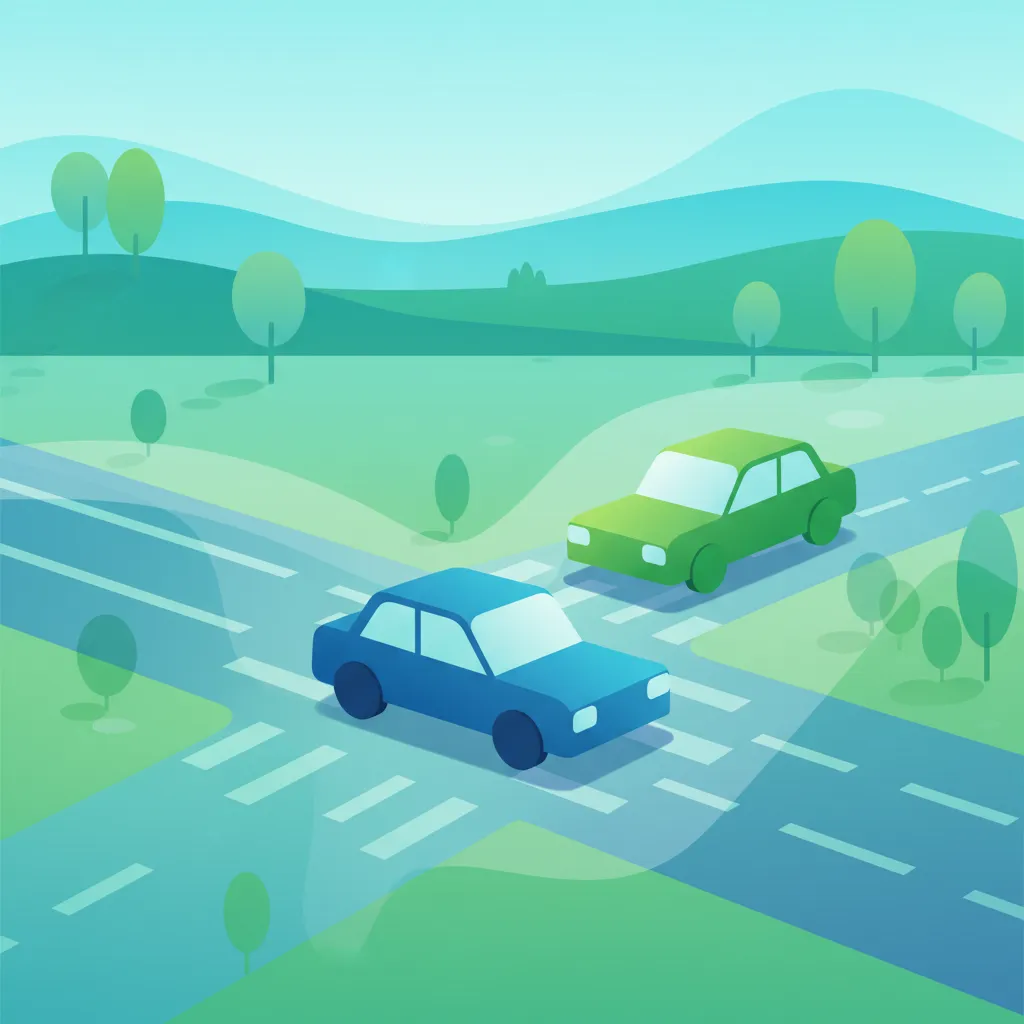
At many junctions in Sweden, you won't find traffic lights, stop signs, or give way signs. These are called uncontrolled intersections, and knowing how to determine priority is essential for safety. This page explains the fundamental 'priority to the right' rule and how to safely approach these junctions, even when visibility is poor or other drivers are unpredictable.
Theory topic content overview
Read the full theory topic guide for Priority at Unmarked Intersections with structured, easy-to-scan content built for learners in Sweden. This detailed section explains the exact rule, meaning, traffic context, comparison points, and exam logic behind this Swedish driving theory topic so you can study faster, understand the concept more clearly, and avoid common interpretation mistakes on the theory test.
An uncontrolled intersection (in Swedish, often referred to as a "korsning utan skyltar" – intersection without signs, or "likvärdig korsning" – equal intersection) is a junction where the right of way is not explicitly regulated by traffic lights, stop signs, give way signs, or priority road signs. This means drivers cannot rely on external signals to determine who should proceed first. Instead, they must apply general traffic rules, primarily the priority to the right principle, and their own judgment.
These intersections are common in Sweden, especially in residential areas, smaller towns, and on less-trafficked roads, making a solid understanding of their rules crucial for all drivers.
Navigating uncontrolled intersections safely is vital for several reasons:
In Sweden, the fundamental rule for uncontrolled intersections is "priority to the right" (Swedish: högerregeln). This means that a driver approaching an uncontrolled intersection must yield to any vehicle approaching from their immediate right, unless another specific rule dictates otherwise.
How to apply Högerregeln:
This rule creates a predictable order, ensuring that one driver always has the responsibility to yield.
While "priority to the right" is the default, there are critical exceptions and situations that override it in Sweden:
Navigating uncontrolled intersections safely requires more than just knowing the rules; it demands active decision-making based on current conditions:
It's crucial to distinguish uncontrolled intersections from other types of junctions:
Consider these common scenarios at a korsning utan skyltar:
Swedish learners frequently make these errors at uncontrolled intersections:
At every uncontrolled intersection in Sweden (korsning utan skyltar), remember the Högerregeln: always be prepared to give way to traffic from your right. Beyond this fundamental rule, your safety depends on continuous observation, anticipation of other road users' actions, and adapting your speed to visibility and road conditions. Drive defensively, never assume priority, and always prioritize safety over strictly enforcing a right of way. This adaptable mindset is key to safe driving in Swedish traffic.
Uncontrolled intersections in Sweden are junctions without traffic lights, signs, or road markings that regulate priority, and the default rule is 'priority to the right' (Högerregeln), meaning you must yield to any vehicle approaching from your immediate right. However, this rule has important exceptions: trams and emergency vehicles always have overriding priority, left-turning drivers must yield to oncoming traffic, and vehicles entering from private driveways must yield to all main road traffic. Beyond knowing the rules, safe navigation requires continuous observation, adjusting speed to visibility conditions, and being prepared for other drivers to make mistakes. The Swedish driving theory exam frequently tests these scenarios using diagrams, so understanding both the standard rule and its exceptions is essential.
A short set of high-value points that capture the most important ideas from this theory explanation.
At uncontrolled intersections in Sweden, always give way to traffic approaching from your right (Högerregeln)
Trams have overriding priority over all other vehicles, even at uncontrolled intersections
Emergency vehicles with active blue lights and sirens must always be allowed through first
When turning left, you must yield to oncoming traffic going straight or turning right, regardless of other priority rules
Vulnerable road users such as pedestrians and cyclists require extra caution even when you have vehicle priority
Uncontrolled intersections (korsning utan skyltar) have no traffic lights, stop signs, or give way signs to regulate priority
The 'priority to the right' rule applies equally to all intersecting roads regardless of road width or appearance
A vehicle entering from a private driveway or parking area must always yield to all main road traffic
If visibility is blocked, slow down significantly and be prepared to stop immediately
Never assume a wider or straighter road grants priority without proper signs
Assuming a larger or busier-looking road has automatic priority without signs
Approaching intersections too fast, leaving insufficient time to react to other drivers' errors
Forgetting to yield to pedestrians and cyclists crossing at junctions
Ignoring that trams have overriding priority over vehicles approaching from the right
Failing to check both left and right thoroughly before proceeding at an uncontrolled junction
Start with a short, direct summary of Priority at Unmarked Intersections before reading the full explanation below.
At uncontrolled intersections in Sweden, the general rule is to give way to vehicles approaching from your right. This 'priority to the right' principle ensures a predictable order when no other signals or signs are present. However, drivers must always remain vigilant, adapt to unclear situations, and be prepared to stop for all other road users, especially vulnerable ones like pedestrians and cyclists.
Review the most important terms, rule signals, and traffic concepts linked to Priority at Unmarked Intersections.
Explore related theory topic pages connected to Priority at Unmarked Intersections and continue with the next useful rule explanation.
See the common search queries learners use when trying to understand Priority at Unmarked Intersections in Sweden.

Dive deeper into specific theory topics, review detailed explanations of road rules, and reinforce your understanding of Swedish traffic regulations. Continue your preparation for the driving licence exam by exploring each core concept in detail.
Explore Driving Theory TopicsTheory topic content overview
A short set of high-value points that capture the most important ideas from this theory explanation.
At uncontrolled intersections in Sweden, always give way to traffic approaching from your right (Högerregeln)
Trams have overriding priority over all other vehicles, even at uncontrolled intersections
Emergency vehicles with active blue lights and sirens must always be allowed through first
When turning left, you must yield to oncoming traffic going straight or turning right, regardless of other priority rules
Vulnerable road users such as pedestrians and cyclists require extra caution even when you have vehicle priority
Uncontrolled intersections (korsning utan skyltar) have no traffic lights, stop signs, or give way signs to regulate priority
The 'priority to the right' rule applies equally to all intersecting roads regardless of road width or appearance
A vehicle entering from a private driveway or parking area must always yield to all main road traffic
If visibility is blocked, slow down significantly and be prepared to stop immediately
Never assume a wider or straighter road grants priority without proper signs
Assuming a larger or busier-looking road has automatic priority without signs
Approaching intersections too fast, leaving insufficient time to react to other drivers' errors
Forgetting to yield to pedestrians and cyclists crossing at junctions
Ignoring that trams have overriding priority over vehicles approaching from the right
Failing to check both left and right thoroughly before proceeding at an uncontrolled junction
Start with a short, direct summary of Priority at Unmarked Intersections before reading the full explanation below.
At uncontrolled intersections in Sweden, the general rule is to give way to vehicles approaching from your right. This 'priority to the right' principle ensures a predictable order when no other signals or signs are present. However, drivers must always remain vigilant, adapt to unclear situations, and be prepared to stop for all other road users, especially vulnerable ones like pedestrians and cyclists.
Review the most important terms, rule signals, and traffic concepts linked to Priority at Unmarked Intersections.
Explore related theory topic pages connected to Priority at Unmarked Intersections and continue with the next useful rule explanation.
See the common search queries learners use when trying to understand Priority at Unmarked Intersections in Sweden.
Dive deeper into specific theory topics, review detailed explanations of road rules, and reinforce your understanding of Swedish traffic regulations. Continue your preparation for the driving licence exam by exploring each core concept in detail.
Explore Driving Theory TopicsUse this exam-focused revision tip to understand how Priority at Unmarked Intersections is likely to appear in theory questions for learners in Sweden. This section helps you identify the most testable part of the rule, avoid common traps, and remember the concept more effectively during Swedish driving theory exam preparation.
The Swedish theory exam often includes diagrams of complex uncontrolled intersections. Pay close attention to vehicle types (especially trams and emergency vehicles), turning intentions, and the direction of approach for all vehicles. Remember that 'priority to the right' is the default, but always look for exceptions like trams or special vehicles that may have overriding priority.
Read direct answers to the most common learner questions about Priority at Unmarked Intersections in Sweden. This FAQ focuses on rule confusion, practical meaning, comparison with similar concepts, and the exact uncertainties that appear most often in Swedish driving theory revision and exam preparation.
An uncontrolled intersection is a junction without traffic lights, stop signs, give way signs, or priority road signs, where drivers must determine right of way based on general rules.
In Sweden, when no other priority rules apply at an uncontrolled intersection, you must yield to vehicles approaching from your immediate right. This means they have the right of way.
No, unless there are explicit signs or markings, the size or apparent importance of a road does not determine priority at an uncontrolled intersection in Sweden. The 'priority to the right' rule still applies.
Always approach uncontrolled intersections slowly, especially if visibility is limited by buildings, parked cars, or bushes. Be prepared to stop completely if you cannot clearly see oncoming traffic from all directions, particularly from your right.
While drivers generally must give way to traffic from the right, special caution is required for vulnerable road users. Drivers should always be prepared to yield to pedestrians and cyclists, especially when turning or when their path crosses the intersection.
Even if you have priority, always be prepared to yield if another driver seems hesitant or makes a mistake. Defensive driving and clear communication (like eye contact) are crucial to prevent accidents.
Trams in Sweden generally have priority over other vehicles, even at uncontrolled intersections, unless specifically indicated otherwise by signs or signals. Always yield to trams.
Refine your study plan by exploring practice sets on specific Swedish traffic rules, road signs, or driving situations. Use the search to quickly access relevant questions and focus your preparation for the official driving licence theory exam.