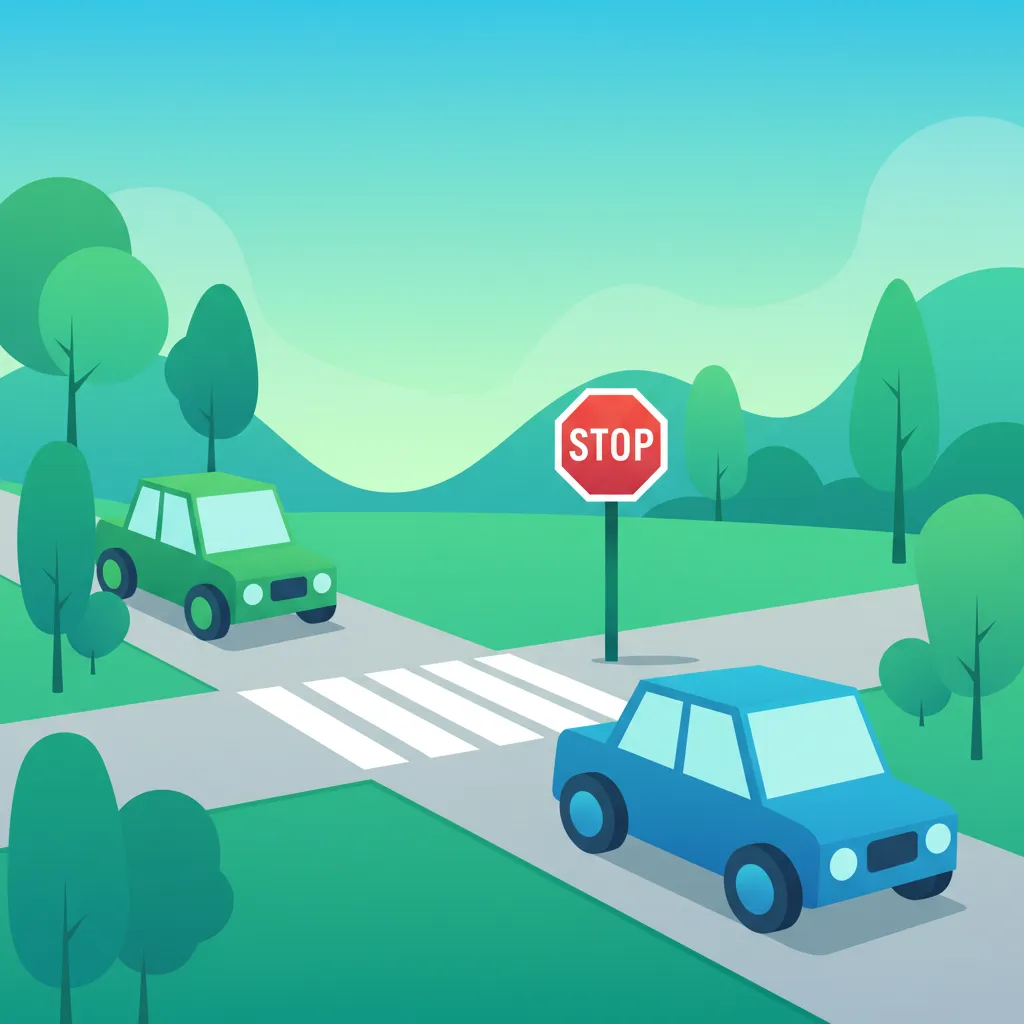
In Swedish traffic, encountering a stop sign means you must bring your vehicle to a complete standstill before proceeding. This is a fundamental rule designed to prevent collisions and ensure all road users are accounted for, especially at intersections with limited visibility or complex traffic flows. Understanding and correctly applying this rule is vital for both your driving safety and success in the theory exam.
Theory topic content overview
Read the full theory topic guide for Stop Sign Rules with structured, easy-to-scan content built for learners in Sweden. This detailed section explains the exact rule, meaning, traffic context, comparison points, and exam logic behind this Swedish driving theory topic so you can study faster, understand the concept more clearly, and avoid common interpretation mistakes on the theory test.
Stopplikt)A stop sign, known as Stopplikt in Swedish traffic regulations, is one of the most critical regulatory traffic signs. It mandates that drivers must bring their vehicle to a complete and full stop before proceeding. This sign is easily identifiable by its red octagonal shape with a white border and the word "STOP" in white text.
The primary purpose of the Stopplikt sign is to enhance safety at intersections, particularly those with limited visibility, complex traffic flows, or where significant risks of collision exist. It ensures that drivers pause long enough to thoroughly observe all approaching traffic and other road users before entering the intersection.
Stopplikt is Crucial in Swedish TrafficUnderstanding and correctly applying Stopplikt is not just about passing your Swedish driving theory exam; it's fundamental to road safety in Sweden.
Stopplikt unequivocally assigns priority to traffic on the intersecting road, removing any ambiguity about who should proceed first.Stopplikt means ignoring a known safety risk identified by traffic authorities like Transportstyrelsen.Stopplikt sign is a serious traffic violation with significant legal consequences.StoppliktProperly stopping at a stop sign involves more than just slowing down. It requires a specific sequence of actions:
Stopplikt.The correct execution of a Stopplikt depends on several factors:
Stopplikt vs. Väjningsplikt: The Critical Swedish DistinctionThis is the most common point of confusion for Swedish driving theory learners. Both signs relate to priority, but their requirements are fundamentally different:
Stopplikt (Stop Sign): Demands a mandatory, complete stop before the stop line or intersection. You must stop regardless of whether there is cross-traffic. The priority is always given to the intersecting road.
Väjningsplikt (Yield Sign / Give Way Sign): Requires you to give way to traffic on the intersecting road. You must reduce speed and be prepared to stop if necessary, but you only need to stop if there is actual cross-traffic that you would otherwise hinder. If the road is clear, you may proceed without stopping.
Key Difference: Stopplikt demands a stop as the primary action, followed by observation. Väjningsplikt demands observation first, with stopping only as a secondary action if needed. Never confuse these two in the Swedish theory test or on the road.
StoppliktHere are common situations where Stopplikt applies:
Stopplikt at an intersection where buildings or vegetation block your view of cross-traffic. You must stop completely at the line, then cautiously edge forward (if needed) to gain a clear view, stopping again if necessary, before proceeding.Stopplikt appears completely deserted in the countryside, you are still legally required to make a full stop. This reinforces the rule and prepares you for unexpected road users.Stopplikt signs are placed where a minor road merges into or crosses a major, high-speed road. A complete stop allows you to accurately gauge the speed and distance of fast-approaching traffic.Stopplikt might be used in conjunction with railway lines, especially if visibility is severely limited.Stopplikt SignsLearners frequently make these errors, often leading to deductions in practical tests and failures in theory exams:
Stopplikt intersections.Stopplikt Mental ModelFor every Stopplikt sign you encounter in Sweden, adopt this non-negotiable mental model:
"Stop Completely. Look Thoroughly. Go Only When Truly Safe."
Remember that the Stopplikt is an absolute command for a full stop, designed for your safety and the safety of everyone on the road. Master this rule, and you'll be a safer, more confident driver in Sweden.
The Stopplikt sign in Sweden demands a mandatory complete stop before proceeding, distinguishing it from the Väjningsplikt (yield) sign which only requires stopping when necessary. Drivers must bring the vehicle to a full standstill at or before the stop line, then thoroughly observe all directions for vehicles, cyclists, and pedestrians before proceeding only when the way is entirely clear. The most critical distinction to remember is that Stopplikt requires a stop as the primary action regardless of traffic, while Väjningsplikt makes observation the priority with stopping only as a fallback. Common mistakes include rolling stops, inadequate observation, and confusing the two sign types, all of which are heavily penalised in both theory and practical driving tests.
A short set of high-value points that capture the most important ideas from this theory explanation.
A Stopplikt sign requires an absolute, complete stop with wheels not rotating, regardless of traffic conditions or road emptiness.
Always stop before the white stop line, or at the intersection edge if no line exists, ensuring you do not obstruct cross-traffic.
After stopping, thoroughly scan all directions including checking mirrors and blind spots for vehicles, cyclists, and pedestrians before proceeding.
Stopplikt (stop sign) is fundamentally different from Väjningsplikt (yield sign): you must always stop at Stopplikt, but only stop at Väjningsplikt if cross-traffic actually requires it.
Encountering a Stopplikt in poor visibility, adverse weather, or while driving larger vehicles demands even greater caution and earlier braking preparation.
Stopplikt sign: red octagon with white 'STOP' text; Väjningsplikt sign: inverted white triangle with red border.
A rolling stop or California stop is illegal at a Stopplikt and counts as a traffic violation in Sweden.
Priority always belongs to traffic on the intersecting road at a Stopplikt intersection.
Stop signs are placed where visibility is limited or collision risk is high, requiring a full assessment before proceeding.
Vulnerable road users like cyclists and pedestrians must be actively looked for after stopping, especially in urban areas.
Performing a rolling stop instead of a complete halt with wheels fully stopped.
Stopping too far from the stop line, reducing visibility, or stopping over the line and obstructing cross-traffic.
Confusing Stopplikt with Väjningsplikt and only slowing down instead of stopping.
Insufficient observation after stopping, such as only glancing left and right without checking all directions.
Proceeding based on another driver's gestures or headlight flashes without confirming it is genuinely safe to go.
Start with a short, direct summary of Stop Sign Rules before reading the full explanation below.
A stop sign (Stopplikt) requires drivers to come to a complete and full stop before the stop line, or at the intersection if no line is present. After stopping, you must look carefully for other road users and only proceed when the way is entirely clear and safe, without causing any hindrance to cross-traffic.
Review the most important terms, rule signals, and traffic concepts linked to Stop Sign Rules.
Explore related theory topic pages connected to Stop Sign Rules and continue with the next useful rule explanation.
See the common search queries learners use when trying to understand Stop Sign Rules in Sweden.

Dive deeper into specific theory topics, review detailed explanations of road rules, and reinforce your understanding of Swedish traffic regulations. Continue your preparation for the driving licence exam by exploring each core concept in detail.
Explore Driving Theory TopicsTheory topic content overview
A short set of high-value points that capture the most important ideas from this theory explanation.
A Stopplikt sign requires an absolute, complete stop with wheels not rotating, regardless of traffic conditions or road emptiness.
Always stop before the white stop line, or at the intersection edge if no line exists, ensuring you do not obstruct cross-traffic.
After stopping, thoroughly scan all directions including checking mirrors and blind spots for vehicles, cyclists, and pedestrians before proceeding.
Stopplikt (stop sign) is fundamentally different from Väjningsplikt (yield sign): you must always stop at Stopplikt, but only stop at Väjningsplikt if cross-traffic actually requires it.
Encountering a Stopplikt in poor visibility, adverse weather, or while driving larger vehicles demands even greater caution and earlier braking preparation.
Stopplikt sign: red octagon with white 'STOP' text; Väjningsplikt sign: inverted white triangle with red border.
A rolling stop or California stop is illegal at a Stopplikt and counts as a traffic violation in Sweden.
Priority always belongs to traffic on the intersecting road at a Stopplikt intersection.
Stop signs are placed where visibility is limited or collision risk is high, requiring a full assessment before proceeding.
Vulnerable road users like cyclists and pedestrians must be actively looked for after stopping, especially in urban areas.
Performing a rolling stop instead of a complete halt with wheels fully stopped.
Stopping too far from the stop line, reducing visibility, or stopping over the line and obstructing cross-traffic.
Confusing Stopplikt with Väjningsplikt and only slowing down instead of stopping.
Insufficient observation after stopping, such as only glancing left and right without checking all directions.
Proceeding based on another driver's gestures or headlight flashes without confirming it is genuinely safe to go.
Start with a short, direct summary of Stop Sign Rules before reading the full explanation below.
A stop sign (Stopplikt) requires drivers to come to a complete and full stop before the stop line, or at the intersection if no line is present. After stopping, you must look carefully for other road users and only proceed when the way is entirely clear and safe, without causing any hindrance to cross-traffic.
Review the most important terms, rule signals, and traffic concepts linked to Stop Sign Rules.
Explore related theory topic pages connected to Stop Sign Rules and continue with the next useful rule explanation.
See the common search queries learners use when trying to understand Stop Sign Rules in Sweden.
Dive deeper into specific theory topics, review detailed explanations of road rules, and reinforce your understanding of Swedish traffic regulations. Continue your preparation for the driving licence exam by exploring each core concept in detail.
Explore Driving Theory TopicsUse this exam-focused revision tip to understand how Stop Sign Rules is likely to appear in theory questions for learners in Sweden. This section helps you identify the most testable part of the rule, avoid common traps, and remember the concept more effectively during Swedish driving theory exam preparation.
The most common mistake on the theory exam regarding stop signs is confusing them with yield signs. Always remember: a stop sign (Stopplikt) means a full, complete stop – no rolling stops allowed, even if the road seems empty. Focus on checking all directions thoroughly after stopping.
Read direct answers to the most common learner questions about Stop Sign Rules in Sweden. This FAQ focuses on rule confusion, practical meaning, comparison with similar concepts, and the exact uncertainties that appear most often in Swedish driving theory revision and exam preparation.
The primary rule is to bring your vehicle to a complete and full stop before the stop line or the intersection, even if you see no other traffic approaching.
A stop sign always requires a complete stop, regardless of traffic. A yield sign requires you to give way to crossing traffic, but you may proceed without stopping if the road is clearly free.
You must stop before the stop line marked on the road. If there is no stop line, stop before entering the intersection, at a point where you have a clear view of crossing traffic without obstructing it.
Yes, a complete stop is always mandatory at a stop sign (Stopplikt), even if the intersection appears clear. This ensures you actively assess the situation before proceeding.
After stopping, you must carefully look left, right, and ahead for all road users, including vehicles, cyclists, and pedestrians. Only proceed when it is completely safe and you will not interfere with any crossing traffic.
Yes, failing to make a complete stop at a stop sign is considered a serious traffic violation in Sweden, as it significantly increases the risk of collisions and shows disregard for a fundamental safety rule.
Refine your study plan by exploring practice sets on specific Swedish traffic rules, road signs, or driving situations. Use the search to quickly access relevant questions and focus your preparation for the official driving licence theory exam.