
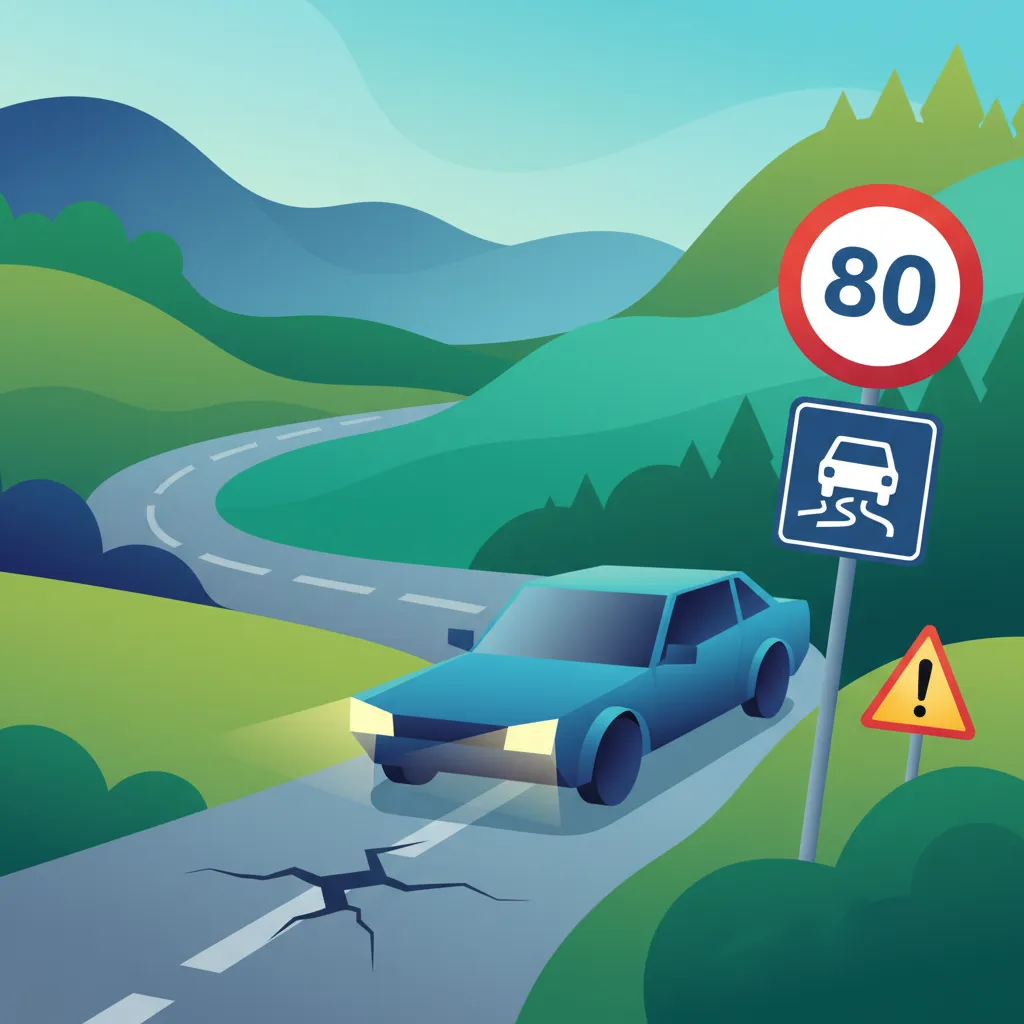
Speed limits define the maximum permissible speed on Swedish roads, but they are not always the safest speed. This section clarifies the purpose of these limits and emphasizes your responsibility to constantly assess road, weather, and traffic conditions to drive at an appropriate and safe speed, even if it's below the posted maximum. Understanding how to adapt your speed is a cornerstone of safe driving and crucial for the Swedish theory test.
Theory topic content overview
Read the full theory topic guide for Swedish Speed Limits with structured, easy-to-scan content built for learners in Sweden. This detailed section explains the exact rule, meaning, traffic context, comparison points, and exam logic behind this Swedish driving theory topic so you can study faster, understand the concept more clearly, and avoid common interpretation mistakes on the theory test.
Speed limits are fundamental regulations in Swedish traffic law that define the maximum legal speed a vehicle is permitted to travel on a given road or within a specific area. These limits are set to ensure safety, manage traffic flow, and protect all road users, including vulnerable ones like pedestrians and cyclists. While essential for legal compliance, understanding speed limits goes beyond simply knowing the numbers; it's about mastering the art of adapting your speed to ensure safety in diverse Swedish road conditions.
Speed is a primary factor in road safety. Higher speeds drastically increase both the risk of a collision and the severity of injuries if one occurs. In Sweden, Transportstyrelsen (the Swedish Transport Agency) and Trafikverket (the Swedish Transport Administration) set these limits based on road design, environment, and accident statistics.
For the Swedish driving licence theory exam, a deep understanding of speed limits is non-negotiable. Exam questions frequently test not only your knowledge of specific limits but, more importantly, your judgment in adjusting speed based on various scenarios. In practical driving, respecting and adapting your speed is a cornerstone of safe, responsible, and environmentally conscious driving in Sweden.
In Sweden, speed limits are primarily indicated by circular förbudsmärken (prohibitory signs) featuring a red border and a black number on a white background. These signs denote the legal maximum speed in kilometres per hour (km/h).
Beyond specific signs, general speed limits apply where no signs are posted. These typical general speed limits in Sweden are:
inom tättbebyggt område): Generally 50 km/h, though many areas, especially residential streets, are designated as 30 km/h zones (30-zoner) or even gångfartsområden (pedestrian zones) where gångfart (walking pace, approx. 7 km/h) applies.utanför tättbebyggt område): Often 70, 80, or 100 km/h on landsvägar (rural roads), depending on the road's design and safety features.motorvägar) and Expressways (motortrafikleder): Typically 110 or 120 km/h, though 90 km/h is common for certain sections or vehicle types.Always remember that these general limits are superseded by any specific speed limit signs you encounter.
Anpassa Hastigheten)A speed limit sign indicates the absolute maximum speed allowed under ideal conditions. It is not a recommended speed to maintain at all times. In Sweden, a core principle of safe driving is anpassa hastigheten (adapting your speed). This means constantly assessing the current situation and adjusting your speed downwards whenever conditions are less than ideal.
Key factors requiring you to reduce your speed below the posted limit include:
halka), snowy, gravel (grusväg), uneven surfaces, or roads with potholes significantly reduce grip and increase stopping distances.dimma), heavy rain (kraftigt regn), or strong winds (stark vind) severely impact visibility and vehicle control.övergångsställen), or school zones requires reduced speed to anticipate hazards.Many learners in Sweden find the distinction between the legal maximum speed and an appropriate safe speed (lämplig hastighet) challenging. It is critical to understand:
The Swedish theory test frequently highlights this difference. Driving at the legal maximum speed when conditions are poor (e.g., heavy rain, dense fog, icy patches) is not only dangerous but also illegal under Trafikförordningen (the Swedish Traffic Ordinance), as it violates the general duty to drive safely. You must always be able to stop your vehicle within the distance you can see to be clear (kunna stanna i tid).
landsväg med vinterväglag): You're on a landsväg with a 70 km/h limit, but light snow has started falling, and the temperature is around freezing. Even if the road initially seems clear, patches of halka (slipperiness) or black ice (svartis) could exist. Maintaining 70 km/h would be unsafe. You must reduce your speed significantly, perhaps to 50 km/h or even less, to maintain control and have sufficient stopping distance.30-zon Near a School: Driving through a 30-zon in a bostadsområde (residential area) during school pick-up time. Even if you don't see children immediately, the potential for them to suddenly appear between parked cars is high. Driving precisely at 30 km/h might still be too fast; reducing to 20 km/h or gångfart allows for immediate reaction.kurva med begränsad sikt): On a rural road with an 80 km/h limit, you approach a sharp, blind bend. You cannot see what's around the corner – perhaps an oncoming vehicle, a cyclist, or an animal. You must reduce your speed before entering the bend to ensure you can stop or react safely within your visible path, regaining speed only once you have clear visibility.halka, or areas with high pedestrian potential.Gångfartsområden: Driving too quickly in pedestrian zones where gångfart (walking pace) is mandatory and pedestrians have priority.Mastering speed limits in Sweden isn't about memorising numbers; it's about developing a profound understanding of risk and responsibility. Always ask yourself: "Is this a safe and appropriate speed for these specific conditions, allowing me to stop safely for any unforeseen event?" Your ability to constantly assess, anticipate, and adapt your speed is a hallmark of a skilled and safe Swedish driver, and a key to success in your driving theory and practical tests.
Swedish speed limits set the maximum legal speed under ideal conditions, but drivers must constantly assess actual conditions including weather, road surface, visibility, and traffic density to determine an appropriate safe speed that allows them to stop in time. The principle of anpassa hastigheten requires reducing speed below the posted limit whenever conditions are less than ideal, such as in rain, fog, on slippery surfaces, or near vulnerable road users. General limits apply where no signs are posted: 50 km/h in built-up areas (often reduced to 30 km/h in residential zones), 70-100 km/h on rural roads, and 110-120 km/h on motorways. The Swedish theory exam frequently tests the distinction between legal maximum and appropriate safe speed, as driving at the maximum during poor conditions violates Trafikförordningen and constitutes a serious safety risk.
A short set of high-value points that capture the most important ideas from this theory explanation.
Speed limit signs in Sweden set the absolute maximum legal speed under ideal conditions only, not a target speed to maintain.
The concept of anpassa hastigheten (adapting your speed) is a core principle requiring constant assessment of road, weather, and traffic conditions.
You must always be able to stop your vehicle within the distance you can see to be clear, even if this means driving below the posted limit.
Swedish speed limits are indicated by circular förbudsmärken with red borders displaying km/h numbers.
Driving at the legal maximum when conditions are poor violates Trafikförordningen and is both dangerous and illegal.
Built-up areas typically have 50 km/h limits, with many residential streets designated as 30-zoner where 30 km/h applies.
Rural roads (landsvägar) often have 70, 80, or 100 km/h limits, while motorways (motorvägar) allow 110 or 120 km/h.
Conditions requiring significant speed reduction include halka (slippery surfaces), dimma (fog), heavy rain, poor visibility, and heavy traffic.
Gångfartsområden (pedestrian zones) require walking pace of approximately 7 km/h, not the standard urban limit.
Total stopping distance equals reaction distance plus braking distance, both of which increase dramatically with speed.
Treating the posted speed limit as a target speed to maintain regardless of actual driving conditions.
Underestimating how dramatically adverse conditions (wet, icy, or low visibility) increase stopping distance.
Failing to reduce speed in 30-zoner near schools or residential areas where children or pedestrians may appear suddenly.
Not recognizing that driving too fast in gångfartsområden violates the walking-pace requirement and endangers pedestrians.
Ignoring less obvious hazards such as subtle changes in road surface, black ice (svartis), or blind bends.
Start with a short, direct summary of Swedish Speed Limits before reading the full explanation below.
Speed limits in Sweden are regulations setting the highest legal speed for vehicles on different roads and areas, indicated by signs. While these are maximums, drivers must always adjust their speed downwards based on actual conditions like weather, visibility, traffic density, and road surface. Your chosen speed must always allow you to stop safely and react to hazards, even if it means driving below the posted limit. This balance is key for both safe driving and the Swedish theory exam.
Review the most important terms, rule signals, and traffic concepts linked to Swedish Speed Limits.
Explore related theory topic pages connected to Swedish Speed Limits and continue with the next useful rule explanation.
See the common search queries learners use when trying to understand Swedish Speed Limits in Sweden.

Dive deeper into specific theory topics, review detailed explanations of road rules, and reinforce your understanding of Swedish traffic regulations. Continue your preparation for the driving licence exam by exploring each core concept in detail.
Explore Driving Theory TopicsTheory topic content overview
A short set of high-value points that capture the most important ideas from this theory explanation.
Speed limit signs in Sweden set the absolute maximum legal speed under ideal conditions only, not a target speed to maintain.
The concept of anpassa hastigheten (adapting your speed) is a core principle requiring constant assessment of road, weather, and traffic conditions.
You must always be able to stop your vehicle within the distance you can see to be clear, even if this means driving below the posted limit.
Swedish speed limits are indicated by circular förbudsmärken with red borders displaying km/h numbers.
Driving at the legal maximum when conditions are poor violates Trafikförordningen and is both dangerous and illegal.
Built-up areas typically have 50 km/h limits, with many residential streets designated as 30-zoner where 30 km/h applies.
Rural roads (landsvägar) often have 70, 80, or 100 km/h limits, while motorways (motorvägar) allow 110 or 120 km/h.
Conditions requiring significant speed reduction include halka (slippery surfaces), dimma (fog), heavy rain, poor visibility, and heavy traffic.
Gångfartsområden (pedestrian zones) require walking pace of approximately 7 km/h, not the standard urban limit.
Total stopping distance equals reaction distance plus braking distance, both of which increase dramatically with speed.
Treating the posted speed limit as a target speed to maintain regardless of actual driving conditions.
Underestimating how dramatically adverse conditions (wet, icy, or low visibility) increase stopping distance.
Failing to reduce speed in 30-zoner near schools or residential areas where children or pedestrians may appear suddenly.
Not recognizing that driving too fast in gångfartsområden violates the walking-pace requirement and endangers pedestrians.
Ignoring less obvious hazards such as subtle changes in road surface, black ice (svartis), or blind bends.
Start with a short, direct summary of Swedish Speed Limits before reading the full explanation below.
Speed limits in Sweden are regulations setting the highest legal speed for vehicles on different roads and areas, indicated by signs. While these are maximums, drivers must always adjust their speed downwards based on actual conditions like weather, visibility, traffic density, and road surface. Your chosen speed must always allow you to stop safely and react to hazards, even if it means driving below the posted limit. This balance is key for both safe driving and the Swedish theory exam.
Review the most important terms, rule signals, and traffic concepts linked to Swedish Speed Limits.
Explore related theory topic pages connected to Swedish Speed Limits and continue with the next useful rule explanation.
See the common search queries learners use when trying to understand Swedish Speed Limits in Sweden.
Dive deeper into specific theory topics, review detailed explanations of road rules, and reinforce your understanding of Swedish traffic regulations. Continue your preparation for the driving licence exam by exploring each core concept in detail.
Explore Driving Theory TopicsUse this exam-focused revision tip to understand how Swedish Speed Limits is likely to appear in theory questions for learners in Sweden. This section helps you identify the most testable part of the rule, avoid common traps, and remember the concept more effectively during Swedish driving theory exam preparation.
In the Swedish theory test, remember that posted speed limits are *maximums*, not recommendations. Always be prepared to explain why you might need to drive *below* the limit based on various conditions, and understand the critical relationship between speed, reaction time, and stopping distance. This is a common area of learner confusion and a frequent topic in exam questions.
Read direct answers to the most common learner questions about Swedish Speed Limits in Sweden. This FAQ focuses on rule confusion, practical meaning, comparison with similar concepts, and the exact uncertainties that appear most often in Swedish driving theory revision and exam preparation.
Speed limits are primarily set to enhance road safety, reduce the risk of accidents, manage traffic flow, and protect vulnerable road users by defining the maximum legal speed for a given area or road type.
Yes, speed limits in Sweden are typically lower in urban and residential areas (e.g., 30 or 50 km/h) and higher on rural roads and motorways (e.g., 70, 90, 110, or 120 km/h), indicated by specific signs.
No, the posted speed limit is the *maximum* legal speed. You must always adjust your speed downwards if conditions like adverse weather, reduced visibility, heavy traffic, or a slippery road surface make it unsafe to drive at the maximum.
In adverse weather such as heavy rain, snow, ice, or fog, you must significantly reduce your speed below the posted limit to maintain control, ensure adequate stopping distance, and respond to reduced visibility. Swedish conditions often demand careful speed adaptation.
The general speed limit within built-up areas (tätbebyggt område) in Sweden is 50 km/h, unless otherwise indicated by specific signs. Many residential streets or school zones are often 30 km/h zones to enhance safety.
While usually safer, driving excessively slowly without a valid reason can impede traffic flow and create a hazard, especially on higher-speed roads like motorways. You should drive at an appropriate speed that considers both safety and the reasonable flow of traffic.
Speeding in Sweden can lead to fines, loss of your driving license, or even imprisonment in severe cases, depending on how much you exceeded the limit. It also significantly increases the risk and severity of accidents.
Refine your study plan by exploring practice sets on specific Swedish traffic rules, road signs, or driving situations. Use the search to quickly access relevant questions and focus your preparation for the official driving licence theory exam.