
Seat belts, or 'bilbälte' in Swedish, are a fundamental safety feature in every vehicle, designed to restrain occupants during sudden stops or collisions. This page outlines their critical role in preventing severe injuries, the legal obligations for their use in Sweden, and how to ensure they are worn effectively by all passengers. Pay close attention to the driver's responsibility for younger passengers and proper fitting.
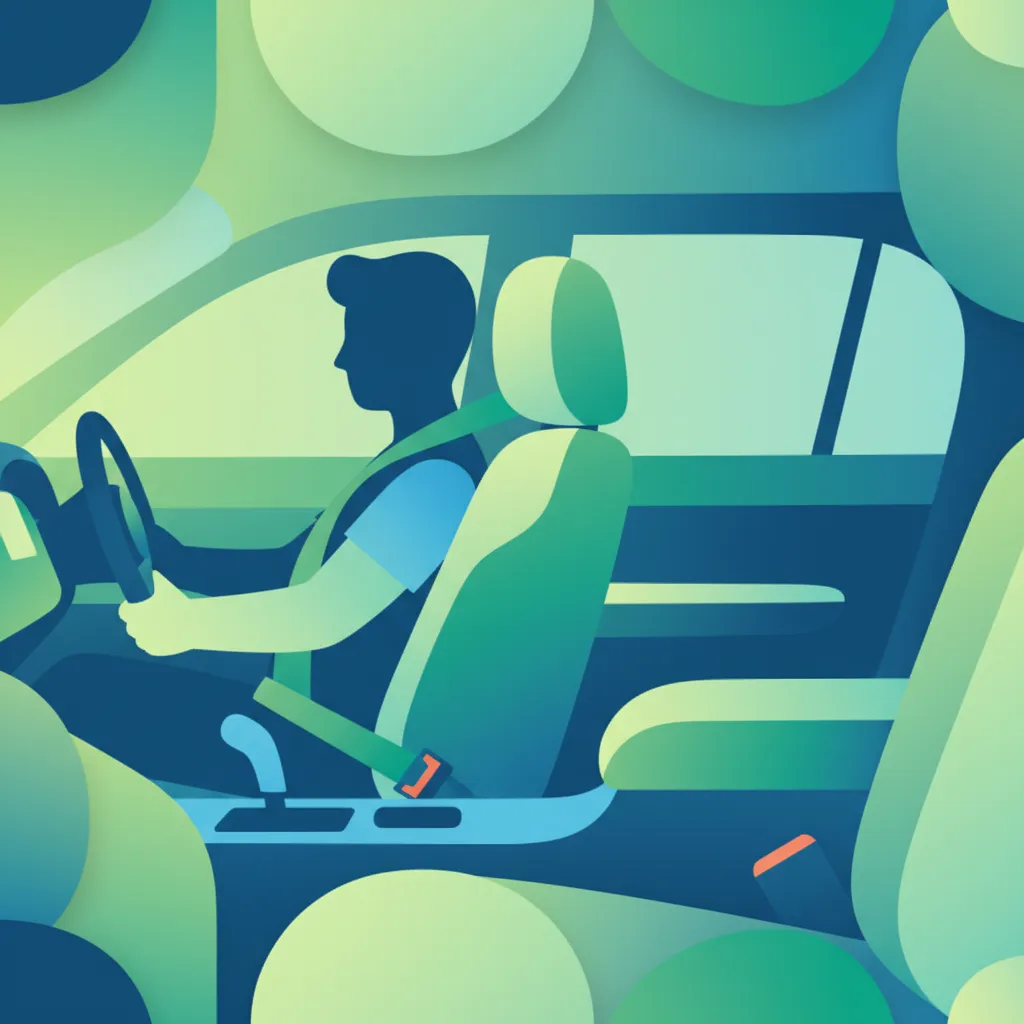
Theory topic content overview
Read the full theory topic guide for Seat Belts Explained with structured, easy-to-scan content built for learners in Sweden. This detailed section explains the exact rule, meaning, traffic context, comparison points, and exam logic behind this Swedish driving theory topic so you can study faster, understand the concept more clearly, and avoid common interpretation mistakes on the theory test.
Seat belts, known in Sweden as bilbälte, are the single most effective safety device in a vehicle. Their primary purpose is to restrain occupants during sudden stops, rapid decelerations, or collisions, preventing them from being thrown forward, hitting the vehicle's interior, or being ejected from the vehicle entirely. Understanding their function and the legal requirements in Sweden is fundamental to road safety and a key part of the Swedish driving theory exam.
When a vehicle is involved in a collision, the laws of physics, specifically inertia, come into play. Inertia dictates that objects in motion tend to stay in motion, and objects at rest tend to stay at rest. If your car is moving at 50 km/h and suddenly stops, your body will continue to move forward at 50 km/h until something stops it. Without a seat belt, that "something" is often the steering wheel, dashboard, windshield, or other occupants.
A seat belt works by:
Modern seat belt systems in Sweden often include advanced features like:
bältessträckare): An automatic system that retracts the seat belt webbing almost instantaneously in a collision, removing any slack and pulling the occupant firmly into the seat for maximum protection before the main impact.The bilbälte is not just a recommendation; it is a legal requirement for all vehicle occupants in Sweden. This mandate reflects decades of research showing that seat belts are the most effective way to reduce fatalities and serious injuries in traffic accidents.
For drivers in Sweden, this includes a specific and crucial responsibility:
Ignoring these rules not only carries legal penalties but drastically increases the risk of severe injury or death for yourself and your passengers.
A seat belt can only offer its full protective potential if worn correctly. Many injuries occur because bilbälte are improperly adjusted or positioned.
Follow these guidelines for correct seat belt use:
nära kroppen): The belt should be snug against your body with no slack. Remove bulky outerwear like thick jackets that can create slack, as this reduces the belt's effectiveness by allowing more forward movement before restraint.For pregnant drivers and passengers, correct seat belt usage is especially vital to protect both the mother and the unborn child. The lap belt must always sit below the pregnant belly, across the hip bones, and never directly over the stomach. The shoulder belt should rest as usual, across the chest and shoulder, between the breasts.
While bilbälte generally refer to the safety restraint system, there are two main types you might encounter:
midjebälte): Also known as a lap belt, this type only has a strap that goes across the lap. It was more common in older vehicles and might still be found in the middle rear seat of some cars. While it prevents ejection and some forward movement, it offers less protection than a three-point belt as it doesn't restrain the upper body, which can still strike the interior.Learners often make several key mistakes or hold misconceptions regarding seat belts:
Always remember that your bilbälte is your primary defence in a collision. Make buckling up a reflex for yourself and a non-negotiable rule for all your passengers. Ensuring everyone is correctly restrained is not just about avoiding a fine; it's about potentially saving lives and preventing serious injuries on Swedish roads. Practice makes perfect: always adjust your seat belt for a snug, correct fit before starting your journey.
Seat belts (bilbälte) are the most effective safety device in a vehicle, working by restraining your body's momentum during collisions and distributing impact forces across the strong bones of your hips and chest rather than vulnerable areas. In Sweden, all occupants are legally required to wear seat belts, and drivers bear specific responsibility for passengers under 15. Proper positioning is critical: the lap belt must sit low across the pelvis (never over the stomach), and the diagonal shoulder strap must cross the chest close to the neck (never under the arm). Advanced features like pretensioners (bältessträckare) automatically tighten the belt during a collision, but only if the belt is worn correctly from the start of your journey.
A short set of high-value points that capture the most important ideas from this theory explanation.
Seat belts protect occupants by counteracting inertia, keeping your body from continuing forward at the vehicle's speed during sudden stops
In Sweden, seat belt use (bilbälte) is a legal requirement for all vehicle occupants without exception
The driver holds legal responsibility for ensuring all passengers under 15 years of age are correctly secured
A correctly worn seat belt must sit snugly across the shoulder and chest, with the lap portion positioned low across the hips/pelvis
Modern seat belts include pretensioners and load limiters that enhance protection during a collision
The driver's legal responsibility specifically covers passengers under 15 years old in Sweden
The lap portion of the belt must always sit across the hip bones/pelvis, never over the stomach
The diagonal shoulder strap should cross close to the neck and over the collarbone, never under the arm or behind the back
For pregnant occupants, the lap belt must sit below the pregnant belly at all times
Three-point seat belts provide better protection than two-point (lap-only) belts by restraining both the upper and lower body
Wearing a seat belt loosely or with slack, which dramatically reduces its effectiveness in a crash
Placing the shoulder strap under the arm or behind the back, which can cause severe internal injuries
Relying on airbags alone without wearing a seat belt, as airbags are designed to work together with belts
Thinking seat belts are only necessary for long journeys, when accidents can occur on any trip regardless of distance
Drivers forgetting to actively check that all passengers, especially those under 15, are correctly buckled up
Start with a short, direct summary of Seat Belts Explained before reading the full explanation below.
Seat belts are mandatory safety devices that significantly reduce the risk of injury or death in a traffic accident by keeping occupants securely restrained and distributing impact forces across strong parts of the body. In Sweden, it is legally required for all vehicle occupants to wear a seat belt, and the driver holds responsibility for ensuring passengers under 15 years of age are correctly buckled up. Always ensure the belt sits snugly across your shoulder and hips, close to your body.
Review the most important terms, rule signals, and traffic concepts linked to Seat Belts Explained.
Explore related theory topic pages connected to Seat Belts Explained and continue with the next useful rule explanation.
See the common search queries learners use when trying to understand Seat Belts Explained in Sweden.

Dive deeper into specific theory topics, review detailed explanations of road rules, and reinforce your understanding of Swedish traffic regulations. Continue your preparation for the driving licence exam by exploring each core concept in detail.
Explore Driving Theory TopicsTheory topic content overview
A short set of high-value points that capture the most important ideas from this theory explanation.
Seat belts protect occupants by counteracting inertia, keeping your body from continuing forward at the vehicle's speed during sudden stops
In Sweden, seat belt use (bilbälte) is a legal requirement for all vehicle occupants without exception
The driver holds legal responsibility for ensuring all passengers under 15 years of age are correctly secured
A correctly worn seat belt must sit snugly across the shoulder and chest, with the lap portion positioned low across the hips/pelvis
Modern seat belts include pretensioners and load limiters that enhance protection during a collision
The driver's legal responsibility specifically covers passengers under 15 years old in Sweden
The lap portion of the belt must always sit across the hip bones/pelvis, never over the stomach
The diagonal shoulder strap should cross close to the neck and over the collarbone, never under the arm or behind the back
For pregnant occupants, the lap belt must sit below the pregnant belly at all times
Three-point seat belts provide better protection than two-point (lap-only) belts by restraining both the upper and lower body
Wearing a seat belt loosely or with slack, which dramatically reduces its effectiveness in a crash
Placing the shoulder strap under the arm or behind the back, which can cause severe internal injuries
Relying on airbags alone without wearing a seat belt, as airbags are designed to work together with belts
Thinking seat belts are only necessary for long journeys, when accidents can occur on any trip regardless of distance
Drivers forgetting to actively check that all passengers, especially those under 15, are correctly buckled up
Start with a short, direct summary of Seat Belts Explained before reading the full explanation below.
Seat belts are mandatory safety devices that significantly reduce the risk of injury or death in a traffic accident by keeping occupants securely restrained and distributing impact forces across strong parts of the body. In Sweden, it is legally required for all vehicle occupants to wear a seat belt, and the driver holds responsibility for ensuring passengers under 15 years of age are correctly buckled up. Always ensure the belt sits snugly across your shoulder and hips, close to your body.
Review the most important terms, rule signals, and traffic concepts linked to Seat Belts Explained.
Explore related theory topic pages connected to Seat Belts Explained and continue with the next useful rule explanation.
See the common search queries learners use when trying to understand Seat Belts Explained in Sweden.
Dive deeper into specific theory topics, review detailed explanations of road rules, and reinforce your understanding of Swedish traffic regulations. Continue your preparation for the driving licence exam by exploring each core concept in detail.
Explore Driving Theory TopicsUse this exam-focused revision tip to understand how Seat Belts Explained is likely to appear in theory questions for learners in Sweden. This section helps you identify the most testable part of the rule, avoid common traps, and remember the concept more effectively during Swedish driving theory exam preparation.
The Swedish theory exam often includes questions about seat belt usage, especially concerning the driver's responsibility for passengers under 15 years old. Remember this specific age limit and understand that a correctly fitted seat belt (snug against the body, not on the shoulder) dramatically increases safety and is a legal requirement.
Read direct answers to the most common learner questions about Seat Belts Explained in Sweden. This FAQ focuses on rule confusion, practical meaning, comparison with similar concepts, and the exact uncertainties that appear most often in Swedish driving theory revision and exam preparation.
Wearing a seat belt is legally mandated in Sweden because it is proven to be the most effective safety device for reducing fatalities and serious injuries in traffic accidents by preventing ejection and cushioning impact.
In Sweden, the driver is legally responsible for ensuring that all passengers under the age of 15 years are using a seat belt or appropriate child restraint correctly. Adult passengers are responsible for their own seat belt use.
A seat belt should sit snugly against the body, with the lap belt across the pelvis (under the stomach if pregnant) and the shoulder belt diagonally across the chest and as close to the neck as possible, not resting on the shoulder or under the arm. Remove thick jackets to ensure a proper fit.
A two-point belt (lap belt) only goes across the waist and offers less protection. A three-point belt, common in modern cars, goes across both the waist and diagonally over the shoulder, distributing forces more effectively over stronger parts of the body for superior protection.
Seat belts work by restraining your body, preventing you from hitting the interior of the car or being ejected. They distribute the force of impact over a larger area of your body (chest and pelvis), reducing the severity of injuries. Modern cars also have pretensioners that tighten the belt and load limiters that release a small amount of webbing to prevent excessive force.
Yes, 'bilbälte' is the Swedish term for a seat belt. It refers to the same safety device used in vehicles to protect occupants.
Exemptions from wearing a seat belt in Sweden are very rare and typically require a valid medical certificate from a doctor, or apply to specific vehicle types or circumstances like driving on a private road. For the vast majority of drivers and passengers, seat belt use is mandatory.
Refine your study plan by exploring practice sets on specific Swedish traffic rules, road signs, or driving situations. Use the search to quickly access relevant questions and focus your preparation for the official driving licence theory exam.