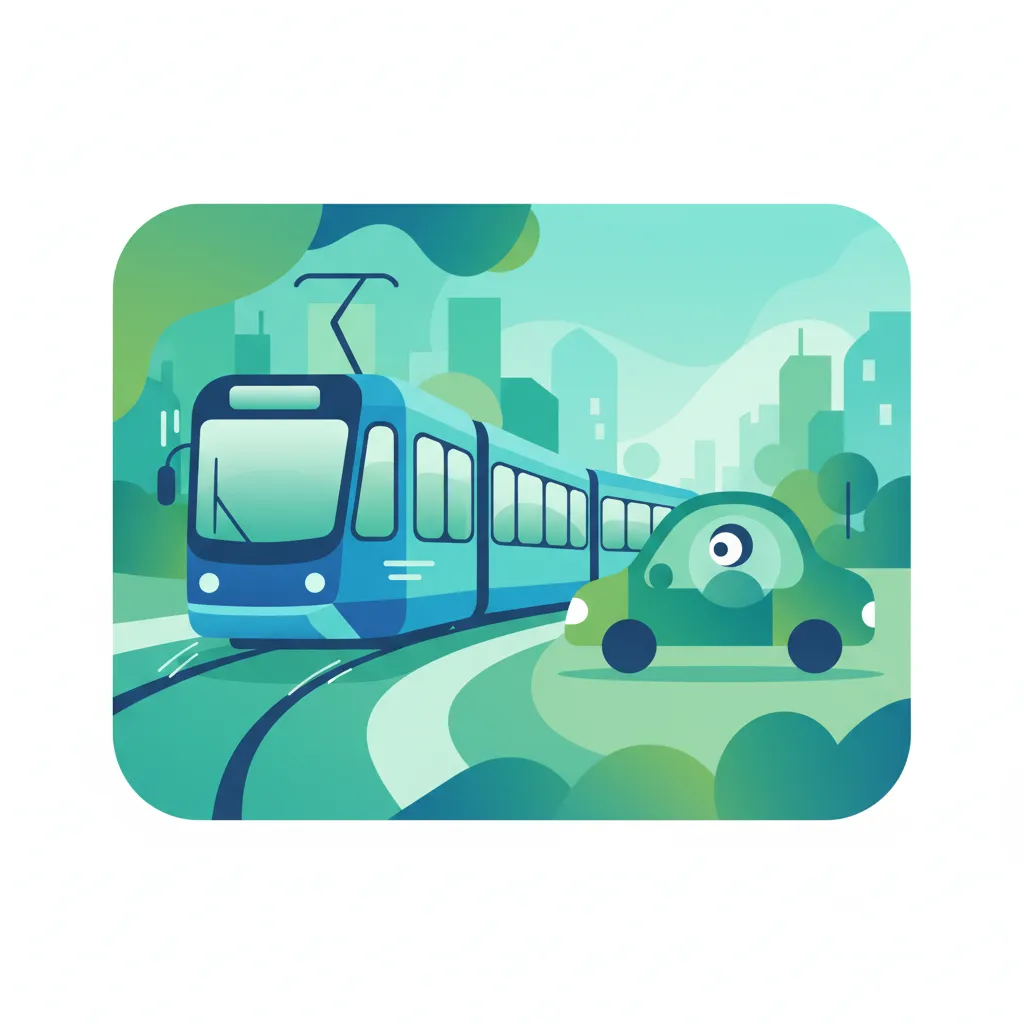
Trams and certain public transport vehicles operate with unique constraints in Swedish urban environments. Their fixed routes, significant size, and limited ability to maneuver quickly mean drivers must often give them priority. This page explains these specific rules, helping you safely share the road and confidently answer related theory questions.
Theory topic content overview
Read the full theory topic guide for Tram Priority Rules with structured, easy-to-scan content built for learners in Sweden. This detailed section explains the exact rule, meaning, traffic context, comparison points, and exam logic behind this Swedish driving theory topic so you can study faster, understand the concept more clearly, and avoid common interpretation mistakes on the theory test.
In Swedish traffic, spårvagn (trams) and certain kollektivtrafik (public transport) vehicles operate under special priority rules. These rules are essential for road safety and efficient urban transport, and are frequently tested in the Swedish driving theory exam. Unlike regular vehicles, trams run on fixed tracks and have limited maneuverability, which dictates their unique right of way status.
Tram priority refers to the specific traffic rules that generally grant trams the right of way over other vehicles. This means drivers must often yield to trams, even in situations where standard priority rules (like the right-hand rule or högerregeln) might otherwise apply.
Similarly, some public transport vehicles like buses, especially when operating in designated lanes or under specific signals, are also given priority to ensure they can maintain their schedules and transport passengers efficiently. The core principle behind these rules is to acknowledge the physical constraints and public service role of these vehicles.
The rationale for tram and public transport priority is rooted in safety, physics, and urban planning:
public transport priority helps maintain efficient timetables, benefiting a large number of commuters and reducing overall traffic congestion.The general rule in Sweden is clear: trams typically have priority. This often overrides other Swedish traffic rules.
This is where tram priority is most critical and often confuses learners.
priority over all other vehicles, even those approaching from the right. This is a key distinction from the högerregeln (right-hand rule), which applies between other vehicles. When a spårvagn approaches, you must yield.priority over vehicles going straight on the same road, and over vehicles coming from the opposite direction that intend to turn. This differs from the standard rule where turning vehicles must yield to oncoming traffic.tram is controlled by specific tram signals (like arrow signals) or traffic lights that indicate it must stop or yield, then those signals take precedence. Similarly, if there are give way signs or stop signs specifically for the tram, it must obey them, though this is less common.tram tracks. Always be aware of approaching trams, check your mirrors frequently, and be prepared to move off the tracks to allow the tram to pass. Never block tram tracks or impede a tram's progress.tram stops at a designated platform or stop, you must allow passengers to board and alight safely. Do not drive past a tram that is stopped and has passengers getting on or off, especially if it involves crossing your path.While trams have a broad general priority, buses (linjebussar) usually receive priority in more specific circumstances:
designated bus lanes.bus signalling its intention to move from a bus stop (busshållplats) is often given courtesy by other drivers, allowing it to pull out. However, this is more a matter of considerate driving for smooth traffic flow than a strict legal right of way that requires other traffic to stop. Always be prepared to yield to a departing bus if it's safe and practical to do so, but understand that the bus driver must still ensure it's safe to pull out.traffic signals that specifically grant priority to buses (e.g., green light for buses while other lanes have red).Understanding these nuances is crucial for Swedish driving theory and practical driving:
right-hand rule at unmarked intersections. You must yield to the tram, even if it approaches from the left.traffic lights or tram-specific signals (e.g., white light signals) override the general tram priority rule. Always observe and obey these.yield to pedestrians and cyclists who have right of way at designated crossings (e.g., zebra crossings) or when entering their path safely.Emergency vehicles (polis, brandkår, ambulans) with active blue lights and sirens always have priority over all other traffic, including trams.spårvagn is approaching from your left on crossing tracks. Even though the right-hand rule would normally give you priority over a vehicle from the left, you must yield to the tram. Prepare to stop and let the tram pass safely.tram tracks. The tram ahead of you slows down for a stop. You should maintain a safe distance and be prepared for passengers to potentially cross the road. Do not attempt to overtake if it means getting too close to the tram or its stop, or if there's any risk of blocking its path.city bus at a marked stop ahead of you indicates to pull out. While not a strict legal requirement to stop all traffic, it is good practice and promotes safe and efficient traffic flow to reduce your speed and allow the bus to merge if conditions permit.Learners frequently make these mistakes regarding tram and public transport priority in the Swedish driving theory test and on the road:
right-hand rule to trams: This is the most critical error. Always remember that a tram generally has priority over the högerregeln.yield.tram tracks: Never stop your vehicle on tram tracks in a way that could impede a tram's movement, even if traffic is congested. Leave enough space.tram signals: Relying only on general tram priority when traffic lights or tram-specific signals are present. These signals override general rules.right of way that would require all traffic to stop regardless of safety.When driving in Sweden, especially in urban areas with trams and public transport, adopt a defensive mindset focused on anticipation and safety. Always look for tram tracks, tram signals, bus lanes, and bus stops. The fundamental principle is to give trams space and priority due to their unique operational constraints. For buses, be courteous and facilitate their movement, especially in designated areas or when leaving stops, to ensure smooth public transport operations and road safety. By internalizing these priority rules, you contribute to a safer and more efficient Swedish traffic environment.
In Sweden, trams operate under special priority rules that often override standard right-of-way conventions. Unlike regular vehicles, trams have fixed tracks and limited maneuverability, meaning they cannot swerve or stop quickly, so other drivers must yield to them—particularly at unmarked intersections where tram priority supersedes the right-hand rule. However, explicit tram signals or traffic lights always take precedence over general tram priority rules. For buses, priority is more situational, applying mainly to designated bus lanes, while pulling out from stops relies on courteous cooperation rather than strict legal right of way. Drivers must always anticipate tram movements, never block tracks, and remember that emergency vehicles remain top priority for all road users including trams.
A short set of high-value points that capture the most important ideas from this theory explanation.
Trams generally have priority over other vehicles at unmarked intersections, even overriding the right-hand rule (högerregeln) when approaching from the left
Trams cannot swerve or brake quickly due to fixed tracks and their large mass, making it critical to anticipate their movement and yield
Tram-specific traffic signals or lights override the general tram priority rule and must always be obeyed
A tram that is turning at an intersection has priority over vehicles going straight and over vehicles turning from the opposite direction
Never block tram tracks or impede a tram's progress, even in congested traffic situations
At unmarked intersections, tram priority supersedes högerregeln—you must yield to the tram regardless of which side it approaches from
White light signals or specific traffic lights controlling trams always take precedence over general tram priority rules
Trams turning have priority over vehicles proceeding straight, unlike standard turning vehicle rules
Buses have more limited priority than trams—bus lane restrictions apply, but pulling out from stops relies on driver courtesy rather than a strict right of way
Emergency vehicles with active blue lights and sirens retain priority over all traffic, including trams
Applying the right-hand rule to trams at unmarked intersections—this is the most critical error on Swedish theory exams
Assuming a tram will stop or yield for you since trams cannot brake quickly and may not see your vehicle
Blocking tram tracks by stopping on rails, even briefly in congested traffic, which can obstruct public transport
Relying solely on general tram priority while ignoring tram-specific signals or traffic lights that override it
Confusing the courteous recommendation to allow buses to pull out from stops with a strict legal right of way requiring all traffic to stop
Start with a short, direct summary of Tram Priority Rules before reading the full explanation below.
In Sweden, trams generally have priority over other vehicles, especially at intersections, due to their fixed tracks and inability to swerve or stop quickly. Other public transport vehicles, like buses, may also receive priority in specific situations or designated lanes, signaled by road markings or signs. Drivers must always be attentive and yield to these vehicles to ensure safe and efficient traffic flow.
Review the most important terms, rule signals, and traffic concepts linked to Tram Priority Rules.
Explore related theory topic pages connected to Tram Priority Rules and continue with the next useful rule explanation.
See the common search queries learners use when trying to understand Tram Priority Rules in Sweden.

Dive deeper into specific theory topics, review detailed explanations of road rules, and reinforce your understanding of Swedish traffic regulations. Continue your preparation for the driving licence exam by exploring each core concept in detail.
Explore Driving Theory TopicsTheory topic content overview
A short set of high-value points that capture the most important ideas from this theory explanation.
Trams generally have priority over other vehicles at unmarked intersections, even overriding the right-hand rule (högerregeln) when approaching from the left
Trams cannot swerve or brake quickly due to fixed tracks and their large mass, making it critical to anticipate their movement and yield
Tram-specific traffic signals or lights override the general tram priority rule and must always be obeyed
A tram that is turning at an intersection has priority over vehicles going straight and over vehicles turning from the opposite direction
Never block tram tracks or impede a tram's progress, even in congested traffic situations
At unmarked intersections, tram priority supersedes högerregeln—you must yield to the tram regardless of which side it approaches from
White light signals or specific traffic lights controlling trams always take precedence over general tram priority rules
Trams turning have priority over vehicles proceeding straight, unlike standard turning vehicle rules
Buses have more limited priority than trams—bus lane restrictions apply, but pulling out from stops relies on driver courtesy rather than a strict right of way
Emergency vehicles with active blue lights and sirens retain priority over all traffic, including trams
Applying the right-hand rule to trams at unmarked intersections—this is the most critical error on Swedish theory exams
Assuming a tram will stop or yield for you since trams cannot brake quickly and may not see your vehicle
Blocking tram tracks by stopping on rails, even briefly in congested traffic, which can obstruct public transport
Relying solely on general tram priority while ignoring tram-specific signals or traffic lights that override it
Confusing the courteous recommendation to allow buses to pull out from stops with a strict legal right of way requiring all traffic to stop
Start with a short, direct summary of Tram Priority Rules before reading the full explanation below.
In Sweden, trams generally have priority over other vehicles, especially at intersections, due to their fixed tracks and inability to swerve or stop quickly. Other public transport vehicles, like buses, may also receive priority in specific situations or designated lanes, signaled by road markings or signs. Drivers must always be attentive and yield to these vehicles to ensure safe and efficient traffic flow.
Review the most important terms, rule signals, and traffic concepts linked to Tram Priority Rules.
Explore related theory topic pages connected to Tram Priority Rules and continue with the next useful rule explanation.
See the common search queries learners use when trying to understand Tram Priority Rules in Sweden.
Dive deeper into specific theory topics, review detailed explanations of road rules, and reinforce your understanding of Swedish traffic regulations. Continue your preparation for the driving licence exam by exploring each core concept in detail.
Explore Driving Theory TopicsUse this exam-focused revision tip to understand how Tram Priority Rules is likely to appear in theory questions for learners in Sweden. This section helps you identify the most testable part of the rule, avoid common traps, and remember the concept more effectively during Swedish driving theory exam preparation.
A common mistake in the Swedish theory exam is forgetting that trams often override standard priority rules like the 'right-hand rule' at intersections. Always consider the tram's fixed path and limited maneuverability first. Look out for specific signs or traffic lights that might alter tram priority in certain situations, but assume general priority for the tram unless explicitly stated otherwise.
Read direct answers to the most common learner questions about Tram Priority Rules in Sweden. This FAQ focuses on rule confusion, practical meaning, comparison with similar concepts, and the exact uncertainties that appear most often in Swedish driving theory revision and exam preparation.
In Sweden, 'tram priority' means that trams, which run on fixed tracks, usually have the right of way over other road users. This is primarily because they cannot easily stop or change direction, requiring other drivers to yield to them.
Trams have priority due to their physical limitations: they run on rails, have long stopping distances, and cannot swerve. Giving them priority ensures safety and helps maintain the efficiency of public transport schedules.
Not always. While trams almost always have priority, buses typically follow general traffic rules. However, buses may be granted priority in specific situations, such as when exiting a bus stop or within designated bus lanes, often indicated by specific signage or road markings.
You should give way to an approaching tram at most intersections in Sweden, even if you normally would have priority based on the 'right-hand rule' or other signs, unless specific traffic lights or signs clearly indicate otherwise.
'Spårvagn' is the Swedish word for tram. You might encounter this term in official driving theory materials or on road signs in areas with tram lines.
The Swedish driving theory exam frequently includes questions on tram priority, often presenting scenarios at intersections or tram stops. These questions assess your understanding of when to yield and how to interact safely with trams.
Yes, you can overtake a tram, but only if it's safe to do so and does not involve driving on the left side of the tram if it's in motion. Be extra cautious around tram stops where passengers might be boarding or alighting.
Maintain a safe distance from tram tracks. Avoid stopping on tracks, and be aware of trams approaching from either direction, especially at intersections or when making turns. Always check for trams before crossing or turning onto tracks.
Refine your study plan by exploring practice sets on specific Swedish traffic rules, road signs, or driving situations. Use the search to quickly access relevant questions and focus your preparation for the official driving licence theory exam.