
Driving at night presents distinct challenges that require drivers to adapt their techniques significantly. Reduced visibility makes it harder to spot hazards like pedestrians or cyclists, while glare from oncoming headlights can temporarily impair vision. This page explains how to adjust your speed, observation, and use of lights to maintain safety and comply with Swedish traffic rules after dark.
Theory topic content overview
Read the full theory topic guide for Night Driving Safety with structured, easy-to-scan content built for learners in Sweden. This detailed section explains the exact rule, meaning, traffic context, comparison points, and exam logic behind this Swedish driving theory topic so you can study faster, understand the concept more clearly, and avoid common interpretation mistakes on the theory test.
Driving at night, or mörkerkörning in Swedish, presents a unique and significantly more challenging driving environment compared to daytime. The core problem is reduced visibility, which profoundly impacts a driver's ability to see, process information, and react safely. While universal, the challenges of mörkerkörning are particularly relevant in Sweden due to its long, dark periods, especially during winter months.
Driving at night refers to operating a vehicle during the hours of darkness, typically from sunset to sunrise. This period introduces a range of visual limitations:
These factors combine to create a driving environment where the usual safe driving practices must be significantly adapted to prevent accidents.
Understanding the challenges of mörkerkörning is crucial for both road safety and success in the Swedish driving theory test.
halvljus and helljus), hazard detection, and managing headlight glare. Misunderstanding these principles can lead to critical errors on the exam.mörkerkörning a fundamental skill.Safe night driving hinges on two main principles: driving within your visible distance and optimizing your observation techniques.
The most critical adjustment for night driving is reducing your speed. You must always drive at a speed that allows you to stop safely within the distance illuminated by your headlights. This is often significantly lower than the posted speed limit, especially on unlit roads.
halvljus): Typically illuminates approximately 30-50 meters ahead. Your speed must allow you to stop within this range.helljus): Can illuminate up to 150-200 meters. Use helljus whenever possible on unlit roads where you won't dazzle other road users.vägren) to maintain your bearing.In Sweden, specific rules govern headlight use:
helljus): Use helljus on dark roads outside urban areas when there are no oncoming vehicles or vehicles directly in front of you. Switch to halvljus well in advance:
halvljus): Use halvljus in all other situations, including in built-up areas with streetlights, in heavy rain or fog, or when helljus would dazzle others.Several factors compound the risks of mörkerkörning:
A common misconception is that the posted speed limit (hastighetsgräns) is always a safe speed. This is critically false at night, especially on unlit roads. The safe speed in darkness is determined by your visible stopping distance, which is often much lower than the legal maximum. The Swedish theory test often tests your understanding of this distinction.
Helljus) vs. Low Beam (Halvljus)Understanding when and how to switch between these is vital. Helljus provides maximum illumination but must be used responsibly to avoid dazzling other drivers. Halvljus is for situations where helljus is inappropriate, providing a shorter, broader beam. Incorrect use of either can be dangerous or illegal.
landsväg (rural road) in Småland. It's dark, and you're using your helljus. As you approach a slight bend, you see the faint glow of headlights in the distance, indicating an oncoming vehicle.
halvljus to avoid dazzling the oncoming driver, even if they are still far away. Reduce your speed further, as your visible distance has now decreased significantly. Be prepared for potential wildlife on the roadside.tätort), you notice streetlights are sparse. The speed limit is 50 km/h, but you can only clearly see about 30 meters ahead.
helljus to halvljus before reaching the crest. An oncoming vehicle could appear suddenly, and you risk dazzling them over the hill. Reduce speed to account for the blind spot beyond the crest.Learners and even experienced drivers often make these mistakes when driving at night:
helljus in time for oncoming traffic or when following another vehicle.Mörkerkörning and Local RisksThe concept of mörkerkörning is deeply ingrained in Swedish driving theory due to geographical and environmental factors.
polarnatt) where the sun may not rise for weeks, and even in southern parts, winter days are very short. This means a significant portion of driving occurs in darkness.Vilt): Sweden has a high population of large animals like moose (älg), deer (rådjur), and wild boar (vildsvin). These animals are most active at dawn and dusk, but also throughout the night, posing a severe collision risk on unlit roads. Road signs depicting these animals (varningsmärken) are common.reflexer (reflectors) for pedestrians and cyclists. As a driver, you cannot assume everyone will be visible.The Swedish driving test emphasizes not just knowing the rules, but understanding the reasons behind them – for example, why helljus rules exist to prevent dazzling (blända) and why speed must be adapted to your personal visible range.
Remember this core principle for mörkerkörning: Your speed must always be directly proportional to your visible stopping distance. If you can only see 40 meters ahead with your halvljus, you must be able to stop your vehicle completely within those 40 meters. This principle is the bedrock of safe night driving and will serve you well both in your driving test and on Swedish roads.
Night driving in Sweden (mörkerkörning) requires drivers to adapt speed based on their personal visible stopping distance, not the posted speed limit. Low beam (halvljus) illuminates approximately 30-50 meters while high beam (helljus) reaches 150-200 meters, and Swedish law requires headlights at all times. Key rules include switching to halvljus before meeting traffic, before crests, and when following other vehicles. The increased risks stem from reduced visibility, impaired depth perception, headlight glare, wildlife hazards common in Sweden, and greater driver fatigue—each requiring heightened vigilance and speed adaptation on dark Swedish roads.
A short set of high-value points that capture the most important ideas from this theory explanation.
The golden rule of night driving: always drive at a speed that allows you to stop safely within the distance your headlights illuminate.
Low beam (halvljus) typically illuminates only 30-50 meters ahead, while high beam (helljus) can reach 150-200 meters; your speed must match what you can actually see.
The posted speed limit is not automatically safe at night—your visible stopping distance determines your safe speed in darkness.
Headlights must be switched on at all times in Sweden, day or night, regardless of weather conditions.
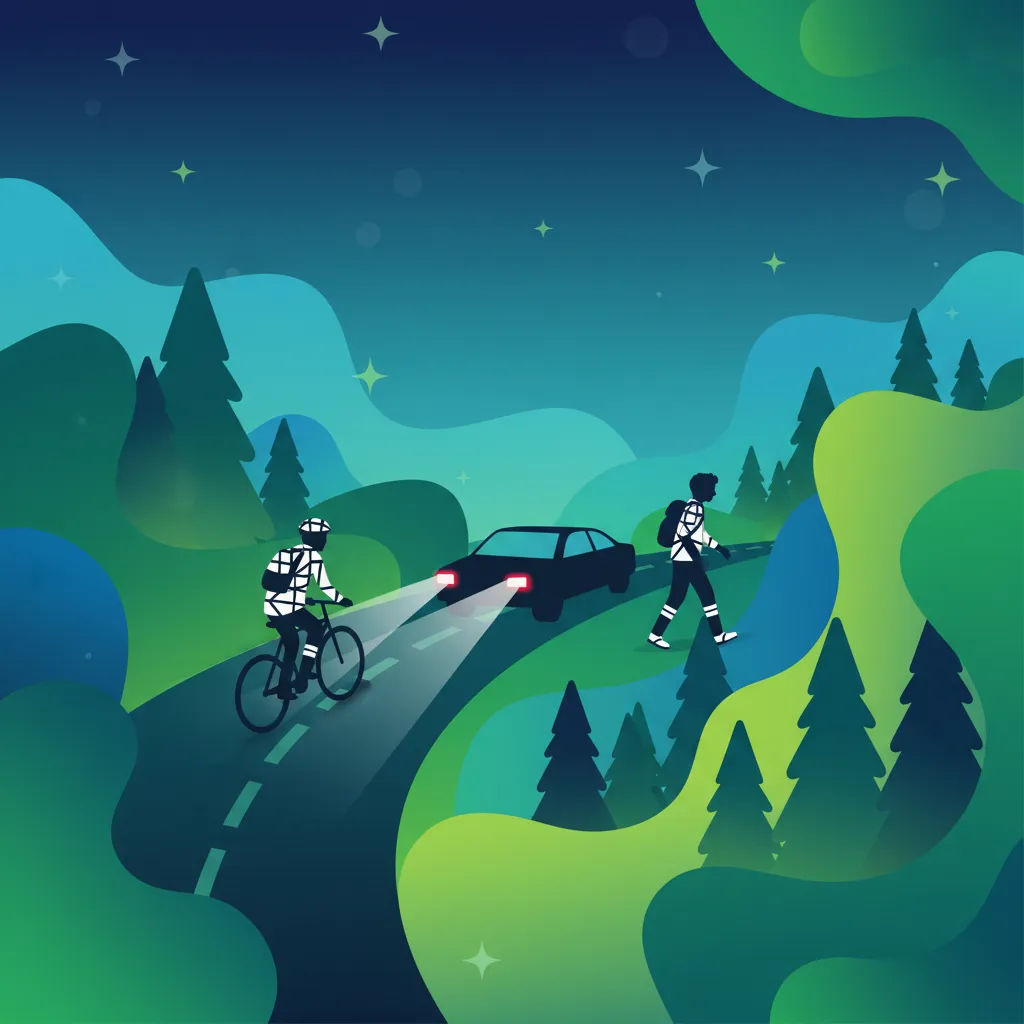
Pedestrians, cyclists, and wildlife on Swedish roads are extremely difficult to spot at night without reflective equipment.
Switch from helljus to halvljus well before meeting oncoming traffic, when following another vehicle, and before crests or bends where other traffic may appear.
Dirty or misaligned headlights and windscreens drastically reduce visibility by scattering light—maintenance is essential for safe night driving.
On unlit Swedish rural roads (landsväg), speed must be reduced significantly below the posted limit to account for limited headlight range.
In Sweden, the reflector culture (reflexer) exists because pedestrians and cyclists are legally required to use them, but drivers cannot assume everyone complies.
Driver fatigue is more dangerous at night—impaired concentration and slower reaction time compound the visibility challenges.
Driving at the posted speed limit assuming it is safe regardless of actual visibility conditions—misjudging stopping distance in darkness.
Not switching to halvljus early enough when approaching oncoming traffic, risking blinding other drivers (blända).
Underestimating how much fatigue impairs reaction time and decision-making during night driving.
Neglecting windscreen and headlight cleanliness, believing minor dirt or smudges will not significantly affect visibility.
Failing to actively scan for wildlife such as moose (älg), deer (rådjuret), or wild boar—common hazards on unlit Swedish rural roads.
Start with a short, direct summary of Night Driving Safety before reading the full explanation below.
Driving at night significantly reduces visibility, making it harder to spot hazards and judge distances accurately. Drivers must adjust their speed to ensure they can stop within the illuminated area of their headlights. Be aware of headlight glare from oncoming traffic and the increased risk of fatigue, adapting your observation and use of vehicle lighting according to Swedish regulations.
Review the most important terms, rule signals, and traffic concepts linked to Night Driving Safety.
Explore related theory topic pages connected to Night Driving Safety and continue with the next useful rule explanation.
See the common search queries learners use when trying to understand Night Driving Safety in Sweden.

Dive deeper into specific theory topics, review detailed explanations of road rules, and reinforce your understanding of Swedish traffic regulations. Continue your preparation for the driving licence exam by exploring each core concept in detail.
Explore Driving Theory TopicsTheory topic content overview
A short set of high-value points that capture the most important ideas from this theory explanation.
The golden rule of night driving: always drive at a speed that allows you to stop safely within the distance your headlights illuminate.
Low beam (halvljus) typically illuminates only 30-50 meters ahead, while high beam (helljus) can reach 150-200 meters; your speed must match what you can actually see.
The posted speed limit is not automatically safe at night—your visible stopping distance determines your safe speed in darkness.
Headlights must be switched on at all times in Sweden, day or night, regardless of weather conditions.
Pedestrians, cyclists, and wildlife on Swedish roads are extremely difficult to spot at night without reflective equipment.
Switch from helljus to halvljus well before meeting oncoming traffic, when following another vehicle, and before crests or bends where other traffic may appear.
Dirty or misaligned headlights and windscreens drastically reduce visibility by scattering light—maintenance is essential for safe night driving.
On unlit Swedish rural roads (landsväg), speed must be reduced significantly below the posted limit to account for limited headlight range.
In Sweden, the reflector culture (reflexer) exists because pedestrians and cyclists are legally required to use them, but drivers cannot assume everyone complies.
Driver fatigue is more dangerous at night—impaired concentration and slower reaction time compound the visibility challenges.
Driving at the posted speed limit assuming it is safe regardless of actual visibility conditions—misjudging stopping distance in darkness.
Not switching to halvljus early enough when approaching oncoming traffic, risking blinding other drivers (blända).
Underestimating how much fatigue impairs reaction time and decision-making during night driving.
Neglecting windscreen and headlight cleanliness, believing minor dirt or smudges will not significantly affect visibility.
Failing to actively scan for wildlife such as moose (älg), deer (rådjuret), or wild boar—common hazards on unlit Swedish rural roads.
Start with a short, direct summary of Night Driving Safety before reading the full explanation below.
Driving at night significantly reduces visibility, making it harder to spot hazards and judge distances accurately. Drivers must adjust their speed to ensure they can stop within the illuminated area of their headlights. Be aware of headlight glare from oncoming traffic and the increased risk of fatigue, adapting your observation and use of vehicle lighting according to Swedish regulations.
Review the most important terms, rule signals, and traffic concepts linked to Night Driving Safety.
Explore related theory topic pages connected to Night Driving Safety and continue with the next useful rule explanation.
See the common search queries learners use when trying to understand Night Driving Safety in Sweden.
Dive deeper into specific theory topics, review detailed explanations of road rules, and reinforce your understanding of Swedish traffic regulations. Continue your preparation for the driving licence exam by exploring each core concept in detail.
Explore Driving Theory TopicsUse this exam-focused revision tip to understand how Night Driving Safety is likely to appear in theory questions for learners in Sweden. This section helps you identify the most testable part of the rule, avoid common traps, and remember the concept more effectively during Swedish driving theory exam preparation.
In the theory test, pay close attention to questions about speed adaptation and hazard detection in darkness. Remember that your ability to react is directly tied to how far your headlights illuminate, so always drive at a speed that allows you to stop safely within that distance. Overconfidence in visibility is a common mistake that can lead to misjudging risks.
Read direct answers to the most common learner questions about Night Driving Safety in Sweden. This FAQ focuses on rule confusion, practical meaning, comparison with similar concepts, and the exact uncertainties that appear most often in Swedish driving theory revision and exam preparation.
Driving at night is more dangerous primarily due to reduced visibility, making it harder to spot hazards, judge distances, and react quickly. Headlight glare from oncoming vehicles and an increased risk of driver fatigue also contribute to the higher danger levels.
You must reduce your speed significantly at night to ensure you can stop safely within the distance illuminated by your headlights. This is especially crucial on unlit roads or in poor weather conditions, where the range of your lights is your only reliable visual guide.
To manage headlight glare, avoid looking directly into the lights of oncoming vehicles. Instead, focus your gaze slightly towards the right edge of your lane or the road markings. This helps you maintain your orientation and avoid temporary blindness.
Pedestrians and cyclists are harder to see at night because they are often less visible, especially if they are not wearing reflective clothing or do not have working lights. Their smaller profiles and unpredictable movements make them blend into the darkness, increasing the risk of accidents.
You should use high beam (helljus) lights at night outside of built-up areas when the road is not sufficiently lit, and there is no oncoming traffic or vehicle ahead of you that could be dazzled. Always switch to low beam well in advance of meeting or following another vehicle.
Yes, driver fatigue is more common and pronounced during night driving, as it conflicts with the body's natural sleep cycle. Tiredness impairs judgment, concentration, and reaction time, making it even more hazardous to drive in low light conditions.
Swedish traffic regulations (Trafikförordningen) require all vehicles to use appropriate lighting at all times when driving, particularly during darkness or limited visibility. This includes using low beam (halvljus) or high beam (helljus) as appropriate, ensuring rear lights are also on.
Refine your study plan by exploring practice sets on specific Swedish traffic rules, road signs, or driving situations. Use the search to quickly access relevant questions and focus your preparation for the official driving licence theory exam.