
Safe speed is the fundamental principle of driving at a velocity appropriate for current road conditions, traffic density, and visibility, rather than simply matching the posted speed limit. It emphasizes continuous driver judgment and adaptation to ensure you can always react safely and stop within the distance you can see. Mastering this concept is vital for both road safety and passing your Swedish driving theory test.
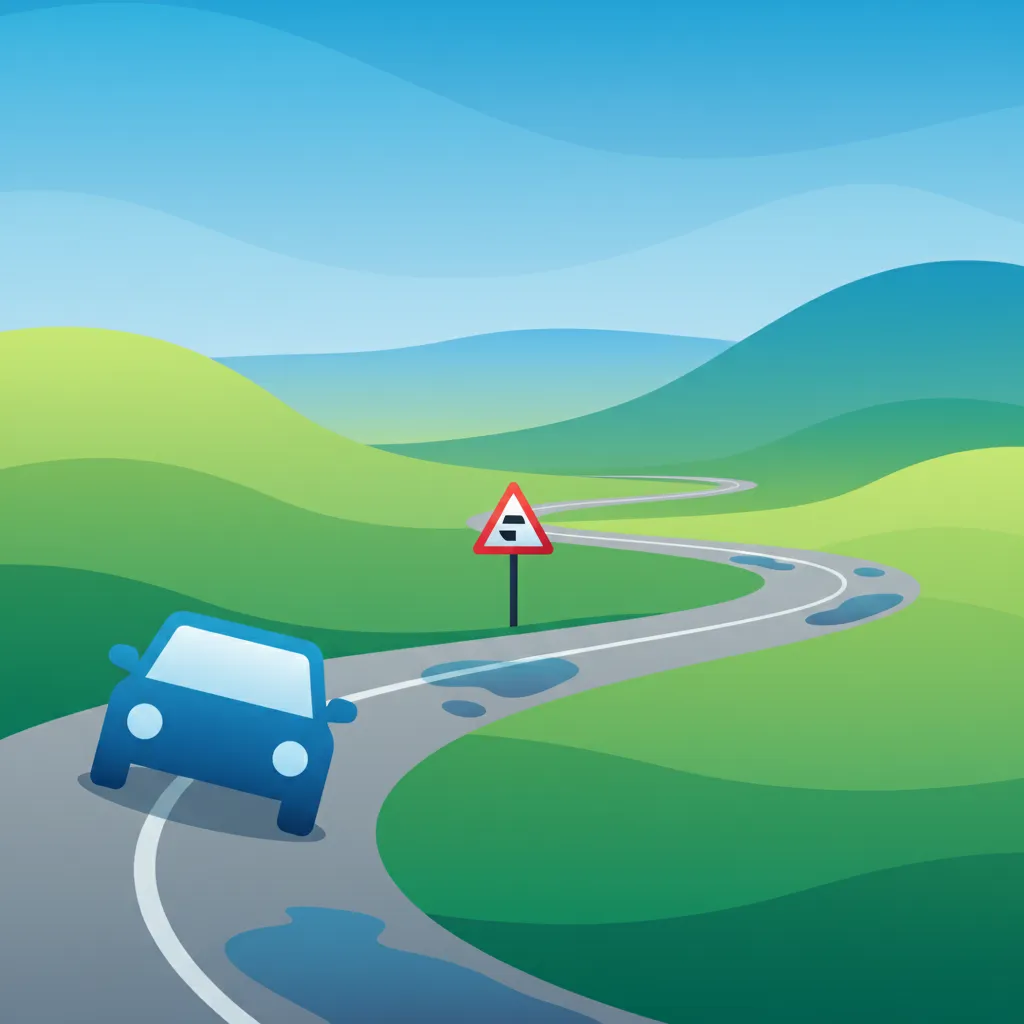
Theory topic content overview
Read the full theory topic guide for Safe Speed & Conditions with structured, easy-to-scan content built for learners in Sweden. This detailed section explains the exact rule, meaning, traffic context, comparison points, and exam logic behind this Swedish driving theory topic so you can study faster, understand the concept more clearly, and avoid common interpretation mistakes on the theory test.
Safe speed is the principle of driving at a velocity that is always appropriate for the current road, traffic, and environmental conditions, rather than simply adhering to the maximum legal speed limit. In Swedish driving theory, this concept is fundamental. It means continuously assessing your surroundings to ensure you can maintain full control of your vehicle, react safely to unexpected hazards, and stop within the distance you can clearly see ahead.
This isn't about memorizing specific speeds for every situation, but rather about developing the critical judgment needed to adapt your driving. The legal speed limit (hastighetsgräns) indicates the maximum permissible speed under ideal conditions, but responsible and safe driving in Sweden often demands a lower speed.
Understanding and applying the safe speed principle is paramount for several reasons:
teoriprov) frequently presents scenarios where you must identify the safest speed, not just the legal maximum. Questions often highlight conditions (e.g., fog, icy roads, heavy traffic) that necessitate a reduction in speed, even if the posted limit is higher. Your ability to demonstrate this judgment is crucial for passing.Choosing a safe speed requires constant observation and adaptation. Here are the primary factors a driver must evaluate:
dimma), heavy rain (kraftigt regn), snowstorms (snöstorm) severely reduce your ability to see ahead.lågt stående sol) can impair vision and make hazards harder to spot.slitna däck) or incorrect tire pressure compromise grip, especially in adverse conditions. Winter tires (vinterdäck) are crucial for safe speed in snowy/icy conditions.trötthet) or distraction (distraktioner) slows reaction time, making higher speeds inherently more dangerous.This is perhaps the most crucial distinction for Swedish theory learners. The speed limit (hastighetsgräns) is the absolute maximum speed legally permitted on a given stretch of road, assuming ideal conditions. It is a legal boundary, not a recommendation for all circumstances.
Safe speed, on the other hand, is the speed you should be driving at, which is often below the posted limit. It represents your active, moment-by-moment judgment to maintain safety.
A core principle, similar to Article 19 of the RVV 1990 in the Netherlands, is that a driver must always be able to stop their vehicle within the distance they can see to be clear and free from obstacles. This stopsträcka (stopping distance) is the sum of reaktionssträcka (reaction distance) and bromssträcka (braking distance).
Therefore, if visibility is limited (e.g., due to a bend, a hill, fog, or darkness), or the road surface is poor, your safe speed must be lower than the speed limit to ensure you can stop within the reduced visible distance.
Here are common situations in Swedish traffic where adapting your speed is critical:
svartis) is present. Your safe speed might be 30-40 km/h, or even slower, to maintain control and have any chance of stopping if an animal or obstacle appears.regn) reduces visibility and increases stopping distance. Pedestrians might be less visible, and water spray from your tires could obscure their view. Reducing your speed to 30 km/h or less allows you to react to a pedestrian stepping out.grusväg (gravel road) with a 70 km/h limit in dim light presents reduced visibility and unpredictable surfaces. Your safe speed should be significantly lower, perhaps 40-50 km/h, especially if unlit junctions or hidden entrances are present.motorväg) with a 110 km/h limit, if fog (dimma) reduces visibility to only 50 meters, your safe speed must be low enough to stop within that 50 meters – likely 30-40 km/h – even if it feels extremely slow.Swedish driving learners often make these mistakes regarding safe speed:
In Sweden, Transportstyrelsen and Trafikverket guidance strongly emphasizes the driver's continuous responsibility (kontinuerligt ansvar) for choosing a safe speed. This is not a static decision but a dynamic process that evolves with every meter driven. The theory exam highlights this by challenging you to apply principles rather than memorizing numbers.
The focus is on proactive hazard perception (riskmedvetenhet) and taking preventative action. A truly safe driver in Sweden understands that adhering to the spirit of the law – ensuring safety – is more important than simply sticking to the letter of the speed limit sign. Your decision-making process should always prioritize the ability to react and stop safely under current conditions.
Always remember: the legal speed limit is a maximum, not a target. Your safe speed in Sweden is the one that allows you to maintain full control, react to any unexpected event, and stop within the distance you can see to be clear. Continuously observe, assess, and adjust your speed based on the road, traffic, visibility, and your vehicle's condition. This proactive approach to speed control is essential for your safety and for successfully navigating the Swedish driving theory exam.
The safe speed principle requires drivers to continuously choose a speed appropriate for road conditions, traffic, and visibility rather than simply following the posted speed limit. In Sweden, this is especially critical due to varied road conditions and seasonal weather challenges. The key distinction is that speed limits are maximum legal speeds under ideal conditions, while safe speed is your situational judgment to maintain control and stop within the visible distance. Common learner errors include equating speed limits with safety and failing to adjust for weather, visibility, or vulnerable road users. Mastering this judgment-based approach is essential for both road safety and passing the Swedish driving theory exam.
A short set of high-value points that capture the most important ideas from this theory explanation.
Safe speed is the speed appropriate for current conditions, not the maximum allowed speed.
You must always be able to stop within the distance you can see to be clear of obstacles.
Speed limit signs indicate the maximum speed under ideal conditions only.
Continuous observation and adjustment of speed is a dynamic driver responsibility.
Swedish weather and road conditions require constant speed evaluation, not just at the limit.
Speed limit is a legal maximum; safe speed is a situational judgment.
Stopping distance equals reaction distance plus braking distance and increases exponentially with speed.
Road surface, visibility, traffic density, and vehicle condition all affect safe speed.
Worn tires, poor brakes, heavy loads, and fatigue all increase stopping distance.
Swedish authorities (Transportstyrelsen, Trafikverket) emphasize continuous speed adjustment as driver responsibility.
Assuming that driving at the posted speed limit is always safe regardless of conditions.
Underestimating how light rain, drizzle, or frost can make roads slippery.
Failing to reduce speed when pedestrians, cyclists, or children are present.
Driving too fast into blind bends, crests, or darkness without considering reduced visibility.
Not accounting for worn tires, incorrect tire pressure, or vehicle load when choosing speed.
Start with a short, direct summary of Safe Speed & Conditions before reading the full explanation below.
Safe speed is the speed a driver must choose to maintain control and stop safely, considering all current conditions like weather, road surface, traffic, and visibility. It often requires driving below the maximum legal speed limit. This concept is central to defensive driving and ensures you have enough time to react to unexpected hazards, which is critical in Swedish traffic environments.
Review the most important terms, rule signals, and traffic concepts linked to Safe Speed & Conditions.
Explore related theory topic pages connected to Safe Speed & Conditions and continue with the next useful rule explanation.
See the common search queries learners use when trying to understand Safe Speed & Conditions in Sweden.

Dive deeper into specific theory topics, review detailed explanations of road rules, and reinforce your understanding of Swedish traffic regulations. Continue your preparation for the driving licence exam by exploring each core concept in detail.
Explore Driving Theory TopicsTheory topic content overview
A short set of high-value points that capture the most important ideas from this theory explanation.
Safe speed is the speed appropriate for current conditions, not the maximum allowed speed.
You must always be able to stop within the distance you can see to be clear of obstacles.
Speed limit signs indicate the maximum speed under ideal conditions only.
Continuous observation and adjustment of speed is a dynamic driver responsibility.
Swedish weather and road conditions require constant speed evaluation, not just at the limit.
Speed limit is a legal maximum; safe speed is a situational judgment.
Stopping distance equals reaction distance plus braking distance and increases exponentially with speed.
Road surface, visibility, traffic density, and vehicle condition all affect safe speed.
Worn tires, poor brakes, heavy loads, and fatigue all increase stopping distance.
Swedish authorities (Transportstyrelsen, Trafikverket) emphasize continuous speed adjustment as driver responsibility.
Assuming that driving at the posted speed limit is always safe regardless of conditions.
Underestimating how light rain, drizzle, or frost can make roads slippery.
Failing to reduce speed when pedestrians, cyclists, or children are present.
Driving too fast into blind bends, crests, or darkness without considering reduced visibility.
Not accounting for worn tires, incorrect tire pressure, or vehicle load when choosing speed.
Start with a short, direct summary of Safe Speed & Conditions before reading the full explanation below.
Safe speed is the speed a driver must choose to maintain control and stop safely, considering all current conditions like weather, road surface, traffic, and visibility. It often requires driving below the maximum legal speed limit. This concept is central to defensive driving and ensures you have enough time to react to unexpected hazards, which is critical in Swedish traffic environments.
Review the most important terms, rule signals, and traffic concepts linked to Safe Speed & Conditions.
Explore related theory topic pages connected to Safe Speed & Conditions and continue with the next useful rule explanation.
See the common search queries learners use when trying to understand Safe Speed & Conditions in Sweden.
Dive deeper into specific theory topics, review detailed explanations of road rules, and reinforce your understanding of Swedish traffic regulations. Continue your preparation for the driving licence exam by exploring each core concept in detail.
Explore Driving Theory TopicsUse this exam-focused revision tip to understand how Safe Speed & Conditions is likely to appear in theory questions for learners in Sweden. This section helps you identify the most testable part of the rule, avoid common traps, and remember the concept more effectively during Swedish driving theory exam preparation.
Many exam questions test your judgment in scenarios where the speed limit is high, but conditions demand a lower speed. Always prioritize safety over the maximum allowed speed. Think: 'Can I stop if something unexpected happens right now?'
Read direct answers to the most common learner questions about Safe Speed & Conditions in Sweden. This FAQ focuses on rule confusion, practical meaning, comparison with similar concepts, and the exact uncertainties that appear most often in Swedish driving theory revision and exam preparation.
The speed limit is the maximum allowed speed under ideal conditions, while safe speed is the actual speed you should drive at to be safe, considering current factors like weather, traffic, and road surface. Safe speed can, and often should, be lower than the posted limit.
In Sweden, understanding safe speed is crucial because traffic regulations emphasize adapting your driving to circumstances. It's a frequently tested concept, assessing your judgment in various road scenarios beyond just memorizing limits.
Key factors include weather conditions (rain, snow, fog), road surface (ice, gravel), visibility, traffic density, the presence of vulnerable road users, and the road's layout (curves, hills). Any increase in risk requires a reduction in speed.
Higher speeds significantly increase both reaction distance and braking distance. This means you travel much farther before stopping, drastically reducing your ability to avoid hazards and increasing collision severity.
Yes, absolutely. Even at the legal speed limit, your speed can be unsafe if conditions are poor, such as heavy rain, dense fog, icy roads, or heavy traffic. You must always adjust your speed to maintain control and stop within the visible distance.
This principle dictates that you must always drive at a speed that allows you to stop your vehicle within the distance you can clearly see ahead and over which the road is free of obstacles. It's a core concept of safe speed and defensive driving.
Refine your study plan by exploring practice sets on specific Swedish traffic rules, road signs, or driving situations. Use the search to quickly access relevant questions and focus your preparation for the official driving licence theory exam.