
In Sweden, traffic rules place significant emphasis on protecting pedestrians, who are considered vulnerable road users. Understanding pedestrian priority means knowing precisely when you, as a driver, must yield the right of way to someone on foot. This principle is fundamental for preventing accidents and is a key component of the Swedish driving theory exam.
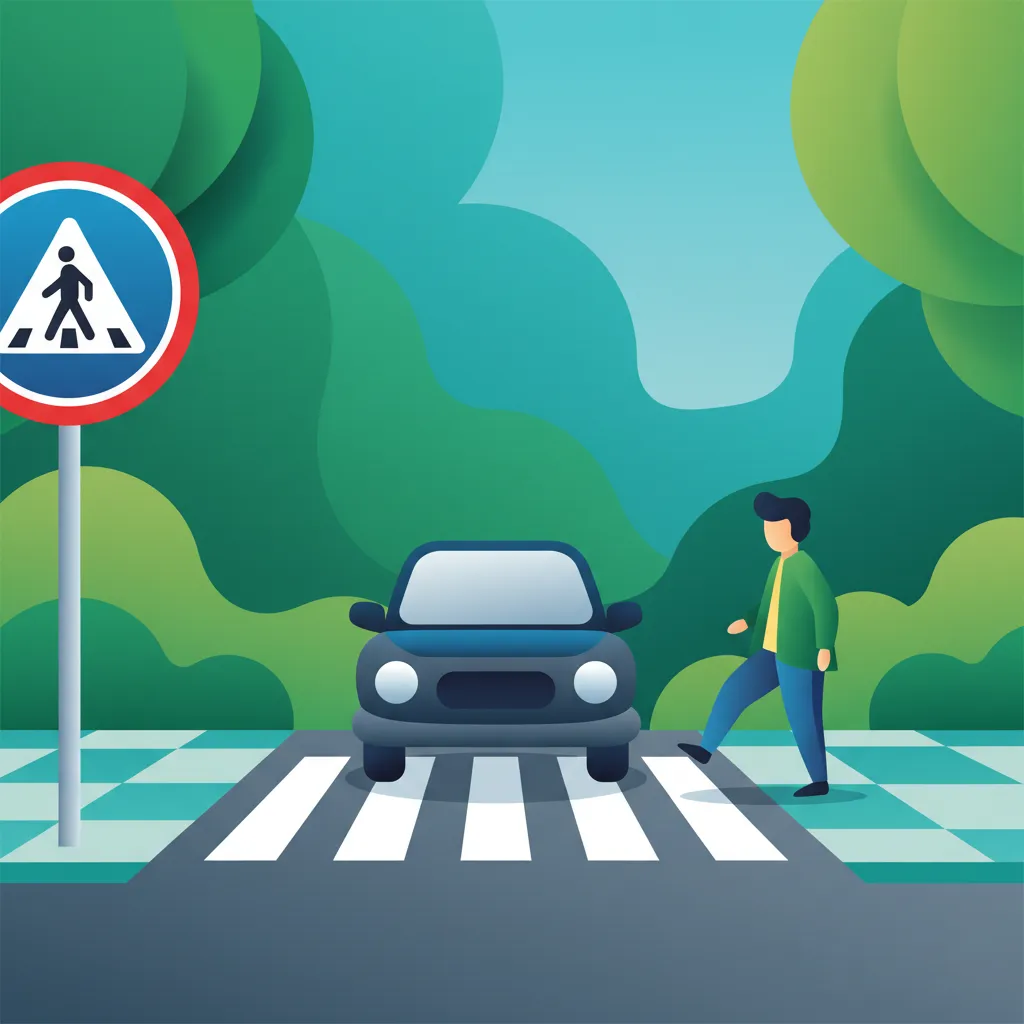
Theory topic content overview
Read the full theory topic guide for Pedestrian Priority Rules with structured, easy-to-scan content built for learners in Sweden. This detailed section explains the exact rule, meaning, traffic context, comparison points, and exam logic behind this Swedish driving theory topic so you can study faster, understand the concept more clearly, and avoid common interpretation mistakes on the theory test.
Pedestrian priority in Sweden refers to specific situations where drivers are legally obligated to yield the right of way to pedestrians. This principle is fundamental to Swedish traffic law, which places a strong emphasis on protecting vulnerable road users (oskyddade trafikanter) like pedestrians and cyclists. For any driver in Sweden, mastering these rules is not just a legal requirement but a crucial aspect of road safety and a key component of the Swedish driving licence theory exam.
At its core, pedestrian priority means recognizing when someone on foot has the right to cross the road before your vehicle proceeds, ensuring their safety and preventing collisions.
Understanding and applying pedestrian priority rules is vital for several reasons:
Trafikförordningen) clearly define when drivers must yield to pedestrians. Failure to comply can result in fines, licence points, and, in severe cases, criminal charges.Swedish law outlines specific scenarios where pedestrians are granted priority. It's crucial for drivers to distinguish these situations clearly.
Övergångsställen)This is the most common and important scenario for pedestrian priority.
övergångsställe signs (E11 signs) featuring a pedestrian symbol.When a driver turns at an intersection, they often cross the path of pedestrians who are already crossing or about to cross the road they are entering or leaving.
While not a formal priority rule for pedestrians to cross, drivers must exercise extreme caution near bus and tram stops.
A crucial point for Swedish learners, and a common source of confusion, is the distinction between formal pedestrian priority and the general duty of care (allmän aktsamhetsplikt) drivers have towards all road users.
Omarkerade övergångsställen): At crossings without zebra stripes or övergångsställe signs, pedestrians do not have formal priority in Sweden. However, drivers still have a strong general responsibility to exercise extreme caution, adapt their speed, and ensure the safety of pedestrians. You should still be prepared to stop if a pedestrian is already in the road or if stopping can prevent an accident.Several factors can affect how you perceive and react to pedestrian priority situations:
Let's consider how pedestrian priority plays out in typical Swedish traffic:
30-zon). As you approach a övergångsställe, you see a person waiting at the curb, looking towards your direction. Even if they haven't stepped out, their clear intention to cross means you must slow down and be prepared to stop, allowing them to cross safely.Learners frequently make these mistakes regarding pedestrian priority during the theory exam and practical driving:
Always remember the "Think If" (Tänk Om) principle when it comes to pedestrians:
In Sweden, the driver carries the primary responsibility for safety, especially towards vulnerable road users. Always be prepared to yield, adapt your speed, and maintain constant vigilance. Prioritizing pedestrian safety is a cornerstone of safe and responsible driving in Sweden.
Pedestrian priority in Sweden operates under specific legal rules outlined in Trafikförordningen, with formal priority granted only at marked crossings (övergångsställen) with zebra stripes and E11 signs. When turning at intersections, drivers must always yield to pedestrians crossing their intended path. At unmarked crossings, pedestrians lack formal priority but drivers retain a strong general duty of care requiring them to slow down and be prepared to stop. The driver's responsibility extends to all vulnerable road users (oskyddade trafikanter), and overtaking is strictly prohibited on or just before pedestrian crossings. Adopting the 'Tänk Om' (Think If) mindset—always considering whether a pedestrian might step out—helps drivers maintain the constant vigilance Swedish traffic culture demands.
A short set of high-value points that capture the most important ideas from this theory explanation.
Pedestrians have formal priority only at marked crossings (övergångsställen) indicated by zebra stripes and blue E11 signs with a pedestrian symbol
When turning at any intersection, drivers must yield to pedestrians crossing the road you are entering or leaving, regardless of traffic signals
At unmarked crossings in Sweden, pedestrians do not have formal priority, but drivers still have a strong general duty of care (allmän aktsamhetsplikt) to exercise extreme caution
It is strictly forbidden to overtake another vehicle on or immediately before a marked pedestrian crossing
Drivers are always legally responsible for safety toward vulnerable road users (oskyddade trafikanter) even when pedestrians do not formally have priority
Marked crossings (zebra stripes + E11 signs) give pedestrians formal priority; unmarked crossings do not
When turning, you must yield to any pedestrian crossing your turning path before proceeding
Your stopping distance increases significantly in wet, icy, or poor visibility conditions—reduce speed accordingly
Children, elderly pedestrians, and anyone distracted may behave unpredictably—anticipate sudden movement
Never overtake a vehicle on or just before a pedestrian crossing; this creates dangerous blind spots for pedestrians
Assuming pedestrians always have priority everywhere, including at unmarked crossings where they do not have formal right of way
Not reducing speed sufficiently when approaching crossings, underestimating stopping distances in adverse conditions
Forgetting to check for pedestrians when turning at intersections because focused on oncoming vehicle traffic
Expecting pedestrians to always behave predictably (look both ways, wait at signals) rather than driving defensively
Attempting to overtake another vehicle just before or on a pedestrian crossing, which is strictly prohibited by Swedish law
Start with a short, direct summary of Pedestrian Priority Rules before reading the full explanation below.
Pedestrian priority dictates that drivers must yield to pedestrians in specific situations, primarily at marked pedestrian crossings and when turning at intersections where pedestrians are crossing the road you are entering or leaving. Drivers are always responsible for driving cautiously and adapting their speed to ensure the safety of pedestrians, even when pedestrians do not formally have priority.
Review the most important terms, rule signals, and traffic concepts linked to Pedestrian Priority Rules.
Explore related theory topic pages connected to Pedestrian Priority Rules and continue with the next useful rule explanation.
See the common search queries learners use when trying to understand Pedestrian Priority Rules in Sweden.

Dive deeper into specific theory topics, review detailed explanations of road rules, and reinforce your understanding of Swedish traffic regulations. Continue your preparation for the driving licence exam by exploring each core concept in detail.
Explore Driving Theory TopicsTheory topic content overview
A short set of high-value points that capture the most important ideas from this theory explanation.
Pedestrians have formal priority only at marked crossings (övergångsställen) indicated by zebra stripes and blue E11 signs with a pedestrian symbol
When turning at any intersection, drivers must yield to pedestrians crossing the road you are entering or leaving, regardless of traffic signals
At unmarked crossings in Sweden, pedestrians do not have formal priority, but drivers still have a strong general duty of care (allmän aktsamhetsplikt) to exercise extreme caution
It is strictly forbidden to overtake another vehicle on or immediately before a marked pedestrian crossing
Drivers are always legally responsible for safety toward vulnerable road users (oskyddade trafikanter) even when pedestrians do not formally have priority
Marked crossings (zebra stripes + E11 signs) give pedestrians formal priority; unmarked crossings do not
When turning, you must yield to any pedestrian crossing your turning path before proceeding
Your stopping distance increases significantly in wet, icy, or poor visibility conditions—reduce speed accordingly
Children, elderly pedestrians, and anyone distracted may behave unpredictably—anticipate sudden movement
Never overtake a vehicle on or just before a pedestrian crossing; this creates dangerous blind spots for pedestrians
Assuming pedestrians always have priority everywhere, including at unmarked crossings where they do not have formal right of way
Not reducing speed sufficiently when approaching crossings, underestimating stopping distances in adverse conditions
Forgetting to check for pedestrians when turning at intersections because focused on oncoming vehicle traffic
Expecting pedestrians to always behave predictably (look both ways, wait at signals) rather than driving defensively
Attempting to overtake another vehicle just before or on a pedestrian crossing, which is strictly prohibited by Swedish law
Start with a short, direct summary of Pedestrian Priority Rules before reading the full explanation below.
Pedestrian priority dictates that drivers must yield to pedestrians in specific situations, primarily at marked pedestrian crossings and when turning at intersections where pedestrians are crossing the road you are entering or leaving. Drivers are always responsible for driving cautiously and adapting their speed to ensure the safety of pedestrians, even when pedestrians do not formally have priority.
Review the most important terms, rule signals, and traffic concepts linked to Pedestrian Priority Rules.
Explore related theory topic pages connected to Pedestrian Priority Rules and continue with the next useful rule explanation.
See the common search queries learners use when trying to understand Pedestrian Priority Rules in Sweden.
Dive deeper into specific theory topics, review detailed explanations of road rules, and reinforce your understanding of Swedish traffic regulations. Continue your preparation for the driving licence exam by exploring each core concept in detail.
Explore Driving Theory TopicsUse this exam-focused revision tip to understand how Pedestrian Priority Rules is likely to appear in theory questions for learners in Sweden. This section helps you identify the most testable part of the rule, avoid common traps, and remember the concept more effectively during Swedish driving theory exam preparation.
Pay close attention to scenarios involving turning vehicles and pedestrian crossings in your Swedish theory exam. Learners often confuse the rules when pedestrians are not at a marked crossing or when a driver is turning. Remember that a driver's responsibility for safety extends to all vulnerable road users, even in situations where formal priority is less clear.
Read direct answers to the most common learner questions about Pedestrian Priority Rules in Sweden. This FAQ focuses on rule confusion, practical meaning, comparison with similar concepts, and the exact uncertainties that appear most often in Swedish driving theory revision and exam preparation.
Pedestrian priority means that a driver must allow a pedestrian to cross the road safely and without hindrance, stopping if necessary. This rule applies in specific traffic situations in Sweden.
At a marked zebra crossing (övergångsställe), drivers must always yield to pedestrians who are on the crossing or are clearly intending to step onto it. You must approach with caution and be prepared to stop.
Yes, when you are turning at an intersection, you must yield to pedestrians who are crossing the road you are turning into or from. This applies whether the crossing is marked or unmarked.
While pedestrians do not have automatic priority at every unmarked point, drivers must still exercise extreme caution, adapt their speed, and be prepared to stop. In designated pedestrian zones (gångfartsområde), pedestrians can use the entire road, and vehicles must yield.
In Sweden, vulnerable road users include pedestrians, cyclists, and moped riders. Drivers have a heightened responsibility to ensure their safety due to their lack of physical protection.
Failing to yield to a pedestrian where required is a traffic violation that can result in fines and, more importantly, can lead to serious accidents and injuries. It is a critical aspect of safe and legal driving in Sweden.
Refine your study plan by exploring practice sets on specific Swedish traffic rules, road signs, or driving situations. Use the search to quickly access relevant questions and focus your preparation for the official driving licence theory exam.