
For aspiring AM moped riders and their parents in Sweden, understanding passenger transport laws and mandatory helmet requirements is paramount. This guide breaks down the legal obligations and safety implications, directly preparing you for common questions on the Transportstyrelsen theory exam and ensuring you ride responsibly.
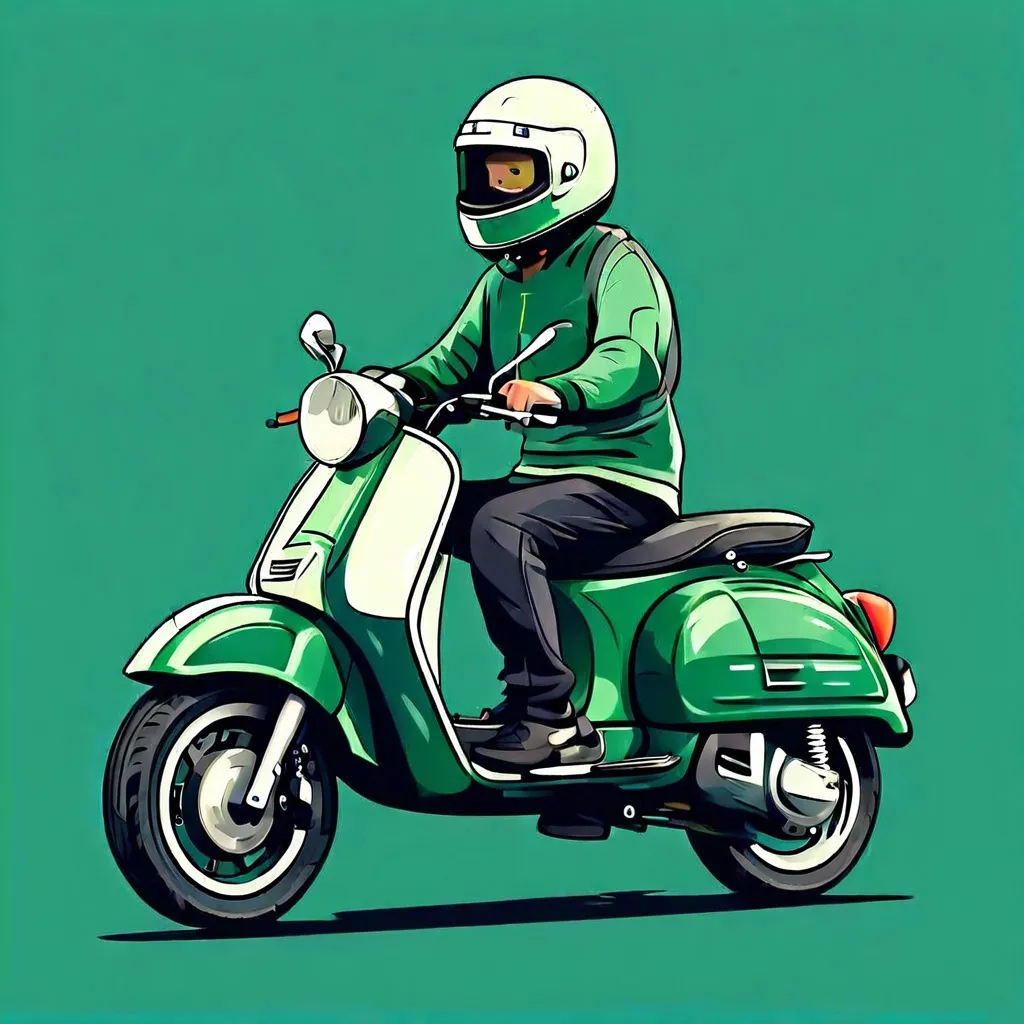
Article content overview
Navigating the roads of Sweden on an AM moped requires a thorough understanding of specific regulations, especially concerning passenger transport and mandatory safety equipment. For aspiring riders and those preparing for the Transportstyrelsen theory examination, a clear grasp of these rules is not only essential for passing but, more importantly, for ensuring safe and responsible riding. This comprehensive guide delves into the legal requirements, driver obligations, and common scenarios related to carrying passengers and wearing helmets on your AM moped in Sweden, directly addressing topics frequently tested by the Swedish Transport Administration.
The AM driving license in Sweden is your gateway to operating a Class I moped, often referred to as an EU-moped, which has a maximum speed of 45 km/h. This license also permits the operation of other vehicles such as moped cars, A-tractors, and EPA tractors. Crucially, it signifies that you have met the necessary theoretical and practical requirements to handle these vehicles safely in traffic. As an AM license holder, you are not just a driver; you are a road user with significant responsibilities, particularly when it comes to the safety of yourself and any passengers you may carry.
Swedish traffic law is very specific about who can ride on an AM moped and under what conditions. The fundamental rule is that a moped is built for a certain number of occupants, and you cannot exceed this limit. For a standard two-wheeled moped, this typically means only the driver is permitted unless specific conditions are met. The Swedish Transport Administration, or Transportstyrelsen, emphasizes that exceeding the designed capacity significantly compromises the moped's stability and maneuverability, thereby increasing the risk of accidents.
When it comes to carrying passengers on an AM moped, the regulations are quite strict, particularly concerning children. For a moped designed for two people, with appropriate seating and effective wheel spoke guards, certain passenger groups are permitted. A driver who is at least 15 years old may carry one child under the age of ten. However, if the driver is 18 years or older, they are permitted to carry two children under the age of six, provided the moped is equipped with suitable seats and protective measures for the passengers' safety. It is imperative for drivers to ensure that any passenger they carry is seated securely and comfortably, and that their presence does not impair the driver's ability to control the vehicle.
The theory exam frequently tests your knowledge of these specific passenger age and capacity rules. Misunderstanding these limits can lead to significant penalties and, more importantly, endanger lives. Always verify the moped's design for passenger carrying and adhere strictly to the age and number restrictions.
The driver of an AM moped bears ultimate responsibility for the safety of any passenger. This means ensuring that the passenger is aware of how to behave on the moped, especially during acceleration, braking, and turns. The driver must also confirm that the passenger is properly seated and, if required by law, is wearing appropriate safety gear. This responsibility extends to ensuring the moped is capable of safely carrying the additional weight and that the passenger’s actions do not create a hazard for other road users or themselves.
In Sweden, the use of protective helmets is a non-negotiable safety requirement for moped riders. Transportstyrelsen mandates that all individuals operating or riding on a moped must wear an approved helmet. This rule applies to both Class I (EU-moped) and Class II mopeds, although the specific road usage rules differ between the two classes. An approved helmet is typically one that meets Swedish or European safety standards, such as E- or SIS-marked helmets. The purpose of this regulation is to significantly reduce the risk of head injuries in the event of an accident.
For AM license holders operating a Class I moped, wearing an approved helmet is always mandatory. This includes riding on roads, while maneuvering, and even at low speeds within designated areas like parking lots if the vehicle is in motion. For Class II mopeds, which have a lower speed limit (25 km/h) and may be driven on cycle paths, helmet use is also required for the driver and any passengers. The regulations are designed to provide maximum protection against potential head trauma, recognizing the inherent vulnerability of moped riders in traffic.
When answering theory exam questions, remember that exceptions to helmet use for mopeds are extremely rare and typically involve specific circumstances like a vehicle being stationary or in a very private area not considered part of the general road network. Always assume a helmet is required.
Just as the driver is responsible for their own safety, they are equally accountable for ensuring that any passenger on the moped is also wearing a correctly fitted, approved helmet. This is a critical aspect of driver responsibility. If a passenger, especially one under 15 years of age, is not wearing a helmet, the driver can be held liable. This underscores the importance of not only having the right safety equipment but also ensuring it is used correctly by everyone on board.
Beyond passenger and helmet regulations, AM moped drivers must adhere to a set of specific road rules designed for their safety and the smooth flow of traffic. These rules dictate where mopeds can be ridden, how they should be positioned on the road, and what types of roads are permissible. Understanding these distinctions is vital for safe operation and for passing the theory test.
Class I mopeds, with their higher speed capability, generally follow rules similar to motorcycles. They should be ridden on the edge of the roadway (vägren) if one is available. If there is no vägren, they should occupy the rightmost part of the traffic lane. Crucially, Class I mopeds are not permitted to be driven on cycle paths (cykelbana) or in bus lanes (bussfilen). They are also prohibited from motorways (motorväg) and other high-speed roads designated as motortrafikled.
Class II mopeds, however, have different routing rules. They are generally expected to be ridden on cycle paths when they are available. If a cycle path is not present, they should be ridden on the edge of the roadway. Similar to Class I mopeds, Class II mopeds are also prohibited from motorways and motortrafikleder. This distinction in road placement is a common point of focus in theory exams, as it directly relates to understanding different vehicle classifications and their appropriate use of road infrastructure.
Swedish traffic law also prohibits certain actions for moped riders to prevent dangerous situations. Drivers are not allowed to push or tow other vehicles or road users with their moped. This is to maintain control and prevent unpredictable movements in traffic. Furthermore, operators should not engage in unnecessary or disruptive driving, particularly in residential areas, meaning they should drive in a manner that minimises noise and disturbance to others.
Understanding and applying the rules for passengers and helmets is fundamental for any AM moped license holder in Sweden. The Transportstyrelsen theory exam is designed to assess not only your knowledge of these rules but also your comprehension of the underlying principles of safety and responsibility. Questions often revolve around scenarios that test your judgment in complex traffic situations, such as when carrying a passenger or in varying weather conditions.
A common pitfall in theory exams is assuming that rules might be relaxed for short distances or for passengers perceived as less vulnerable. For example, the necessity of a helmet is absolute, regardless of the trip's length. Similarly, the strict age and capacity limits for passengers must be adhered to at all times. The exam may present scenarios where a driver might be tempted to bend a rule for convenience, but correct answers will always reflect strict adherence to the law and safety guidelines.
Remember that your AM moped's registration, insurance, and a valid registration plate are also legal requirements. While not directly related to passengers or helmets, these aspects are often covered in the broader context of moped operation in the theory test.
To ensure you are fully prepared for the Transportstyrelsen theory exam, consistent practice is key. Familiarise yourself with different question formats and common themes related to AM moped operation. Focus on scenarios involving passenger safety, helmet requirements, and correct road positioning. Understanding the 'why' behind each rule – the safety implications – will help you apply the knowledge effectively.
To further aid your understanding and preparation for the Swedish driving theory test, here are some essential terms:
Mastering these rules regarding passengers and helmets is a crucial step toward obtaining your AM license and becoming a safe, responsible rider on Swedish roads. Always prioritise safety, adhere to the regulations set by Transportstyrelsen, and use your knowledge to navigate traffic confidently.
This guide covers the essential regulations for AM moped riders in Sweden regarding passenger transport and helmet requirements. The rules are precise: drivers must meet age thresholds (15+ for one young child, 18+ for two young children), the moped must be designed and equipped for passengers, and approved helmets are mandatory for everyone on board at all times. Class I mopeds (45 km/h) follow motorcycle-style road rules using vägren, while Class II mopeds (25 km/h) may use cycle paths. The driver carries full responsibility for passenger safety and proper equipment use, which is a frequent focus in Transportstyrelsen theory examinations.
A short set of high-value points that capture the most important ideas from this article.
Standard two-wheeled AM mopeds are designed for the driver only; passengers require specific conditions to be met
A driver aged 15+ may carry one child under 10, while drivers 18+ may carry two children under 6 with proper seats and wheel guards
Approved helmets (E- or SIS-marked) are mandatory for both driver and all passengers on Class I mopeds at all times when the vehicle is in motion
Class I mopeds must use vägren or the rightmost lane and are prohibited from cycle paths, motorways, and high-speed roads
The driver bears full responsibility for ensuring passengers are properly seated, informed, and wearing required safety equipment
Passenger age and capacity limits are strictly enforced: 15+ for one child under 10; 18+ for two children under 6
Helmet exceptions are extremely rare and typically only apply when the moped is completely stationary in a private area
Class I mopeds cannot use cykelbanor (cycle paths), bussfilar (bus lanes), motorvägar, or motortrafikleder
Class II mopeds (25 km/h) generally use cycle paths when available, while Class I mopeds (45 km/h) follow motorcycle road rules
Driver responsibility includes ensuring passenger behavior does not impair vehicle control
Assuming passengers are allowed without checking the moped's design capacity or meeting the specific age requirements
Thinking helmet rules might be relaxed for short distances or slow speeds within parking areas
Confusing road placement rules between Class I and Class II mopeds, particularly regarding cycle path usage
Believing the driver is only responsible for their own helmet rather than ensuring all passengers wear approved helmets
Assuming that carrying a passenger who is slightly over the age limit or one extra child is a minor violation
Article content overview
A short set of high-value points that capture the most important ideas from this article.
Standard two-wheeled AM mopeds are designed for the driver only; passengers require specific conditions to be met
A driver aged 15+ may carry one child under 10, while drivers 18+ may carry two children under 6 with proper seats and wheel guards
Approved helmets (E- or SIS-marked) are mandatory for both driver and all passengers on Class I mopeds at all times when the vehicle is in motion
Class I mopeds must use vägren or the rightmost lane and are prohibited from cycle paths, motorways, and high-speed roads
The driver bears full responsibility for ensuring passengers are properly seated, informed, and wearing required safety equipment
Passenger age and capacity limits are strictly enforced: 15+ for one child under 10; 18+ for two children under 6
Helmet exceptions are extremely rare and typically only apply when the moped is completely stationary in a private area
Class I mopeds cannot use cykelbanor (cycle paths), bussfilar (bus lanes), motorvägar, or motortrafikleder
Class II mopeds (25 km/h) generally use cycle paths when available, while Class I mopeds (45 km/h) follow motorcycle road rules
Driver responsibility includes ensuring passenger behavior does not impair vehicle control
Assuming passengers are allowed without checking the moped's design capacity or meeting the specific age requirements
Thinking helmet rules might be relaxed for short distances or slow speeds within parking areas
Confusing road placement rules between Class I and Class II mopeds, particularly regarding cycle path usage
Believing the driver is only responsible for their own helmet rather than ensuring all passengers wear approved helmets
Assuming that carrying a passenger who is slightly over the age limit or one extra child is a minor violation
Explore related topics, search based questions, and concepts that learners often look up when studying Sweden AM Moped Rules. These themes reflect real search intent and help you understand how this topic connects to wider driving theory knowledge in Sweden.
Find clear and practical answers to common questions learners often have about Sweden AM Moped Rules. This section helps explain difficult points, remove confusion, and reinforce the key driving theory concepts that matter for learners in Sweden.
If you are 15 years old, you can carry one child under 10 years old. If you are 18 years old, you can carry two children under 6 years old, provided the moped has suitable seats and wheel guards.
Yes, both the driver and any passenger on an AM moped (Class I moped) must wear an approved helmet (E- or SIS-marked).
The driver is responsible for ensuring the passenger wears a helmet and is safely seated. They must also ensure the moped is equipped to carry the passenger and that the passenger does not obstruct the driver's control or vision.
No, you are only allowed to carry as many passengers as the moped is constructed to carry. Exceeding this limit is illegal and unsafe.
Yes. This article focuses on Class I (EU) mopeds requiring an AM license. Class II mopeds have different rules, typically with lower speed limits and specific helmet requirements if they are pedal-assisted.
Continue your learning journey by exploring more detailed articles and guides. Clarify specific traffic rules, understand complex road signs, or review safe driving practices. Our extensive content library supports your Swedish driving license theory preparation.