
This guide explains the typical procedures and your responsibilities when encountering a Swedish police roadside check. It emphasizes the importance of remaining calm and cooperative, ensuring both your safety and adherence to traffic laws. This knowledge is essential for demonstrating responsible driving behaviour, a key aspect of the Swedish driving theory curriculum.
Article content overview
Encountering a police roadside check in Sweden can be an unexpected part of your driving experience. Understanding the procedures and knowing how to cooperate calmly and effectively is crucial for both your safety and for maintaining a positive interaction with law enforcement. This guide will walk you through what to expect during a Swedish traffic stop, emphasizing the importance of compliance with Swedish traffic regulations and how this knowledge contributes to your preparedness for the driving theory exam. By familiarizing yourself with these protocols, you can ensure a smooth and lawful encounter, demonstrating responsible driving behaviour.
Swedish authorities, including the police and bodies like Transportstyrelsen, utilize roadside checks as a vital tool for enhancing road safety and ensuring compliance with traffic laws. These checks are not arbitrary; they are strategically conducted to identify and address potential hazards on the road. The primary objectives include verifying that vehicles are roadworthy, drivers are licensed and sober, and that all traffic regulations are being observed. By participating cooperatively in these checks, you contribute to a safer road environment for everyone. The Swedish Transport Administration (Trafikverket) and other governmental bodies work collaboratively to uphold these standards, making understanding these procedures a key element of the Swedish driving theory.
The legal basis for these checks stems from the need to uphold public order and safety on Swedish roads. A police officer, or another authorized individual as stipulated by Swedish law (such as a trafiknykterhetskontrollant or specially appointed personnel), has the authority to stop vehicles to conduct inspections. These individuals are identifiable by their attire or other specific markings, ensuring transparency and legitimacy of the stop.
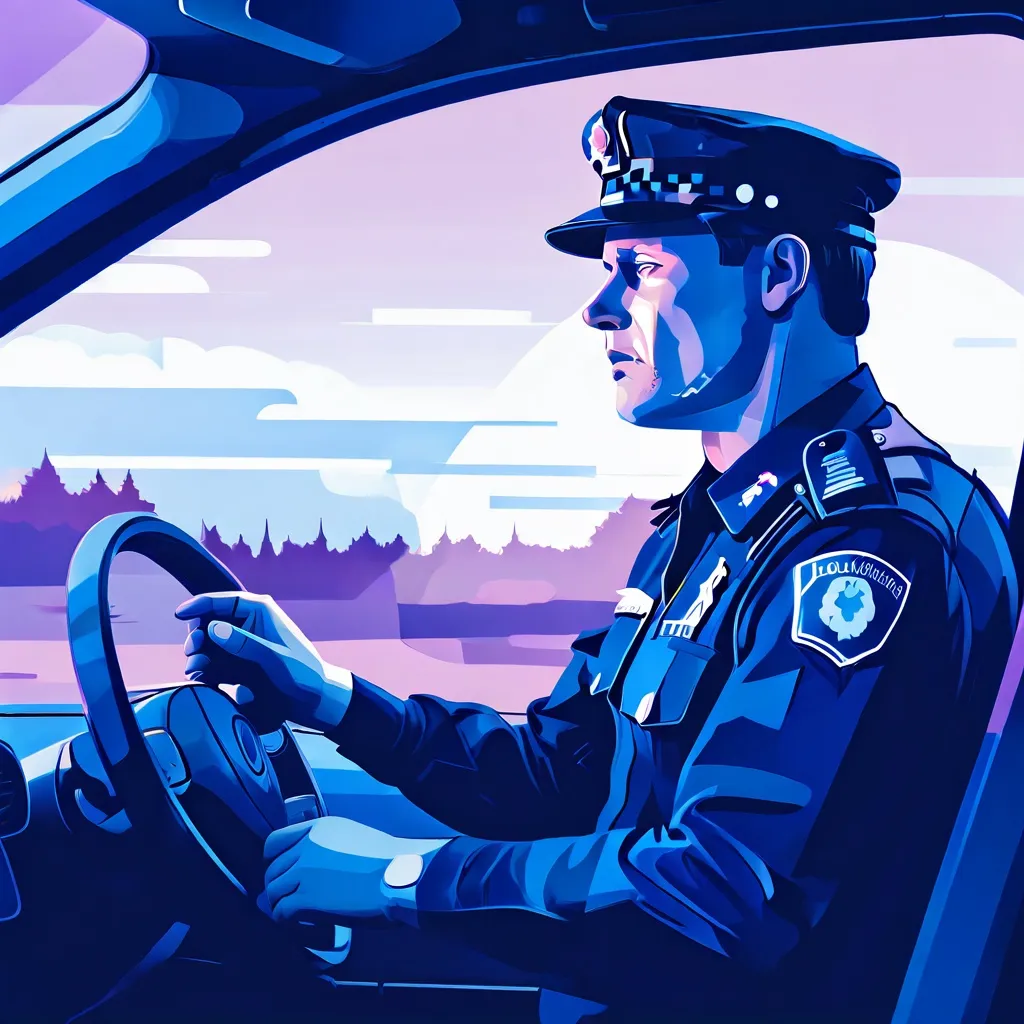
When a Swedish police officer signals you to stop, it is essential to do so promptly and safely. This typically involves pulling over to the right side of the road, as close to the edge as practically possible, without obstructing traffic. The officer will then approach your vehicle. Remain calm and patient throughout the interaction. It is advisable to keep your hands visible on the steering wheel, as this can help alleviate any potential misunderstandings and demonstrate that you are not a threat.
The officer will likely ask for your driver's license (körkort) and the vehicle's registration documents. They may also inquire about your journey or conduct a brief inspection of the vehicle's condition. In some instances, particularly during specific campaigns or at designated checkpoints, officers might conduct breathalyzer tests to check for alcohol impairment. Understanding that these are standard procedures within Swedish traffic regulations is key to remaining composed.
As a driver in Sweden, you are legally required to carry certain documents with you at all times. These are crucial for any roadside inspection by law enforcement. The most important documents are your valid Swedish driver's license (körkort) and the vehicle registration certificate (registreringsbevis). If you are driving a vehicle that is not registered in your name, it is also advisable to have a document that explains who the rightful owner is or that you have permission to use the vehicle. Not having these documents can lead to immediate issues and potentially a fine.
Swedish police officers use clear signals and verbal commands to direct traffic and stop vehicles. The most common signal for a vehicle to stop is the officer standing in front of your vehicle, often with their arm raised, or a signal from a police vehicle indicating you should pull over. If a police vehicle is directly behind you and signals you to stop, you should pull over to the side of the road when it is safe to do so.
In situations where police are directing traffic, they may use specific hand signals to indicate whether you should proceed, stop, or yield. It is imperative to observe these signals closely, as they override traffic lights and other standard traffic control devices. Familiarizing yourself with these signals, which are part of the general driving knowledge tested in the theory exam, can prevent confusion and ensure smooth traffic flow during police operations.
Cooperation with the police during a roadside check is not only a matter of courtesy but also a legal obligation in Sweden. Refusing to stop or hindering an officer in their duty can lead to serious consequences, including fines and potential charges. When asked to provide your license and vehicle documents, you must do so without delay. Similarly, if asked to take a breathalyzer test, you are legally obligated to comply.
Remember that the police are conducting these checks to ensure the safety of all road users. Approaching the situation with a cooperative and respectful attitude is always the best course of action.
A key aspect of cooperating is understanding your rights and responsibilities. While you must comply with lawful orders, you also have the right to be treated with respect. If you believe an officer's request is unlawful or unreasonable, you can address this concern calmly and professionally, or note it for later discussion with relevant authorities. However, during the stop itself, compliance is paramount for a smooth resolution.
During a roadside check, the police may also conduct a brief inspection of your vehicle to ensure it meets safety standards. This can include checking the condition of your tires, lights, brakes, and the presence of essential safety equipment like warning triangles. Sweden has regulations regarding vehicle inspections (besiktning), and while a full inspection is conducted periodically, police can perform a "flying inspection" (flygande inspektion) at any time to check for immediate safety concerns.
A roadside check conducted by police or authorized vehicle inspectors to assess a vehicle's roadworthiness and safety standards at any given time, regardless of its scheduled periodic inspection.
If the officer identifies any minor issues, such as a burnt-out light bulb or worn tires, they might issue a warning or a recommendation for repair. However, if significant faults are found that pose a direct safety risk, the vehicle could be issued a driving ban (körförbud) on the spot, meaning you will not be allowed to drive it until the issues are rectified and the vehicle passes an inspection. This highlights the importance of regular vehicle maintenance.
The knowledge tested in the Swedish driving theory exam includes understanding how to interact with authorities and how to respond to various traffic situations. Questions may arise regarding police signals, the documentation required, and the legal implications of non-compliance. For instance, you might encounter exam questions about what to do when a police officer signals you to stop, or what documents are mandatory to carry.
Understanding the "blixtlåsprincipen" (zipper principle) for merging traffic is another example of how general traffic knowledge applies, but in the context of police stops, it's about understanding directed traffic flow. Even seemingly minor aspects, like knowing the basic speed limits within and outside built-up areas (50 km/h and 70 km/h respectively, unless otherwise indicated), are fundamental.
The default speed limit applied in Sweden when no specific speed limit signs are present. This is typically 50 km/h within built-up areas and 70 km/h outside built-up areas on rural roads.
A common misconception is that police stops are always indicative of wrongdoing. In reality, many roadside checks are proactive safety measures aimed at preventing accidents and ensuring compliance. Another misconception is that you can refuse a breathalyzer test without consequences; this is not the case in Sweden and can lead to severe penalties.
The best practice when interacting with police during a roadside check is to remain calm, polite, and cooperative. Avoid making sudden movements, keep conversations focused and respectful, and follow all instructions given. If you are unsure about a request, it is better to ask for clarification politely than to ignore it or react defensively. Remember, the goal is to get back on the road safely and legally as quickly as possible.
Regularly checking your vehicle's condition is paramount, not just for passing the mandatory periodic inspection (kontrollbesiktning), but also for ensuring compliance during random police checks. This includes verifying that all lights are functional, tires have adequate tread depth, brakes are in good working order, and that you have the legally required safety equipment, such as a warning triangle.
Failure to maintain your vehicle in a roadworthy condition can result in immediate driving bans and fines during a police roadside check.
Understanding the nuances of Swedish traffic laws and how they are enforced is a cornerstone of passing the driving theory test. Questions related to police stops, required documentation, and driver responsibilities are common. By studying this information, you are not only preparing for the exam but also becoming a more responsible and informed driver in Sweden. The ability to cooperate with authorities and maintain a safe vehicle are critical components of safe driving culture promoted by Trafikverket.
To further solidify your understanding and readiness for the theory exam, consider exploring related topics such as road signs, priority rules at intersections, and safe driving practices in various conditions.
This guide covers what drivers should expect during Swedish police roadside checks, emphasizing that these are strategic safety measures rather than punitive actions. Key procedures include stopping safely when signaled, presenting your körkort and registreringsbevis, and complying with breathalyzer requests, which are legally mandatory. The article also explains that police can conduct a flygande inspektion at any time to check vehicle roadworthiness, and that significant faults can result in an immediate körförbud. Understanding these protocols is essential for both safe driving in Sweden and for answering related questions on the Swedish driving theory exam.
A short set of high-value points that capture the most important ideas from this article.
Pull over safely to the right side of the road when signaled by police, keeping hands visible on the steering wheel
Always carry your Swedish driver's license (körkort) and vehicle registration certificate (registreringsbevis) when driving
Breathalyzer tests are legally mandatory in Sweden during roadside checks and refusing them carries serious penalties
Police roadside checks are proactive safety measures, not necessarily indicators of wrongdoing
A flying inspection (flygande inspektion) can occur at any time to check vehicle roadworthiness regardless of scheduled inspection dates
You must stop when signaled by police or when the P11 'Stop for Police Vehicle' sign is displayed
Officers directing traffic use hand signals that override traffic lights and standard traffic control devices
Significant vehicle faults can result in an immediate driving ban (körförbud) preventing you from continuing your journey
The default speed limit (bashastighet) is 50 km/h in built-up areas and 70 km/h outside unless otherwise indicated
Refusing to stop or cooperate with police during a roadside check is a criminal offense that can result in fines and charges
Assuming that being stopped always means you have done something wrong, when many checks are routine safety measures
Not carrying all required documents, which can result in fines even if you are otherwise compliant
Attempting to refuse or argue about a breathalyzer test, which is legally obligatory in Sweden
Failing to regularly check vehicle safety items like lights and tires, leading to issues during random inspections
Making sudden movements or appearing defensive, which can escalate an otherwise routine stop
Article content overview
A short set of high-value points that capture the most important ideas from this article.
Pull over safely to the right side of the road when signaled by police, keeping hands visible on the steering wheel
Always carry your Swedish driver's license (körkort) and vehicle registration certificate (registreringsbevis) when driving
Breathalyzer tests are legally mandatory in Sweden during roadside checks and refusing them carries serious penalties
Police roadside checks are proactive safety measures, not necessarily indicators of wrongdoing
A flying inspection (flygande inspektion) can occur at any time to check vehicle roadworthiness regardless of scheduled inspection dates
You must stop when signaled by police or when the P11 'Stop for Police Vehicle' sign is displayed
Officers directing traffic use hand signals that override traffic lights and standard traffic control devices
Significant vehicle faults can result in an immediate driving ban (körförbud) preventing you from continuing your journey
The default speed limit (bashastighet) is 50 km/h in built-up areas and 70 km/h outside unless otherwise indicated
Refusing to stop or cooperate with police during a roadside check is a criminal offense that can result in fines and charges
Assuming that being stopped always means you have done something wrong, when many checks are routine safety measures
Not carrying all required documents, which can result in fines even if you are otherwise compliant
Attempting to refuse or argue about a breathalyzer test, which is legally obligatory in Sweden
Failing to regularly check vehicle safety items like lights and tires, leading to issues during random inspections
Making sudden movements or appearing defensive, which can escalate an otherwise routine stop
Explore related topics, search based questions, and concepts that learners often look up when studying Swedish Police Roadside Checks. These themes reflect real search intent and help you understand how this topic connects to wider driving theory knowledge in Sweden.
Find clear and practical answers to common questions learners often have about Swedish Police Roadside Checks. This section helps explain difficult points, remove confusion, and reinforce the key driving theory concepts that matter for learners in Sweden.
The primary purpose is to ensure road safety, verify driver and vehicle compliance with traffic laws, and maintain public security. This includes checks on driving licenses, vehicle condition, and sobriety.
You should safely pull over to the right-hand side of the road as soon as it is safe to do so, signal your intentions, and stop your vehicle. Turn off the engine and await further instructions from the officer.
Officers may request your driving license, vehicle registration documents (registreringsbevis), and proof of insurance. Ensure these are readily accessible.
Yes, police officers or vehicle inspectors (bilinspektör) have the right to perform roadside checks (flygande inspektion) on a vehicle's condition, safety features, and emissions. They can issue a driving ban (körförbud) if serious defects are found.
Failure to cooperate can lead to fines, penalties, or more serious legal consequences. It is important to follow lawful instructions given by the police.
Continue your learning journey by exploring more detailed articles and guides. Clarify specific traffic rules, understand complex road signs, or review safe driving practices. Our extensive content library supports your Swedish driving license theory preparation.