This lesson guides you through the complex rules of priority at intersections where no traffic signs or signals are present. Understanding these principles is a vital part of your Category B theory training and is essential for passing the MTSK e-sınav. You will learn to assess right-of-way safely and confidently in everyday driving scenarios.
Lesson content overview
Navigating intersections safely is one of the most critical skills evaluated during the Turkish driving license theory exam (MTSK e-sınav). While controlled intersections rely on traffic lights, police officers, or signs to direct the flow of traffic, uncontrolled intersections (kontrolsüz kavşaklar) feature no such guidance.
At an uncontrolled intersection, there are no traffic lights, stop signs, yield signs, or traffic officers. Drivers must rely entirely on their knowledge of statutory right-of-way rules, defensive driving, and mutual courtesy to prevent collisions.
This lesson provides a comprehensive breakdown of the right-of-way hierarchy, approach rules, and tactical hazard assessment strategies required to master uncontrolled intersections under the Turkish Highway Traffic Law (Karayolları Trafik Kanunu).
An uncontrolled intersection is a junction where two or more public roads cross, but no regulatory devices are present to assign priority. These are highly common in residential areas, rural sectors, and secondary roads across Turkey.
Without clear physical cues like red lights or triangular "Yield" signs, these zones carry a significantly higher risk of side-impact (T-bone) collisions. Operating safely in these areas requires an understanding of standard prioritization hierarchies and proactive speed reduction.
When multiple vehicles approach an uncontrolled intersection, priority is not determined by who is driving faster or who has the larger vehicle. Instead, the law establishes a clear, systematic hierarchy to resolve potential conflicts.
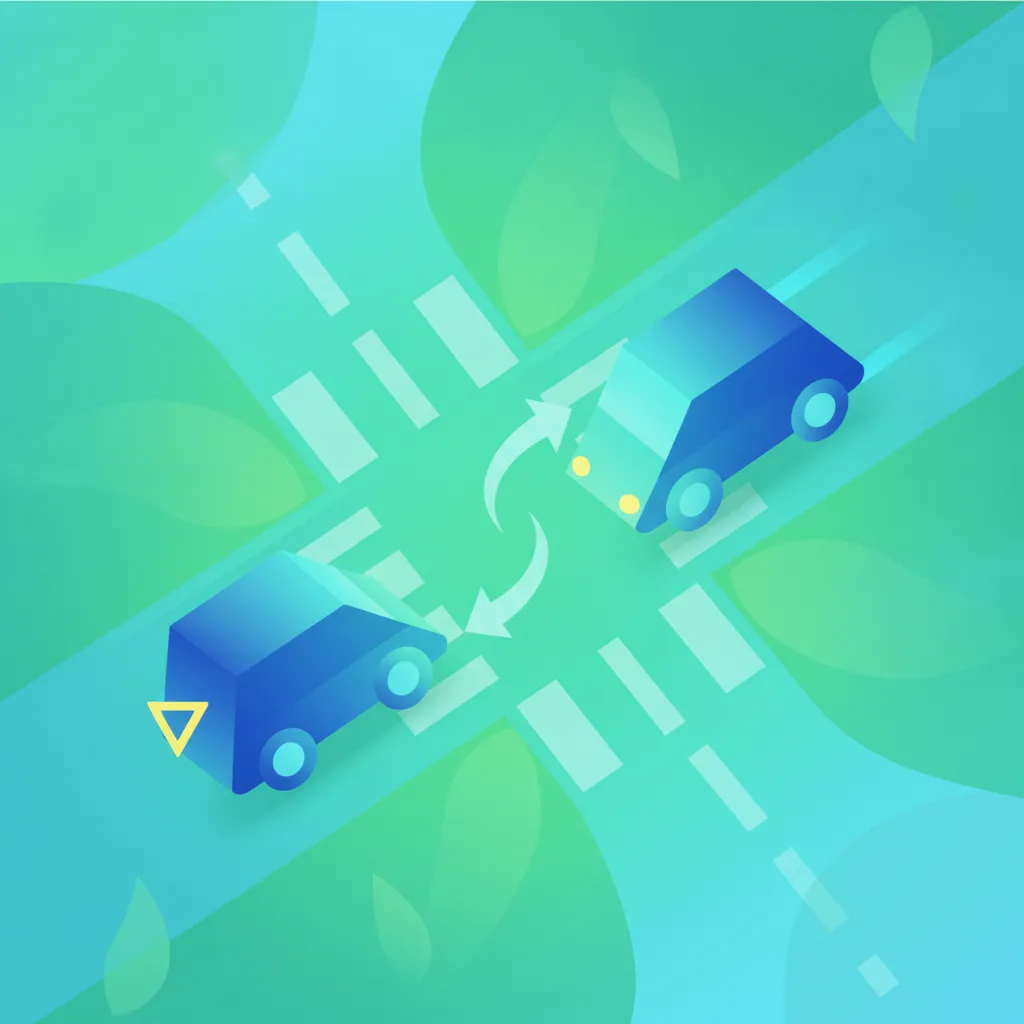
The foundational rule of uncontrolled junctions is simple: when two vehicles approach an intersection from different directions, the driver on the left must yield to the vehicle approaching from their right.
Under Turkish traffic regulations, certain vehicle types and road conditions supersede the standard right-hand rule:
The direction a vehicle is traveling dictates its priority. Straight-line driving is always favored over turning maneuvers because turning requires crossing oncoming traffic lanes.
The legal right of certain road users to proceed first with safety and priority over others at a given time and location.
There are certain scenarios where standard directional and right-hand rules are completely suspended. You must memorize these high-priority exceptions for the Category B theory exam.
Emergency vehicles operating with active sirens and flashing lights have absolute right-of-way over all other road users, regardless of direction, vehicle type, or arrival order.
Detect: Scan your mirrors and listen for sirens to locate the emergency vehicle early.
Signal: Indicate your intentions clearly to surrounding traffic.
Clear the Intersection: Never stop directly in the middle of an intersection. If you are already inside, proceed through safely and pull over to the right. If you have not entered, stop before the intersection boundary.
Yield: Remain stationary until the emergency vehicle and any accompanying escort vehicles have fully cleared the area.
Vulnerable road users must always be protected. Under recent updates to the Turkish Highway Traffic Code, drivers must exercise extreme caution and yield to pedestrians crossing the road at any intersection, even if there are no painted pedestrian crossings (yaya geçidi).
Exam Tip: On the MTSK exam, if a question presents a scenario involving a motorized vehicle, a bicycle, and a pedestrian at an uncontrolled intersection, the pedestrian always has the absolute highest priority, followed by the cyclist (if crossing via a designated path), and then the motorized vehicles according to standard right-hand rules.
Navigating an uncontrolled intersection requires defensive driving. You should never assume that another driver knows the rules or will yield to you.
Reduce Speed: As you approach, ease off the accelerator. You should be traveling at a speed that allows you to stop safely if a vehicle suddenly appears from a blind corner.
Scan from Left to Right: Look left first, then right, then left again. Pay close attention to blind spots caused by parked cars, buildings, or vegetation.
Identify Priority: Assess oncoming vehicles. Identify who has the right-of-way based on their vehicle type, approach angle, and intended path.
Establish Eye Contact: Where possible, look at the other drivers to confirm they have seen you and are prepared to yield.
Proceed with Caution: Once the intersection is clear and you have established your legal right-of-way, proceed smoothly without hesitating.
Many traffic accidents in Turkey occur at uncontrolled junctions due to common misconceptions and illegal driving habits.
A common myth among student drivers is that heavy trucks, buses, or SUVs automatically have priority over smaller passenger cars.
Drivers often enter a junction even when traffic on the opposing side is backed up, resulting in the vehicle stopping directly in the middle of the intersection.
Approaching a blind uncontrolled intersection at standard road speed (e.g., 50 km/h in residential zones) prevents you from reacting to vehicles hidden by buildings or walls.
Your decision-making process at uncontrolled intersections must adapt to changing environmental variables.
In rain, snow, or icy conditions, stopping distances increase exponentially.
At night, judging the approach speed of oncoming vehicles is highly difficult, and cyclists or pedestrians without reflective gear may be nearly invisible.
Understanding the direct consequences of your actions at uncontrolled junctions reinforces safe driving habits:
[Driver yields to vehicle on the right] ➔ [Smooth, predictable traffic flow; zero accident risk]
[Driver ignores right-hand rule]       ➔ [Side-impact collision risk; legal liability; MTSK exam failure]
[Driver blocks intersection center]    ➔ [Gridlock; increased rear-end hazard; traffic fine]
[Driver scans blind spots early]       ➔ [Early hazard detection; ample time to brake safely]
| Scenario / Interaction | Who Yields? | Who Proceeds First? |
|---|---|---|
| Emergency Vehicle vs. All Others | All other vehicles | Emergency Vehicle (with active signals) |
| Tramway vs. Rubber-Tired Vehicle | Rubber-Tired Vehicle | Tramway |
| Vehicle on Dirt Road vs. Paved Road | Vehicle on Dirt Road | Vehicle on Paved Road |
| Two Motor Vehicles (Straight Paths) | Vehicle on the Left | Vehicle on the Right |
| Straight-Going vs. Left-Turning | Left-Turning Vehicle | Straight-Going Vehicle |
| Left-Turning vs. Right-Turning | Left-Turning Vehicle | Right-Turning Vehicle |
| Motor Vehicle vs. Crossing Pedestrian | Motor Vehicle | Pedestrian |
Want to test your knowledge on right-of-way hierarchies and practice realistic intersection scenarios? Explore our dedicated revision tools below.
Uncontrolled intersections in Turkey have no traffic lights, signs, or officers directing traffic, requiring drivers to apply statutory priority rules. The foundational right-hand rule mandates yielding to vehicles approaching from your right, but this is overridden by higher-level rules: tramways have absolute priority, paved-road vehicles have priority over unpaved-road vehicles, and emergency vehicles supersede all other traffic. Straight-through vehicles always have priority over those turning, with left-turning vehicles yielding to both straight-going and right-turning oncoming traffic. Pedestrians retain the highest priority regardless of crossing markings. Safe navigation requires defensive driving: reducing speed early, scanning left-right-left for blind spots, establishing eye contact, and never entering if the exit is blocked.
A short set of high-value points that capture the most important learning from this lesson.
The right-hand rule (sağdan gelen geçer) is the default priority at uncontrolled intersections: always yield to vehicles approaching from your right
Tramways have absolute priority over all rubber-tired vehicles at uncontrolled intersections and must never be blocked
Vehicles exiting unpaved roads (dirt, gravel) must yield to all traffic on paved roads regardless of approach direction
Straight-through traffic always has priority over any turning vehicle; left-turning vehicles must yield to both straight-going and right-turning vehicles from oncoming traffic
Emergency vehicles with active sirens and flashing lights have unconditional priority over all road users in any direction
Explore all units and lessons included in this driving theory course.
Paved road vehicles have priority over unpaved road vehicles; this overrides the right-hand rule
Left turns always yield to straight-through and right turns from oncoming traffic
Pedestrians have the highest priority at any intersection, even without marked crossings
Never enter an intersection if your exit is blocked by queued traffic — this causes gridlock and is illegal
At blind uncontrolled intersections, reduce speed to under 15 km/h and treat them as if a stop sign were present
Assuming larger or heavier vehicles (trucks, buses) have automatic priority over smaller cars — vehicle size does not grant right-of-way
Entering an intersection when the exit is blocked, stopping in the middle and blocking cross-traffic flow
Approaching blind uncontrolled intersections at normal road speed instead of slowing to a crawl to check for hidden vehicles
Failing to yield to emergency vehicles by not clearing the intersection or stopping inside it
Not recognizing that trams have absolute priority, expecting standard vehicle-to-vehicle rules to apply
Lesson content overview
A short set of high-value points that capture the most important learning from this lesson.
The right-hand rule (sağdan gelen geçer) is the default priority at uncontrolled intersections: always yield to vehicles approaching from your right
Tramways have absolute priority over all rubber-tired vehicles at uncontrolled intersections and must never be blocked
Vehicles exiting unpaved roads (dirt, gravel) must yield to all traffic on paved roads regardless of approach direction
Straight-through traffic always has priority over any turning vehicle; left-turning vehicles must yield to both straight-going and right-turning vehicles from oncoming traffic
Emergency vehicles with active sirens and flashing lights have unconditional priority over all road users in any direction
Explore all units and lessons included in this driving theory course.
Paved road vehicles have priority over unpaved road vehicles; this overrides the right-hand rule
Left turns always yield to straight-through and right turns from oncoming traffic
Pedestrians have the highest priority at any intersection, even without marked crossings
Never enter an intersection if your exit is blocked by queued traffic — this causes gridlock and is illegal
At blind uncontrolled intersections, reduce speed to under 15 km/h and treat them as if a stop sign were present
Assuming larger or heavier vehicles (trucks, buses) have automatic priority over smaller cars — vehicle size does not grant right-of-way
Entering an intersection when the exit is blocked, stopping in the middle and blocking cross-traffic flow
Approaching blind uncontrolled intersections at normal road speed instead of slowing to a crawl to check for hidden vehicles
Failing to yield to emergency vehicles by not clearing the intersection or stopping inside it
Not recognizing that trams have absolute priority, expecting standard vehicle-to-vehicle rules to apply
Explore search topics learners often look for when studying Priority at Uncontrolled Intersections. These topics reflect common questions about road rules, driving situations, safety guidance, and lesson level theory preparation for learners in Turkey.
Browse additional driving theory lessons that cover connected traffic rules, road signs, and common driving situations related to this topic. Improve your understanding of how different rules interact across everyday traffic scenarios.
Understand how traffic lights, regulatory signs, and traffic officers determine right-of-way at controlled junctions. This guide explores the hierarchy of traffic control devices and how they override standard priority rules to maintain safety and efficiency on Turkish roads during different driving conditions.
This lesson focuses on priority rules at controlled intersections equipped with traffic signals, stop signs, or yield signs. Learners will understand how to interpret traffic light phases, comply with stop and yield indications, and assess right-of-way at these intersections. The lesson also covers pedestrian and cyclist considerations, as well as emergency vehicle priority.
This lesson provides an in-depth understanding of traffic light signals and their role in regulating intersection traffic. Learners will study the meanings of red, yellow, and green lights, as well as pedestrian and bicycle signals. The lesson also covers special conditions such as flashing signals and signal malfunctions. Emphasis is placed on the correct driver response to each signal phase.
Correctly interpreting traffic signal sequences and priority rules is crucial for preventing devastating right-angle collisions at intersections. This lesson breaks down the phase progression of standard lights, the meanings of flashing amber or red indicators, and the hierarchy of traffic control when a police officer is directing vehicles. You will also master the basic legal default rules of right-of-way, such as yielding to vehicles coming from the right at uncontrolled junctions.
This lesson focuses on the safe interaction with other traffic participants at bus stops and traffic intersections. Learners will explore right-of-way rules, signal compliance, and techniques for maintaining safe distances while stopping and departing. Understanding these interactions is vital for preventing accidents in complex traffic environments.
This lesson provides an overview of the general priority principles that dictate right-of-way on Turkish roads. Topics include the hierarchy of road users, such as pedestrians, cyclists, and emergency vehicles, and how these hierarchies apply at various intersections. Learners will understand the fundamental concepts of yielding, stopping, and proceeding, as well as the importance of clear decision-making.
In this lesson, learners will master the skills required to safely navigate various types of intersections encountered in Turkish urban settings. The content covers interpreting traffic signals, understanding right-of-way rules, and executing proper lane positioning. Practical strategies for managing blind spots and ensuring visibility to other road users are emphasized. By the end of this session, participants will be equipped with safe crossing techniques.
In this lesson, learners will explore the functioning of traffic lights and their impact on motorcycle riding. It delves into the meanings of red, amber, and green lights, as well as dedicated turn arrows and pedestrian signals. The lesson highlights specific considerations for motorcyclists at intersections, such as the appropriate response to amber lights, the use of turn arrows for safe lane changes, and legal crossing obligations.
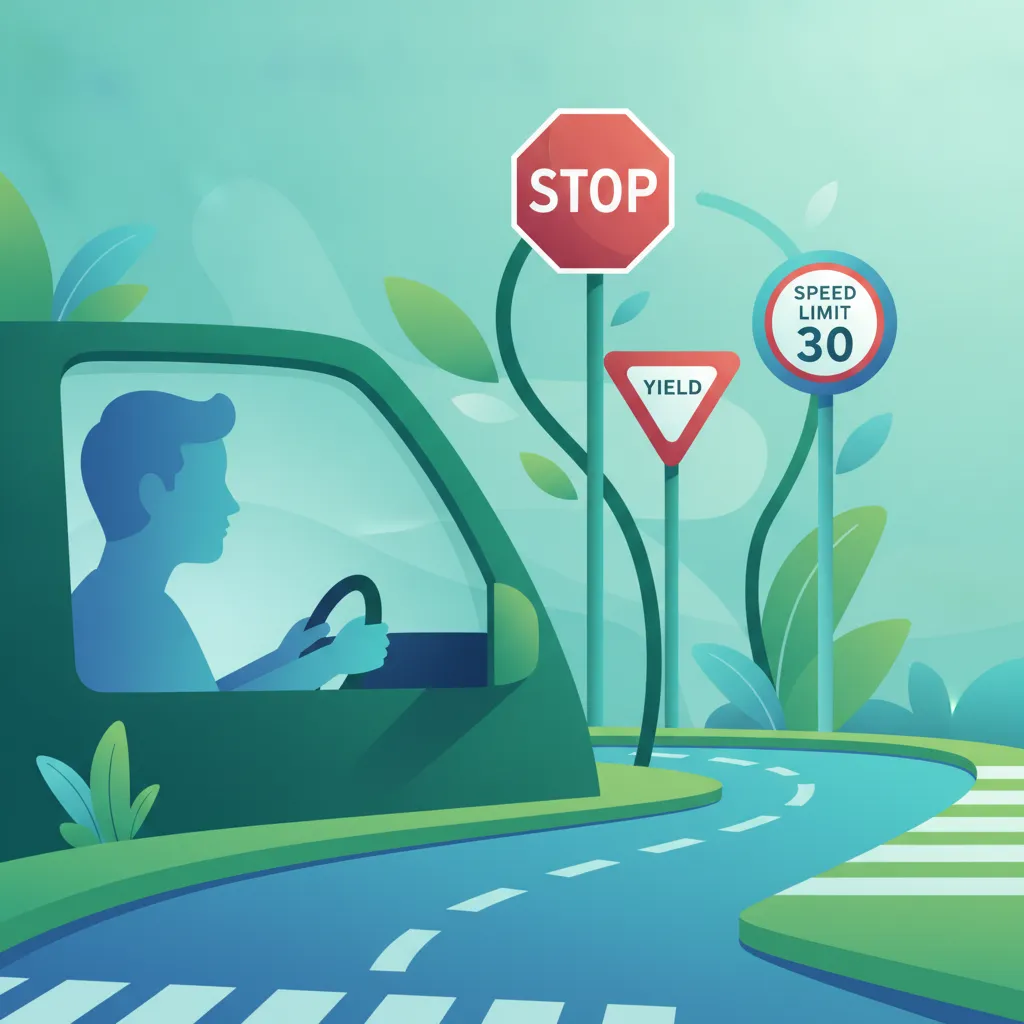
This lesson delves into the regulatory traffic signs that dictate mandatory and prohibited actions for drivers. Learners will study signs indicating speed limits, stop and yield requirements, no-entry zones, and lane usage directives. The lesson also covers temporary regulatory signs used in construction or special events, emphasizing the importance of adhering to these signs to avoid penalties.
In this lesson, learners will master the meanings of various traffic signs as defined by Turkish traffic legislation. The focus will be on understanding regulatory, warning, and informational signs, with particular attention to those that directly affect motorcyclists, such as speed limits and lane usage. By the end of this session, participants will be able to quickly recognize sign categories and apply the required actions safely.
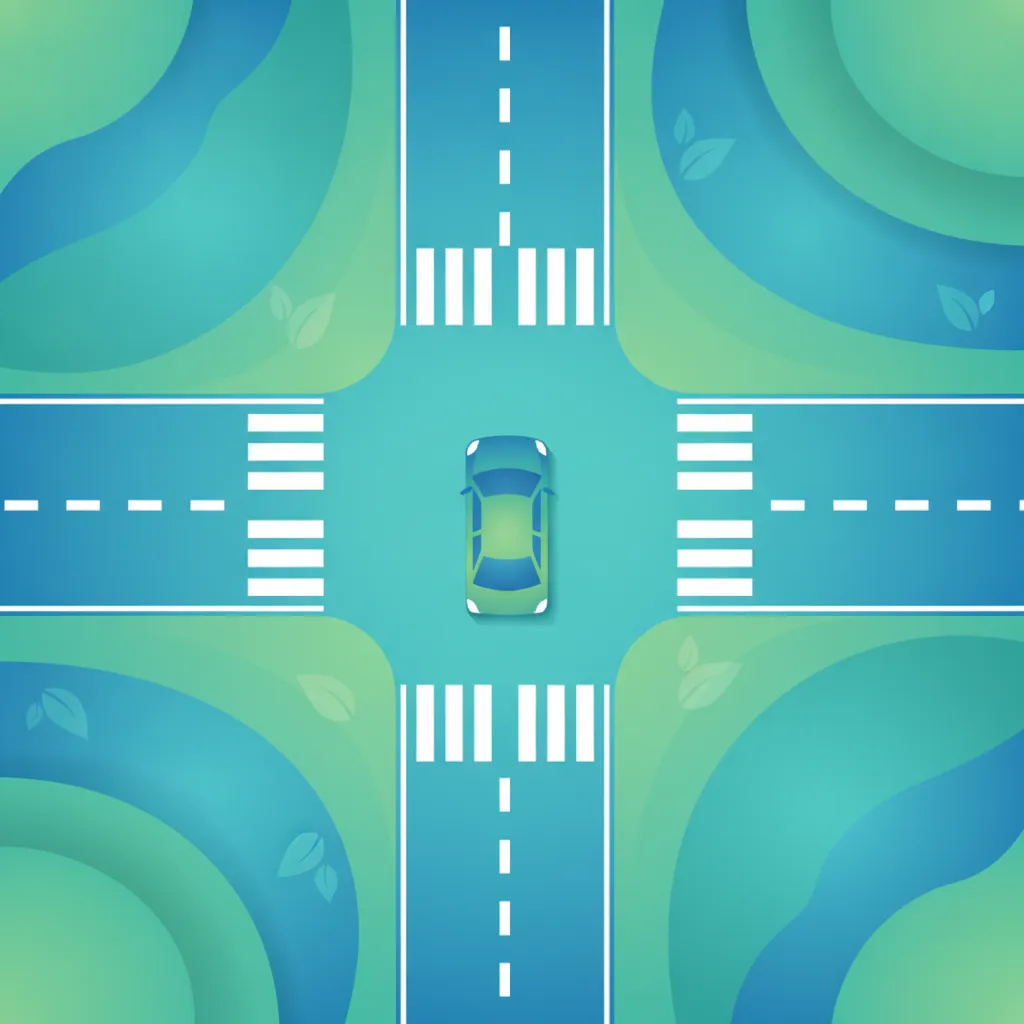
This lesson delves into horizontal road markings, focusing on solid, broken, and double lines that define lane boundaries and overtaking rules. Learners will explore the significance of each type of line in indicating permissible lane changes, passing zones, and stopping points at intersections. The lesson also covers crosswalk markings and their role in pedestrian safety.
Learn the specific procedures for entering, circulating, and exiting roundabouts according to Turkish traffic law. This lesson focuses on lane discipline, signaling, and yielding to traffic within the roundabout to ensure smooth transitions and avoid accidents at high-traffic merge points.
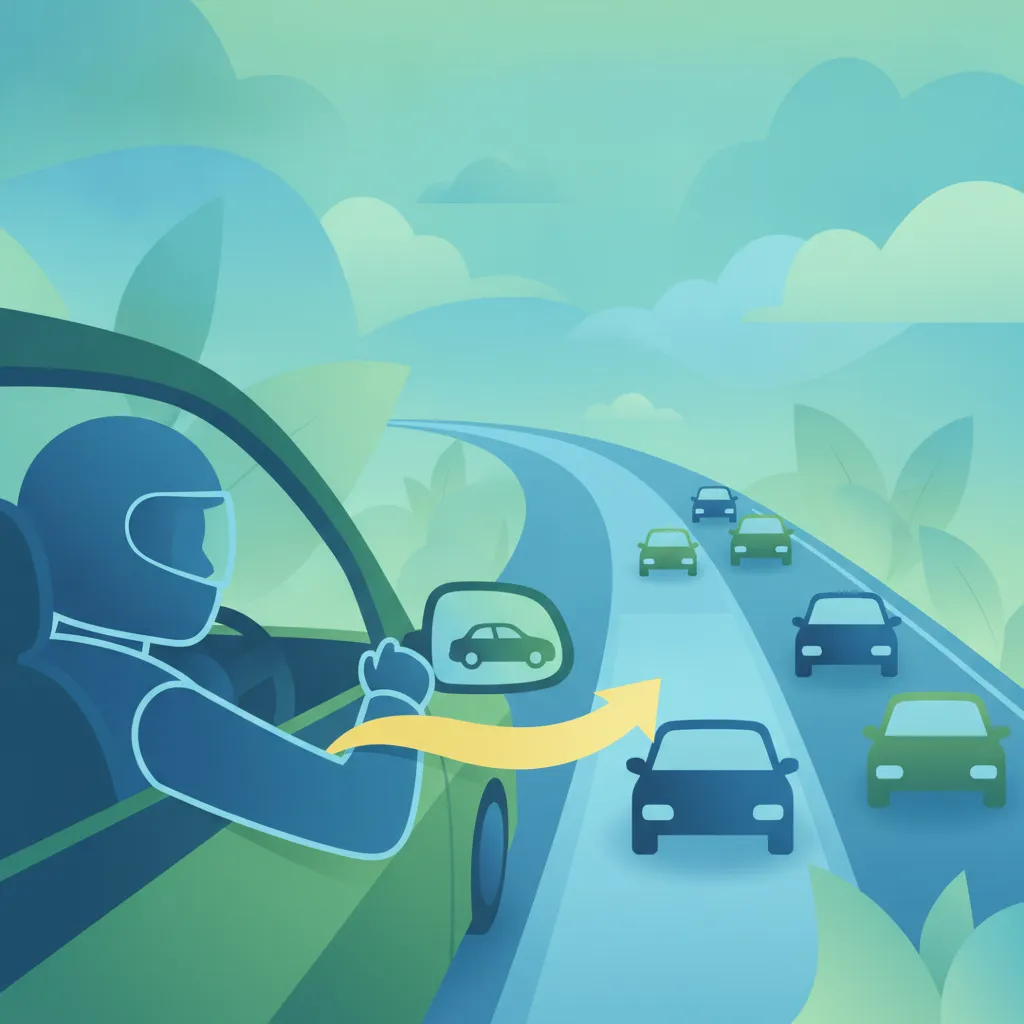
This lesson details the techniques for merging onto busy expressways and executing safe lane changes in urban traffic conditions. It explains how to match the speed of highway traffic in the acceleration lane and select safe gaps for merging. Drivers will learn how to eliminate blind spots and signal early to maintain smooth traffic flow.
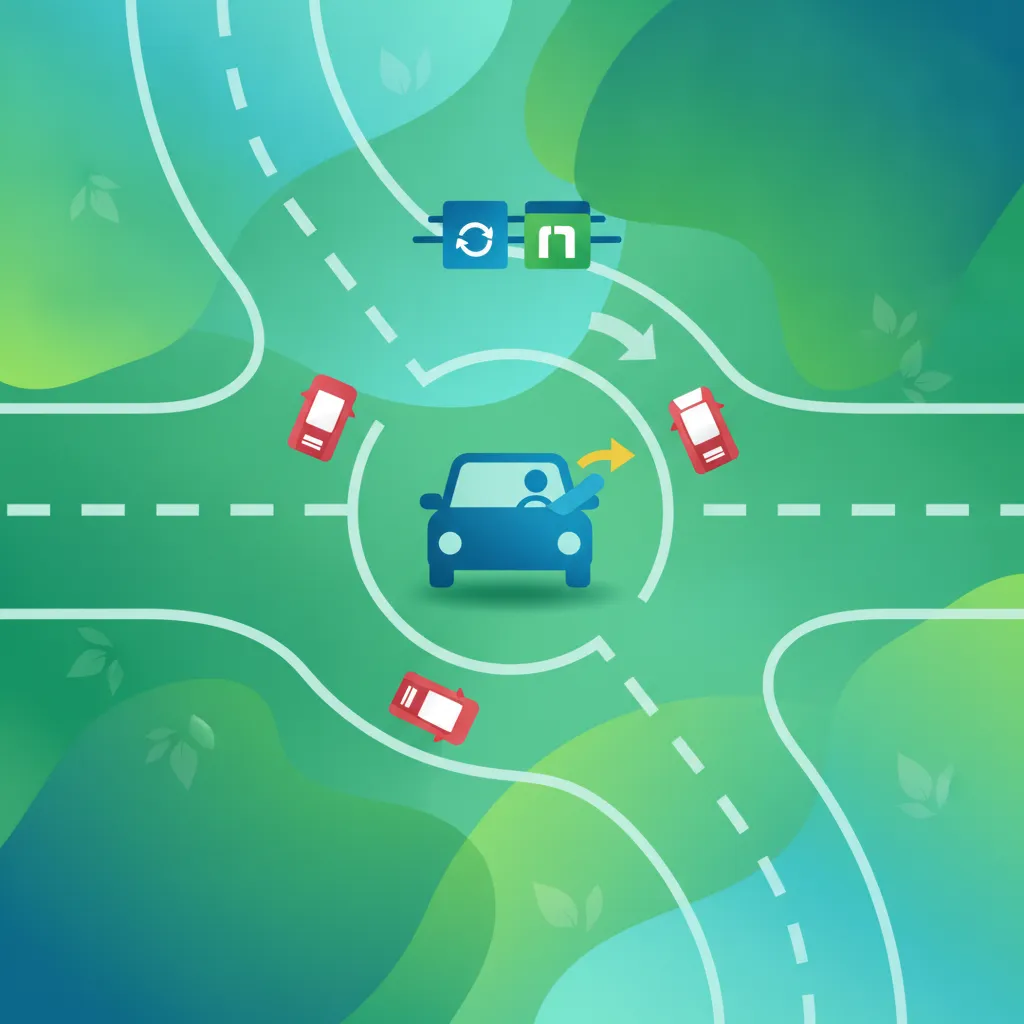
In this lesson, learners explore the specific priority rules and navigation techniques for roundabouts. Topics include yielding to traffic already in the roundabout, proper lane selection upon entry, and safe exit strategies. The lesson also addresses interactions with pedestrians and cyclists near roundabouts and the importance of maintaining appropriate speed.
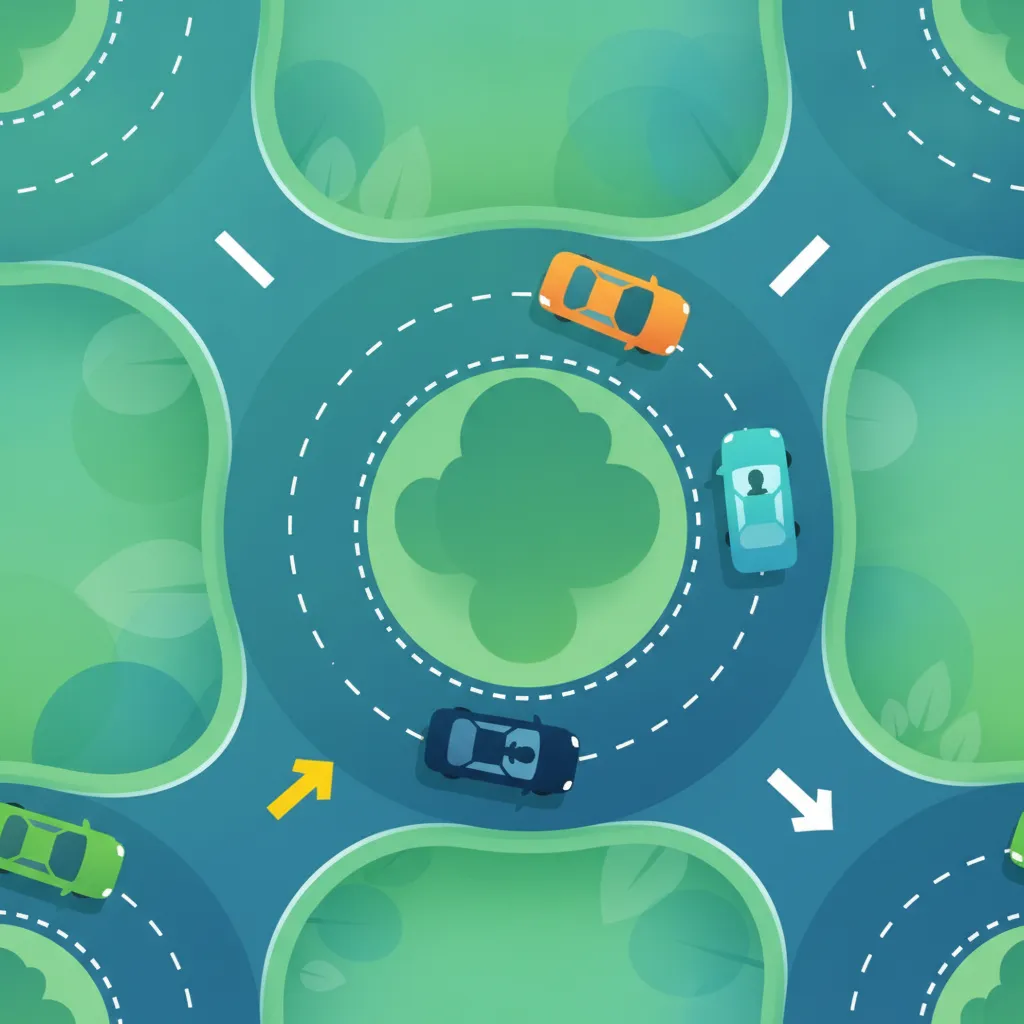
This lesson delves into the specific challenges and procedures associated with navigating roundabouts on a motorcycle. It outlines the importance of approaching at a safe speed, selecting the correct lane, and yielding to vehicles already within the roundabout. The content also covers the proper use of signals when exiting and emphasizes the need for heightened awareness of blind spots, especially when larger vehicles are present.
Roundabouts require a clear understanding of yield regulations and precise signaling to avoid conflicts with larger vehicles. This lesson details the legal requirements under Turkish road rules, which demand that entering vehicles yield to traffic already circulating inside the roundabout. You will learn how to select the appropriate lane upon entry, maintain a steady speed, signal your exit intentions clearly with your indicators, and remain alert to drivers who cut across lanes.
This lesson outlines the precise legal and safety procedures for overtaking slower vehicles on two-lane and multi-lane roads. It details when overtaking is strictly prohibited by signs or solid road lines, and how to calculate passing distances. Drivers will learn how to communicate their intentions using indicators and pass other vehicles safely.
In this lesson, learners will master the skills required to safely navigate various types of intersections encountered in Turkish urban settings. The content covers interpreting traffic signals, understanding right-of-way rules, and executing proper lane positioning. Practical strategies for managing blind spots and ensuring visibility to other road users are emphasized. By the end of this session, participants will be equipped with safe crossing techniques.
This lesson examines lane division and proper lane usage on multi-lane roads and highways. Learners will understand the purpose of lane markings in guiding drivers to maintain appropriate lane discipline. Topics include correct lane selection for different vehicle types, overtaking procedures, and lane-changing techniques. Real-world examples illustrate the importance of respecting lane usage rules.
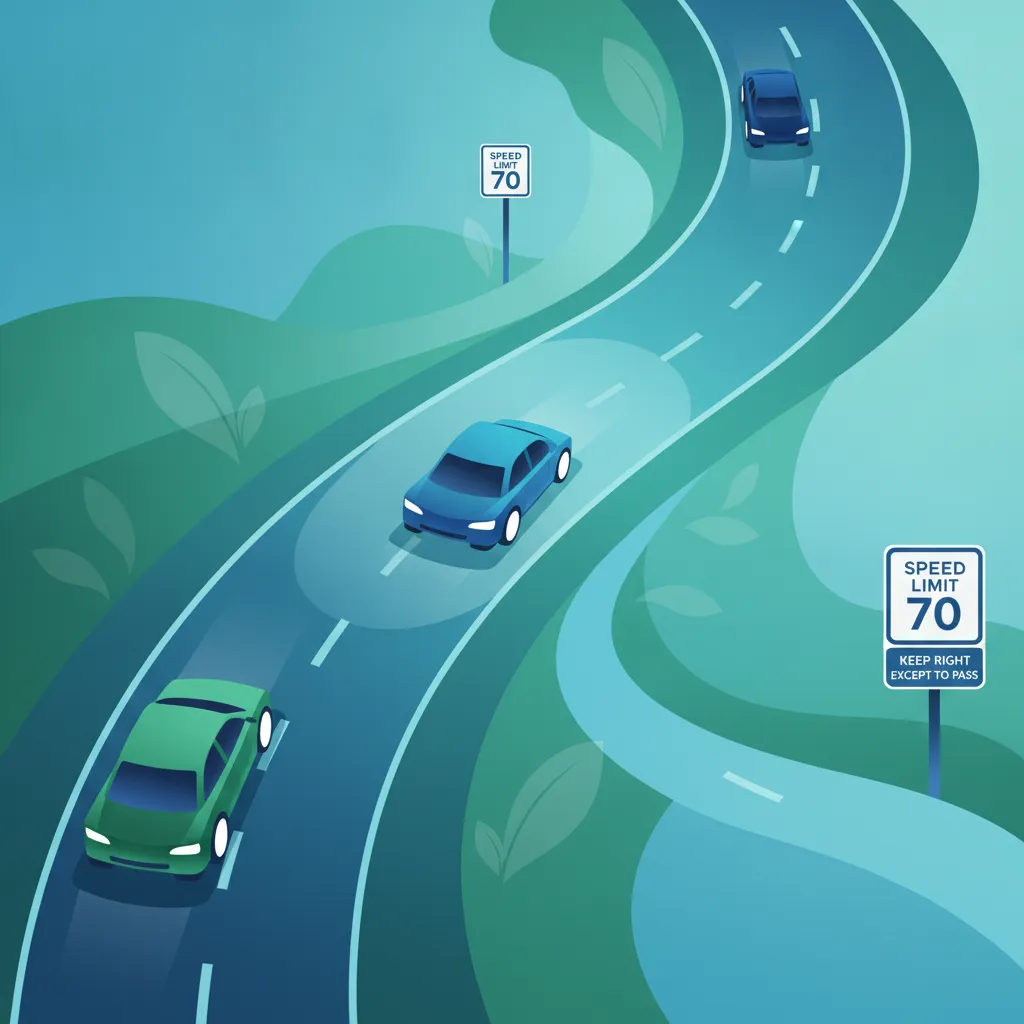
This lesson explains the specific rules, driving etiquette, and safety protocols for operating a vehicle on high-speed Turkish motorways. It covers correct lane usage, overtaking procedures, emergency lane restrictions, and how to maintain consistent high speeds safely. Drivers will learn to avoid dangerous tailgating and sudden lane changes.
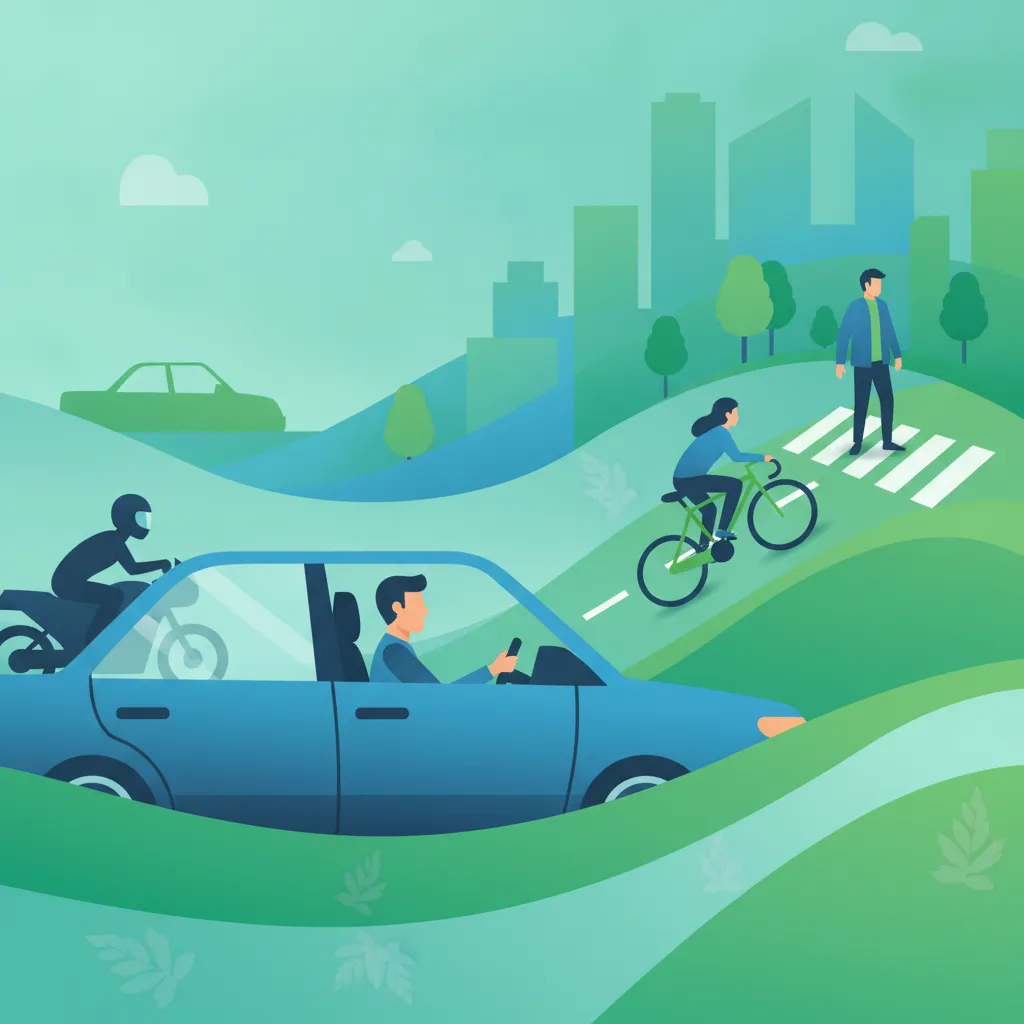
Learners will examine the complexities of operating in environments where various road users, including pedestrians, cyclists, and motorcyclists, coexist. The lesson emphasizes the need for heightened situational awareness, defensive driving techniques, and proactive hazard anticipation. Strategies for navigating mixed traffic safely, especially in congested urban areas, are highlighted.
In this lesson, learners will explore the functioning of traffic lights and their impact on motorcycle riding. It delves into the meanings of red, amber, and green lights, as well as dedicated turn arrows and pedestrian signals. The lesson highlights specific considerations for motorcyclists at intersections, such as the appropriate response to amber lights, the use of turn arrows for safe lane changes, and legal crossing obligations.
Find clear answers to common questions learners have about Priority at Uncontrolled Intersections. Learn how the lesson is structured, which driving theory objectives it supports, and how it fits into the overall learning path of units and curriculum progression in Turkey. These explanations help you understand key concepts, lesson flow, and exam focused study goals.
In the absence of signs or signals, vehicles on the main road generally have priority. If both roads are of equal status, vehicles must yield to traffic coming from their right side.
Yes, trams operating on rails generally have priority over other vehicles at intersections, regardless of the intersection type, unless otherwise indicated by lights or signals.
The e-sınav often uses diagrams of intersections without signs. This lesson teaches you the specific logical steps to identify who has the right-of-way in those diagrams, which is a common source of lost marks.
You must apply the rule of yielding to the vehicle on your right. If you are turning left, you must also yield to oncoming traffic proceeding straight or turning right.
Use our comprehensive practice search to find exactly the Turkish driving theory questions you need to master. Whether reviewing specific road signs, traffic rules, or first aid scenarios, select your perfect practice set and boost your confidence for the official ehliyet sınavı.