This unit offers a comprehensive analysis of the visual signalling system used on French roads to regulate, warn, and guide traffic. You will learn to identify sign categories through their shapes, colors, and borders to ensure full compliance with the Code de la route. Mastering these signals is essential for reacting correctly to hazards and passing your Category B theory exam.
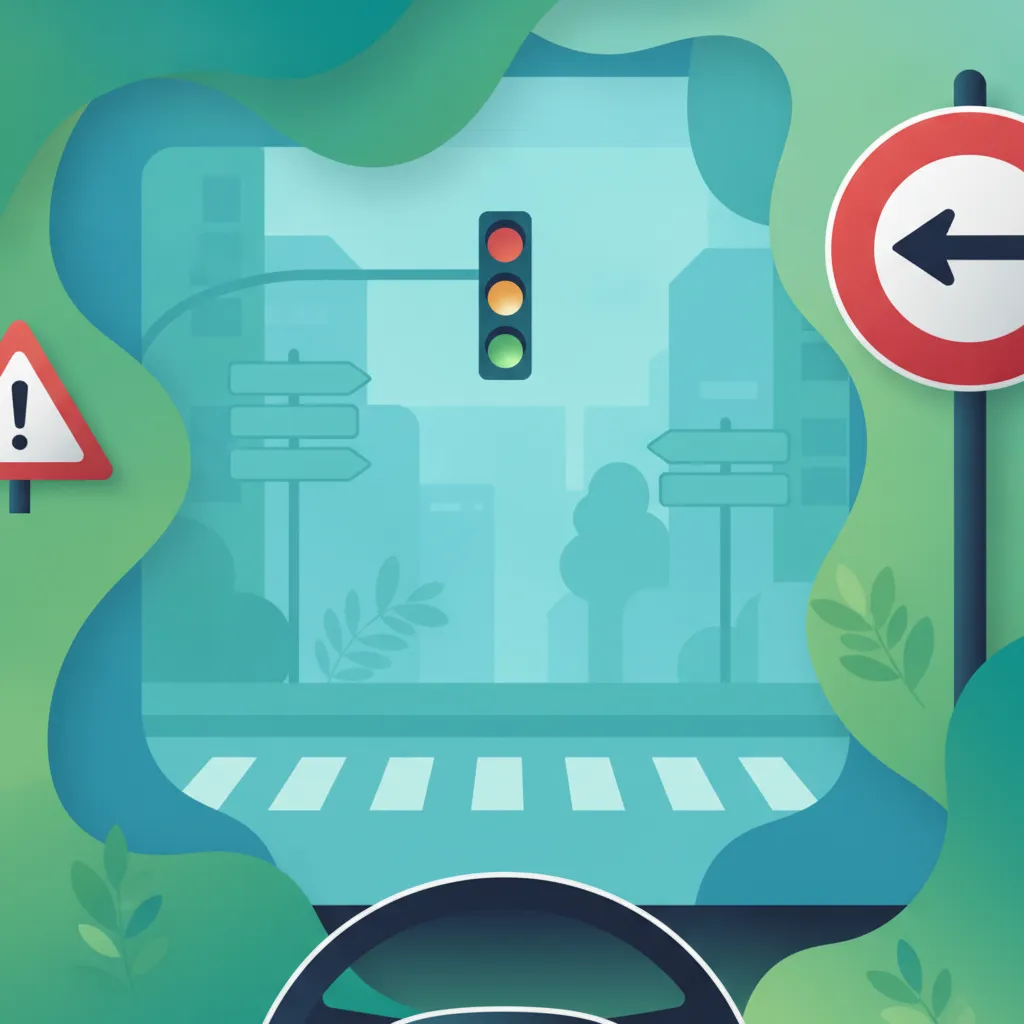
Browse all lessons that make up French Road Signs and Traffic Signals. Each lesson focuses on specific topics, learning objectives, and core concepts, helping you build essential knowledge and follow a clear, structured progression toward your study goals in France.
Regulatory signs are circular with red borders for prohibitions and blue backgrounds for mandatory instructions. This lesson details critical signs, such as speed limits, no-entry indicators, overtaking bans, and mandatory turning lanes. You will also learn about environmental zones restrictions, height limits for large vehicles, and the legal priority instructions conveyed by stop and yield signs.
Warning signs on French roads are triangular with a red border, designed to alert drivers to upcoming dangers. This lesson teaches you how to interpret warnings for sharp curves, slippery surfaces, narrowing lanes, and wildlife or animal crossing hazards. You will understand the safety adjustments needed when approaching school zones, active roadworks, or crossings where vulnerable pedestrians are present.
Information signs are typically square or rectangular and provide navigation support, route identification, and safety service details. This lesson covers how to read distance markers, locate highway rest stops, and identify services like hospitals or charging stations. You will also learn to read European route numbers, toll-road indicators, and directional signs that facilitate easy travel across France.
Traffic signals control flow and priority at busy intersections using precise color sequences. This lesson explains standard red, amber, and green cycles, as well as complex signals like flashing amber lights that indicate caution or a priority-to-the-right situation. You will learn the legal rules for turning on arrow signals and how to coordinate with dedicated pedestrian and cyclist light displays.
Temporary traffic configurations and construction sites are signaled using yellow-background signs to indicate their short-term nature. This lesson teaches you how to comply with temporary speed reductions, interpret lane shifts, and follow designated detour signs (deviation). Drivers will learn how to maintain high vigilance and safely navigate worksites while protecting road workers and oncoming traffic.
Explore high-intent keywords and long-tail search topics learners use when researching French Road Signs and Traffic Signals. These terms reflect how people search for reliable study materials, structured explanations, and unit-level theory preparation support in France.
Find clear answers to the most common questions learners ask about French Road Signs and Traffic Signals. Understand how the unit is organized, what learning goals it supports, and how it contributes to your study progression with structured explanations and practical guidance tailored for learners in France.
French road signs are standardized by shape and color. For instance, circular signs with a red border generally indicate a prohibition, while triangular signs with a red border are used for warnings. Understanding these visual patterns helps you quickly identify the sign's intent during the exam.
You should aim to recognize all common categories and their meanings. Rather than brute-force memorization, focus on understanding the logical framework: regulatory signs define laws, warning signs highlight dangers, and information signs guide you. This logic makes it easier to answer even unfamiliar questions.
Ignoring temporary signs, such as those indicating lane closures or speed reductions at roadworks, is a serious traffic violation under the Code de la route. These signs take precedence over permanent signals and are critical for your safety and that of construction workers.
Yes, traffic light signals are standardized nationally according to the French Code de la route. The meaning of green, amber, and red lights is uniform, ensuring consistent behavior for drivers whether you are in a small town or a major city like Paris.
All included lessons
Lessons in French Road Signs and Traffic Signals
See who benefits most from studying French Road Signs and Traffic Signals. This overview explains how the unit supports different learning needs, what level of knowledge is helpful before starting, and how it fits into the overall study path in France.
This unit is designed for all Category B licence candidates in France, from beginners starting their theory journey to exam retakers needing to refresh their knowledge of road signaling. It is particularly helpful for those who struggle with distinguishing between similar-looking signs or understanding the specific legal weight of different sign types.

Begin your structured journey towards passing the French ETG exam by exploring our comprehensive driving theory curriculum. Each course is designed to guide you through the Code de la route, ensuring you gain the knowledge and confidence for exam success. Find your ideal study path now.
Explore Theory CurriculumExplore all units and lessons included in this driving theory course.
Begin your structured journey towards passing the French ETG exam by exploring our comprehensive driving theory curriculum. Each course is designed to guide you through the Code de la route, ensuring you gain the knowledge and confidence for exam success. Find your ideal study path now.
Explore Theory Curriculum