This lesson guides you through the crucial regulatory signs that govern traffic flow and safety on French roads. By mastering these prohibitions and obligations, you will be prepared to correctly interpret signs in both the Category B theory exam and real-world driving situations.

Lesson content overview
In the French Highway Code (Code de la route), regulatory signs are the primary legal tools used to control traffic, protect road users, and enforce specific rules of the road. Unlike warning signs that advise of upcoming hazards, regulatory signs carry the full force of the law. Disregarding them is not merely a driving error—it is a traffic violation that carries heavy legal penalties, including fines, license points deductions, and potential license suspension.
Understanding these signs is essential for passing the French driving theory exam (Examen de l'Éthique Générale or ETG) and navigating French public roads safely and legally. This lesson details the two major categories of regulatory signs—prohibitions and obligations—alongside critical priority indicators and modern environmental zone restrictions.
The Code de la route uses a standardized, highly visible system of shapes and colors to help drivers identify regulatory commands instantly, even from a distance or in poor weather conditions.
Regulatory signs establish immediate, legally binding rules starting precisely at the point where the sign is erected, unless a supplemental arrow or distance panel (pannonceau) indicates otherwise. They remain in force until a corresponding "end of restriction" sign is posted, or until the driver passes the next major intersection.
There are two primary visual formats for regulatory signs:
Additionally, a circular grey sign with a black diagonal stripe indicates the end of a restriction (Fin d'interdiction), lifting the specific prohibition or obligation previously imposed.
Prohibition signs forbid drivers from performing certain maneuvers, entering specific streets, or exceeding set physical limits. In France, violating a prohibition sign generally results in a Class 4 fine (contravention de 4ème classe) and a loss of points on your driving licence.
Speed limits are among the most common prohibitory signs on French roads. They feature a red circle enclosing a black number representing the maximum allowable speed in kilometres per hour (km/h).
In France, speed limits are highly conditional. Even when a sign displays a specific limit, the Code de la route mandates automatic speed reductions during adverse weather conditions, such as rain or heavy fog.
The "No Entry" sign is one of the most critical safety signs in the French road system. It indicates that traffic is strictly prohibited from entering a street in the direction of the sign. It is commonly placed at the exit points of one-way streets (rues à sens unique) and highway off-ramps to prevent catastrophic head-on collisions.
Entering a street past a B1 "No Entry" sign is treated as a highly dangerous Class 4 traffic violation in France. It carries a heavy fine, a mandatory 4-point deduction from your driving license, and can lead to an immediate license suspension of up to three years.
Overtaking on two-lane roads carries inherent risks of head-on collisions. Where visibility is poor, such as on winding mountain roads or near school zones, the Code de la route prohibits overtaking using sign B3.
The legal implications of this sign are precise:
To maintain traffic flow and prevent hazards, French roads utilize distinct signs to regulate stationary vehicles. Confusing these two signs is a frequent cause of vehicle impoundment (mise en fourrière) and parking tickets.
The legal difference between stopping (l'arrêt) and parking (le stationnement) is defined by the physical presence and activity of the driver:
Mandatory signs dictate actions that you must perform. They are designed to streamline traffic flow and protect vulnerable road users by keeping specific vehicle types in designated areas.
These blue circular signs contain white arrows pointing in the direction you are legally required to travel.
These arrows can point straight ahead, to the left, or to the right. When placed directly before or within an intersection, they override any general turning privileges. For example, if you approach a multi-lane junction and see a blue sign with an arrow pointing right, you must turn right; continuing straight or turning left is an offense.
Obligation signs are also used to dedicate specific parts of the road infrastructure to certain groups of road users, isolating them from general motor vehicle traffic for safety reasons.
As urban areas face challenges from air pollution and physical traffic volume, the French government utilizes specialized regulatory signs to restrict certain vehicles based on emissions, size, or weight.
Major French metropolitan areas (including Paris, Lyon, Marseille, and Toulouse) have designated Low Emission Zones, known legally as Zones à Faibles Émissions (ZFE).
Access to these zones is regulated by the Crit'Air vignette system, which categorizes vehicles from Class 0 (electric and hydrogen) to Class 5 (older, high-emission diesel engines) based on their environmental impact.
For structural safety, vehicles exceeding specific dimensions or weights are legally prohibited from passing under bridges, through narrow tunnels, or across weight-sensitive structures.
Drivers of Category B vehicles (standard passenger cars) towing large trailers or caravans must pay close attention to height and width restrictions, as their combined profile may exceed standard limits.
While most priority rules in France default to "priority to the right" (priorité à droite), regulatory signs are used to establish clear legal precedence at busy or high-risk intersections.
The Stop and Give Way (Yield) signs have unique shapes (an octagon and an inverted triangle, respectively) so they can be recognized even from behind, or when completely covered in snow.
The physical and legal requirements of these two signs are fundamentally different:
Begin your approach deceleration early: Gradually reduce your speed as you approach the intersection to ensure a controlled stop.
Bring the vehicle to a complete physical halt: Your vehicle's wheels must stop moving entirely (immobilisation totale). A rolling stop, even at a very slow speed, is illegal.
Position your vehicle correctly: Stop directly behind the solid white stop line painted on the road surface. If there is no painted line, stop at the edge of the intersecting roadway where you have clear visibility.
Scan and yield: Look left, right, and left again. You must yield the right-of-way to all vehicles, cyclists, and pedestrians traveling on the crossing road.
Proceed only when safe: Accelerate smoothly out of the intersection once you have confirmed a clear, safe gap in traffic.
By contrast, the Give Way / Yield Sign (Cédez le passage - Sign AB3) does not legally require a complete physical stop if the intersecting road is completely clear.
The design of regulatory signs is directly linked to road safety outcomes. Correct observation of these signs prevents accidents and improves overall traffic flow:
To expand your driving theory knowledge, explore these related lessons on French traffic laws, speed limits, and road signs:
To test your understanding of prohibitions, obligations, and the legal priority rules of the Code de la route, access the targeted practice exams below:
Explore all units and lessons included in this driving theory course.
Lesson content overview
Explore all units and lessons included in this driving theory course.
Explore search topics learners often look for when studying Regulatory Signs: Prohibitions and Obligations. These topics reflect common questions about road rules, driving situations, safety guidance, and lesson level theory preparation for learners in France.
Browse additional driving theory lessons that cover connected traffic rules, road signs, and common driving situations related to this topic. Improve your understanding of how different rules interact across everyday traffic scenarios.
Understand the legal principles of priority in France, including priority to the right, controlled intersections, and roundabout navigation rules. This lesson explains how to identify priority situations and apply the correct driving strategy at various junction types according to the official Code de la route traffic regulations.

Negotiating crossroads that lack active traffic light signals requires a clear reading of signs and painted stop or yield lines. This lesson details the obligations of stopping completely at stop signs and slowing down to yield at 'cedez le passage' markings. You will learn to assess cross-traffic speeds, determine priorities when multiple vehicles arrive, and execute turns safely.

In France, the default rule at any intersection without clear priority signage is priority-to-the-right (priorite a droite). This lesson explains how to identify unsignaled junctions in urban and rural environments and when you must yield to incoming vehicles. You will learn to spot the standard yellow diamond priority signs and triangular warning signs that indicate whether you hold the priority.

Learners will study the fundamental priority rules that dictate right-of-way at intersections, focusing on the 'priorité à droite' principle prevalent in French road design. The lesson explains how to identify priority roads, interpret yield signs, and apply these rules safely when operating an AM vehicle. Understanding priority ensures orderly movement and reduces conflict points in mixed traffic scenarios.

France features a vast network of roundabouts (carrefours a sens giratoire) governed by specific entry and lane-use regulations. This lesson explains that vehicles entering a roundabout must yield to traffic already circulating inside. You will learn how to select the correct lane depending on your exit, use direction indicators properly, and yield to pedestrians and cyclists near roundabout exits.

Controlled intersections use traffic lights and accompanying signs to manage busy crossings systematically. This lesson covers how to safely proceed on a green light, negotiate left turns when yielding to oncoming traffic, and obey flashing amber lights. You will also learn the hierarchy of traffic control, where police officer gestures overrule both traffic lights and priority signs.
This lesson provides a comprehensive breakdown of priority rules under French law, with special focus on the default rule of priorité à droite. You will learn to recognize when this rule applies, even in the absence of explicit signage, and how to verify that entering vehicles see you. It also explains how to read priority road indicators, stop signs, and yield signs, helping you manage right-of-way safely and confidently.

Some crossroads feature complex layouts or specific signs that modify standard priority rules, such as schematic diagrams (panonceaux schematiques). This lesson teaches you how to read these auxiliary signs, which depict the thick line of the priority road and thin lines of secondary roads. You will learn how to maintain priority when the main road curves and how to navigate non-standard intersection layouts.
This lesson focuses on the skills required to safely enter, navigate, and exit roundabouts, a common feature in French urban environments. Learners will understand the need to yield to circulating traffic, select the appropriate lane upon entry, and signal intentions when exiting. By mastering these techniques, AM riders can safely integrate into roundabout traffic flow and reduce conflicts with other road users.

This lesson analyzes the technical path a long wheelbase vehicle must take when turning at intersections and navigating roundabouts. Drivers will learn to calculate tail swing and rear-wheel tracking, intentionally swinging wide to clear roadside curbs and poles safely. The lesson emphasizes yielding protocols for pedestrians and cyclists who may be crossing the target street during the turn.

Learners will learn the critical steps for safely approaching and traversing intersections, emphasizing speed reduction, priority assessment, and adherence to right-of-way rules, including priorité à droite. The lesson covers recognizing stop lines, interpreting road markings, and maintaining a safe distance from other vehicles. By mastering these practices, AM riders can confidently navigate intersections while minimizing collision risk.
Learn to identify hazard warning signs and temporary road signs used for construction or special events. This guide covers how these signs differ from regulatory prohibitions and provides essential context for anticipating road hazards and adjusting driving behavior safely within the French motorway and urban road network.
Warning signs on French roads are triangular with a red border, designed to alert drivers to upcoming dangers. This lesson teaches you how to interpret warnings for sharp curves, slippery surfaces, narrowing lanes, and wildlife or animal crossing hazards. You will understand the safety adjustments needed when approaching school zones, active roadworks, or crossings where vulnerable pedestrians are present.
Temporary traffic configurations and construction sites are signaled using yellow-background signs to indicate their short-term nature. This lesson teaches you how to comply with temporary speed reductions, interpret lane shifts, and follow designated detour signs (deviation). Drivers will learn how to maintain high vigilance and safely navigate worksites while protecting road workers and oncoming traffic.
This lesson focuses on French warning signs that alert drivers to potential hazards ahead, such as curves, animal crossings, or slippery surfaces, with particular attention to signs relevant to AM riders. Learners will examine how to interpret these signs, understand the associated risks, and adapt riding behavior accordingly. By mastering warning sign recognition, riders can proactively manage safety risks in diverse road conditions.
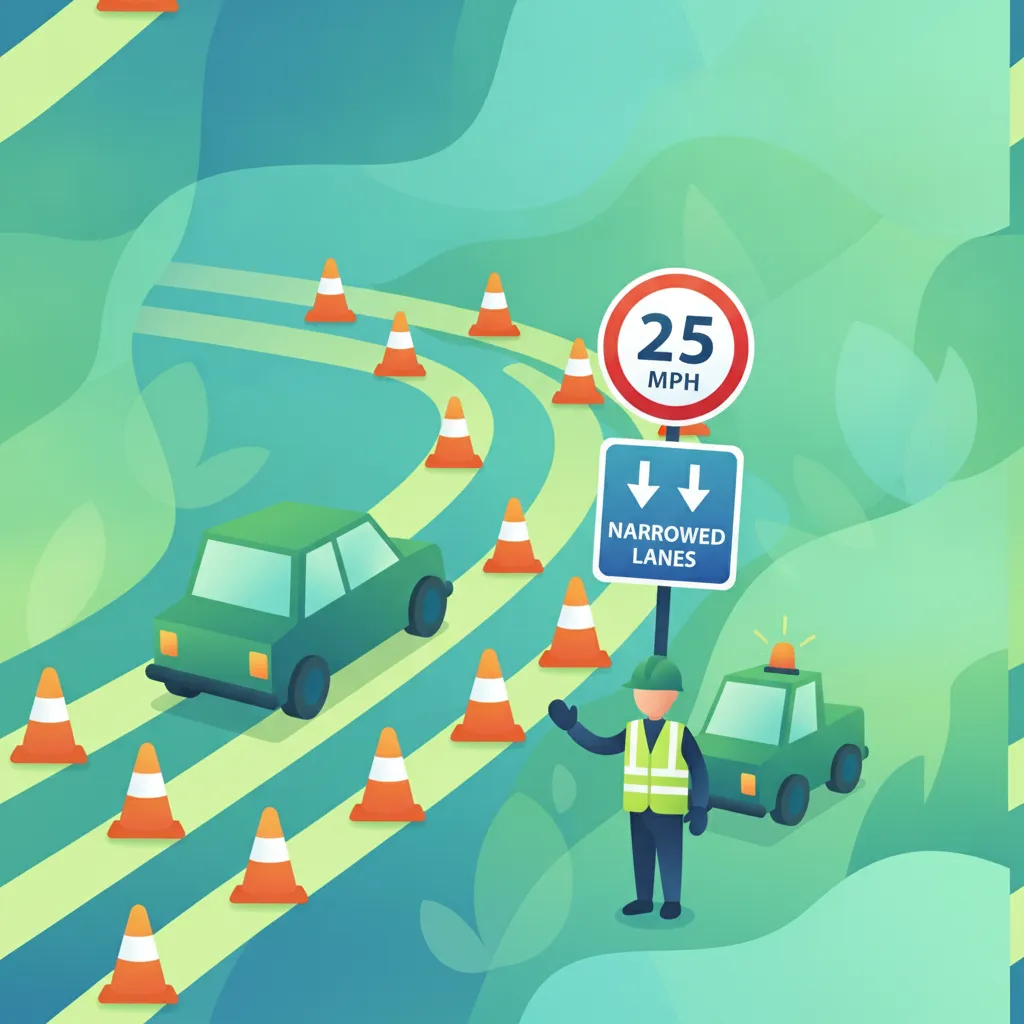
Active roadworks demand heightened vigilance to protect workers and guide vehicles through modified, narrow traffic lanes. This lesson covers how to recognize yellow horizontal road lines, which supersede standard white lines, and temporary traffic signals. You will learn to obey reduced construction-zone speed limits, negotiate lane shifts, and execute detours (deviations) systematically.

This lesson breaks down triangular warning signs, which warn of upcoming safety hazards like reverse curves, narrowing lanes, or loose gravel. You will learn to translate these visual markers into proactive riding techniques, such as adjusting your entry speed or choosing an alternative lean angle. Special attention is given to signs indicating temporary roadworks or variable grip conditions, which pose elevated dangers to motorcycles.

This lesson examines how goods vehicle drivers should approach and navigate roadworks zones and temporary traffic restrictions. Learners will be taught to recognize temporary speed limit signs, follow detour routes safely, and respect lane closures. The content also highlights the importance of maintaining safe distances from workers, adjusting for reduced lane width, and ensuring compliance with temporary regulations to avoid penalties.
Learners will be introduced to the core set of French regulatory signs that dictate mandatory actions or prohibitions for all road users, including AM riders. The lesson explains the significance of signs such as stop, yield (cédez le passage), speed limit, and no entry, highlighting their specific implications for small vehicles. Understanding these signs is crucial for legal compliance and safe navigation through varied traffic environments.
Some crossroads feature complex layouts or specific signs that modify standard priority rules, such as schematic diagrams (panonceaux schematiques). This lesson teaches you how to read these auxiliary signs, which depict the thick line of the priority road and thin lines of secondary roads. You will learn how to maintain priority when the main road curves and how to navigate non-standard intersection layouts.

Longitudinal road markings are painted along the length of the road to divide lanes and regulate overtaking maneuvers. This lesson teaches the strict legal prohibition of crossing solid white lines and the specific spacing of broken lines that permit lane changes. You will also learn how to interpret dual lines, warning arrows, and how to maintain proper lane discipline in heavy traffic.
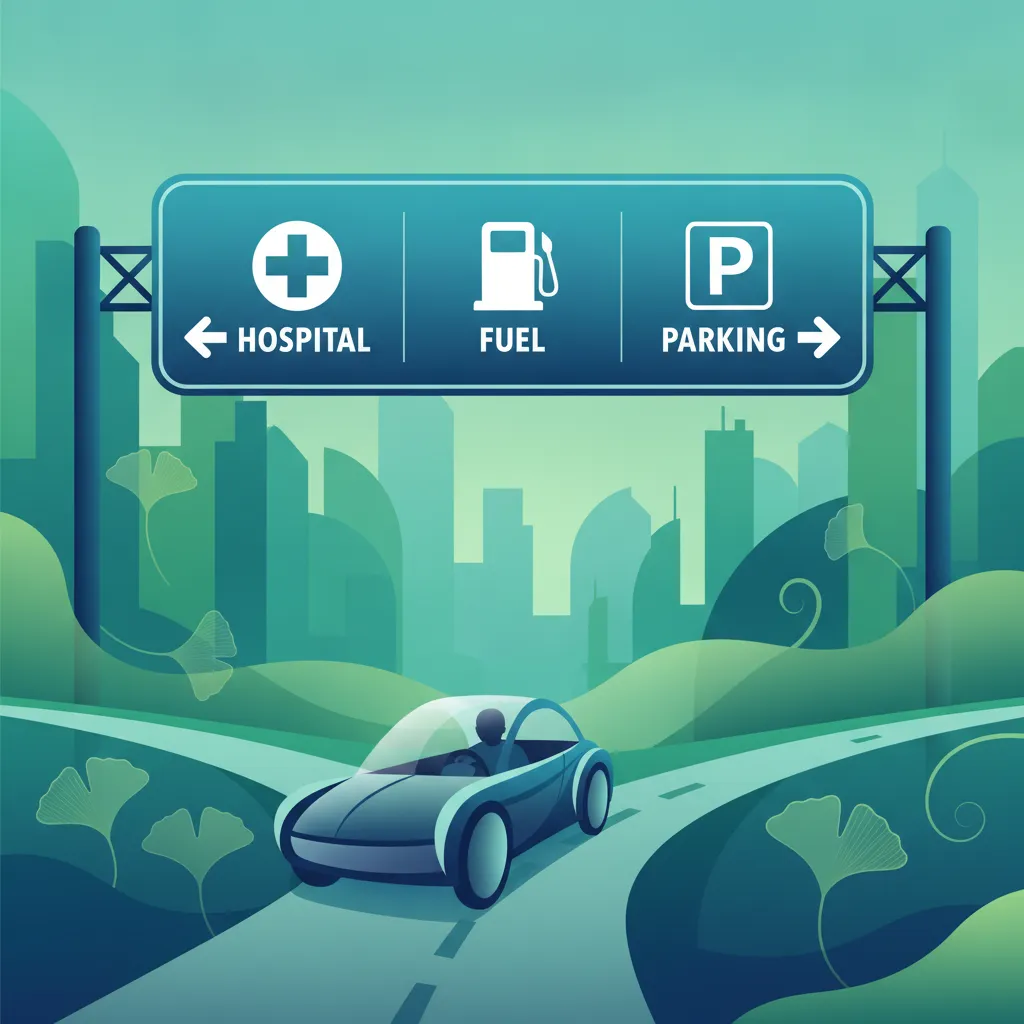
Information signs are typically square or rectangular and provide navigation support, route identification, and safety service details. This lesson covers how to read distance markers, locate highway rest stops, and identify services like hospitals or charging stations. You will also learn to read European route numbers, toll-road indicators, and directional signs that facilitate easy travel across France.
Find clear answers to common questions learners have about Regulatory Signs: Prohibitions and Obligations. Learn how the lesson is structured, which driving theory objectives it supports, and how it fits into the overall learning path of units and curriculum progression in France. These explanations help you understand key concepts, lesson flow, and exam focused study goals.
Prohibition signs are typically circular with a red border and a white background, indicating what you must not do. Mandatory signs are circular with a blue background, indicating actions you are required to perform, such as a mandatory direction.
Yes, regulatory signs generally take effect at the point where they are placed. However, some signs may be accompanied by an additional plaque underneath that specifies the distance to the restriction or the types of vehicles affected.
A Stop sign is octagonal, requiring a full halt for a few seconds regardless of traffic. A Yield sign is an inverted triangle, which only requires you to slow down or stop if another vehicle is approaching on the priority road.
Yes, French environmental zones, or ZFE, are marked by regulatory signs that often include specific symbols indicating which vehicles are authorized to enter based on their Crit'Air sticker rating.
Ready to focus your study? Use the practice search to find exactly the French driving theory questions you need for the Code de la route and permis de conduire ETG. Refine your knowledge on specific topics or challenging rules to boost your confidence and exam readiness.