Understanding when a traffic rule or restriction finishes is just as important as knowing the rule itself. This group of signs, often referred to as 'End of Restriction' signs, tells you precisely when a previous prohibition, obligation, or special condition no longer applies. Failing to recognise these signs can lead to confusion and unsafe driving, but mastering them is key to passing your theory test and navigating roads confidently.
An explanation of how France End of Restriction Signs road signs apply in real traffic situations in France. Learn where these signs are typically placed, what drivers are expected to do when they appear, and how correct reactions help you stay safe, avoid fines, and succeed in your French driving theory exam.
You will encounter end-of-restriction signs in various traffic scenarios, often following areas where specific rules were in place. For example, after passing through a zone where a speed limit was reduced (like a 50 km/h zone ending), or after a section of road with a specific prohibition, such as no honking. These signs are crucial because drivers must not assume a restriction has automatically ended just because the road layout changes or the area looks different. You must continue to adhere to the existing rule until you see a sign explicitly stating the restriction is over. This ensures you don't mistakenly accelerate after a reduced speed zone or enter a prohibited manoeuvre just because the 'no' sign seems to be in the past.
An overview of the key learning outcomes when studying the France End of Restriction Signs road sign category. Understand the main concepts, sign meanings, and traffic situations covered here so you can recognise patterns, answer theory questions more confidently, and build a solid foundation for safe driving in France.
Master France's end-of-restriction signs to understand precisely when speed limits, prohibitions, or special rules no longer apply. Studying these vital traffic signs together helps avoid confusion and ensures compliance with French road law. Recognising these indicators is key for successful theory test revision and safe driving.

The B31 'End of Restriction' Sign: Knowing When a Rule No Longer Applies

The B33 sign marks the end of a 50 km/h speed limit zone.

You can sound your horn again: The End of No Sounding of Horns sign (B35) means the restriction is over.
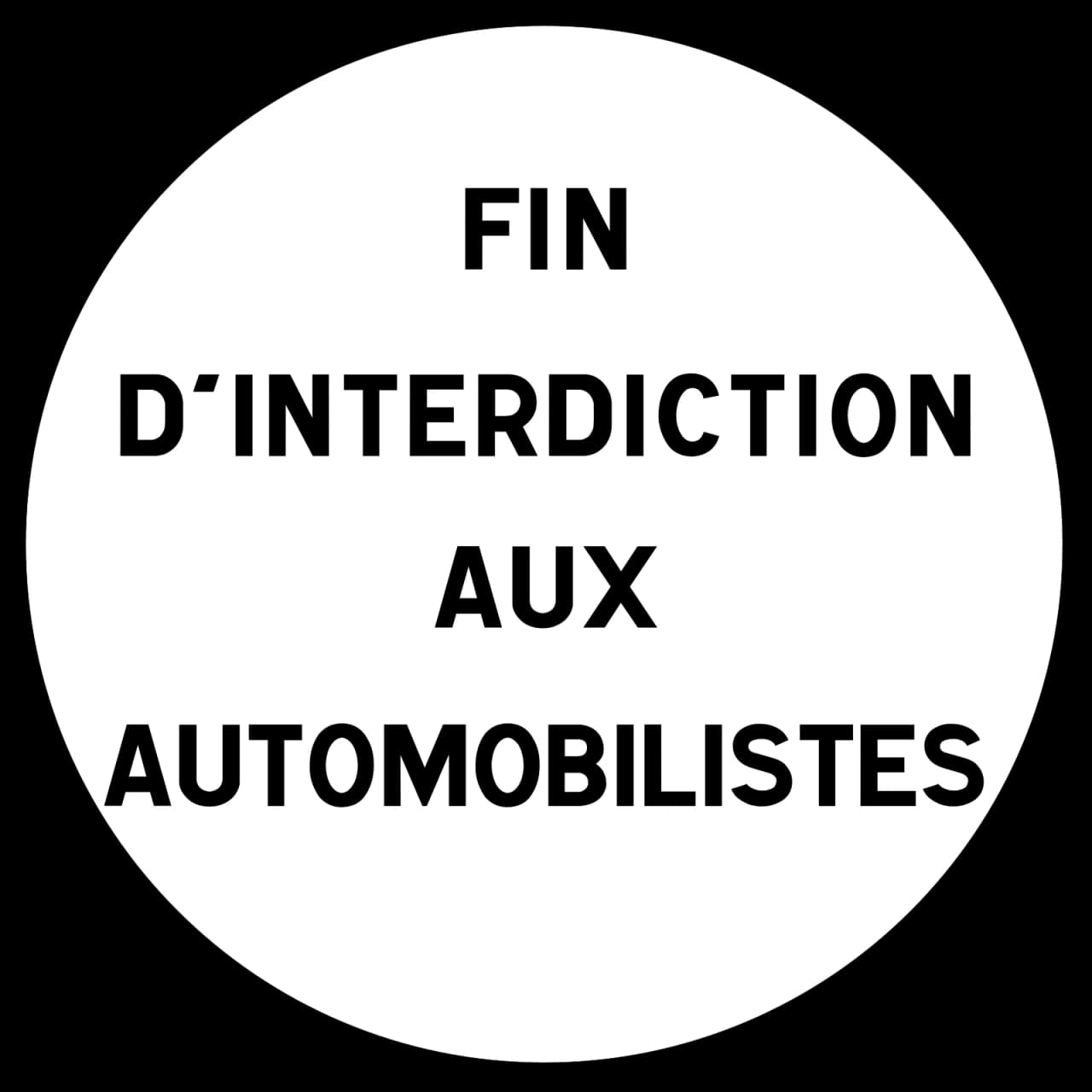
The B39 sign signifies the end of previous driving restrictions or special rules.
Clear answers to common questions about the France End of Restriction Signs road sign category. Use this FAQ to review tricky rules, understand how these signs appear in exam scenarios, and remove confusion that often leads to mistakes in the French driving theory exam in France.
The main purpose of these signs is to clearly indicate that a previously applied traffic rule, such as a speed limit, a prohibition, or a special obligation, is no longer in effect. They provide definitive information, so drivers know exactly when they can resume normal driving behaviour according to general traffic laws.
You should always assume a restriction remains in place until you see an official 'End of Restriction' sign, a relevant road marking that signifies the end of the zone, or an exit sign for the area where the restriction applied. Never assume a restriction has ended based solely on your surroundings; always wait for a clear official signal.
Not always. While some signs are very specific, like the 'End of 50 km/h zone' sign (B33), others are more general. The 'End of Restriction' sign (B31) can apply to various preceding prohibitions, and the 'End of other restrictions' sign (B39) covers any other rules not covered by specific signs. It's important to remember the context of the road leading up to these general signs.
A specific sign, like the 'End of 50 km/h zone', clearly states the exact restriction that is being lifted – in this case, a mandatory 50 km/h speed limit. A general 'End of Restriction' sign (B31) is used to cancel various other types of restrictions that might have been indicated by previous signs or road markings but do not have their own specific 'end' sign. The context of the road and preceding signs helps determine which restriction is being lifted by the general sign.
Yes, these signs can appear in a wide variety of locations. You'll see them after entering a specially regulated area, such as a town centre with traffic calming measures, a road with temporary prohibitions due to roadworks, or specific zones like those requiring silence. They are placed at the point where the special rule concludes and the general rules of the road resume.
Ready to deepen your understanding of French road signs? Dive into our comprehensive overview of official sign categories and groups. This structured approach will help you learn Code de la route classifications more effectively, preparing you thoroughly for your Permis de Conduire theory exam.
Explore Sign Categories