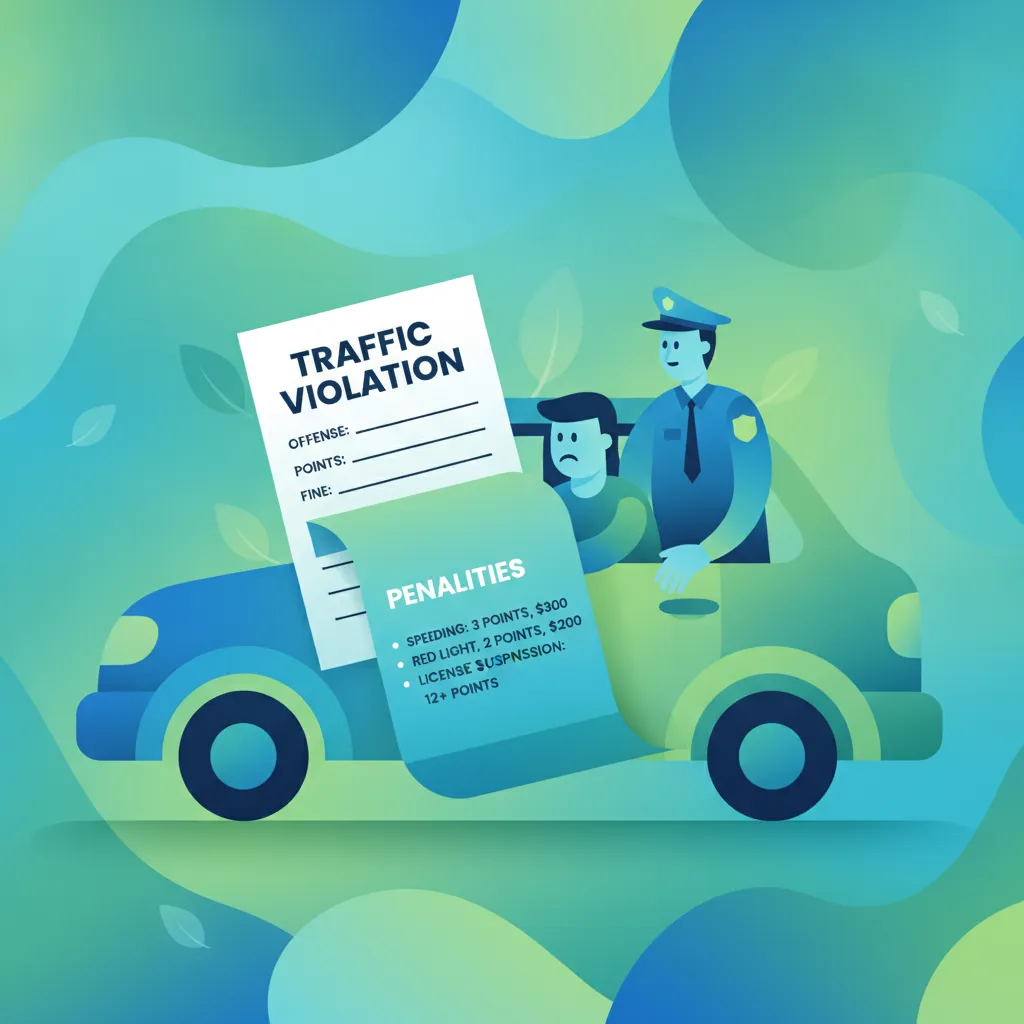
This lesson details the legal responsibilities of Category AM moped riders in Ireland, focusing on the consequences of violating road traffic laws. You will learn how the penalty point system works, the nature of financial fines, and the conditions that lead to mandatory license disqualification. Mastering these regulations is essential for passing your theory test and maintaining a clean driving record.
Lesson content overview
Operating a moped or a light quadricycle under a Category AM licence in Ireland comes with significant legal responsibilities. The Irish Rules of the Road are designed to protect all road users, particularly vulnerable ones like riders of two-wheeled vehicles. Failing to comply with these regulations does not just carry financial consequences; it can also result in penalty points, licence disqualification, and in severe cases, criminal prosecution.
This lesson covers the legal framework of traffic penalties, fines, and disqualifications under Irish law, specifically tailored for Category AM riders. Understanding these rules is a vital part of your journey toward becoming a safe, responsible, and fully compliant road user.
In Ireland, traffic laws are enacted by the Oireachtas (Irish Parliament) and enforced by An Garda Síochána (the Irish police force). The Road Safety Authority (RSA) oversees licence standards, vehicle testing, and road safety education.
Every time you mount a moped, you are legally classified as a driver of a mechanically propelled vehicle (MPV). This means you are subject to the same strict legal accountability as car, truck, or bus drivers. The legal penal system for road traffic violations operates on three main principles:
A Fixed Charge Penalty (often called a Fixed Charge Notice or FCN) is an administrative fine issued by An Garda Síochána for specific, minor-to-moderate road traffic offences.
A legal notice issued to a motorist alleging that a road traffic offence has been committed. It allows the individual to pay a set fine within a specified timeframe to avoid court prosecution and potentially reduce the number of penalty points applied.
When you are detected committing a fixed-charge offence (for example, by a speed camera or by a Garda officer at the roadside), a notice is sent to your registered address. Under Irish law, a strict chronological process must be followed:
Stage 1 (Days 1 to 28): You have 28 days from the date of the notice to pay the base fine amount specified.
Stage 2 (Days 29 to 56): If you fail to pay within the first 28 days, the fine increases by 50%. You have an additional 28 days to pay this increased amount.
Stage 3 (Day 57 onwards): If the fine remains unpaid after 56 days, a court summons is automatically issued. If convicted in court, you will face much higher fines, more penalty points, and a potential criminal record.
Many new riders mistakenly believe that fixed charge fines are optional or do not apply to mopeds. Under the Road Traffic Acts, a moped is an MPV. Ignoring a Fixed Charge Notice will lead to a District Court summons, which carries significantly harsher penalties.
The monetary value of an FCN depends entirely on the severity of the safety risk. For example:
The penalty points system is a key administrative tool used in Ireland to identify, track, and deter habitual traffic offenders. Points are recorded electronically on your driver record when you pay a Fixed Charge Notice for a points-carrying offence, or when you are convicted of such an offence in court.
The Irish legal system recognizes that inexperienced riders are at a higher risk of accidents. Consequently, the threshold for licence disqualification is lower for learner permit holders and novice drivers:
| Driver Status | Disqualification Threshold | Disqualification Period |
|---|---|---|
| Fully Licensed Rider (Held full licence > 2 years) | 12 Penalty Points | 6 Months (Mandatory) |
| Learner Permit Holder (Any stage of learning) | 7 Penalty Points | 6 Months (Mandatory) |
| Novice Rider (First 2 years of holding a full licence) | 7 Penalty Points | 6 Months (Mandatory) |
Because Category AM riders are frequently operating under a learner permit or are in their first two years as a licensed driver (novice stage), you are highly vulnerable to disqualification after only two or three minor infractions.
For the most dangerous road traffic offences, the legal system bypasses the gradual accumulation of penalty points and triggers an immediate licence disqualification or revocation. This means you must cease riding immediately upon the order of the court or the suspension notice.
A court-ordered or administrative ban that revokes your legal entitlement to operate any mechanically propelled vehicle on public roads.
If you are disqualified, you must surrender your physical licence or learner permit to the National Driver Licence Service (NDLS) within the specified timeframe. Riding while disqualified is a serious criminal offence that can result in immediate arrest, vehicle seizure, heavy court fines, and imprisonment.
Alcohol seriously impairs a rider's balance, reaction time, and peripheral vision. Because moped riders have no protective cabin, the physical danger of riding under the influence is extreme.
Under Irish law, the legal limit depends on your driver profile. Category AM riders on learner permits or within their first two years as novice riders are classified as specified drivers:
If you are caught riding a moped above the legal BAC limit, you face an automatic roadside ban or a court conviction resulting in a mandatory disqualification period ranging from 3 months to several years, depending on the concentration of alcohol detected.
It is strictly illegal to ride a moped under the influence of drugs, including illegal narcotics and certain prescription or over-the-counter medications that cause drowsiness or impair coordination. An Garda Síochána can conduct roadside saliva tests for drugs like cannabis, cocaine, opiates, and benzodiazepines. A positive test or proof of impairment leads to an immediate arrest and a mandatory court disqualification of at least 1 year.
Engaging in manoeuvres that show a complete disregard for the safety of others—such as pulling stunts (wheelies), weaving excessively through traffic, or racing—can result in a conviction for dangerous driving. This carries a mandatory minimum disqualification of 2 years on a first conviction.
Riding a moped on a public road without holding a valid learner permit or full licence for Category AM is a serious breach of the law. You cannot legally ride unless you have passed your theory test, obtained your learner permit, and completed your mandatory Initial Basic Training (IBT) course.
Certain legal requirements are highly specific to two-wheeled vehicles like mopeds and light quadricycles. Neglecting these rules often results in targeted enforcement by Gardaí.
Under Irish law, both the rider and any passenger (provided the moped is legally certified to carry one) must wear a protective helmet that conforms to European safety standards (look for the "ECE 22.05" or "ECE 22.06" mark or the British Standard BS 6658).
If you are riding on a Category AM learner permit, you must strictly adhere to the following conditional laws. Violating them is a direct breach of licence conditions:
Under Category AM, a moped is legally defined as having a maximum design speed of 45 km/h. Modifying the engine or transmission (commonly known as "de-restricting" or "tuning" the moped) to exceed this speed changes the legal classification of the vehicle.
If your moped is modified to travel faster than 45 km/h, your Category AM licence and insurance policy become completely invalid. You can be prosecuted for driving an uninsured and unlicensed vehicle, leading to immediate disqualification, heavy court fines, and the seizure of the moped.
Riding on footpaths, pedestrian plazas, or cycle lanes is highly illegal. Some riders attempt this to bypass traffic congestion. This constitutes "careless or dangerous driving" and can lead to immediate prosecution and licence suspension, as it places highly vulnerable road users (pedestrians and children) at extreme risk.
The severity of a traffic penalty can be affected by external conditions and the context of the offence. The legal system allows judges and enforcing officers to scale penalties based on risk:
If you are disqualified from riding due to accumulating too many penalty points or committing a serious offence, regaining your driving privileges is not an automatic or simple process.
Once your disqualification period has expired, you must complete several legally mandated steps before you can legally ride again:
Serve the Full Ban: You must complete the entire duration of the disqualification period. You cannot ride under any circumstances during this time.
Apply for Reinstatement: You must submit an application to the NDLS to have your licence restored. In some cases, you may need a court order of restoration.
Mandatory Training or Re-testing: Depending on the court order, you may be required to sit the Driver Theory Test again, undergo Initial Basic Training (IBT), or pass a practical riding test to prove your competency.
Medical Assessments: For alcohol or drug-related disqualifications, you may be legally required to undergo a medical fitness assessment to certify that you do not have an active dependency before a new licence can be issued.
Aside from the immediate legal penalties, a traffic conviction or disqualification has deep, lasting impacts on your personal life:
Strict legal penalties are not designed merely to punish riders; they are a vital tool for preserving life. Mopeds are lightweight, highly agile, and lack the safety shell of a car. In any collision, the moped rider is highly likely to suffer severe injury or death.
By enforcing strict rules regarding helmet use, speed limits, alcohol consumption, and vehicle maintenance, the law acts as a protective barrier. Adhering to the Rules of the Road ensures that you minimize your risk of an accident, secure your legal standing, and contribute to making Irish roads safer for everyone.
Explore all units and lessons included in this driving theory course.
Lesson content overview
Explore all units and lessons included in this driving theory course.
Explore search topics learners often look for when studying Understanding Penalties, Fines and Legal Consequences. These topics reflect common questions about road rules, driving situations, safety guidance, and lesson level theory preparation for learners in Ireland.
Browse additional driving theory lessons that cover connected traffic rules, road signs, and common driving situations related to this topic. Improve your understanding of how different rules interact across everyday traffic scenarios.
Understand how impaired driving impacts reaction time, balance, and decision-making on Irish roads. This lesson explains the legal consequences and safety hazards of riding a moped while distracted or under the influence of substances, helping you maintain compliance with the Irish Rules of the Road.

This lesson highlights the catastrophic dangers of operating a Category AM vehicle while impaired by alcohol, drugs, or fatigue. It explains the legal limits enforced in Ireland, the impact of distractions like mobile phones, and the influence of peer pressure. Riders will learn strategies to resist unsafe behavior and prioritize conscious safety decisions.

This lesson details the statutory blood alcohol concentration limits in Ireland and the severe penalties for operating a motorcycle under the influence. It explains the physiological effects of alcohol, illicit drugs, and everyday prescription medication on vision, reaction speed, and overall coordination. Motorcyclists will understand how chemical impairment fundamentally alters risk assessment and vehicle control.
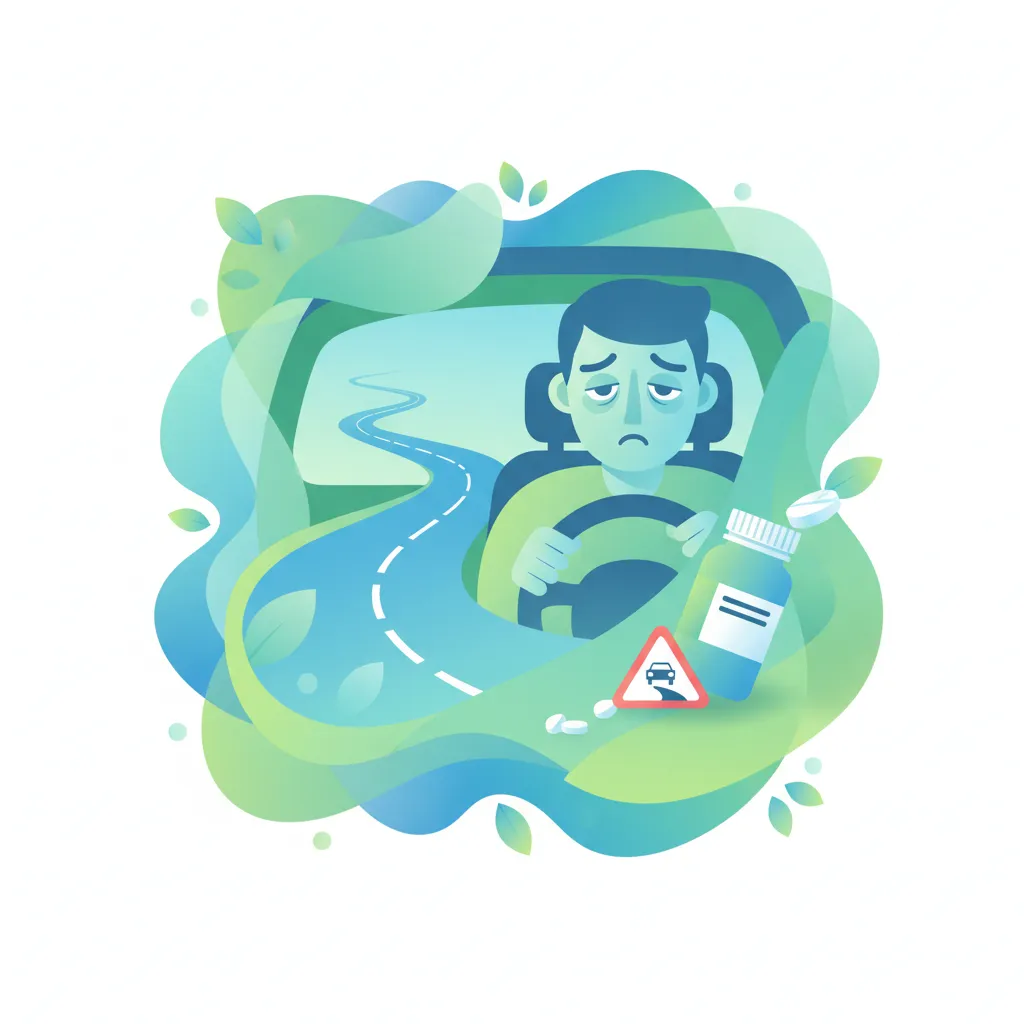
Driving under the influence of illegal drugs or impairing prescription medication is a major contributor to road traffic accidents in Ireland. This lesson details how officers conduct roadside oral fluid tests for substances like cannabis and cocaine, and the legal penalties for driving while impaired. You will learn to read warnings on over-the-counter medicine labels and assess your fitness to drive before taking medication.
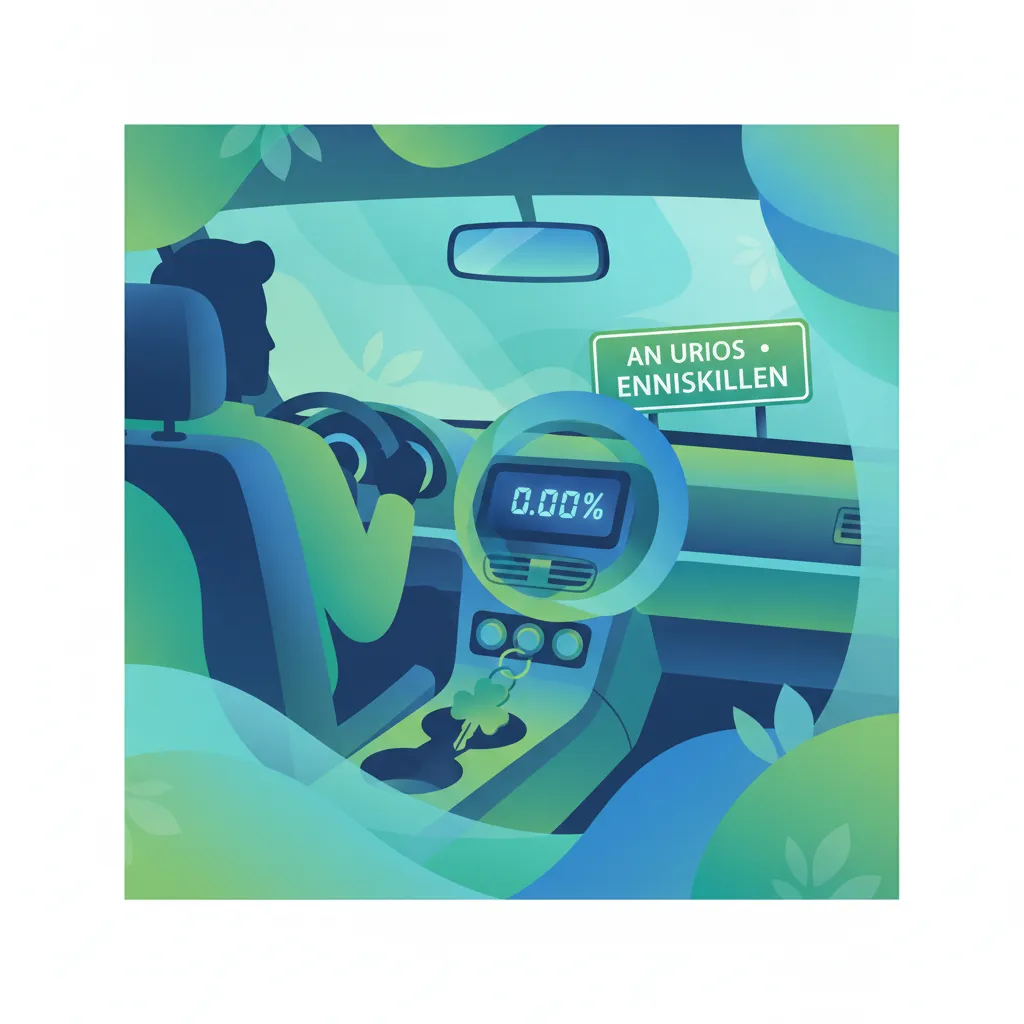
Ireland enforces strict blood alcohol concentration (BAC) limits, with a near zero-tolerance policy of 20 milligrams for learner and novice drivers. This lesson explains how alcohol impairs your cognitive functions, slows your reaction times, and distorts your depth perception. You will learn about mandatory Garda breathalyser checkpoints, the severe penalties for refusal, and the safety rule that only time eliminates alcohol.

This lesson identifies prevalent risky behaviours among motorcyclists, including speeding, tailgating, and reckless riding under the influence of alcohol or drugs. Learners will understand the associated penalties, legal implications, and the impact of fatigue and peer pressure on decision-making, following RSA and Irish legal frameworks.
Driver fatigue and visual distractions are major contributors to commercial passenger vehicle accidents on national transport networks. This lesson explores the physiological indicators of drowsiness, the benefits of healthy sleep habits, and strategies for avoiding digital distractions. It emphasizes strict compliance with professional driver hours to maintain alertness and safe operations.
Driver fatigue is a silent killer on the roads, often causing drivers to drift out of lanes or experience catastrophic micro-sleeps. This lesson outlines the early warning signs of sleepiness, such as frequent yawning, heavy eyelids, and difficulty remembering the last few kilometres driven. You will learn effective prevention strategies, including planning regular rest stops, taking caffeine breaks, and never driving tired.

Irish rural roads are often narrow, winding, and bordered by high hedges, presenting unique hazards compared to urban streets. This lesson focuses on scanning for hidden hazards such as slow-moving farm machinery, mud on the road surface, and loose livestock. You will learn how to adjust your speed before entering blind bends, sound your horn at blind crests, and safely share the road with local agricultural traffic.
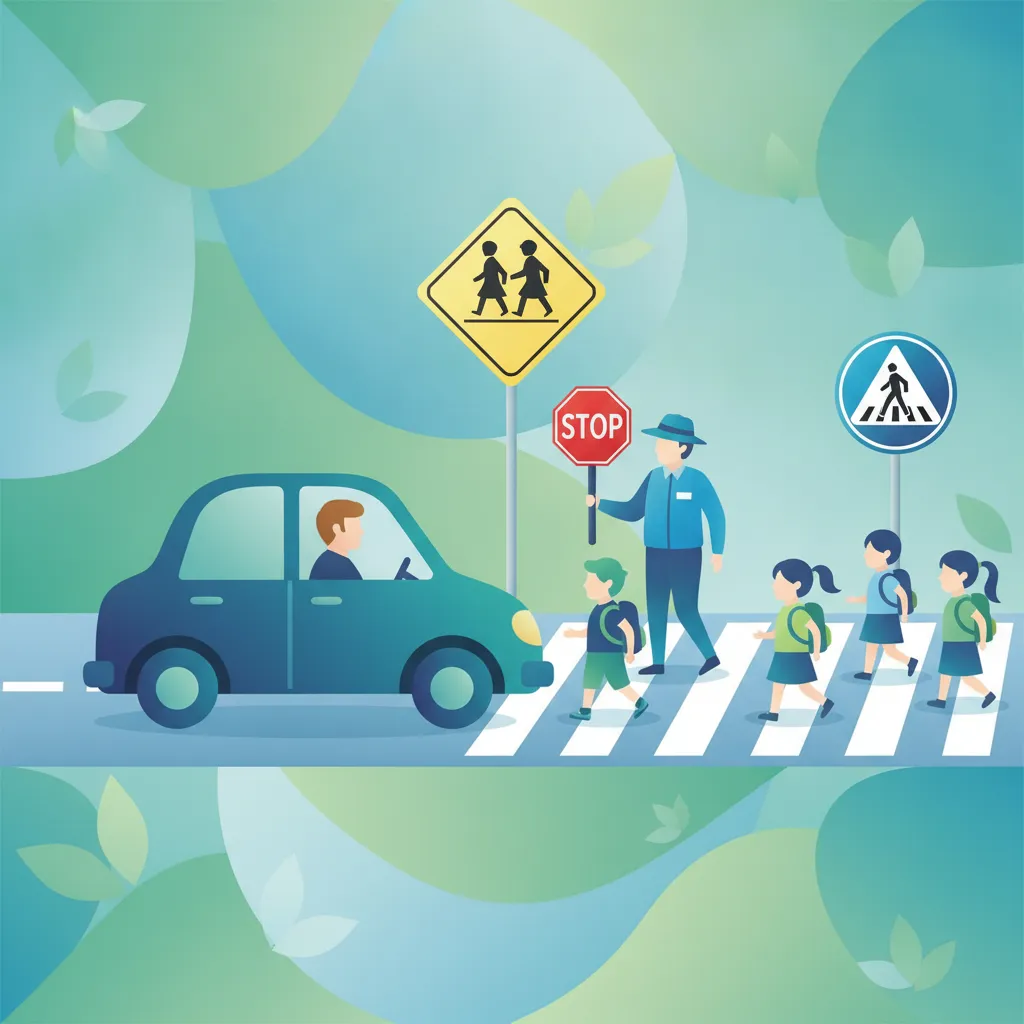
School zones and pedestrian crossings require high driver alertness and strict compliance with local speed limits in Ireland. This lesson details the legal rules of zebra and pelican crossings, explaining driver requirements when amber warning beacons are flashing. Drivers will study safety procedures for dropping off or picking up children, preventing common blind-spot accidents near schools.
Safeguarding vulnerable road users requires more than simple obedience to traffic signs; it demands a defensive driving mindset. This lesson summarizes safe practices, including scanning far ahead in urban areas, keeping massive safety margins in wet weather, and executing thorough blind spot checks before reversing. By anticipating the unpredictable movements of others, you can prevent accidents and support a safe road culture.
Explore the specific legal requirements for Category AM learner permit holders, including L-plate display, passenger restrictions, and vehicle limitations. This guide clarifies the conditions of your licence and the steps necessary to progress toward full Category AM licensure under official Irish RSA standards.

Learner drivers in Ireland must adhere to strict operational rules, including the compulsory display of red L-plates and driving under qualified supervision. This lesson outlines your specific duties as a learner, the legal definitions of an accompanying experienced driver, and the elevated safety margins you must maintain on the road. Failing to comply with these learner regulations carries serious legal penalties and delays your progression to a full driving licence.

This lesson details the statutory rules governing learner permit holders, including compulsory safety gear and vehicle roadworthiness standards. Riders must understand the requirement for high-visibility clothing, functioning warning devices, and compliance with the official Rules of the Road. Safe riding habits are established by strictly adhering to these RSA standards.

This lesson covers the legal definition of mopeds and light quadricycles in Ireland, specifying engine capacity and maximum power limits. It outlines the minimum age requirements and the specific routes where these vehicles are legally permitted to operate. Understanding these classifications is critical for compliance with Irish and EU regulations.

This lesson explores the various vehicle categories in Ireland, with a dedicated focus on Category B for passenger vehicles. You will learn about the exact age requirements, medical fitness certificates, and the step-by-step application process overseen by the National Driver Licence Service. Understanding these initial administrative requirements is essential before you can legally operate any motor vehicle on public roads under supervision.
This lesson details the structure of the Irish penalty point system and its implications for novice Category AM riders. It highlights the specific traffic violations that trigger points and the thresholds that result in automatic disqualification. Learners will understand the process of moving from a learner permit to a full driving licence safely.

This lesson explores the essential differences between D1, D, D1E, and DE licence categories under Irish road traffic legislation. It covers the medical fitness standards, age requirements, and national driver licensing service procedures necessary to qualify for passenger vehicle operation. By detailing these regulatory expectations, drivers gain a thorough understanding of their legal limitations and licensing pathways.
This lesson outlines the legal speed limits governing mopeds and light quadricycles in various Irish environments, including urban centers and school zones. It clarifies why Category AM vehicles are strictly prohibited from driving on motorways due to safety and speed disparities. Riders will also study the legal penalties, including fines and points, for speeding.
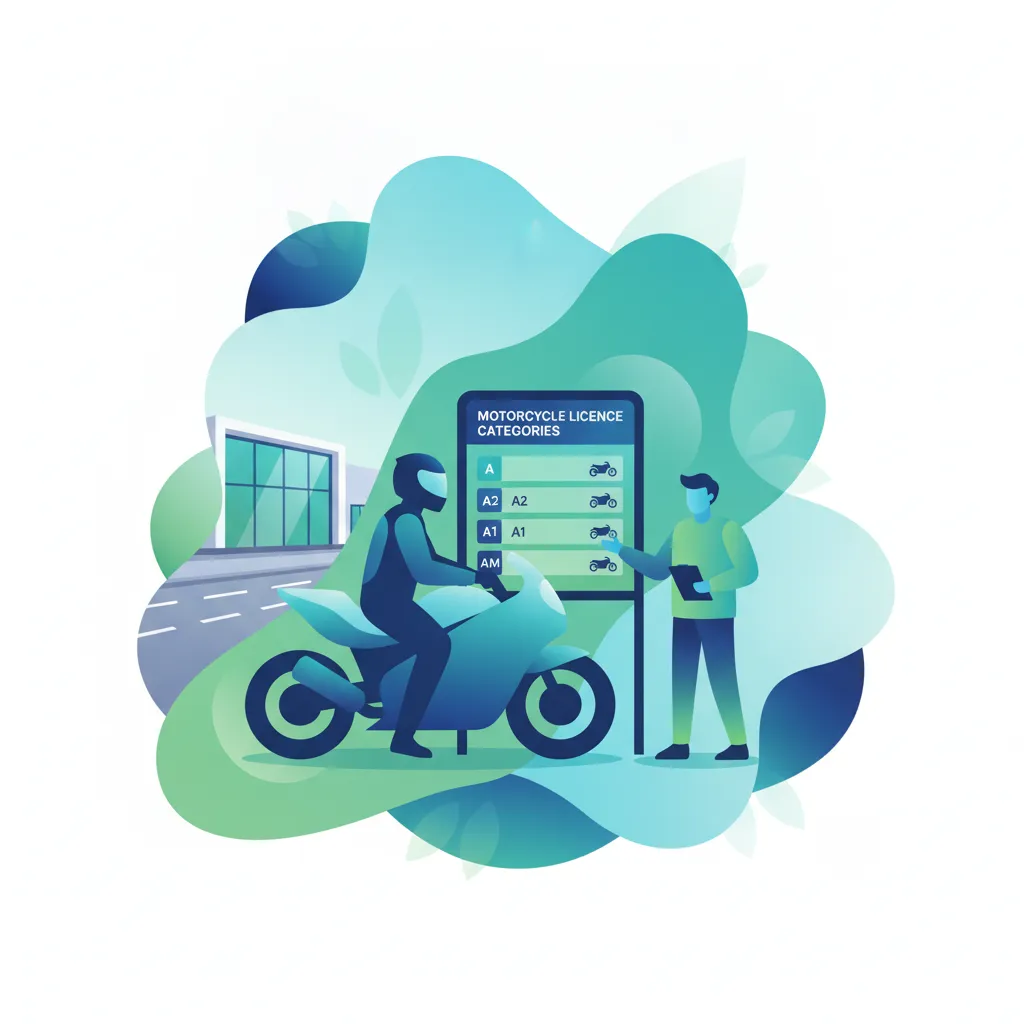
This lesson covers the specific parameters defining the A1, A2, and Category A motorcycle licences in Ireland, including age thresholds and engine limits. It outlines the progressive access route and the direct entry requirements defined by the Road Safety Authority. Motorcyclists will understand how the power-to-weight ratio dictates which vehicles they are legally permitted to operate with their specific permit.
This lesson highlights the catastrophic dangers of operating a Category AM vehicle while impaired by alcohol, drugs, or fatigue. It explains the legal limits enforced in Ireland, the impact of distractions like mobile phones, and the influence of peer pressure. Riders will learn strategies to resist unsafe behavior and prioritize conscious safety decisions.

Drivers bear the legal responsibility of ensuring that all passengers under seventeen years of age are properly secured in the vehicle. This lesson covers Ireland's strict seatbelt laws and the requirement to use an EU-approved child restraint system appropriate for the child's height and weight. You will learn how to locate ISOFIX anchorage points, fit child seats correctly, and deactivate passenger airbags when using rear-facing seats.
Find clear answers to common questions learners have about Understanding Penalties, Fines and Legal Consequences. Learn how the lesson is structured, which driving theory objectives it supports, and how it fits into the overall learning path of units and curriculum progression in Ireland. These explanations help you understand key concepts, lesson flow, and exam focused study goals.
Learner permit holders are generally subject to a lower threshold for disqualification than full license holders. Accumulating 7 penalty points leads to automatic disqualification for a period of six months.
No, penalty points generally remain on your driving record for three years from the date of the offence. However, points will be removed if you are disqualified for a period during that time.
A Fixed Charge Notice is an alternative to prosecution for certain minor traffic offences. If you pay the fine within the specified time, no court appearance is required, and the penalty points are applied to your license.
Yes, penalty points are attached to your personal driver record. If you are caught riding while disqualified or without the proper category license, you face severe legal consequences, including heavy fines and potential court prosecution.
Use the practice question search tool to pinpoint specific topics, road signs, or rules you need to master for your official Driver Theory Test. Refine your study strategy and ensure comprehensive preparation for all aspects of the Irish driving exam. Start your focused revision now and build confidence for your learner permit test.