This lesson focuses on the critical handling skills required to safely manoeuvre large passenger vehicles on Irish roads. You will learn to manage the wide rear-wheel track offset and master the mirror routines essential for spotting vulnerable road users during turns. This is a vital step in Unit 7, building on your knowledge of vehicle dimensions to ensure passenger and public safety.

Lesson content overview
Mastering the physical dynamics of a large passenger vehicle is one of the most critical steps in obtaining your Category D or D1 driving licence in Ireland. Due to their significant length and wheelbase, buses and coaches do not behave like passenger cars. When negotiating corners, junctions, and roundabouts, professional drivers must constantly manage two main hazards: the physical "off-tracking" of the rear wheels and the extensive blind spots that can easily conceal vulnerable road users, particularly cyclists and pedestrians.
This lesson explores the essential mechanics of turning large vehicles, the regulations governing blind spot management under the Irish Rules of the Road, and the defensive driving strategies required to prevent collisions with both stationary street furniture and moving road users.
When any vehicle negotiates a turn, the rear wheels do not follow the exact path of the front wheels. Instead, they cut inward, following a shorter, tighter path. In passenger cars, this offset is negligible. However, in Category D vehicles, the distance between the front steering axle and the drive axle (the wheelbase) is substantial. This physical reality creates a significant rear-wheel track offset, commonly referred to as off-tracking or low-speed off-tracking.
The difference in the turning radius between the path taken by the front steering wheels and the path taken by the rear wheels as a vehicle negotiates a curve or corner.
When a bus driver turns the steering wheel, the front of the vehicle swings outward (front-end overhang), while the rear wheels cut inward toward the centre of the turn. The longer the wheelbase of the vehicle, the greater the inward cut of the rear wheels.
If a driver attempts to turn a coach around a tight corner using the same steering line they would use in a car, the rear wheels will mount the kerb, potentially striking pedestrians waiting at a crossing, damaging tyres, or colliding with street furniture such as traffic light poles, signs, and bollards.
Because of off-tracking, a driver must often position the vehicle further to the right (when turning left) or further to the left (when turning right) to allow the rear of the vehicle to clear the corner safely. This manoeuvre is known as swinging wide.
However, swinging wide creates a temporary gap between the side of the bus and the kerb. Smaller vehicles, motorcyclists, and especially cyclists may mistake this gap for an open lane and attempt to undertake or overtake the turning bus. As the bus completes the turn, the rear-wheel offset closes this gap rapidly. This dangerous situation is known as the squeeze play, and it is a leading cause of serious urban collisions.
Because of the height, length, and structural design of modern buses and coaches, a driver’s direct line of sight is highly restricted. Even with a comprehensive array of mirrors, there are significant areas around the vehicle where other road users can become completely invisible. These are known as blind spots or blind zones.
A professional passenger vehicle has four primary blind zones:
In Ireland's cities and towns, cyclists frequently use cycle lanes situated on the left-hand side of the road. When a bus prepares to turn left, any cyclist travelling straight ahead alongside the bus is at extreme risk. If the cyclist enters the nearside blind spot, the driver may initiate the turn without realising the cyclist is there, leading to a potentially fatal side-impact or crushing collision.
The Road Safety Authority (RSA) and Irish road traffic legislation place a strict duty of care on professional drivers to protect vulnerable road users. When operating a Category D vehicle, you must adhere to several statutory principles during turns and lane changes.
Legal Duty of Care: Under Irish law, drivers of large commercial and passenger vehicles must take reasonable care to avoid moving into the path of a cyclist or pedestrian. Failing to properly check blind spots before turning can lead to prosecution for careless or dangerous driving.
A driver of a passenger vehicle must give way to any cyclist or other vulnerable road user travelling alongside them or in their blind spot before initiating a turn. You must never "squeeze" or cut across a cyclist's path. If a cyclist is in your vicinity, you must assume they may proceed straight ahead and delay your turn until they have safely cleared the junction.
When turning left or right into another road, you must yield to pedestrians who have already started to cross the road you are turning into. Because your turning speed is slow due to the vehicle's size, you must monitor the crossing area continuously, as pedestrians may step off the kerb while your attention is focused on managing the rear-wheel offset.
You must signal your intention to turn in good time to warn following traffic, cyclists, and pedestrians. Your indicators should be activated early enough to prevent other road users from entering the gap created when you swing wide to accommodate your turning circle.
Executing turns safely in a Category D vehicle requires a systematic approach. Professional drivers use the MSM (Mirror-Signal-Manoeuvre) routine, adapted specifically for large vehicle dynamics.
Assess and Mirror Check: Well before the turn, check your interior passenger mirrors, your main flat nearside mirror, and your wide-angle convex mirrors. Look specifically for cyclists approaching from behind on your left.
Signal Early: Signal left early to claim your space and discourage cyclists or motorists from attempting to slip up your inside lane.
Position the Vehicle: Depending on the tightness of the corner, position the bus slightly towards the centre of your lane (or move slightly right, if safe and necessary) to allow room for the rear wheels to clear the kerb. Do not swing so far right that you invite vehicles to pass you on the left.
Speed Reduction: Slow down to a safe, controlled speed (typically under 10–15 km/h for tight turns) and select the correct gear before commencing the turn.
Final Blind Spot Sweep: Immediately before turning the wheel, perform a final sweep of your nearside mirrors and glance to the left window to ensure no cyclist has ridden into your blind spot.
Control the Turn: Drive forward into the intersection before turning the steering wheel. Watch your nearside mirror constantly during the turn to monitor the position of the rear tyres relative to the kerb and any street furniture.
Straighten and Accelerate: Once the rear of the vehicle has cleared the apex of the corner, straighten the steering smoothly and accelerate gently up to the speed limit of the new road.
Mirror Check and Signal: Check your offside mirrors and internal mirrors. Signal your intention to turn right in good time.
Position and Yield: Position your vehicle close to the centre line of the road (or in the designated right-turn lane). Yield to all oncoming traffic, including oncoming cyclists and motorcyclists who can easily be hidden behind other vehicles.
Deep Turn Planning: Do not cut the corner. Drive straight into the intersection until the front of your bus is aligned with the centre of the road you are entering, then begin your turn. This prevents your rear wheels from cutting across the oncoming lane of the side road.
Monitor the Offside: Watch your right-hand mirrors to ensure the rear of your vehicle does not swing out dangerously or strike oncoming vehicles waiting at the junction.
To manage blind spots effectively, you must ensure that your vehicle's mirrors are correctly adjusted before every single journey. Do not rely on the settings used by a previous driver.
Most modern passenger vehicles are equipped with a combination of mirror types to provide a comprehensive field of view:
Before starting the engine, adjust your seat to your driving position, then set your mirrors using the following rules:
Operating a large passenger vehicle in complex urban environments introduces several challenging scenarios where standard rules must be adapted to maintain safety.
A common mistake made by inexperienced drivers is initiating the turn too early. This causes the rear wheels to ride up onto the footpath. This is a critical fail on the Irish driving test, as it poses an immediate hazard to pedestrians standing near the edge of the path and can cause severe tyre or suspension damage.
While the rear wheels cut inward, the rear overhang of the bus (the bodywork behind the rear axle) swings in the opposite direction of the turn. If you turn sharply to the left, the rear right corner of the bus will swing out to the right. Drivers must monitor this tail swing to ensure they do not strike parked cars, traffic signs, or vehicles in adjacent lanes.
When turning into a road with multiple lanes, you should ideally turn into the lane that corresponds to your position. However, due to the turning circle of a Category D vehicle, you may need to temporarily occupy parts of two lanes to complete the manoeuvre. You must ensure that you have checked your mirrors and that other drivers have yielded the space before you straddle lane markings.
In typical Irish weather conditions—such as heavy rain, fog, or dark winter evenings—blind spots become significantly more dangerous. Water droplets on side windows and mirrors distort reflections, making it extremely difficult to spot the small lights or reflective clothing of cyclists. In these conditions, drivers must:
To safely navigate turns and manage blind spots, you must connect the concepts learned in this lesson with other core driving disciplines.
+------------------------------------------+
|  Vehicle Size & Controls (Lesson 4)       |
|  - Understands vehicle dimensions         |
+--------------------+---------------------+
                     |
                     v
+--------------------+---------------------+
|  Vulnerable Road Users (Lesson 6)        |
|  - Identifies cyclist behaviours         |
+--------------------+---------------------+
                     |
                     v
+--------------------+---------------------+
|  Safe Turning & Blind Spots (Lesson 7.2) |
|  - Manages rear-wheel offset             |
|  - Executes mirror checks and turns      |
+--------------------+---------------------+
                     |
                     v
+--------------------+---------------------+
|  Manoeuvring in Confined Spaces (7.4)    |
|  - Handles tight urban environments      |
+------------------------------------------+
Explore all units and lessons included in this driving theory course.
Lesson content overview
Explore all units and lessons included in this driving theory course.
Explore search topics learners often look for when studying Safe Turning Practices and Managing Blind Spots. These topics reflect common questions about road rules, driving situations, safety guidance, and lesson level theory preparation for learners in Ireland.
Browse additional driving theory lessons that cover connected traffic rules, road signs, and common driving situations related to this topic. Improve your understanding of how different rules interact across everyday traffic scenarios.
Learn the physical requirements and techniques for navigating tight urban environments with a bus or coach. This explanation covers tail swing, clearing narrow streets, and managing spatial awareness to prevent collisions with infrastructure and street furniture in accordance with Irish driving theory.

Driving a coach through narrow urban streets or historic Irish town centers demands precise spatial judgment and low speed control. This lesson covers turning radii, rear tail-swing physics, and managing overhangs when navigating around tight, permanent obstacles. Drivers will learn to assess clearance gaps accurately, reducing damage risks to the vehicle exterior and public infrastructure.

This lesson addresses the mechanical dynamics of turning long-wheelbase and articulated commercial vehicles at intersections, junctions, and roundabouts. It covers the necessity of deep cornering lines, early mirror checks, and correct signaling to warn vulnerable road users of wide turn maneuvers. Drivers will learn how to minimize rear cut-in and ensure the entire vehicle clears urban obstacles safely.
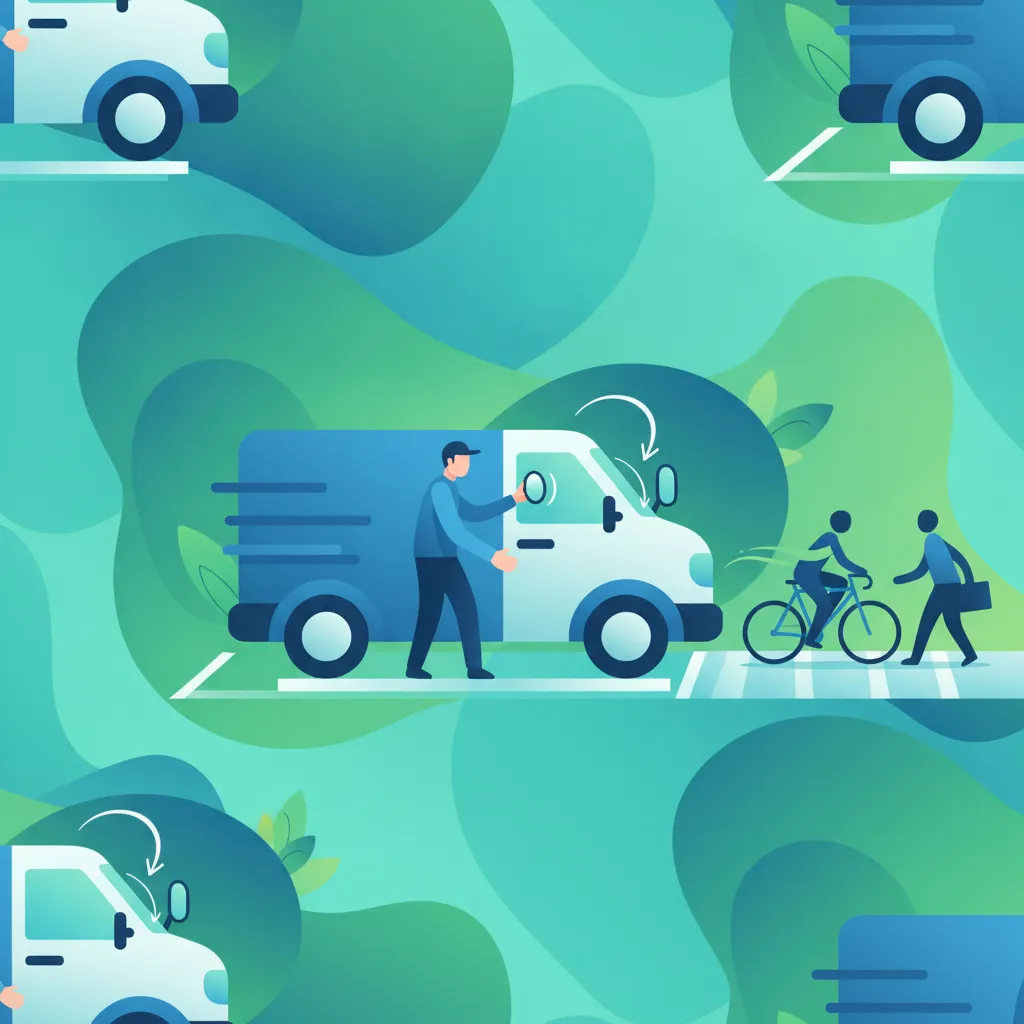
This lesson addresses the unique environmental and logistical challenges faced during delivery stops in commercial town and city centers. It covers the legal frameworks governing municipal loading zones, double-parking hazards, and temporary pedestrian-only street restrictions. Drivers will acquire practical skills for managing traffic build-up, utilizing visual spotters, and securing the vehicle while unloading cargo.

This lesson explains the extensive blind spots of heavy goods vehicles, buses, and other large trucks on Irish roads. It teaches Category AM riders how to maintain safe following distances and position themselves where truck drivers can see them. Proper space cushion management is emphasized to protect riders from the wind turbulence of passing trucks.
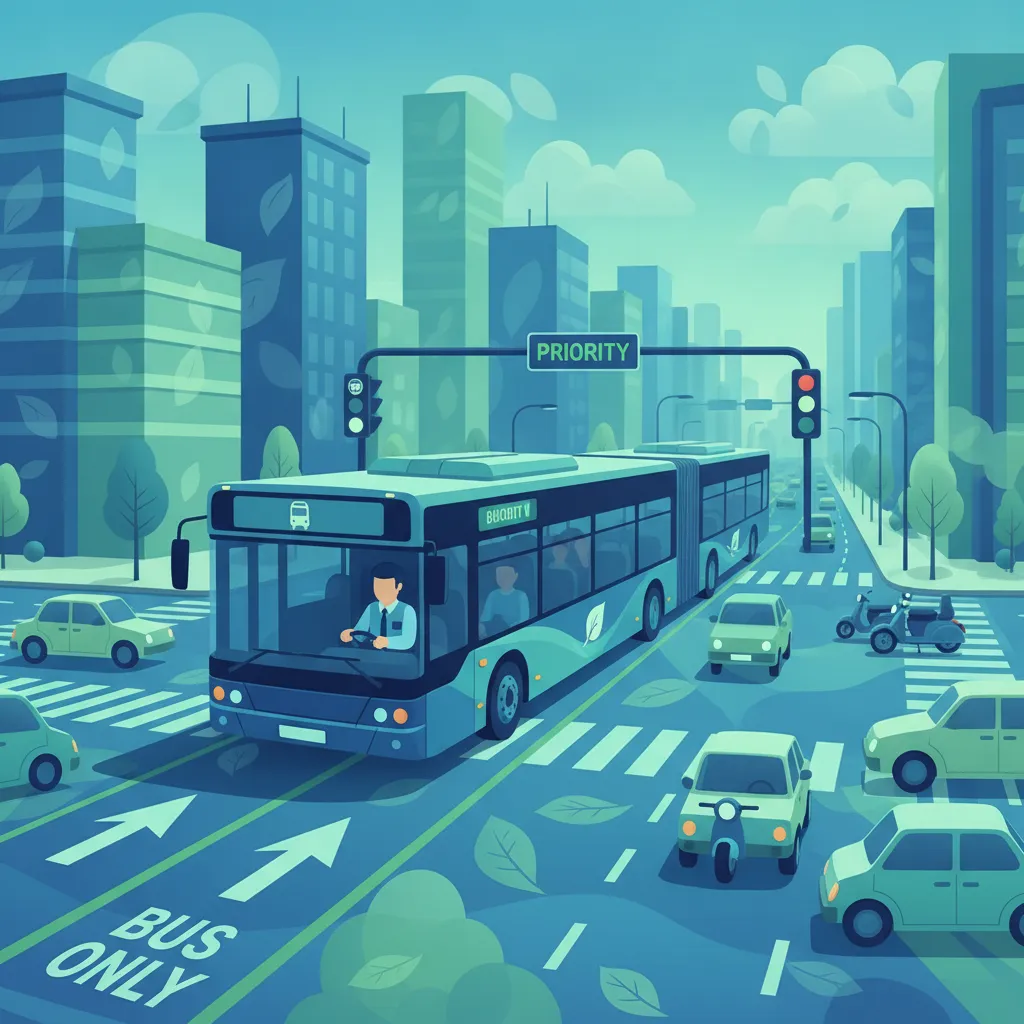
Driving large vehicles through dense city traffic requires outstanding lane discipline, spatial awareness, and consistent patience. This lesson teaches drivers how to utilize public bus corridors, manage tight yellow box intersections, and handle narrow city streets. It focuses on predicting traffic pattern shifts to maintain service timetables while minimizing fuel waste and driver stress.

Motorcycles and bicycles are often hidden from view in the large blind spots of passenger buses and coaches during turns. This lesson covers safe lateral clearances when overtaking cyclists, recognizing advanced stop lines, and sharing narrow lanes. Drivers will understand how to signal clearly, giving riders enough room to navigate safely near busy public transit corridors.
Large passenger vehicles must maintain consistent lane positioning to prevent side-swipe incidents and sustain smooth urban traffic patterns. This lesson covers standard lane selection rules, safe overtaking procedures, and how to use designated public transit corridors correctly. Drivers will learn the importance of checking mirrors continuously and planning lane changes well in advance.
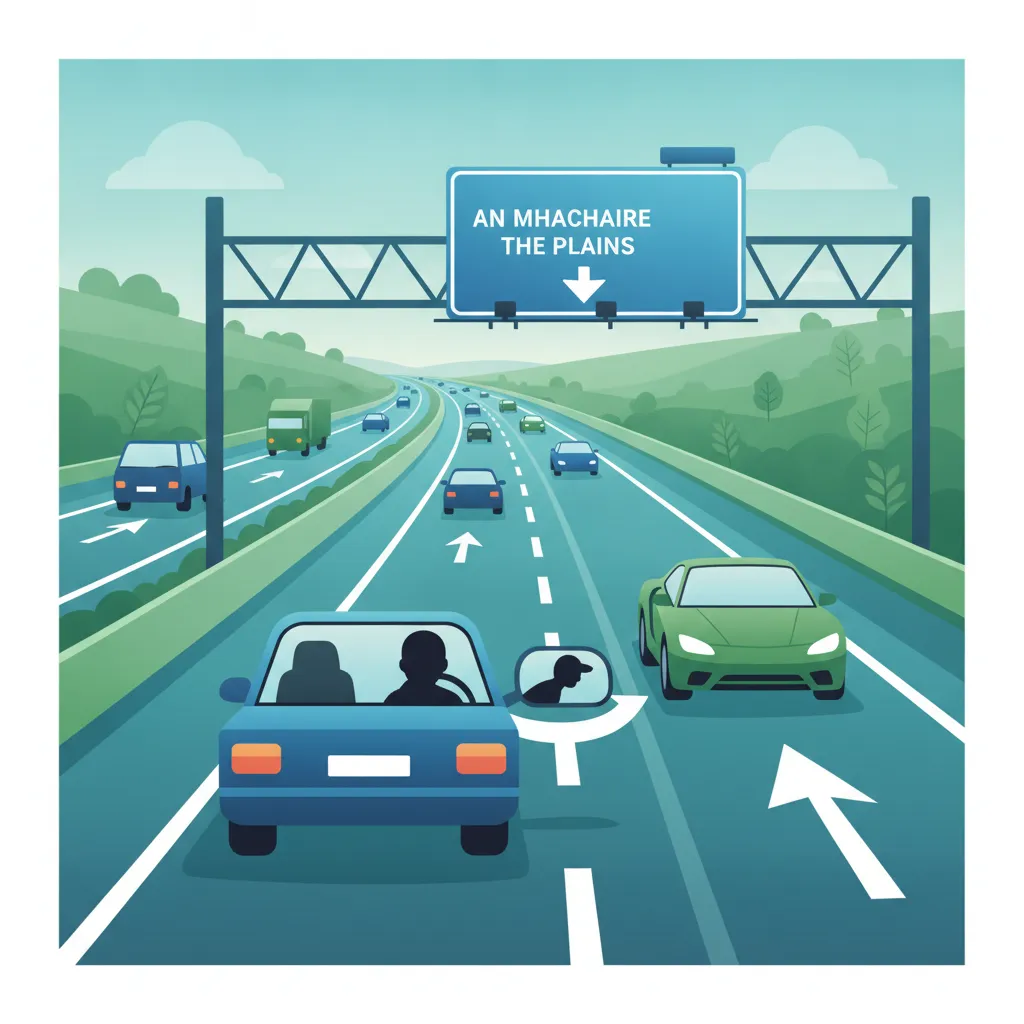
Merging a long, heavy passenger vehicle onto high-speed motorways requires matching the traffic speed within the limited length of slip lanes. This lesson covers signal timing, safe lane-merging gaps, and maintaining control during overtaking maneuvers on national routes. Drivers will learn to prioritize passenger comfort and vehicle stability, preventing sudden weight shifts during lane entries.
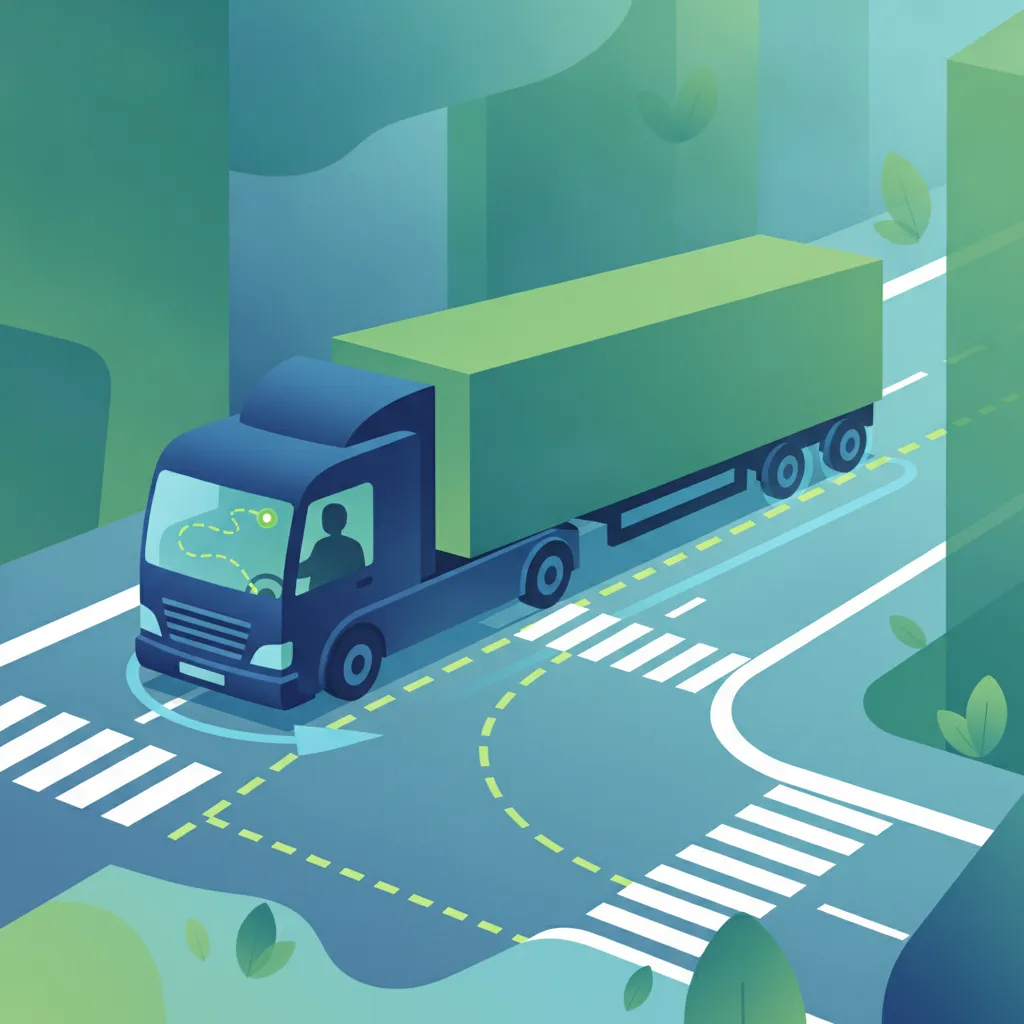
This lesson focuses on the physical mechanics of long-wheelbase and articulated vehicles when executing turns in restricted spaces. It explains concepts like swept path, rear overhang, and turning circles, which must be accounted for to prevent side-swiping collisions. Drivers will discover strategic route-planning techniques to avoid congested urban layouts and unsuitable rural corridors.
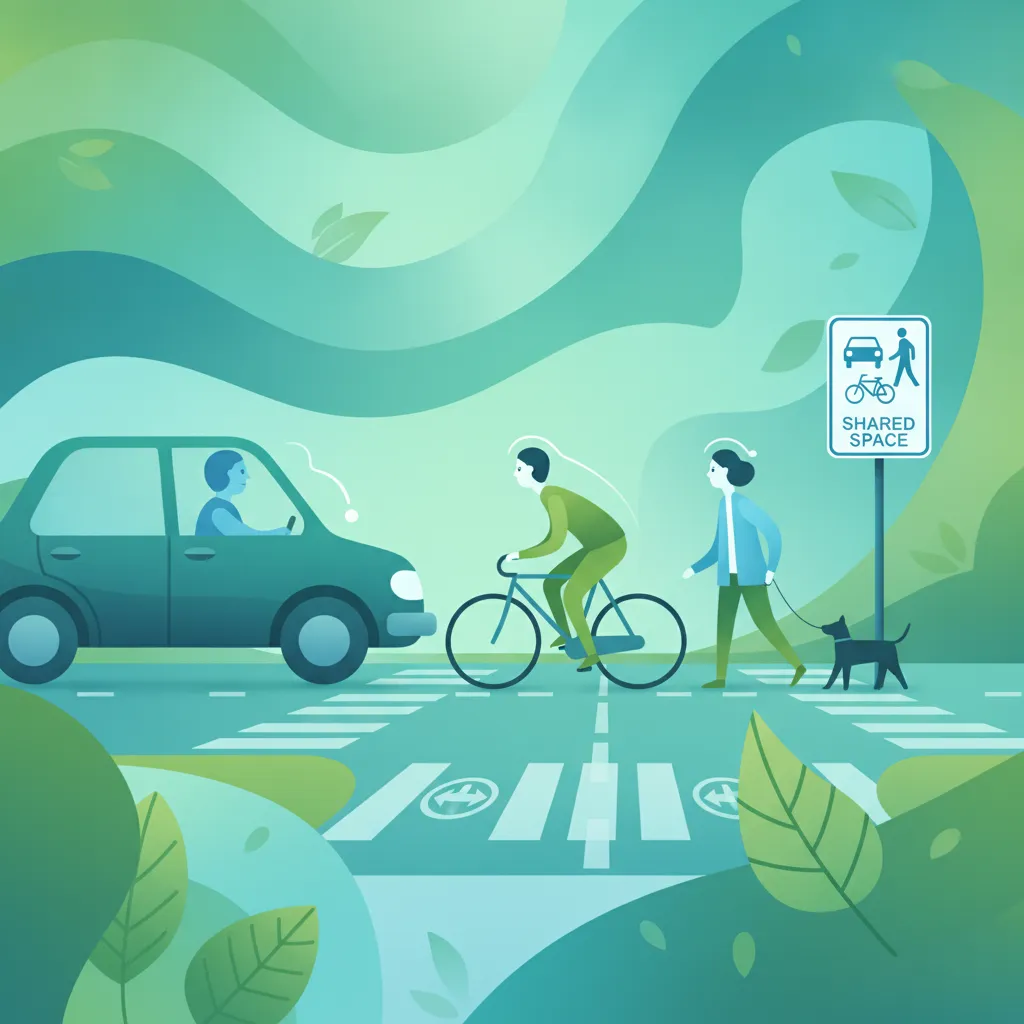
Shared public spaces rely heavily on road user cooperation, low speeds, and active visual communication rather than traditional traffic signals. This lesson teaches drivers how to navigate these open zones safely, yielding priority to pedestrians and integrated cyclists. Drivers will study how traffic calming designs alter vehicle trajectories, allowing safe, stress-free transit through modern city centers.
Examine the legal duty of care toward cyclists, pedestrians, and motorcyclists when driving large passenger vehicles. Understand how to anticipate vulnerable road user behavior at junctions, crossings, and bus stops to reduce collision risks and comply with Irish road safety standards.
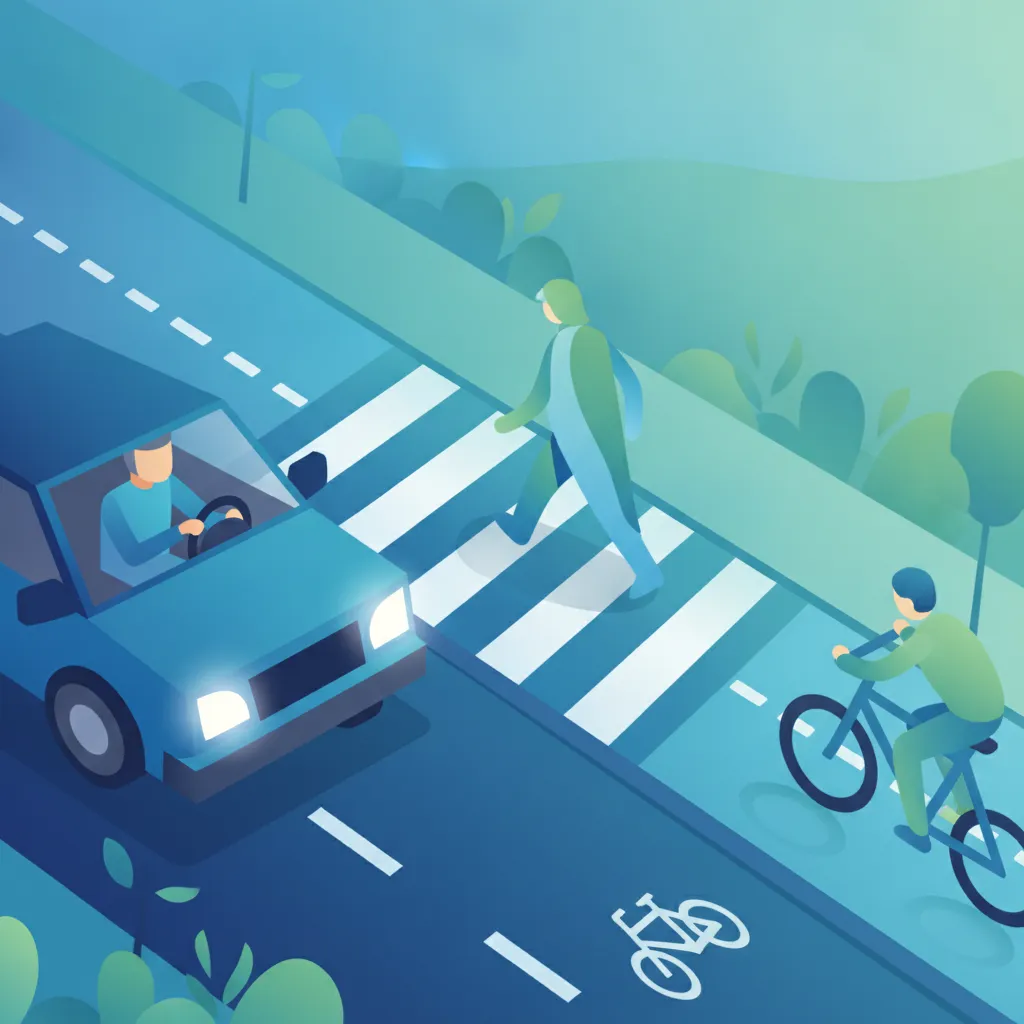
This lesson details how to approach zebra, pelican, and other pedestrian crossings safely, ensuring complete priority is given to walkers. It also covers the safe guidelines for overtaking cyclists and sharing lanes in busy urban centers without causing danger. Respecting these interactions is critical for maintaining overall safety and compliance with Irish road law.
This lesson covers the rules governing zebra, pelican, and toucan pedestrian crossings, focusing on driver obligations and rider safety. It details how to interact safely with cyclists, personal mobility devices, and pedestrians in busy urban sectors. Motorcyclists will learn to scan pavement edges, yield right-of-way, and maintain safe overtaking distances when passing slower road users.
Bus stops often intersect with designated bicycle lanes and busy walking pathways, creating high-risk conflict areas for drivers. This lesson trains drivers to check blind spots for oncoming cyclists before pulling into or exiting public stop bays. It emphasizes yielding right-of-way to passengers crossing the road, preventing collision risks in active urban transport hubs.

This lesson focuses on managing the interactions between commercial goods vehicles and non-motorized or lightweight commuters. It outlines defensive driving techniques to utilize when overtaking cyclists, navigating pedestrian crossings, or negotiating shared junctions in Irish cities. Drivers will examine common cyclist behaviors at roundabouts and understand how to maintain massive safety margins to protect lives.
Cyclists share public roads under unique safety constraints, requiring drivers to keep wide clearances and anticipate sudden steering changes. This lesson covers the minimum safe passing distance of 1 to 1.5 metres, rules for driving near cycle tracks, and the danger of the 'dooring' hazard when parking. You will also learn to check your left-side blind spot before turning, preventing dangerous side-swipe collisions.
Motorcycles and bicycles are often hidden from view in the large blind spots of passenger buses and coaches during turns. This lesson covers safe lateral clearances when overtaking cyclists, recognizing advanced stop lines, and sharing narrow lanes. Drivers will understand how to signal clearly, giving riders enough room to navigate safely near busy public transit corridors.
Pedestrians are the most common vulnerable road users, and drivers must maintain constant vigilance to protect them. This lesson covers pedestrian priority, especially when you are turning into side roads or navigating busy urban centres. You will learn why you must yield to pedestrians already crossing, how to scan blind spots for hidden walkers, and the safety dangers of blocking footpaths or pedestrian zones with your car.
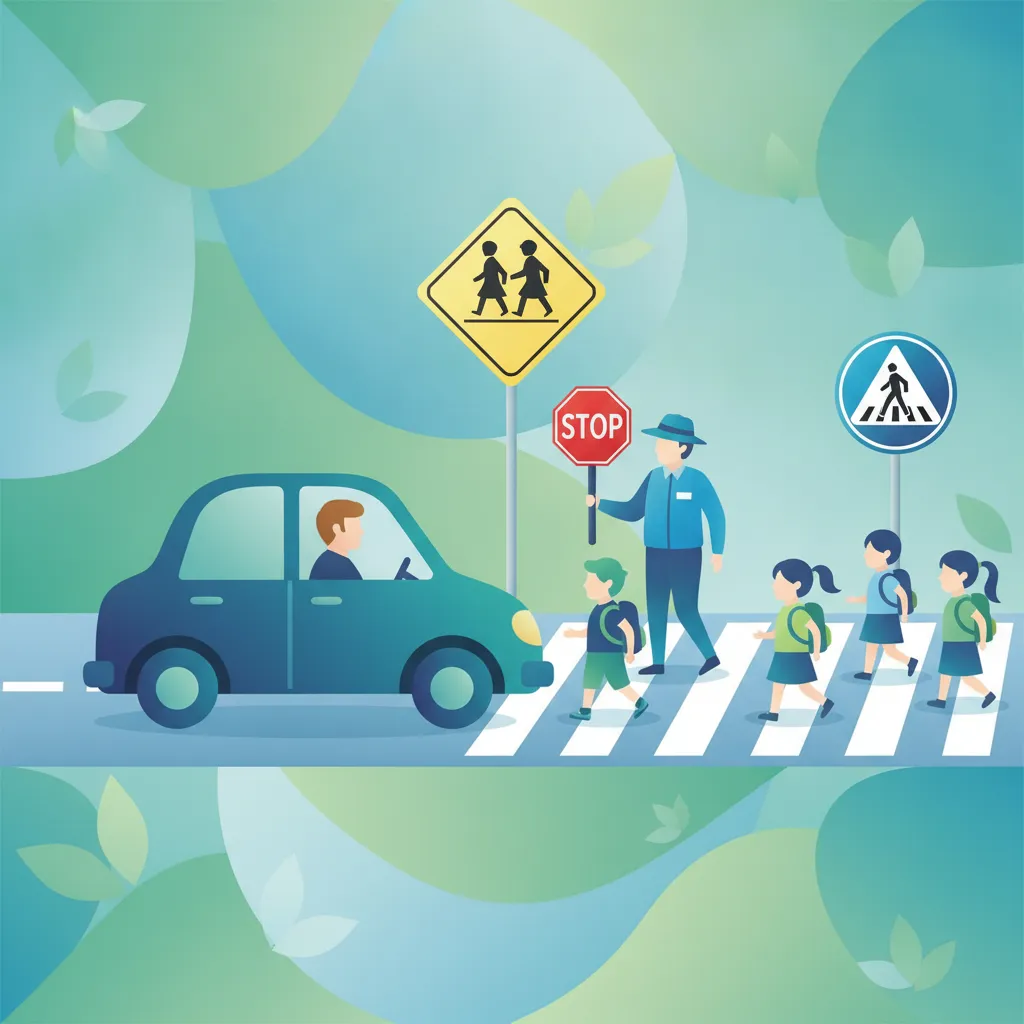
School zones and pedestrian crossings require high driver alertness and strict compliance with local speed limits in Ireland. This lesson details the legal rules of zebra and pelican crossings, explaining driver requirements when amber warning beacons are flashing. Drivers will study safety procedures for dropping off or picking up children, preventing common blind-spot accidents near schools.
Shared public spaces rely heavily on road user cooperation, low speeds, and active visual communication rather than traditional traffic signals. This lesson teaches drivers how to navigate these open zones safely, yielding priority to pedestrians and integrated cyclists. Drivers will study how traffic calming designs alter vehicle trajectories, allowing safe, stress-free transit through modern city centers.

Children often struggle to judge heavy vehicle speeds accurately, while elderly pedestrians may possess limited mobility or hearing impairments. This lesson addresses these unique risks, explaining how to adjust driving patterns in residential neighborhoods and near shopping districts. Drivers will learn to maintain a high safety margin, ensuring they can yield quickly to vulnerable road users.
Find clear answers to common questions learners have about Safe Turning Practices and Managing Blind Spots. Learn how the lesson is structured, which driving theory objectives it supports, and how it fits into the overall learning path of units and curriculum progression in Ireland. These explanations help you understand key concepts, lesson flow, and exam focused study goals.
Because buses are long, the rear wheels follow a tighter path than the front wheels during a turn. If you do not swing wide, your rear wheels may hit curbs, signs, or other road users, which is a common failure point in both theory exams and real-world driving.
You must use your side mirrors and blind-spot mirrors continuously before and during the turn. Never rely on just one check; keep scanning the inside lane as you begin your manoeuvre to ensure no cyclist has moved into your blind spot.
Yes, the theory test often tests your awareness of the space required to negotiate junctions safely. Understanding the clearance needed to avoid hitting signs or traffic lights is a core competency for professional passenger vehicle drivers.
Your mirrors must be adjusted to provide a clear view along the entire side of your vehicle and the area immediately adjacent to the rear wheels. Proper adjustment is a legal and safety requirement for spotting hazards that are invisible from the driver's direct line of sight.
Use the practice question search tool to pinpoint specific topics, road signs, or rules you need to master for your official Driver Theory Test. Refine your study strategy and ensure comprehensive preparation for all aspects of the Irish driving exam. Start your focused revision now and build confidence for your learner permit test.