Navigating rural Turkish roads requires special attention to specific hazards not always found in urban settings. This guide details how to safely approach and manage situations involving slow-moving tractors, unpredictable animal crossings, and dangerous road conditions like narrow or damaged shoulders. Prepare for these common ehliyet theory exam scenarios by learning the correct procedures and awareness techniques.
Article content overview
Driving on the rural roads of Turkey presents a unique set of challenges that differ significantly from urban environments. These stretches of asphalt and gravel often present unexpected hazards, including slow-moving agricultural vehicles like tractors, unpredictable animal crossings, and precarious road conditions such as narrow or damaged shoulders. A thorough understanding of how to navigate these situations is not only vital for your personal safety but is also a key component of the Turkish driving theory test, known as the ehliyet theory exam. Mastering these rural road conventions will equip you to handle the Turkish countryside with confidence and competence, preparing you thoroughly for your ehliyet.
Rural roads in Türkiye are characterized by their often winding nature, reduced visibility, and the prevalence of agricultural activity. Unlike the controlled environment of city streets, country lanes can be shared with a variety of road users, including farm machinery and livestock, which move at speeds far below typical traffic flow. The road infrastructure itself can also be less predictable, with a greater likelihood of encountering poorly maintained surfaces, unmarked hazards, and limited signage. Recognizing these specific environmental factors is the first step towards safe rural driving and will help you anticipate potential dangers before they become critical situations, a core concept tested in the MTSK e-sınav.
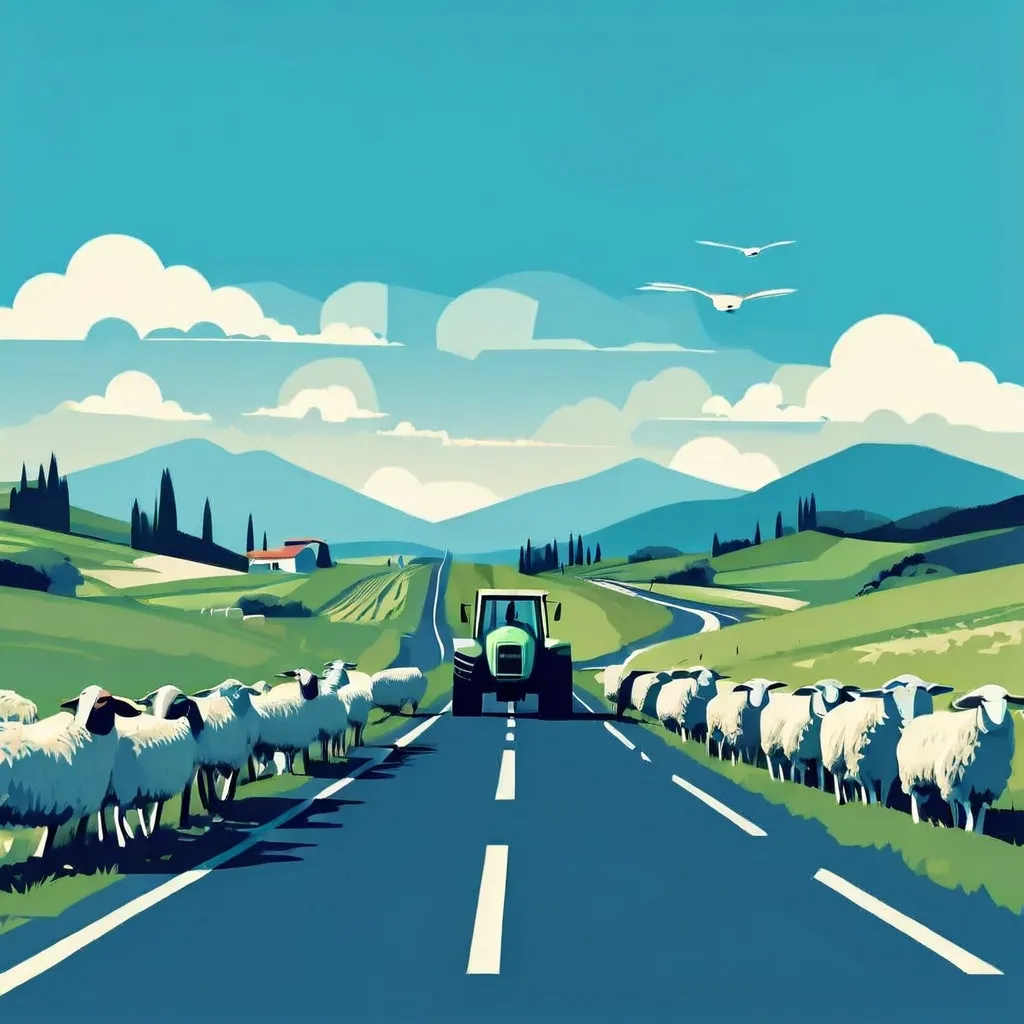
Tractors and other agricultural machinery are common sights on Turkish rural roads, especially during planting and harvesting seasons. These vehicles are considerably slower than cars and often occupy a significant portion of the road width. Their maneuverability can be limited, particularly on narrow lanes or when turning. Drivers approaching these slow-moving vehicles must exercise extreme caution and patience. Overtaking a tractor requires a clear line of sight, sufficient distance, and a thorough assessment of oncoming traffic and the tractor's potential movements. Always assume that a tractor driver might not be able to see you easily, and be prepared for them to make unexpected turns or slow down abruptly.
When considering overtaking, consult relevant road signs, such as the "No Overtaking" signs, which are especially important to heed in these situations. If overtaking is permissible, ensure you have ample space and that it is safe to do so. A common mistake is to misjudge the speed of oncoming traffic or the available space, leading to dangerous situations. Remember that agricultural vehicles often have wide implements that extend beyond their basic dimensions, making them appear narrower than they actually are. Always allow a generous buffer zone.
Animals on the road, whether domestic livestock like sheep, goats, or cattle, or even wild animals, pose a significant and often sudden risk on rural Turkish roads. Unlike inanimate objects, animals can change direction unpredictably, dart out from behind obstructions, or freeze in the middle of the roadway. These encounters are particularly common at dawn and dusk, as well as during the night, when visibility is reduced and animals are more active. Drivers must maintain a defensive driving posture, constantly scanning the verges and the road ahead for any signs of animal activity.
It is crucial to reduce your speed when driving through areas known for livestock or where signs indicate potential animal crossings. A sudden application of brakes can be more dangerous than a controlled slowdown if you are following too closely. If you encounter animals on the road, resist the urge to honk loudly or flash your lights aggressively, as this can startle them and cause them to scatter or move erratically. Instead, slow down gradually, stop if necessary, and wait for them to clear the path. Being aware of local farming practices and animal herding times can also help in anticipating these situations.
The condition of the road surface and its margins are often compromised on rural routes in Türkiye. You might encounter narrow lanes, sections with no defined shoulder, or shoulders that are soft, uneven, or eroded. Driving too close to the edge of the road, especially on a soft shoulder, can lead to your vehicle sliding off the carriageway, potentially causing damage or an accident. Drivers should maintain a position that keeps them well within the marked lanes, or the clear driving portion of the road if markings are absent, while being mindful of oncoming traffic.
When encountering oncoming vehicles on narrow rural roads, especially those with poor shoulders, it is vital to be prepared to slow down or stop to allow safe passage. The driver who is closer to a safe passing point or has more room to maneuver should generally yield. Always be cautious when moving towards the edge of the road, even to allow another vehicle to pass. The soft earth can give way unexpectedly. If you must drive on the shoulder briefly to let another vehicle pass, do so slowly and cautiously, and immediately return to the main carriageway when it is safe.
Safe driving on Turkish rural roads requires adherence to specific rules and the application of defensive driving techniques. Understanding how these principles are tested in the ehliyet theory exam will help you prepare effectively. The MTSK curriculum emphasizes proactive hazard identification and appropriate responses, particularly in less predictable environments.
Maintaining an appropriate speed is paramount on rural roads. While speed limits exist, they are often set for ideal conditions. On rural routes, you must adjust your speed based on visibility, road conditions, and the presence of potential hazards. Limited visibility, caused by curves, hills, fog, or darkness, necessitates a significant reduction in speed. You should always be able to stop your vehicle within the distance you can see clearly ahead.
Night driving on rural roads is particularly hazardous due to severely reduced visibility. Headlights are your primary tool, but their beam is limited. Always use your high beams when appropriate to see further, but be sure to dip them when approaching other vehicles to avoid dazzling the oncoming driver. If you encounter fog, reduce your speed drastically, use fog lights if fitted, and consider pulling over if visibility becomes dangerously low.
While general priority rules apply, rural roads often present situations where these are tested in less conventional ways. Unmarked junctions are common, and drivers must be vigilant. When overtaking, the same principles apply as elsewhere: ensure you have a clear view, ample space, and that it is safe to do so, paying extra attention to the unpredictable nature of rural traffic.
Remember that many rural roads are single-track or have very limited passing opportunities. Patience is key. Forcing an overtake when it is not entirely safe is a common cause of accidents on these types of roads and a likely point of failure in the practical driving assessment.
When faced with poor road shoulders, the primary rule is to avoid driving on them unless absolutely necessary and with extreme caution. Soft shoulders can quickly lead to a loss of control. If you need to pull over, try to find a safe, firm area off the main carriageway. If you must use a soft shoulder, do so at a crawl and be prepared for the vehicle to dip or slide.
When encountering narrow roads where passing is difficult, be courteous. If you are on a slight incline and another vehicle is coming downhill, it is often easier for the downhill vehicle to move slightly to the side or wait. However, communication and mutual understanding are key. A polite wave or a brief flash of hazard lights can often prevent misunderstandings.
The Turkish driving theory exam, conducted via the MTSK e-sınav system, frequently features questions based on rural driving scenarios. These questions are designed to assess your understanding of hazard perception, priority rules in non-standard situations, and the application of traffic laws in diverse conditions. Expect questions that test your knowledge of how to react to tractors, animals, and challenging road conditions.
Common exam traps include scenarios where drivers are tempted to speed up unnecessarily or make risky overtaking maneuvers. The exam will also likely test your understanding of the importance of reduced speed in areas with limited visibility or potential animal crossings. Pay close attention to the wording of questions, as subtle details about road conditions or the presence of specific hazards can change the correct course of action dramatically.
Understanding the correct procedures for interacting with slow-moving vehicles, managing animal crossings, and navigating potentially dangerous road conditions is fundamental. The exam aims to ensure that future drivers are not only competent but also acutely aware of the diverse and sometimes hazardous environments they might encounter on Turkish roads.
By thoroughly studying these aspects of rural driving and practicing with relevant questions, you will significantly increase your chances of passing your ehliyet theory exam and, more importantly, of driving safely and responsibly on all types of roads in Türkiye.
This article covers the unique hazards of rural Turkish roads, focusing on safe interactions with slow-moving agricultural vehicles, unpredictable animal crossings, and challenging road conditions like narrow lanes and soft shoulders. It emphasizes defensive driving techniques, proper speed management based on visibility, and specific procedures such as the 6-step safe overtaking process and soft-shoulder recovery. Key exam-relevant points include the importance of road signs like C1 (No Overtaking) and F2 (Speed Limit), timing risks for animal encounters, and the priority rules for narrow road passing. Thorough understanding of these scenarios is essential for passing the MTSK e-sınav and driving safely in Turkey's countryside.
A short set of high-value points that capture the most important ideas from this article.
Tractors and agricultural vehicles move slowly and may make unexpected turns; always assume limited visibility from the driver's perspective.
Animal crossings are most dangerous at dawn, dusk, and night; reduce speed and avoid honking or flashing lights that could startle them.
Soft or eroded shoulders can cause loss of vehicle control; avoid driving on them unless absolutely necessary and only at very low speed.
On narrow rural roads, yield to oncoming traffic by moving toward the safest passing point, typically letting the downhill vehicle wait.
Night driving on rural roads requires using high beams when safe and dipping them for oncoming traffic, with drastically reduced speeds in fog.
Always check for the 'No Overtaking' sign (C1) before attempting to pass tractors or other slow vehicles.
If your wheels go onto a soft shoulder, ease off the accelerator and steer gently back onto the road; do not brake suddenly or swerve.
Maintain speed that allows you to stop within the distance you can see ahead (visibility distance rule).
When animals are on the road, slow down gradually, stop if needed, and wait for them to clear rather than trying to rush past.
On single-track rural roads, patience is essential; do not force an overtake if any doubt about safety exists.
Misjudging the speed of oncoming traffic when overtaking a slow-moving tractor, especially on curves or hills.
Using high beams inappropriately when approaching other vehicles at night, dazzling oncoming drivers.
Driving too close to the edge of the road on soft shoulders, risking the vehicle sliding off the carriageway.
Attempting to rush past livestock rather than stopping and waiting, which can cause erratic animal behavior.
Failing to adjust speed based on reduced visibility conditions such as fog, darkness, or winding roads.
Article content overview
A short set of high-value points that capture the most important ideas from this article.
Tractors and agricultural vehicles move slowly and may make unexpected turns; always assume limited visibility from the driver's perspective.
Animal crossings are most dangerous at dawn, dusk, and night; reduce speed and avoid honking or flashing lights that could startle them.
Soft or eroded shoulders can cause loss of vehicle control; avoid driving on them unless absolutely necessary and only at very low speed.
On narrow rural roads, yield to oncoming traffic by moving toward the safest passing point, typically letting the downhill vehicle wait.
Night driving on rural roads requires using high beams when safe and dipping them for oncoming traffic, with drastically reduced speeds in fog.
Always check for the 'No Overtaking' sign (C1) before attempting to pass tractors or other slow vehicles.
If your wheels go onto a soft shoulder, ease off the accelerator and steer gently back onto the road; do not brake suddenly or swerve.
Maintain speed that allows you to stop within the distance you can see ahead (visibility distance rule).
When animals are on the road, slow down gradually, stop if needed, and wait for them to clear rather than trying to rush past.
On single-track rural roads, patience is essential; do not force an overtake if any doubt about safety exists.
Misjudging the speed of oncoming traffic when overtaking a slow-moving tractor, especially on curves or hills.
Using high beams inappropriately when approaching other vehicles at night, dazzling oncoming drivers.
Driving too close to the edge of the road on soft shoulders, risking the vehicle sliding off the carriageway.
Attempting to rush past livestock rather than stopping and waiting, which can cause erratic animal behavior.
Failing to adjust speed based on reduced visibility conditions such as fog, darkness, or winding roads.
Explore related topics, search based questions, and concepts that learners often look up when studying Rural Road Hazards in Turkey. These themes reflect real search intent and help you understand how this topic connects to wider driving theory knowledge in Turkey.
Find clear and practical answers to common questions learners often have about Rural Road Hazards in Turkey. This section helps explain difficult points, remove confusion, and reinforce the key driving theory concepts that matter for learners in Turkey.
The primary risk is their slow speed and potential for unexpected turns or stops, especially in agricultural areas. Drivers must maintain a safe distance and be prepared to slow down or overtake cautiously, respecting their maneuver space.
Always be prepared for animals to appear suddenly. Reduce speed, use your horn sparingly (to avoid startling them into panic), and be ready to brake. Never swerve sharply, as this can lead to rollovers or collisions with oncoming traffic.
Maintain a safe position on the road, avoiding the shoulder unless absolutely necessary. Be wary of uneven surfaces, debris, or drop-offs. If you must pull over, do so carefully and ensure your vehicle is fully off the travelled portion of the roadway.
Yes, while specific laws might be detailed in broader traffic regulations, drivers are expected to understand that agricultural vehicles operate differently and require extra caution. Priority rules and safe passing distances are key considerations.
Limited visibility, especially at dawn, dusk, or in poor weather, amplifies the risk from tractors and animals. Drive at a reduced speed, use headlights, and increase your awareness of potential hazards around blind corners or crests.
After finding the specific Turkish driving theory articles you need, dive deeper into related topics or challenge your knowledge with practice questions. Enhance your understanding of trafik işaretleri, road rules, and vehicle safety to ensure you are fully prepared for the official ehliyet sınavı.