Prepare for your Turkish driving license theory test by mastering the essential priority rules at junctions and intersections. This guide breaks down frequently asked questions related to right-of-way in Türkiye, ensuring you understand the logic behind Turkish traffic legislation and can confidently answer exam questions.
Article content overview
Navigating intersections is a fundamental skill for any driver, and understanding who has the right of way, or priority, is paramount for safety and success in the Turkish driving license theory exam (ehliyet sınavı). The Turkish traffic legislation meticulously outlines these rules to ensure a smooth and orderly flow of vehicles. This article delves into common right-of-way scenarios often encountered in the MTSK e-sınav, providing clear explanations and insights to help you confidently answer questions related to Turkish priority rules. Mastering these concepts will not only help you pass your exam but also equip you with the knowledge to drive safely and courteously on Turkish roads.
In Türkiye, priority rules are designed to prevent confusion and accidents at junctions and intersections. These rules dictate which vehicle or pedestrian has the right to proceed first when multiple road users converge. The fundamental principle is often that traffic from the right has priority, but this is subject to many exceptions dictated by road signs, specific road layouts, and the actions of other road users. It's crucial to remember that priority is not absolute; drivers must always be prepared to yield if necessary to avoid a collision, a concept emphasized in many exam questions concerning hazard awareness and defensive driving.
One of the most common points of confusion in the ehliyet exam revolves around unmarked intersections. In the absence of any specific traffic signs or signals, the general rule in Turkey is to yield to vehicles approaching from the right. However, this simple rule can become complex when considering different types of vehicles, such as emergency services or public transport. Always remember that observation and anticipation are key; look for any clues that might indicate priority, such as vehicle type or the presence of traffic police directing flow.
Traffic signs play a critical role in determining priority at intersections. Different signs will either grant you priority or require you to yield to other traffic. Understanding the meaning and implication of these signs is essential for both the theory test and practical driving.
The "Priority Road" sign, a yellow diamond, indicates that you have the right of way on the road you are currently on. Drivers approaching this road from side roads must yield to you.
Conversely, the "Give Way" sign, an inverted triangle, means you must yield to traffic on the road you are entering or crossing. This is a critical sign, and failing to yield when required is a common cause of accidents and a frequent topic in the ehliyet theory exam.
The "Stop" sign, an octagonal red sign, is the most definitive requirement to stop. You must come to a complete halt at the stop line or, if none, before entering the intersection, and only proceed when it is safe to do so, yielding to all other traffic.
Exam questions often present scenarios with combinations of these signs or ask about the implications of encountering a sign that contradicts the general rule of "traffic from the right." For instance, if you are on a road marked with a "Priority Road" sign, you retain priority even if another vehicle is approaching from your right, because the sign overrides the default rule for that specific intersection.
Beyond general right-of-way rules and traffic signs, Turkish traffic law also designates special priority to certain categories of road users in specific situations. Understanding these exceptions is vital as they frequently appear in exam questions designed to test your comprehensive knowledge of traffic legislation.
Public transport vehicles, particularly buses and trams, often have special priority. When a bus or tram is leaving a bus stop or a designated station and signalling to re-enter the traffic flow, drivers are generally expected to yield to them. This is a common point tested in the ehliyet theory exam, emphasizing courteous and safe interaction with public transport.
Emergency vehicles with active sirens and flashing lights (such as police cars, ambulances, and fire trucks) have absolute priority. Drivers must pull over to the side of the road and stop to allow them to pass. Failing to yield to emergency vehicles is a serious offense and is heavily emphasized in driving theory education.
Vehicles emerging from private property, such as driveways or parking lots, generally must yield to all traffic on the main road. This rule applies even if the main road does not have any priority signs. The driver exiting private property is considered to be entering a traffic flow and must ensure it is safe to do so without disrupting existing traffic.
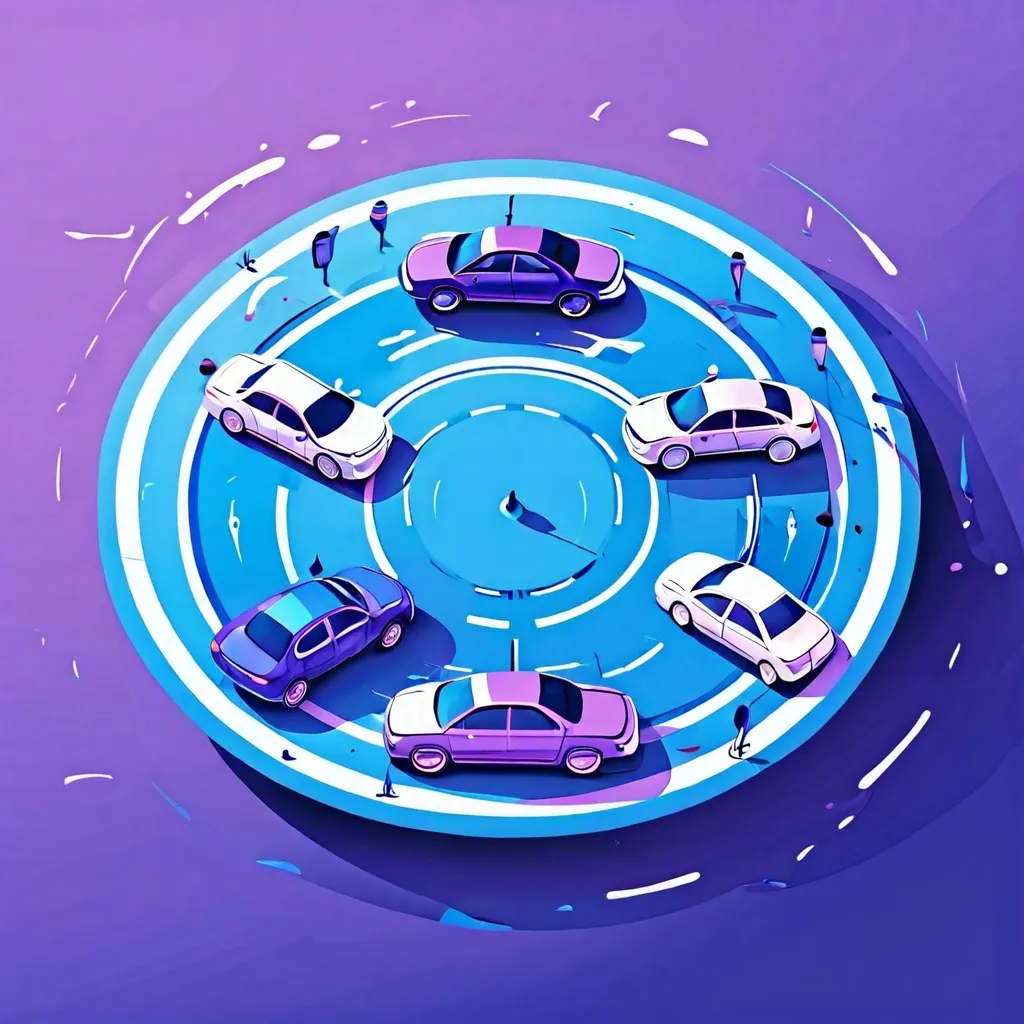
Roundabouts are a common feature in modern traffic systems, and they have specific priority rules. In most Turkish roundabouts, vehicles already inside the roundabout have priority over vehicles waiting to enter. Drivers approaching a roundabout should yield to traffic already circulating.
Exam questions on roundabouts often test your understanding of when to enter and when to yield. The general practice is to slow down as you approach, look for gaps in the traffic already in the roundabout, and signal your intention to enter. Remember to also signal when exiting the roundabout to inform other road users of your intentions.
Unmarked intersections, as mentioned earlier, typically follow the "traffic from the right has priority" rule. This means if you arrive at an intersection where no signs or signals are present, you must yield to any vehicle coming from your right. However, this rule applies only when vehicles are at the same level and arriving at roughly the same time. If one vehicle is clearly closer to the intersection or moving faster, the driver of that vehicle may have de facto priority, but the principle of yielding to the right remains the primary guideline.
The Turkish ehliyet theory exam is designed to assess not just your knowledge of rules but also your ability to apply them in nuanced situations. Common traps related to priority rules often involve scenarios where multiple rules might seem to apply or where exceptions are introduced.
One frequent pitfall is assuming general rules apply when specific signs are present. For example, always prioritize the instruction of a traffic sign over the "traffic from the right" rule. Similarly, the presence of a pedestrian crossing requires drivers to yield to pedestrians, regardless of other priority considerations.
Another common area of confusion is the interaction between general priority rules and the "rule of the first to arrive, first to go" when vehicles arrive at an intersection simultaneously from roads of equal importance and without any signs. In such a situation, the vehicle that arrives first at the intersection has priority. If both arrive at the same time, the vehicle on the right usually has priority. However, this is a less common scenario in the exam compared to sign-controlled junctions or the right-hand rule.
Furthermore, questions might test your understanding of priority when vehicles are turning. Generally, a vehicle going straight ahead has priority over a vehicle turning left. When turning right, you must yield to pedestrians and cyclists crossing the road you are turning into. This often intersects with other priority rules, requiring careful consideration of all factors.
While not directly about right-of-way, certain aspects of vehicle technique and safety are indirectly linked to understanding and respecting priority rules. Properly functioning brakes, steering, and lights are essential for safely yielding to other traffic or for making your intentions clear. For instance, well-maintained indicators are crucial for signalling your intention to turn or change lanes, which can prevent conflicts at intersections.
Basic knowledge of vehicle mechanics ensures that your vehicle is in a condition to obey traffic rules reliably. For the B class driving license exam, candidates are tested on their understanding of vehicle technology, and this includes how the vehicle's systems contribute to safe driving. A well-maintained vehicle allows you to react appropriately in priority situations, whether that means stopping smoothly for a pedestrian or accelerating safely when you have priority.
Mastering Turkish priority rules is a cornerstone of passing the ehliyet theory exam and becoming a safe, responsible driver in Türkiye. By understanding the fundamental principles, the significance of traffic signs, and the special provisions for public transport and emergency vehicles, you can confidently approach intersection-related questions. Remember that the MTSK e-sınav often presents scenarios that require careful analysis, so always consider all contributing factors: signs, general rules, other road users, and the specific context of the junction. Consistent practice with exam-style questions will solidify your understanding and prepare you for real-world driving challenges.
This article covers Turkish priority rules essential for the ehliyet theory exam, explaining how traffic signs (Priority Road, Give Way, Stop) determine right-of-way, the special priority granted to emergency vehicles and public transport, and rules for roundabouts and unmarked intersections. The fundamental principle of yielding to traffic from the right applies only at unmarked intersections where no signs are present. Key exam traps include scenarios where multiple rules intersect, such as sign-controlled junctions contradicting the default right-hand rule, and situations requiring drivers to yield to pedestrians at crossings. Understanding these distinctions and practicing with exam-style questions will help learners confidently navigate intersection-related scenarios on Turkish roads.
A short set of high-value points that capture the most important ideas from this article.
In Turkish traffic, the default rule at unmarked intersections is to yield to vehicles approaching from your right, but traffic signs override this general rule.
Priority Road (yellow diamond), Give Way (inverted triangle), and Stop (octagonal red) signs have specific hierarchical meanings that determine right-of-way at intersections.
Emergency vehicles with active sirens and flashing lights have absolute priority, and drivers must pull over and stop to allow them to pass.
Vehicles already inside a roundabout have priority over vehicles waiting to enter; always yield to circulating traffic.
Public transport vehicles such as buses and trams leaving stops have special priority, and drivers should yield to allow them to re-enter traffic flow.
Priority signs always take precedence over the 'traffic from the right' rule at sign-controlled intersections.
At unmarked intersections, the vehicle arriving first generally has priority; if arriving simultaneously, the vehicle on the right has priority.
Drivers emerging from private property (driveways or parking lots) must yield to all main road traffic regardless of other signs.
A vehicle going straight has priority over a vehicle turning left at the same intersection.
At pedestrian crossings, drivers must always yield to pedestrians regardless of other priority considerations.
Assuming the 'traffic from the right' rule applies when priority signs are present, leading to incorrect answers on sign-controlled junctions.
Failing to recognize that the Stop sign requires a complete halt, not just slowing down, before proceeding.
Forgetting that emergency vehicles require immediate action to pull over and stop, not just yielding or slowing down.
Mistakenly believing a vehicle on the main road always has priority over vehicles from private property exits.
Confusing the priority rules for entering versus being inside a roundabout, thinking the entering vehicle has priority.
Article content overview
A short set of high-value points that capture the most important ideas from this article.
In Turkish traffic, the default rule at unmarked intersections is to yield to vehicles approaching from your right, but traffic signs override this general rule.
Priority Road (yellow diamond), Give Way (inverted triangle), and Stop (octagonal red) signs have specific hierarchical meanings that determine right-of-way at intersections.
Emergency vehicles with active sirens and flashing lights have absolute priority, and drivers must pull over and stop to allow them to pass.
Vehicles already inside a roundabout have priority over vehicles waiting to enter; always yield to circulating traffic.
Public transport vehicles such as buses and trams leaving stops have special priority, and drivers should yield to allow them to re-enter traffic flow.
Priority signs always take precedence over the 'traffic from the right' rule at sign-controlled intersections.
At unmarked intersections, the vehicle arriving first generally has priority; if arriving simultaneously, the vehicle on the right has priority.
Drivers emerging from private property (driveways or parking lots) must yield to all main road traffic regardless of other signs.
A vehicle going straight has priority over a vehicle turning left at the same intersection.
At pedestrian crossings, drivers must always yield to pedestrians regardless of other priority considerations.
Assuming the 'traffic from the right' rule applies when priority signs are present, leading to incorrect answers on sign-controlled junctions.
Failing to recognize that the Stop sign requires a complete halt, not just slowing down, before proceeding.
Forgetting that emergency vehicles require immediate action to pull over and stop, not just yielding or slowing down.
Mistakenly believing a vehicle on the main road always has priority over vehicles from private property exits.
Confusing the priority rules for entering versus being inside a roundabout, thinking the entering vehicle has priority.
Explore related topics, search based questions, and concepts that learners often look up when studying Turkish Priority Rules & Ehliyet Exam. These themes reflect real search intent and help you understand how this topic connects to wider driving theory knowledge in Turkey.
Find clear and practical answers to common questions learners often have about Turkish Priority Rules & Ehliyet Exam. This section helps explain difficult points, remove confusion, and reinforce the key driving theory concepts that matter for learners in Turkey.
Generally, vehicles approaching from the right have priority at unmarked intersections. However, specific road signs and traffic lights can alter this rule.
At roundabouts in Turkey, vehicles already within the roundabout generally have priority over those entering. Always check for signage indicating specific entry rules.
Yes, drivers must yield to emergency vehicles (ambulances, fire trucks, police) displaying active lights and sirens by pulling over safely to the side of the road.
If you arrive at the same time as a vehicle to your right, they have priority. If a vehicle is directly opposite and intends to turn left, you may proceed if it's safe, but yielding to them is often safer.
Yes, the ehliyet theory exam covers a wide range of topics including priority rules, traffic signs, speed limits, safe driving practices, and environmental considerations applicable in Turkey.
After finding the specific Turkish driving theory articles you need, dive deeper into related topics or challenge your knowledge with practice questions. Enhance your understanding of trafik işaretleri, road rules, and vehicle safety to ensure you are fully prepared for the official ehliyet sınavı.