To pass your Turkish driving license theory test and drive safely, you must understand the meaning and application of all traffic signs, signals, and road markings. This article breaks down the different categories of signs, including warning, regulatory, and informational signs, and explains how they function in real Turkish traffic situations. Gain the knowledge needed to interpret these crucial visual cues and navigate roads confidently.
Article content overview
Passing the Turkish driving theory test, the MTSK e-sınav, requires more than just memorizing rules; it demands a deep understanding of how traffic signs, signals, and road markings function together to ensure safety on Türkiye's roads. This comprehensive guide will delve into the various categories of traffic control devices you'll encounter, explaining their meanings, applications, and how they are assessed in the official driving theory examinations. By mastering these visual cues, you'll not only be better prepared for your ehliyet sınavı but also become a more confident and responsible driver.
Traffic signs are the primary means of communication between traffic authorities and road users. In Turkey, these signs are categorized to help drivers quickly understand their purpose. Each category has a distinct visual style, and recognizing these differences is fundamental to safe driving and passing your driving theory test. Understanding the shape, colour, and symbol of a sign allows you to anticipate road conditions, potential hazards, and required actions.
Warning signs, typically diamond-shaped with a yellow background and black symbols, alert drivers to upcoming hazards or changes in road conditions. These signs are crucial for proactive driving, giving you time to adjust your speed, position, or awareness. Examples include signs for sharp curves, pedestrian crossings, slippery roads, or animals likely to cross the road. Failing to heed these warnings can lead to dangerous situations, and the exam often includes questions that test your ability to react appropriately to the information provided by warning signs.
Regulatory signs dictate what drivers must or must not do. They are essential for maintaining order and safety on the roads. These signs often have specific shapes and colours: blue circles typically indicate mandatory actions, while red circles with a diagonal bar signify prohibitions. Understanding these signs is critical, as violations can lead to penalties and are frequently tested in the MTSK e-sınav. For instance, speed limits, no entry, no overtaking, and mandatory direction signs fall under this category.
Informational signs provide essential guidance, directions, and details about services or points of interest. These signs are typically rectangular or square, with blue or green backgrounds, and white text or symbols. They help drivers navigate, find facilities, and understand general road information. Examples include signs for hospitals, parking areas, motorways, destinations, and specific route numbers. While not always directly about immediate hazards or prohibitions, these signs are vital for smooth and efficient travel.
Beyond signs, road markings and traffic signals are critical components of traffic management in Turkey. They provide continuous guidance and reinforce the messages conveyed by signs.
Road markings, such as lines, arrows, and symbols painted on the road surface, provide essential guidance for lane discipline, turns, and stopping. The colour and type of line convey specific meanings:
Traffic lights, comprising red, yellow, and green lights, are a universal system for controlling traffic flow at intersections. In Turkey, these operate as elsewhere, with red indicating stop, green allowing passage, and yellow warning that the light is about to turn red. However, you must also be aware of other authorized signals:
Navigating Turkish roads involves understanding specific rules that might differ from other countries. For instance, priority at roundabouts, the rights of vulnerable road users, and specific rules for motorways are important.
Understanding who has priority in various situations is fundamental. At intersections without traffic signs or lights, the general rule is that vehicles on the right have priority. However, this can be complex, and the driving theory test often includes scenarios to assess your understanding of priority rules, especially concerning trams, buses, emergency vehicles, and, critically, pedestrians and cyclists.
Motorways (Otoyol) in Turkey have specific regulations. Entry is typically controlled, and certain vehicle types are prohibited. Speed limits are generally higher but strictly enforced. Understanding how to merge safely onto a motorway, maintain appropriate following distances, and use designated lanes is essential for both your exam preparation and safe travel.
The MTSK e-sınav is designed to test your understanding of traffic rules, signs, and signals in practical scenarios. Questions often present images of signs or describe road situations and ask you to identify the correct rule or action. Key areas of focus include:
This article covers the essential Turkish traffic sign system for the driving theory exam, explaining that signs are categorized as warning (yellow diamond shapes alerting to hazards), regulatory (blue circles for mandatory actions, red circles for prohibitions), and informational (blue/green rectangles for guidance). Road markings use white lines for lane discipline in cities and yellow lines for rural roads and stopping restrictions. Traffic lights operate with standard red-yellow-green meanings, but police signals always take priority. Critical exam topics include priority rules for vulnerable road users, the two-second following distance rule, and motorway-specific regulations for safe driving in Turkey.
A short set of high-value points that capture the most important ideas from this article.
Traffic signs in Turkey fall into three main categories: warning signs (yellow diamond, black symbols), regulatory signs (blue/red circles), and informational signs (rectangular blue/green backgrounds)
Warning signs use a diamond shape with yellow background and black symbols to alert drivers to upcoming hazards like curves, pedestrian crossings, and slippery roads
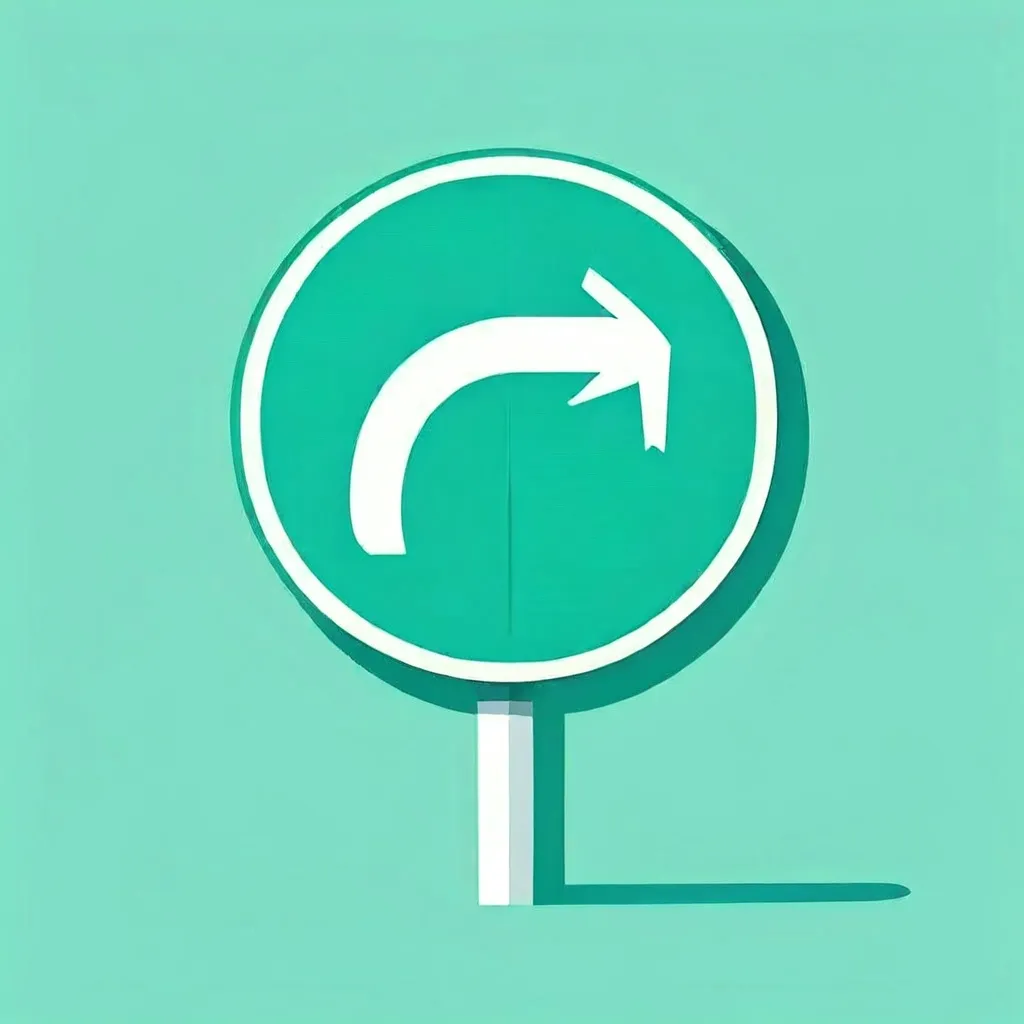
Regulatory signs with blue circles indicate mandatory actions such as turning in a required direction, while red circles with diagonal bars indicate prohibitions
Road markings communicate continuous guidance: white lines for lane division in urban areas, yellow lines for rural roads and parking restrictions
Always prioritize signals from traffic officers over traffic lights or road signs when directing traffic
Vulnerable road users (pedestrians, cyclists, children) always have the highest priority on Turkish roads
The two-second rule applies to safe following distance in Turkey and should be increased in adverse weather conditions
At intersections without signs or lights, vehicles on the right generally have priority over oncoming traffic
Motorway (Otoyol) entry is controlled with specific rules for speed limits, vehicle types, and merging procedures
Flashing yellow lights indicate caution is required and you may proceed after slowing down and ensuring safety
Confusing white and yellow road markings and incorrectly assuming what each color permits or prohibits
Failing to understand that traffic officer hand signals always override traffic lights and road signs
Not recognizing that pedestrians at crossings and cyclists have absolute priority over vehicles
Misinterpreting the two-second following distance and failing to increase it appropriately in rain or fog
Confusing prohibition signs (red circle with diagonal bar) with mandatory signs (blue circle) when answering exam questions
Article content overview
A short set of high-value points that capture the most important ideas from this article.
Traffic signs in Turkey fall into three main categories: warning signs (yellow diamond, black symbols), regulatory signs (blue/red circles), and informational signs (rectangular blue/green backgrounds)
Warning signs use a diamond shape with yellow background and black symbols to alert drivers to upcoming hazards like curves, pedestrian crossings, and slippery roads
Regulatory signs with blue circles indicate mandatory actions such as turning in a required direction, while red circles with diagonal bars indicate prohibitions
Road markings communicate continuous guidance: white lines for lane division in urban areas, yellow lines for rural roads and parking restrictions
Always prioritize signals from traffic officers over traffic lights or road signs when directing traffic
Vulnerable road users (pedestrians, cyclists, children) always have the highest priority on Turkish roads
The two-second rule applies to safe following distance in Turkey and should be increased in adverse weather conditions
At intersections without signs or lights, vehicles on the right generally have priority over oncoming traffic
Motorway (Otoyol) entry is controlled with specific rules for speed limits, vehicle types, and merging procedures
Flashing yellow lights indicate caution is required and you may proceed after slowing down and ensuring safety
Confusing white and yellow road markings and incorrectly assuming what each color permits or prohibits
Failing to understand that traffic officer hand signals always override traffic lights and road signs
Not recognizing that pedestrians at crossings and cyclists have absolute priority over vehicles
Misinterpreting the two-second following distance and failing to increase it appropriately in rain or fog
Confusing prohibition signs (red circle with diagonal bar) with mandatory signs (blue circle) when answering exam questions
Explore related topics, search based questions, and concepts that learners often look up when studying Turkish Traffic Signs & Signals. These themes reflect real search intent and help you understand how this topic connects to wider driving theory knowledge in Turkey.
Find clear and practical answers to common questions learners often have about Turkish Traffic Signs & Signals. This section helps explain difficult points, remove confusion, and reinforce the key driving theory concepts that matter for learners in Turkey.
Turkish traffic signs are primarily categorized into warning signs (alerting to potential hazards), regulatory signs (indicating mandatory actions or prohibitions), and informational signs (providing guidance or details). Understanding these categories is key to interpreting their meaning.
Traffic signals, including lights and authorized signals from police officers, dictate traffic flow and right-of-way. Misinterpreting them can lead to dangerous situations and is a common reason for failure in both the theory (MTSK e-sınav) and practical driving tests.
Road markings provide essential guidance on lane usage, pedestrian crossings, stopping, and parking. They work in conjunction with traffic signs to regulate traffic and enhance safety, and understanding both is vital for navigating Turkish roads legally and safely.
While memorization is part of preparing for the MTSK e-sınav, it's more crucial to understand the practical application of signs and signals in real driving scenarios. The test often assesses your ability to apply this knowledge, not just recall definitions.
After finding the specific Turkish driving theory articles you need, dive deeper into related topics or challenge your knowledge with practice questions. Enhance your understanding of trafik işaretleri, road rules, and vehicle safety to ensure you are fully prepared for the official ehliyet sınavı.