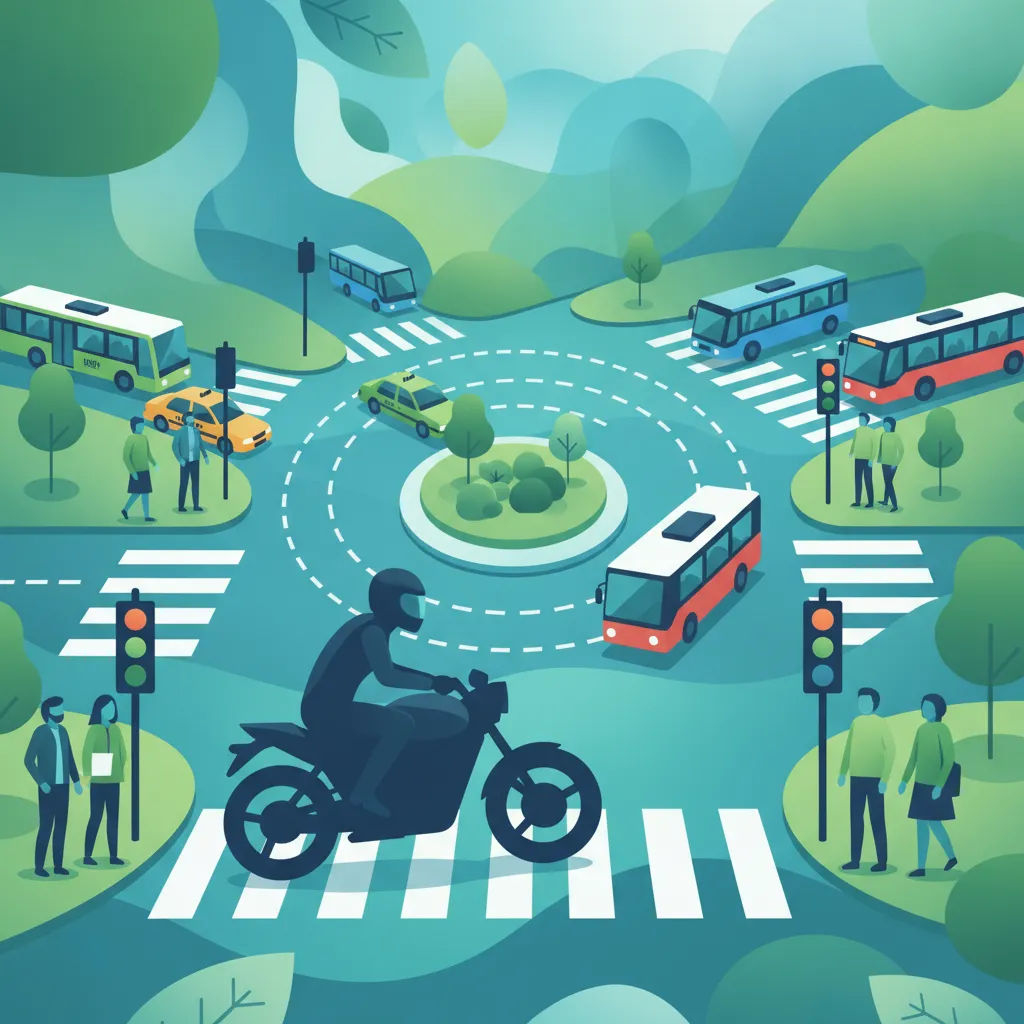
This unit focuses on the complexities of navigating intersections, roundabouts, and pedestrian crossings in urban environments. Learners will explore the specific challenges motorcyclists face at these points, such as blind spots, yielding behavior, and interaction with other road users. Emphasis is placed on developing anticipatory skills and decision-making strategies for safely approaching, entering, and exiting these traffic features.

This official preparation curriculum covers all essential theoretical aspects required to pass the Turkish motorcycle driving licence examination. It details the unique legal frameworks, rider responsibilities, protective gear standards, and defensive riding tactics under Turkish road legislation. Aspiring riders of A1, A2, and A category vehicles will develop a safety-first mindset while gaining deep knowledge of the official highway rules.
The Intersections, Roundabouts, Crossings and Urban Riding unit is a key part of the Motorcycle Theory curriculum and helps learners in Turkey understand essential theory topics in a clear and practical way. Each lesson breaks down a specific theme that often appears in the Turkish driving theory exam. With structured explanations and examples taken from real traffic situations, this unit helps learners study smarter, fix common misunderstandings, and build the knowledge required for confident exam performance.
Upon completion of this unit, you will possess a deep understanding of the regulatory and safety requirements for navigating urban junctions in Turkey. You will be able to confidently apply priority rules, manage your lane position, and anticipate the movements of other road users, which is essential for scoring well on the MTSK e-sınav.
Beyond exam success, this unit instills a safety-first mindset that directly translates to real-world riding. By mastering these traffic features, you will significantly reduce your risk of accidents at intersections—one of the most common locations for motorcycle collisions—and gain the practical knowledge required for safe and responsible motorcycle operation.

This unit is designed for aspiring A1, A2, and A category motorcycle riders preparing for the Turkish theory exam. It is also highly beneficial for current riders looking to improve their defensive riding techniques and situational awareness in urban settings.
See all lessonsExplore key lessons that shape the Intersections, Roundabouts, Crossings and Urban Riding unit in the Motorcycle Theory curriculum. These lessons focus on exam related topics, important rules, and practical skills that help you progress faster and prepare effectively for the driving theory exam in Turkey.

Master the essential rules for safely navigating urban intersections in Turkey. This lesson covers priority, signaling, and positioning to ensure you are ready for your A1, A2, or A theory exam and real-world riding.
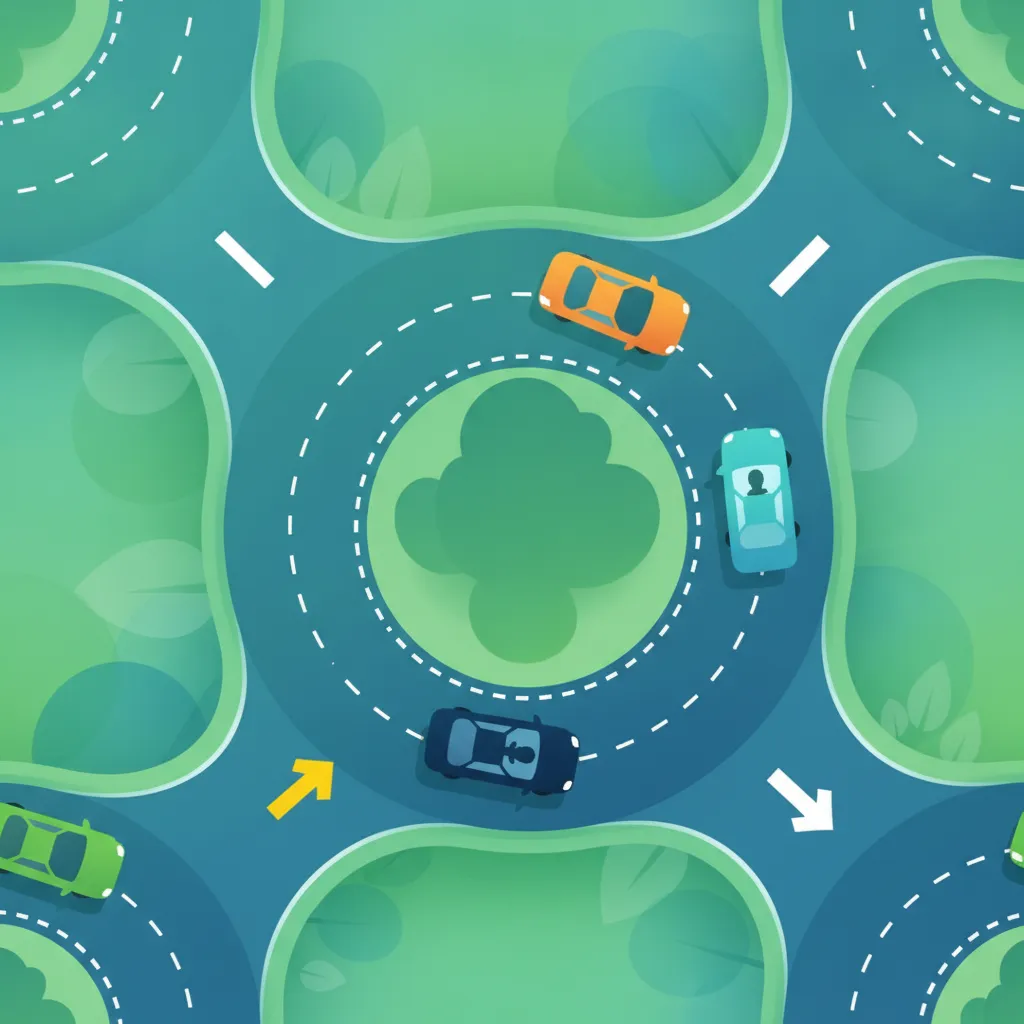
This lesson covers the critical procedures for navigating roundabouts on a motorcycle, including priority rules, correct lane selection, and signaling. It is essential for mastering the maneuvers required for the Turkish motorcycle theory exam and ensuring safety in real-world urban traffic conditions by minimizing blind-spot risks and maintaining rider visibility through proper positioning and communication.
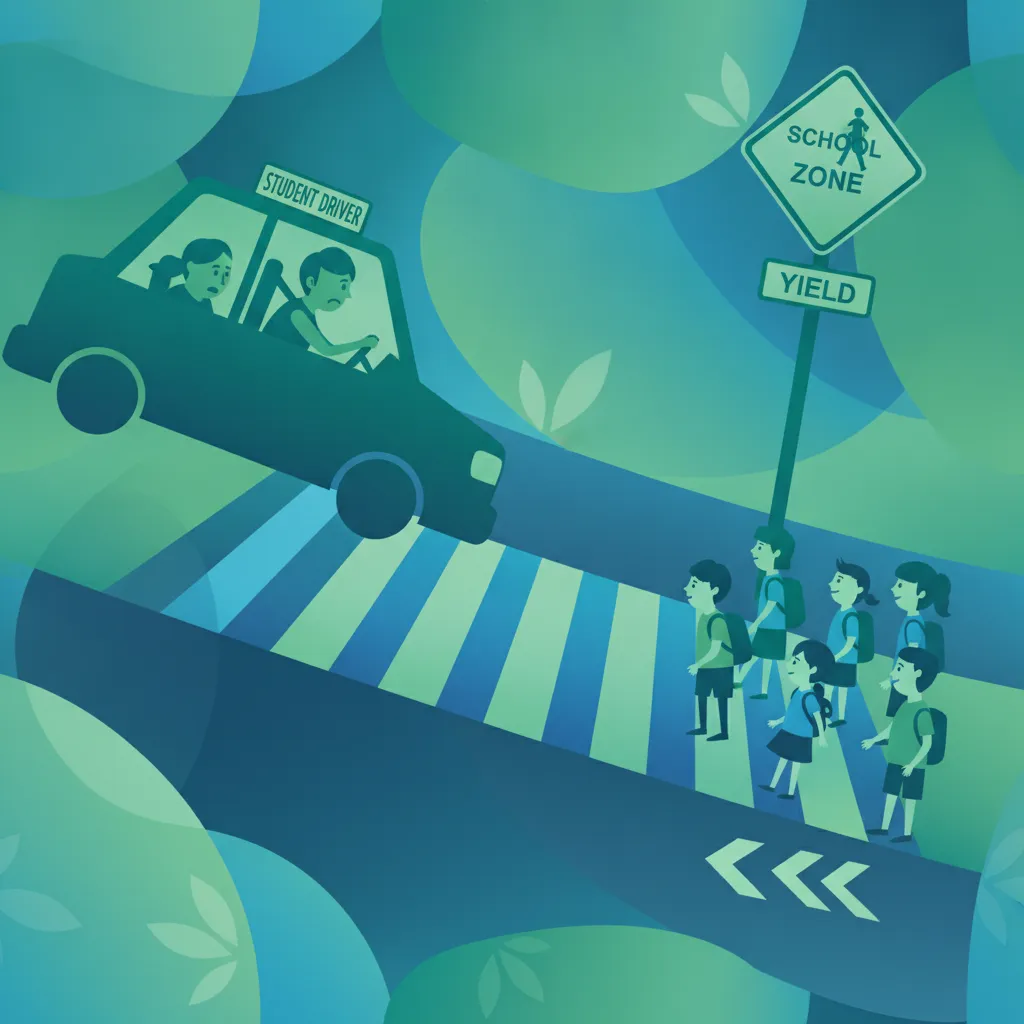
This lesson covers the essential rules for pedestrian crossings and school zones in Turkey. You will learn the legal priority of pedestrians and how to adjust your riding style to pass your theory exam and stay safe in urban traffic.
Get answers to common questions about the Intersections, Roundabouts, Crossings and Urban Riding unit and how it fits within the Motorcycle Theory curriculum. Learn how long the unit takes, how the lessons are structured, and how this unit supports your preparation for the driving theory exam in Turkey.

The Intersections, Roundabouts, Crossings and Urban Riding unit stands out because it teaches essential topics in a way that is simple, clear, and focused on exam success. All content is aligned with real requirements in Turkey and designed to help learners build practical understanding, not just memorise facts. Whether you are revising or learning the material for the first time, this unit provides reliable guidance that supports measurable progress inside the Motorcycle Theory curriculum.
Discover additional units that form the complete Motorcycle Theory curriculum. These units cover a wide range of essential topics that help learners in Turkey strengthen their understanding of road rules, traffic behaviour, and exam relevant theory. Exploring the other units gives you a broader view of the full learning path and helps you continue your progress with confidence.
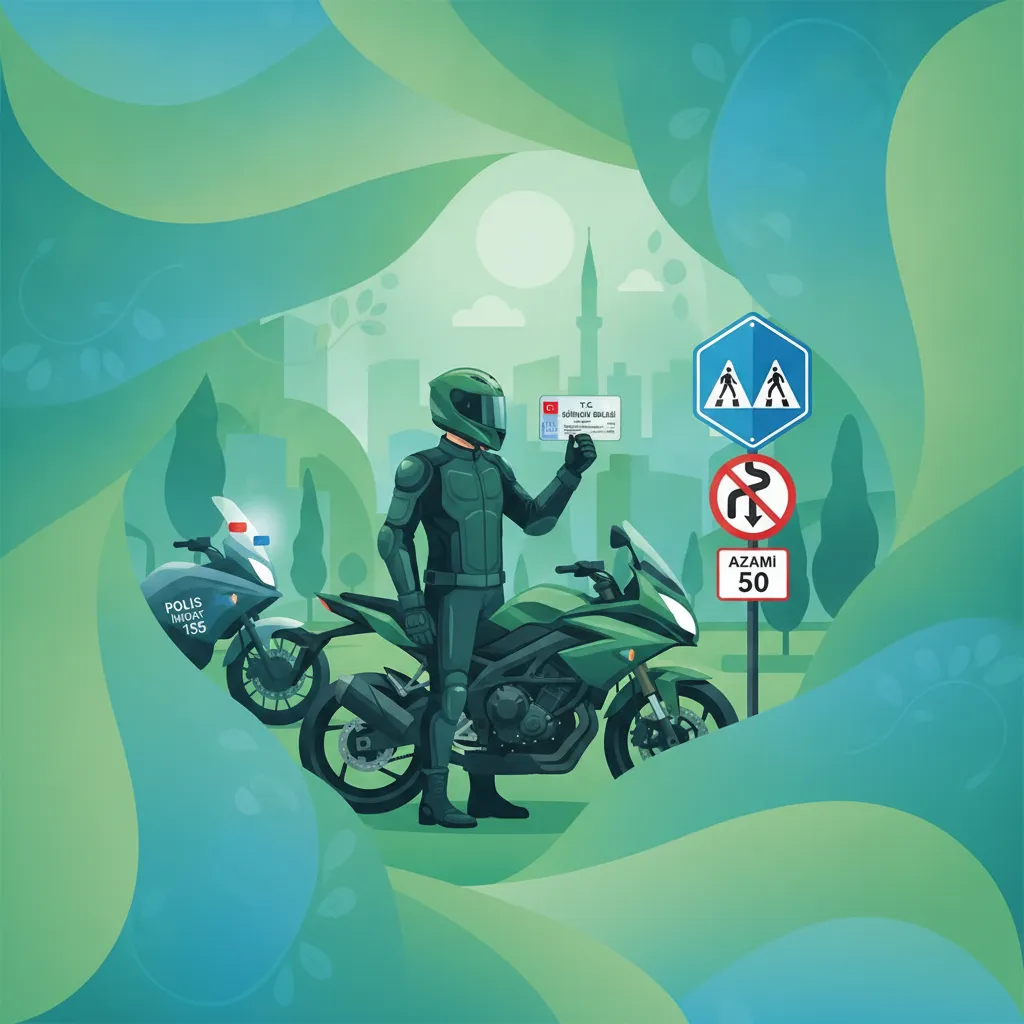
Learn the legal requirements, licensing categories, and safety responsibilities for motorcycle riders in Turkey to prepare for your theory exam.
5 lessons
This unit covers the essential protective equipment, visibility requirements, and physical condition factors critical for safe motorcycling and passing the Turkish theory exam.
3 lessons
Master the essential Turkish traffic signs, road markings, and intersection priority rules required to pass your motorcycle theory exam and ride safely on public roads.
3 lessons
Learn the essential skills for safe motorcycle lane positioning, managing blind spots, and executing legal overtaking maneuvers to pass your Turkish theory exam with confidence.
3 lessons
Master the physics of motorcycle control, including effective braking, stable cornering, and grip management, essential for your Turkish motorcycle theory exam and safe riding.
3 lessons
Learn how to manage your motorcycle safely in challenging weather, on diverse road surfaces, and during night riding to pass your Turkish driving theory test.
3 lessons
Learn to manage rider risk, understand Turkish traffic penalties, and master defensive riding techniques for the official motorcycle theory exam.
3 lessonsStart your targeted revision today. Explore comprehensive practice questions covering all Turkish traffic legislation, road signs, first aid, and vehicle mechanics. Reinforce your knowledge, identify areas for improvement, and build confidence for your upcoming ehliyet sınavı.