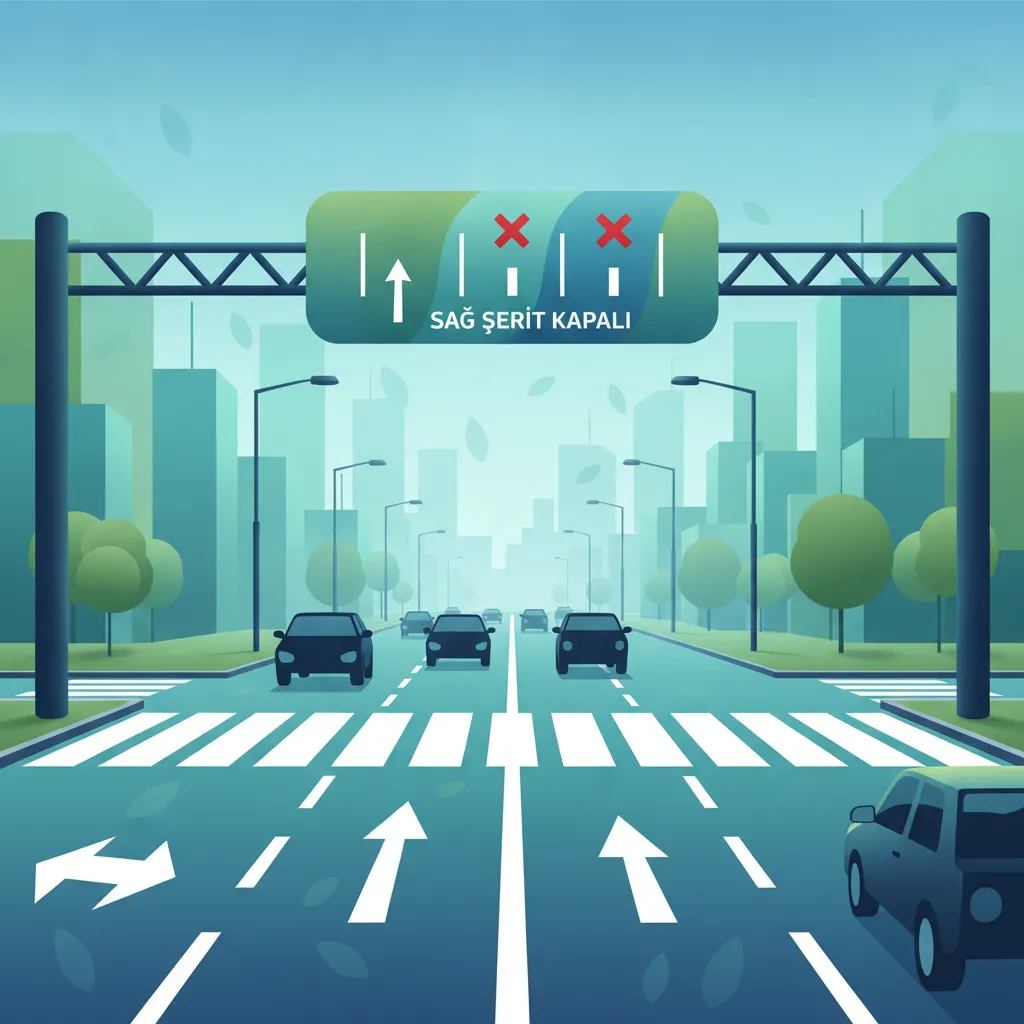
This unit provides a comprehensive guide to interpreting road markings, lane dividers, and traffic directions on Turkish roads. By mastering these horizontal and vertical signals, you will gain the skills necessary to safely navigate intersections, perform lane changes, and follow proper traffic flow. Understanding these markings is vital for both passing your Category B theory exam and ensuring safety while driving in Turkey.
Browse all lessons that make up Road Markings, Lane Use and Traffic Directions. Each lesson focuses on specific topics, learning objectives, and core concepts, helping you build essential knowledge and follow a clear, structured progression toward your study goals in Turkey.
This lesson delves into horizontal road markings, focusing on solid, broken, and double lines that define lane boundaries and overtaking rules. Learners will explore the significance of each type of line in indicating permissible lane changes, passing zones, and stopping points at intersections. The lesson also covers crosswalk markings and their role in pedestrian safety.
In this lesson, learners explore vertical road markings, primarily focusing on signs mounted on poles or overhead structures. Topics include direction indicators, speed limit signs, warning signs, and regulatory signs. The lesson emphasizes the importance of sign placement, illumination, and visibility in ensuring driver compliance. Real-world scenarios demonstrate how drivers should interpret and react to vertical markings.
This lesson examines lane division and proper lane usage on multi-lane roads and highways. Learners will understand the purpose of lane markings in guiding drivers to maintain appropriate lane discipline. Topics include correct lane selection for different vehicle types, overtaking procedures, and lane-changing techniques. Real-world examples illustrate the importance of respecting lane usage rules.
This lesson focuses on the role of directional arrows and guidance markings in indicating lane assignments and intended vehicle movements. Learners will learn to interpret turn arrows, lane-specific directions, and lane assignment at intersections and roadways. Real-world examples demonstrate how these markings aid drivers in navigating complex road networks, especially at junctions and roundabouts.
This lesson explores the concept of reserved lanes and special zones designated for specific vehicle types or purposes. Learners will study bus lanes, bicycle lanes, high-occupancy vehicle (HOV) lanes, and emergency vehicle lanes, understanding the rules governing their usage. Real-world examples illustrate how these lanes improve traffic efficiency, promote sustainable transport, and prioritize emergency response.
Explore high-intent keywords and long-tail search topics learners use when researching Road Markings, Lane Use and Traffic Directions. These terms reflect how people search for reliable study materials, structured explanations, and unit-level theory preparation support in Turkey.
Find clear answers to the most common questions learners ask about Road Markings, Lane Use and Traffic Directions. Understand how the unit is organized, what learning goals it supports, and how it contributes to your study progression with structured explanations and practical guidance tailored for learners in Turkey.
A solid line generally prohibits overtaking or changing lanes, whereas a broken line indicates that lane changes are permitted when it is safe to do so. In the MTSK exam, correctly identifying these allows you to avoid critical driving errors.
No, they usually work in conjunction. Directional arrows indicate the required lane for specific movements, such as turning left or continuing straight, and must be followed regardless of the traffic volume.
Reserved lanes are designated for specific vehicle types like buses or emergency vehicles. Driving in these lanes without authorization is a traffic violation and will result in penalty points.
Always observe lane dividers early, maintain your position within the lane markings, and signal well in advance when changing lanes. Use the road markings to guide your speed and positioning near intersections.
All included lessons
Lessons in Road Markings, Lane Use and Traffic Directions
See who benefits most from studying Road Markings, Lane Use and Traffic Directions. This overview explains how the unit supports different learning needs, what level of knowledge is helpful before starting, and how it fits into the overall study path in Turkey.
This unit is designed for learners preparing for the Category B driving licence in Turkey who need to master road infrastructure navigation. It is also ideal for individuals looking to sharpen their understanding of lane discipline and intersection markings to improve their performance on the MTSK e-sınav.

Ready to systematically prepare for your ehliyet sınavı? Explore our comprehensive curriculum to find the perfect study path. Dive into expertly organized modules covering all official topics. Build a solid understanding of Turkish road rules, signs, and safety protocols for exam success and confident driving.
Explore Driving Theory CurriculumExplore all units and lessons included in this driving theory course.
Ready to systematically prepare for your ehliyet sınavı? Explore our comprehensive curriculum to find the perfect study path. Dive into expertly organized modules covering all official topics. Build a solid understanding of Turkish road rules, signs, and safety protocols for exam success and confident driving.
Explore Driving Theory Curriculum