
This lesson covers the vital safety skills required to ensure you are seen by other road users, a key competency for all motorcycle riders. Building on your knowledge of protective equipment, you will learn how to use lights, positioning, and high-visibility apparel to manage your profile on the road and reduce accident risk during your riding career.

Lesson content overview
For riders undergoing the Great Britain Motorcycle Theory Course (A, A1, A2), understanding and implementing effective visibility techniques is paramount. Being seen by other road users is not merely a recommendation; it is a fundamental aspect of accident prevention, significantly reducing the risk of collisions. This lesson delves into a comprehensive range of strategies, encompassing both the equipment you use and your riding behaviours, all designed to enhance your presence on the road.
Motorcycles, by their very nature, are smaller and less visually dominant than cars or lorries. This inherent characteristic means riders face a higher risk of not being detected by other drivers, especially in complex traffic environments. Numerous studies indicate that a significant proportion of motorcycle collisions occur because the other driver "did not see" the motorcycle. Enhancing your visibility actively counters this risk, giving other road users more time to perceive your presence and react appropriately.
Increased visibility extends the perception-reaction time for other drivers. When you are easily seen, drivers have more seconds to process your location, speed, and direction, allowing them to make safer decisions. This early detection is crucial for preventing situations where a driver might pull out into your path, change lanes unexpectedly, or turn across you. It transforms you from a potential afterthought into a prominent, unavoidable element of the traffic scene.
Human visual perception is not infallible. Drivers often scan the road for larger, more common vehicles, and can be susceptible to "inattentional blindness"—a phenomenon where people fail to see objects directly in front of them because their attention is focused elsewhere. Motorcyclists, being smaller and often moving at different speeds, can easily be overlooked. Furthermore, every vehicle has blind spots: areas around the vehicle that are not visible in mirrors or through direct line of sight. A rider who remains in a driver's blind spot, even for a moment, is at extreme risk. Effective visibility techniques are designed to overcome these perceptual limitations and ensure you are always within a plausible sightline.
Passive visibility refers to methods that enhance your visual signature without requiring active movement. These techniques rely on making your motorcycle and yourself inherently more noticeable through colours, materials, and lighting.
High-visibility (often abbreviated as "hi-vis") clothing uses fluorescent fabrics that appear exceptionally bright in daylight. These materials absorb ultraviolet (UV) light from the sun and re-emit it as visible light, effectively making them glow, especially under overcast conditions or at dusk/dawn. Common fluorescent colours include neon yellow, orange, and pink.
Wearing high-vis clothing significantly increases contrast between you and the background environment, whether it's urban scenery or natural landscapes. This makes you stand out from the visual clutter, making it easier for other drivers to pick you out with their peripheral vision and from a distance. While not a legal requirement for motorcyclists in Great Britain, it is strongly recommended by the Driver and Vehicle Standards Agency (DVSA) and is considered a best practice for all riders.
High-vis options range from full jackets to simple vests worn over other gear. Consider the following:
Even on sunny days, high-visibility clothing provides a substantial safety benefit. Do not assume bright sunshine alone makes you sufficiently visible; the fluorescent materials are specifically designed to maximise conspicuity against natural light.
Unlike fluorescent materials which work best in daylight, reflective materials are designed to return light to its source, creating a powerful "flash" effect when illuminated by vehicle headlights. This makes them incredibly effective for increasing your visibility in low-light conditions, at night, or in tunnels.
Reflective technology works by using tiny glass beads or prismatic structures that act like mirrors, bouncing incident light directly back towards where it came from. When a driver's headlights hit a reflective patch on your gear, it creates a bright point of light, making your motorcycle and silhouette immediately apparent.
You can enhance your night-time visibility through various reflective elements:
A substance or surface that returns incident light directly towards its source, making it appear to "flash" brightly when illuminated by an external light source, such as vehicle headlights.
It is crucial to understand that reflective material needs a light source to be effective. Relying solely on reflective patches at night without proper motorcycle lighting (headlights) is insufficient and dangerous, as you will only become visible once another vehicle's lights are already on you.
Your motorcycle's lighting system is arguably the most critical passive visibility feature. Great Britain's regulations specify mandatory lighting standards to ensure motorcyclists are always visible.
Since 2016, all new motorcycles sold in Great Britain (and across the EU) must be fitted with Daytime Running Lights (DRLs). These are dedicated lights that automatically switch on when the ignition is engaged, emitting a steady white light. DRLs are specifically designed to improve a motorcycle's conspicuity during daylight hours. They make your motorcycle stand out as a distinct, moving light source, making it easier for other drivers to detect you, even in bright sunshine.
Do not confuse DRLs with low-beam headlights. DRLs are for daytime conspicuity; they are not sufficient for illuminating the road or for use in reduced visibility conditions such as night or heavy rain.
The low-beam, or dipped beam, headlight is your primary light source for illuminating the road ahead without dazzling oncoming traffic. Its downward-angled beam ensures you can see the road while keeping other drivers safe.
When to use low-beam headlights:
The high-beam, or main beam, headlight projects a much brighter and farther-reaching light. While excellent for illuminating unlit roads, its powerful beam can dazzle other road users.
When to use high-beam headlights:
When NOT to use high-beam headlights:
Some riders choose to fit auxiliary lights, such as additional LED spotlights or strips. These can further enhance conspicuity, especially from the front and sides. However, any additional lighting must comply with UK Road Vehicles Lighting Regulations:
Examples of such accessories include LED accent lights on fairings, or reflective boot reflectors that illuminate when caught by headlights. These can provide additional visual cues, particularly from a greater distance or in peripheral vision.
Active visibility techniques involve rider behaviours and choices that dynamically place you within the direct line of sight of other road users. These strategies are about making yourself visually prominent through how you move and position your motorcycle on the road.
Your chosen position within a lane has a profound impact on how visible you are to other drivers. The aim is to maximise your exposure to their mirrors and direct sightlines, particularly at junctions, when approaching bends, or when interacting with cross-traffic.
On a standard single carriageway lane, riding in the central lane position is often the safest choice for visibility. This means positioning your motorcycle roughly in the centre of the lane, rather than hugging the curb.
Benefits of central lane positioning:
While the central position is generally good, you should dynamically adjust your lane position based on the situation:
Constantly observe other vehicles and anticipate their potential movements. Adjust your lane position proactively to maintain maximum visibility, especially when approaching junctions or blind spots.
Filtering, often referred to as lane splitting in other regions, is the act of riding a motorcycle between lanes of slow-moving or stationary traffic. While it can help reduce congestion and rider exposure to exhaust fumes, it must be performed with extreme caution and with visibility as a primary concern.
In Great Britain, filtering is generally permissible on urban roads where traffic is slow or stationary. However, specific rules and recommendations apply:
The practice of a motorcyclist riding between lanes of slow-moving or stationary traffic, or between traffic and the side of the road, to progress through congestion.
Every vehicle on the road has blind spots, areas that are not visible to the driver through their mirrors or direct vision. For motorcyclists, avoiding these blind spots is an essential active visibility strategy.
The effectiveness of visibility techniques can vary significantly depending on the prevailing conditions. A safe rider adapts their strategies to match the weather, time of day, and type of road.
Adverse weather conditions severely reduce visibility for all road users, making a motorcyclist's conspicuity even more critical.
Rain/Mist:
Fog:
Sun Glare:
Night riding presents distinct challenges for visibility. Without the benefit of natural light, you rely entirely on artificial illumination.
Different road types demand specific visibility considerations.
Motorways:
Urban Congestion:
Vulnerable Road Users (VRUs) – pedestrians, cyclists, and horse riders – have different expectations and may not always look for motorcycles.
Adherence to legal requirements and adopting best practices are cornerstones of safe motorcycling in Great Britain.
Understanding common errors helps riders avoid dangerous situations.
The effectiveness of visibility techniques is rooted in the science of human perception and light physics.
Studies, such as those by the UK Department for Transport, have consistently shown that riders wearing high-visibility clothing are statistically less likely to be involved in certain types of crashes, underscoring the real-world impact of these techniques.
Mastering rider visibility is a continuous process of awareness, preparation, and adaptation. It involves a combination of legal compliance and proactive safety measures.
Explore all units and lessons included in this driving theory course.
Lesson content overview
Explore all units and lessons included in this driving theory course.
Explore search topics learners often look for when studying Rider Visibility Techniques. These topics reflect common questions about road rules, driving situations, safety guidance, and lesson level theory preparation for learners in Great Britain.
Browse additional driving theory lessons that cover connected traffic rules, road signs, and common driving situations related to this topic. Improve your understanding of how different rules interact across everyday traffic scenarios.
Learn how dynamic lane positioning and safe filtering maximise your visibility to other road users in Great Britain. This lesson covers proactive strategies to ensure you are seen in various traffic scenarios, crucial for motorcycle theory.

Filtering through traffic can be an efficient way to ride, but it carries risks. This lesson explains when it is appropriate to filter, the importance of maintaining a low speed differential, and how to watch out for potential hazards like changing lanes, opening doors, and pedestrians. Safe filtering requires heightened awareness and excellent machine control.
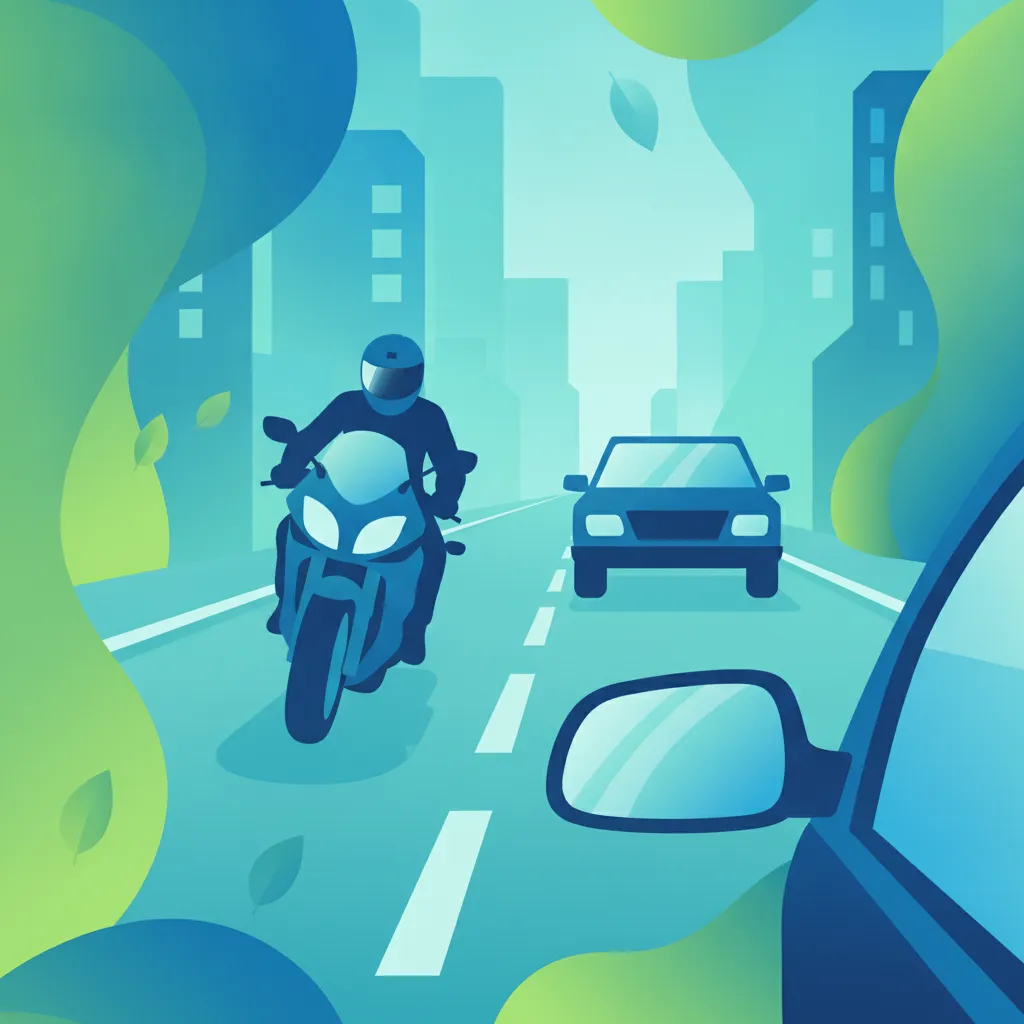
This lesson teaches strategic road positioning techniques to maximize your visibility and safety in traffic. You will learn how to choose the correct lane position to avoid the blind spots of larger vehicles and how to communicate your intentions through predictable riding. Key skills covered include effective use of shoulder checks, making eye contact with drivers, and maintaining a safe following distance, all of which are crucial for defensive riding on British roads.

This lesson explains that your lane is more than just a single track. You will learn how to move within your lane to a position of safety, whether it's to be more visible in another driver's mirrors, to avoid road surface hazards, or to set up for a corner. This proactive approach to positioning is a key defensive riding skill.
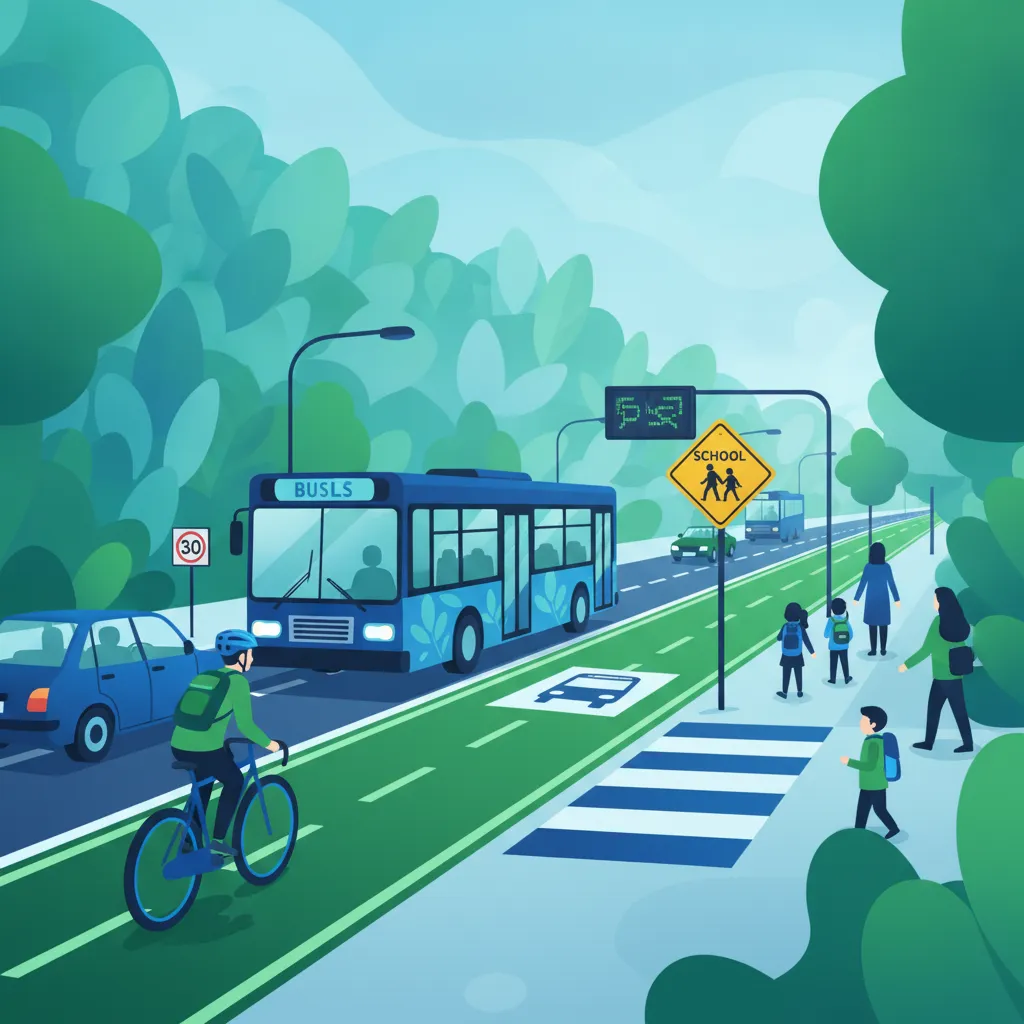
This lesson explains the regulations for special road zones common in urban areas. You will learn about speed restrictions near schools, how to read signs indicating if and when motorcycles can use bus lanes, and how to safely interact with cyclist infrastructure such as advanced stop lines. Compliance with these specific rules is crucial for legal and safe urban riding.

This lesson decodes the language of road markings painted on the road surface. You will learn the rules associated with solid and broken white lines, double white lines that restrict overtaking, and yellow lines controlling parking. Proper understanding of these markings is crucial for maintaining correct lane discipline and riding legally.

This lesson teaches riders how to be constantly aware of blind spots to prevent collisions. You will learn the importance of the 'lifesaver' shoulder check before changing position, turning, or moving off. The content emphasizes active visual scanning of the road ahead and around you, along with developing the judgment needed to accurately assess traffic speed and create safe gaps for maneuvering in various traffic situations.
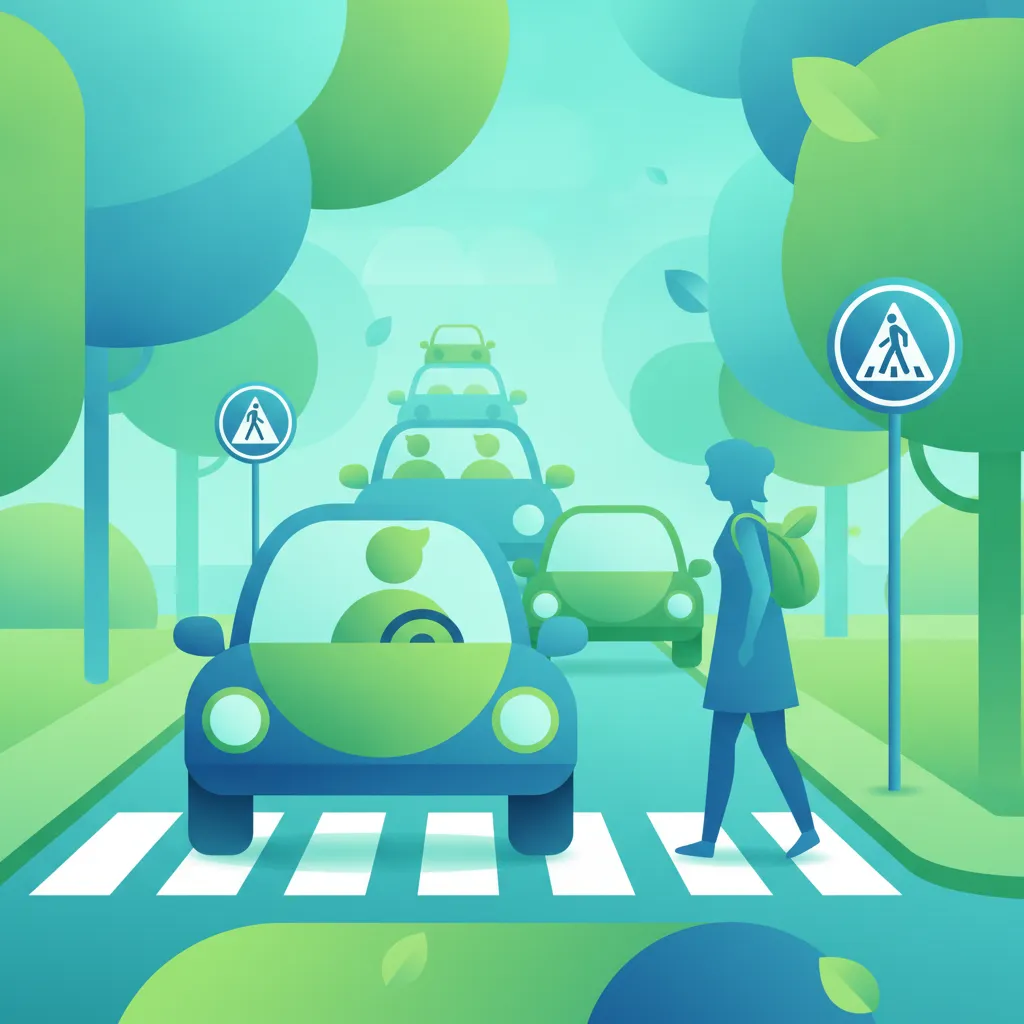
This lesson focuses on the dynamic and often unpredictable nature of urban traffic. It covers how to safely negotiate various pedestrian crossings, anticipate the movement of cyclists and pedestrians, and be aware of hazards like bus stops and car doors opening. You will also learn about the considerations for safe and legal filtering in slow-moving traffic.
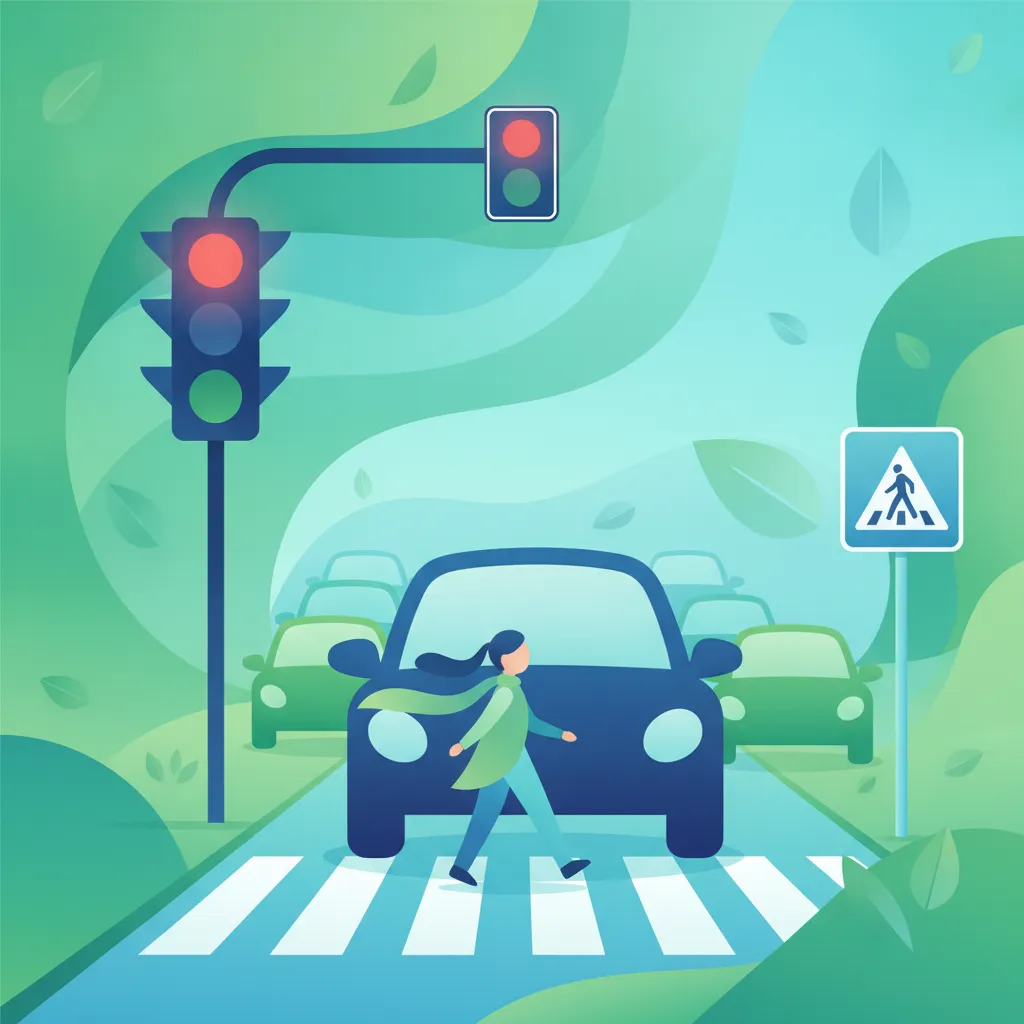
This lesson covers the operation of traffic light signals and the rules for approaching them safely. It also provides a detailed explanation of different pedestrian crossings, such as zebra, pelican, and toucan crossings, clarifying the specific rules and priority for each. You will learn to anticipate the actions of pedestrians and other vulnerable road users at these locations.
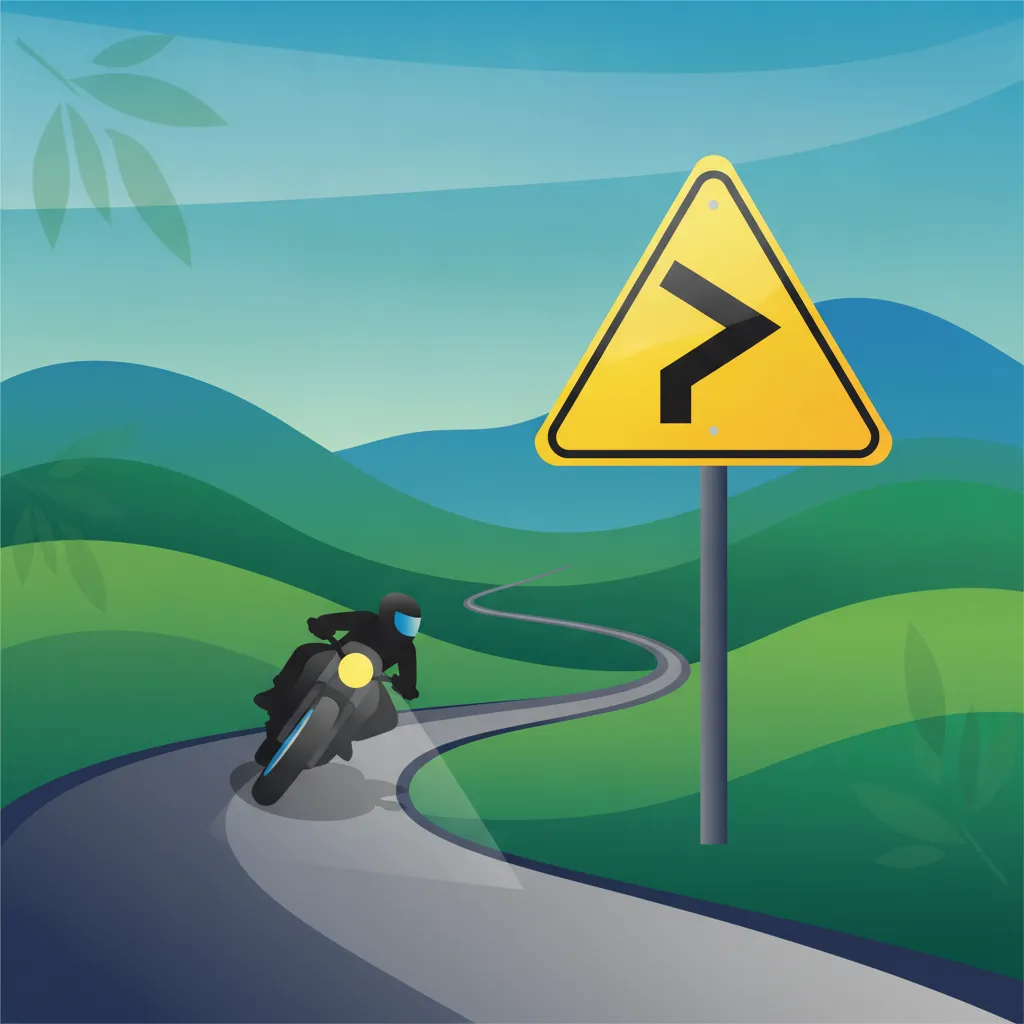
This lesson explains the function of warning signs, which are mostly triangular and alert road users to potential dangers ahead. You will learn to identify signs for bends, junctions, slippery surfaces, and other hazards particularly relevant to motorcyclists. Acting on these warnings allows a rider to adjust speed and position proactively, enhancing safety.
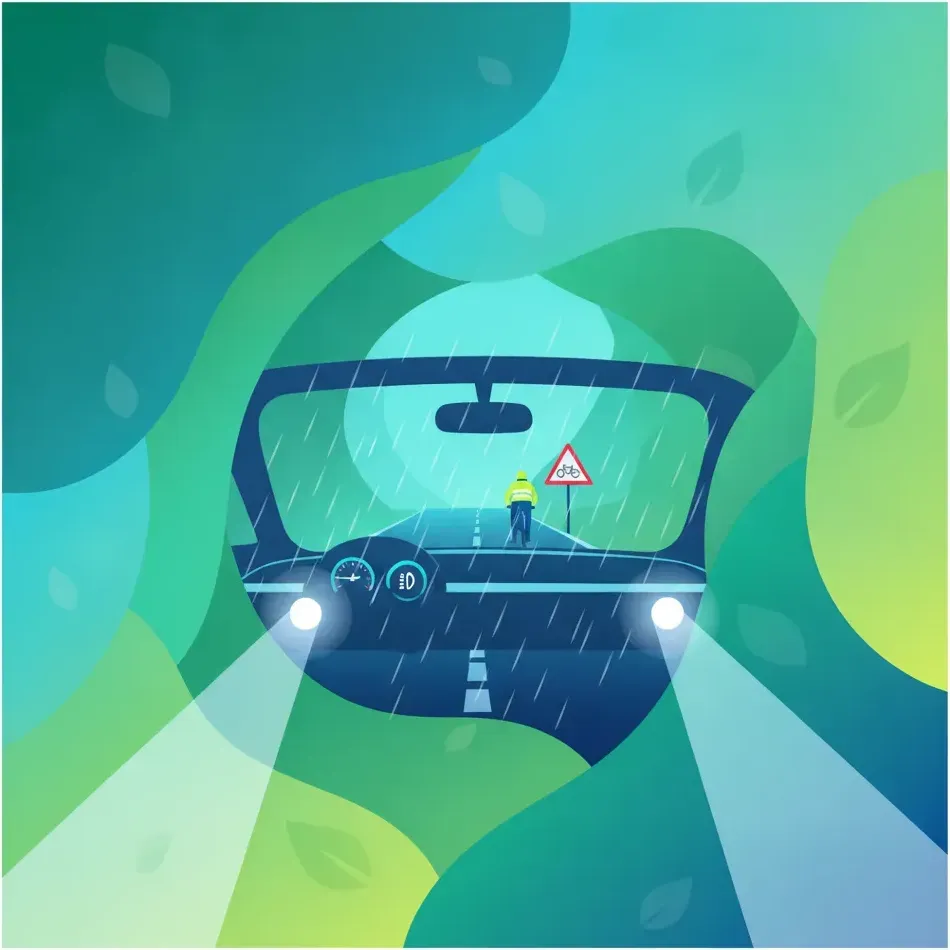
This lesson details the legal requirements and best practices for using lights and reflectors on your moped or light quadricycle. It covers the correct operation of headlamps, daytime running lights, brake lights, and indicators to communicate your intentions clearly to other road users. You will also learn how to enhance your visibility further with strategically placed reflectors and reflective tape, ensuring you remain conspicuous in low-light conditions and compliant with British lighting regulations.
Understand how to adjust your rider visibility techniques for challenging conditions like rain, fog, and night riding in Great Britain. Covers strategies for motorways, urban areas, and interacting with vulnerable road users.

Fog dramatically reduces how far you can see and be seen. This lesson explains why you must reduce your speed and increase your following distance in foggy conditions. It also covers the legal requirements and best practices for using your headlights and fog lights to maximize your visibility to others without dazzling them.

This lesson focuses on the challenges of riding when you can't see or be seen clearly. It covers the correct use of lights in fog, rain, and at night to maximize both your vision and your visibility to others. You will learn why reducing speed is critical, how to use reflective clothing effectively, and strategies for dealing with the glare from other vehicles' headlights to ensure you can navigate safely in all lighting conditions.
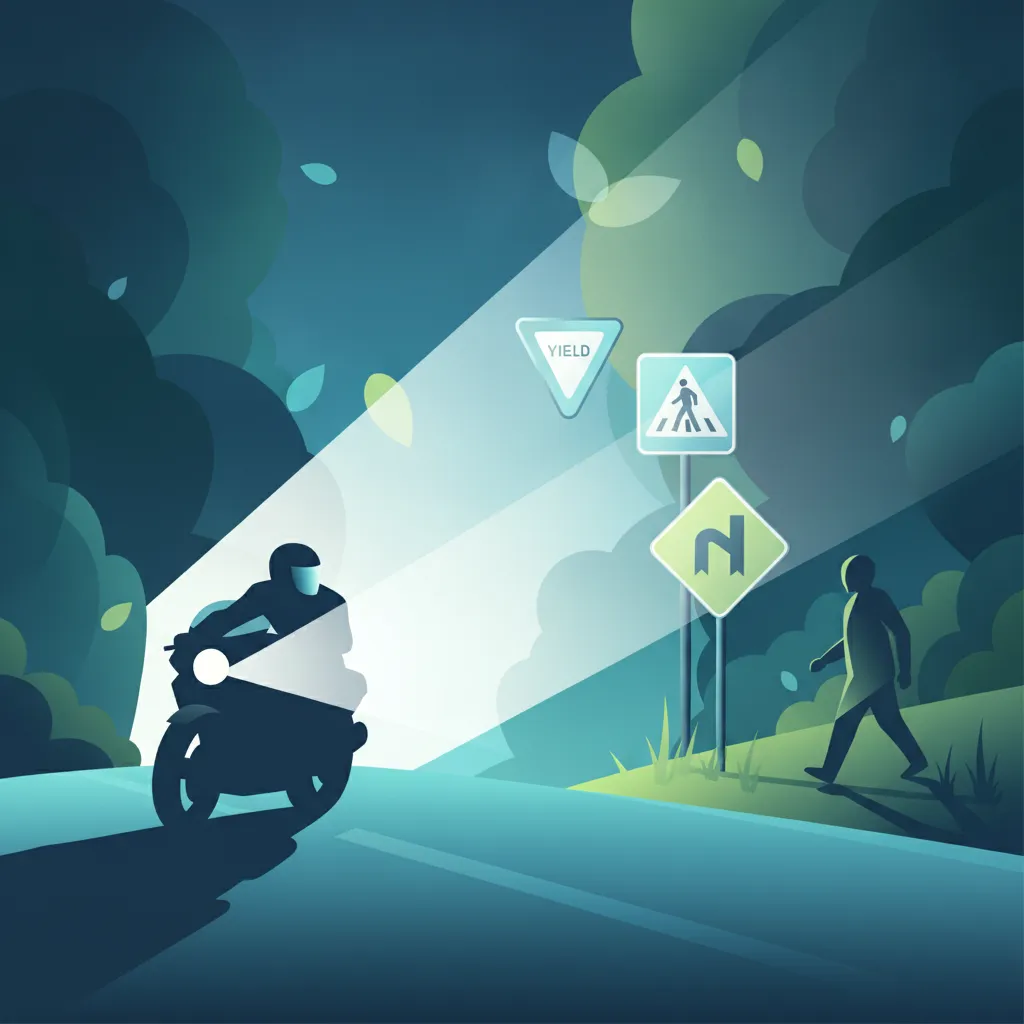
Riding at night requires different skills, as visibility is limited to the reach of your headlights. This lesson teaches you how and when to use main beam and dipped beam lights effectively. It also discusses the increased risk from fatigue and nocturnal animals, and emphasizes the importance of a clean visor and reflective gear for safety.
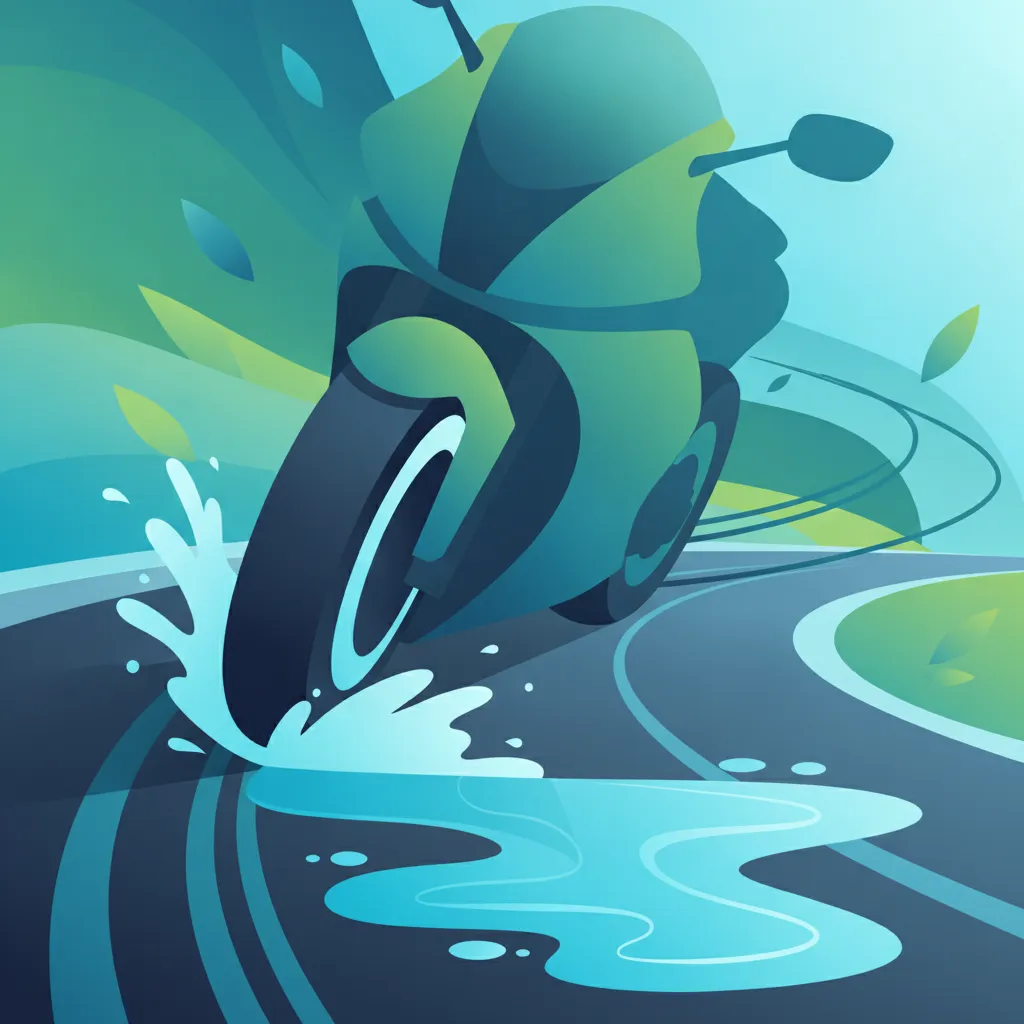
Riding in the rain requires significant adjustments to your technique. This lesson covers how to ride smoothly to maintain traction, the importance of increasing your following distance, and how to deal with reduced visibility from spray and fogged visors. You will also learn what aquaplaning is and how to avoid or manage it.
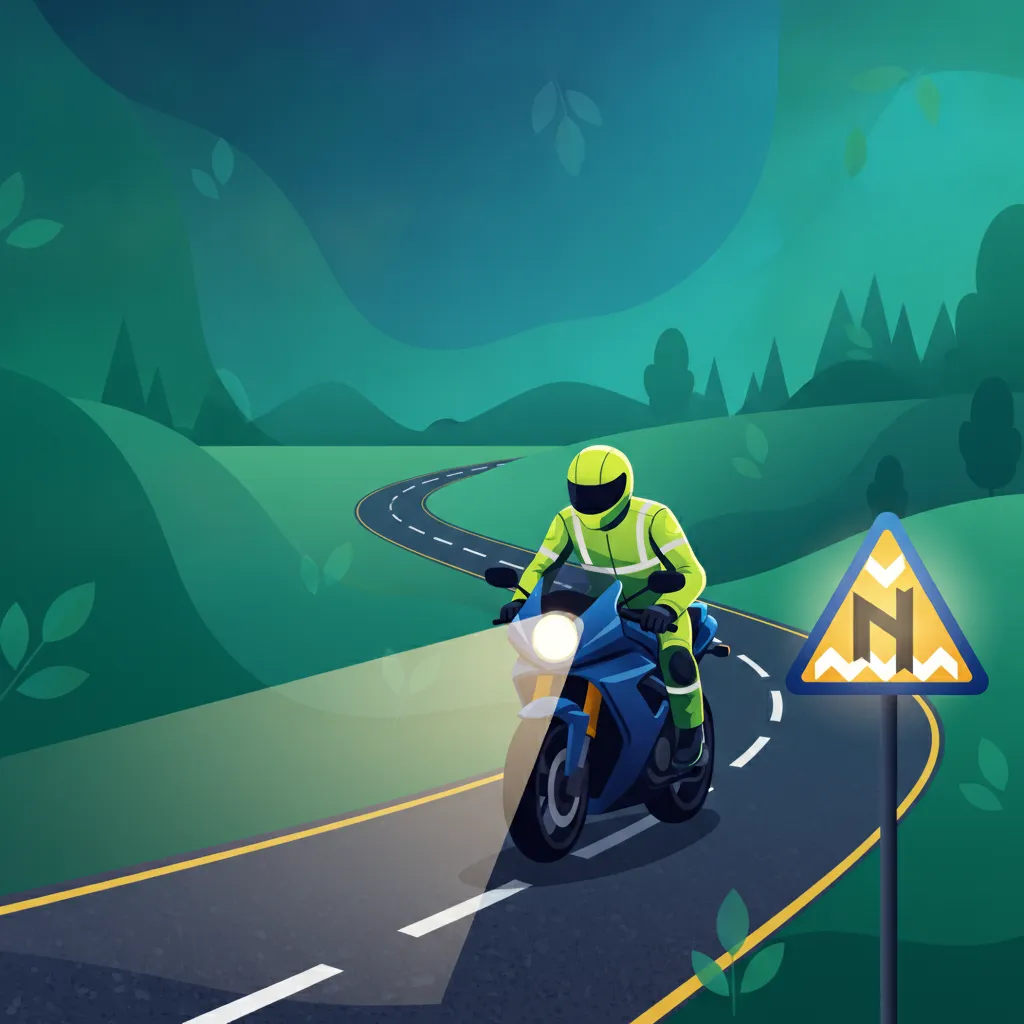
This lesson provides essential techniques for safe riding during nighttime and in poor visibility conditions like dawn or dusk. It covers the correct use of your headlamp's main and dipped beams, strategies for reducing glare from oncoming traffic, and the critical role of reflective clothing. You will also learn how to identify common nighttime hazards and manage fatigue, ensuring you can navigate British roads safely after dark while complying with all relevant road rules.
This lesson details the legal requirements and best practices for using lights and reflectors on your moped or light quadricycle. It covers the correct operation of headlamps, daytime running lights, brake lights, and indicators to communicate your intentions clearly to other road users. You will also learn how to enhance your visibility further with strategically placed reflectors and reflective tape, ensuring you remain conspicuous in low-light conditions and compliant with British lighting regulations.
This lesson teaches strategic road positioning techniques to maximize your visibility and safety in traffic. You will learn how to choose the correct lane position to avoid the blind spots of larger vehicles and how to communicate your intentions through predictable riding. Key skills covered include effective use of shoulder checks, making eye contact with drivers, and maintaining a safe following distance, all of which are crucial for defensive riding on British roads.
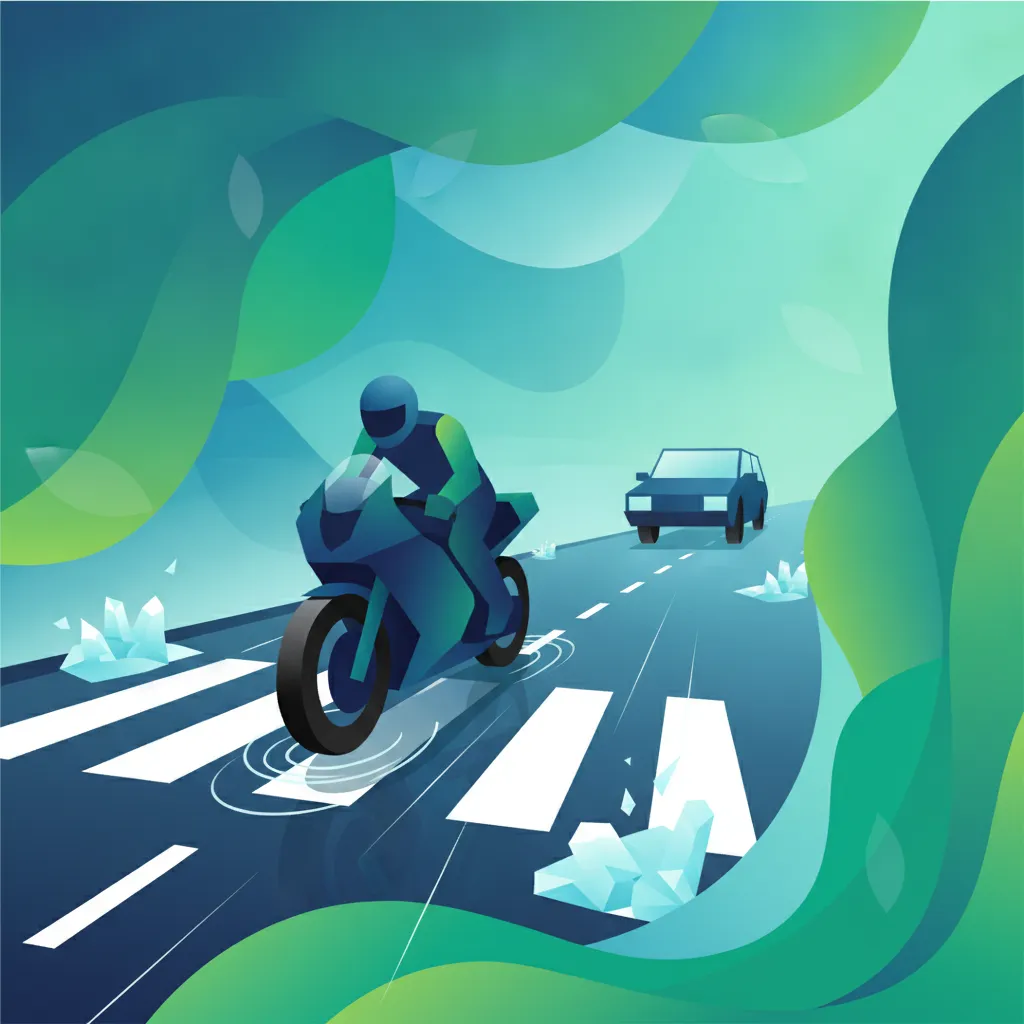
This lesson provides essential advice for riding safely in adverse weather conditions that reduce tyre grip. You will learn how rain, ice, and wet leaves dramatically increase braking distances and affect handling. Key strategies covered include reducing speed, increasing following distances, making smooth control inputs, and anticipating slippery areas to maintain control and avoid skidding on compromised road surfaces.

This lesson provides essential advice for driving when weather conditions are poor. It explains how rain can cause aquaplaning and why you must double your following distance. You will also learn techniques for driving in icy conditions, including gentle use of controls to avoid skidding, and the correct use of lights in fog.

This lesson highlights why motorcyclists are considered vulnerable road users. It covers the increased risk of serious injury in a collision due to lack of physical protection compared to car occupants. You will learn about common visibility challenges and how to adopt proactive, defensive strategies to mitigate risks and anticipate potential hazards on the road.
Find clear answers to common questions learners have about Rider Visibility Techniques. Learn how the lesson is structured, which driving theory objectives it supports, and how it fits into the overall learning path of units and curriculum progression in Great Britain. These explanations help you understand key concepts, lesson flow, and exam focused study goals.
While it is not a legal requirement to wear high-visibility gear, the DVSA strongly encourages it in your theory and practical tests. The Highway Code highlights the importance of being seen, and failing to take steps to increase your visibility is considered a safety risk.
Yes, it is highly recommended to use your dipped headlight during the day to help other road users notice you. Many modern motorcycles feature automatic daytime running lights (DRL), which serve the same purpose of increasing your profile.
Choosing the correct lane position ensures you are not masked by other vehicles or road furniture. By positioning yourself where you can see the driver's mirrors and they can see you, you minimize the risk of being missed when they are turning or emerging.
Motorcyclists are classified as vulnerable road users because of their smaller size. Exam questions frequently test your ability to mitigate this vulnerability by anticipating where and how you might be hidden from other drivers.
Dive into our comprehensive question bank to find exactly what you need for your Great Britain theory test. Use our advanced filters to pinpoint specific subjects or test your knowledge on challenging areas, ensuring you're fully prepared for success.