
This lesson explores why motorcyclists are uniquely vulnerable in traffic and how to manage those risks effectively. It builds on your legal knowledge from Unit 1 to help you apply defensive riding principles essential for your A1, A2, or A motorcycle theory exam.

Lesson content overview
Riding a motorcycle offers a unique sense of freedom and agility, but it also comes with inherent risks due to the rider's exposure. The Great Britain Motorcycle Theory Course (A, A1, A2) places significant emphasis on understanding rider vulnerability, a fundamental concept for safe motorcycling. This lesson explores why motorcyclists are categorised as vulnerable road users, the specific dangers they face, and the proactive strategies essential to mitigate these risks.
Recognising rider vulnerability is not just about acknowledging danger; it's about developing a profound awareness that informs every decision made on the road. From choosing appropriate protective gear to adopting defensive riding techniques, this understanding underpins safe practice and is critical for both passing your theory test and becoming a responsible rider.
Motorcyclists, along with pedestrians and cyclists, are officially classified as Vulnerable Road Users (VRUs) in the UK Highway Code and by DVSA guidance. This classification reflects their increased risk of severe injury or death in a collision compared to occupants of enclosed vehicles. Several interconnected factors contribute to this heightened vulnerability.
The most immediate and obvious reason for a motorcyclist's vulnerability is the complete lack of an enclosed protective shell around the rider. Unlike car occupants who are shielded by a vehicle's chassis, airbags, and seatbelts, a motorcyclist's body is directly exposed to the elements and, crucially, to the forces of an impact.
In a collision, this physical exposure means that the rider's head, torso, and limbs are directly susceptible to impact with other vehicles, road surfaces, or roadside objects. Even at relatively low speeds, such direct impacts can cause severe, life-changing, or fatal injuries. This inherent lack of structural protection necessitates the use of specialised protective equipment, which we will explore further.
The principles of physics play a critical role in understanding injury severity for motorcyclists. Kinetic energy, the energy of motion, is transferred during an impact. While all vehicles have kinetic energy, a motorcyclist’s relatively lower mass means that they experience higher acceleration forces upon impact with a larger, heavier vehicle.
When a motorcycle and a larger vehicle collide, the forces involved can cause a rider to be dislodged, thrown from the bike, or trapped. The impact energy, especially rotational forces, can lead to complex injuries that are amplified due to the rider's lack of structural enclosure. Even a low-speed slide on a wet surface, without proper protective gear, can result in severe abrasions or fractures. Understanding this kinetic energy transfer highlights why managing speed and maintaining control are paramount for rider safety.
Another significant factor contributing to rider vulnerability is the 'visibility deficit' of motorcycles. Motorcycles are inherently smaller than most other vehicles on the road. They occupy less visual space, have a smaller frontal area, and are generally lower to the ground than cars, vans, or lorries. This reduced visual footprint makes them harder for other road users to detect, especially in certain conditions.
Drivers often overlook motorcycles, particularly when scanning for larger vehicles, in situations involving blind spots, or during complex manoeuvres like turning. Factors such as adverse weather, low light conditions (dusk, dawn, night), and busy backgrounds can further exacerbate this visibility deficit. It is a critical misconception to believe that being small makes you harder to hit; in reality, it often makes you harder to see. This lack of detection is a leading cause of 'looked but failed to see' collisions involving motorcycles.
The UK Highway Code explicitly classifies motorcyclists as vulnerable road users. This official designation carries significant implications for both riders and other drivers. For riders, it underscores the need for proactive safety measures and defensive riding. For other road users, it imposes a higher duty of care.
Under the Highway Code, drivers of larger vehicles are expected to afford motorcyclists (and other vulnerable users) extra space, attention, and consideration. This includes specific rules regarding safe overtaking distances and awareness at junctions. This classification is a legal acknowledgement of the inherent dangers motorcyclists face and aims to foster a safer road environment through mutual respect and awareness.
Given the inherent vulnerabilities, motorcycle riders must adopt a set of core safety principles to minimise risks and protect themselves. These principles are not merely recommendations; they are fundamental to safe and responsible motorcycling and are heavily emphasised in the Great Britain Motorcycle Theory Course.
The primary defence against physical exposure is appropriate protective equipment. This starts with a legally compliant and correctly fitted helmet.
In Great Britain, it is mandatory for all motorcyclists, moped, and scooter riders to wear a safety helmet that meets European standards (e.g., ECE 22.05 or ECE 22.06) when riding on public roads.
A helmet is designed to absorb impact energy, protecting the head from severe trauma. Beyond the helmet, riders should also wear:
Wearing full protective gear significantly reduces the severity of injuries in a crash and is a crucial, non-negotiable aspect of responsible riding.
Speed management is critical in offsetting kinetic energy transfer. Riding within speed limits, and often at speeds appropriate for the conditions rather than the maximum permitted, provides several benefits:
Always adjust your speed to the prevailing conditions, such as weather, road surface, visibility, and traffic density. The speed limit is a maximum, not a target.
Counteracting the visibility deficit is paramount. Riders must take proactive steps to make themselves as conspicuous as possible to other road users:
Defensive riding is a proactive philosophy that assumes other road users might make mistakes or might not see you. It's about taking responsibility for your own safety by continuously assessing the environment and anticipating potential hazards. Key elements include:
Adherence to specific rules and regulations is not just about avoiding penalties; it's about embedding safety practices that directly address rider vulnerability. These are mandated by the Highway Code and other relevant legislation in Great Britain.
As discussed, wearing an approved helmet is a legal requirement.
This regulation mandates that any person driving or riding on a motorcycle, moped, or scooter on a public road must wear a safety helmet that complies with a specified European standard (e.g., ECE 22.05 or ECE 22.06).
This rule exists solely to protect the rider's head, which is highly susceptible to fatal or severe injury in a collision due to physical exposure. Non-compliance can lead to legal penalties and dramatically increases the risk of severe head trauma.
The Highway Code provides explicit guidance for drivers when overtaking vulnerable road users, including motorcyclists. This rule directly addresses the need to provide sufficient space to account for a rider's physical exposure and potential instability.
Highway Code Rule 208 states that drivers should allow at least 1.5 metres clearance when overtaking cyclists, horses or horse-drawn vehicles and motorcyclists at speeds of up to 30 mph. Give them at least 2 metres and keep to a low speed when passing pedestrians, horse riders or horse-drawn vehicles and cyclists when they are riding slowly or are stopped. A good guide is a car's width or 1.5m clearance when overtaking on a normal road and 2m when overtaking at high speeds. This rule is particularly important for motorcyclists as it acknowledges their vulnerability.
This mandatory clearance provides a vital safety buffer. It prevents accidental contact with the rider or their exposed limbs and allows the rider sufficient space to manoeuvre safely if unexpected hazards arise, without fear of being squeezed or clipped.
Effective lighting is crucial for mitigating the visibility deficit, especially during periods of reduced light or visibility.
Headlamps must be switched on from sunset to sunrise. They must also be used during the day when visibility is seriously reduced, for example, by fog, heavy rain, or snow.
Motorcycles are required to have their headlamp on during these times to make them visible to other road users. During daylight hours, while not always legally mandatory to use your headlamp, it is strongly recommended for motorcyclists as a proactive measure to enhance visibility. Amber flashing indicators are used for signalling turns or as hazard warnings, not as a continuous running light.
While not legally mandatory, the use of high-visibility or reflective clothing is strongly recommended by the DVSA.
Wearing high-visibility clothing significantly improves your chances of being seen by other road users, particularly in low light conditions, adverse weather, or against complex backgrounds.
This type of clothing helps to increase the visual contrast of the rider against their surroundings, making them easier to spot and allowing other drivers more time to react. It's an active step a rider can take to compensate for the motorcycle's inherent visibility deficit.
Understanding the principles of vulnerability translates directly into practical strategies for avoiding common risks and preventing collisions.
Blind spots are areas around a vehicle that cannot be seen by the driver using mirrors or peripheral vision. Motorcycles are particularly prone to disappearing into these zones due to their smaller size.
Know Common Blind Spot Locations: Be aware that larger vehicles, especially lorries and vans, have extensive blind spots to their sides, front, and rear. Cars also have blind spots, especially over the shoulder.
Position for Visibility: When riding near other vehicles, try to position yourself so you can see the driver's face in their side mirror. If you can see them, there's a good chance they can see you.
Avoid Lingering: If you find yourself in another vehicle's blind spot, either accelerate safely to move past them or slow down to drop behind them. Do not ride alongside them for extended periods.
Anticipate Lane Changes: Be extra vigilant around vehicles that might be about to change lanes, especially if you are in their potential blind spot. Look for slight steering movements or head turns.
Weather conditions can significantly amplify rider vulnerability by reducing grip, decreasing visibility, and affecting motorcycle stability.
Different road types present unique challenges that riders must adapt to:
The condition of your motorcycle and how it's loaded can also impact your vulnerability.
Let's consider some practical scenarios to illustrate how understanding rider vulnerability and applying safety principles can prevent incidents.
Scenario: A car driver is approaching a motorcyclist riding upright on a dual carriageway. The driver wants to overtake.
Correct Behaviour: The car driver, aware of Highway Code Rule 208, signals, checks mirrors and blind spots, and ensures they leave at least 1.5 metres of lateral clearance when passing the motorcyclist. They then pull back into their lane safely.
Incorrect Behaviour: The car driver overtakes the motorcycle too closely, leaving less than 1 metre of space. This could cause the motorcyclist to feel pressured, potentially swerve, or even be struck by the car's wing mirror or bodywork, leading to a loss of control.
Explanation: The extra clearance acknowledges the motorcyclist's physical exposure and the need for space to maintain stability, directly mitigating the risks associated with their vulnerability.
Scenario: A motorcyclist is riding through a city centre at dusk, with streetlights just coming on and moderate traffic.
Correct Behaviour: The rider ensures their low beam headlamp is on, wears a reflective jacket, and positions their motorcycle to be visible in the mirrors of cars ahead and behind. They constantly scan for turning vehicles, pedestrians, and cyclists who might not see them.
Incorrect Behaviour: The rider, wearing dark clothing, rides with only their sidelights on and positions themselves close behind a larger van, effectively disappearing from other drivers' view. A car turning across their path fails to see them, leading to a potential collision.
Explanation: Proactive lighting and high-visibility clothing address the visibility deficit, while defensive positioning and scanning counteract the busy urban environment and potential for 'looked but failed to see' incidents.
Scenario: A motorcyclist is on a rural B-road when light rain begins, making the surface wet and slightly greasy.
Correct Behaviour: The rider immediately reduces speed, increases their following distance significantly, and begins to brake and accelerate more gently. They avoid sudden steering inputs and remain particularly vigilant for standing water or slippery patches.
Incorrect Behaviour: The rider maintains their dry-road speed and braking habits. When approaching a bend, they brake sharply, causing the front wheel to lock and the motorcycle to slide, resulting in a fall.
Explanation: Reducing speed and adjusting control inputs directly addresses the increased kinetic energy transfer risk on a low-grip surface, preventing loss of traction and potential injury from physical exposure.
Scenario: A motorcyclist is riding alongside a large commercial van on a multi-lane road.
Correct Behaviour: The rider quickly assesses the situation, determines they are likely in the van's blind spot, and either accelerates to safely overtake and establish a visible position ahead, or slows down to drop back and remain visible in the van's rear-view mirror.
Incorrect Behaviour: The rider continues to ride alongside the van in its blind spot. The van driver then begins a lane change manoeuvre without seeing the motorcycle, leading to a collision.
Explanation: Actively avoiding blind spots is a core defensive riding strategy that directly counters the visibility deficit, preventing collisions caused by other drivers failing to detect the motorcycle.
Understanding rider vulnerability is the cornerstone of safe motorcycling within the Great Britain Motorcycle Theory Course. It's not just a theoretical concept but a practical guide for every aspect of your ride.
Always remember: You cannot rely on other road users to protect you. Take responsibility for your own safety by being seen, anticipating hazards, and riding defensively.
This lesson explains why motorcyclists are classified as Vulnerable Road Users in the UK Highway Code, focusing on three core vulnerability factors: physical exposure without a protective shell, the amplified effects of kinetic energy transfer during impacts, and the inherent visibility deficit that makes motorcycles harder for other drivers to detect. It establishes mandatory safety requirements including approved helmets under Regulation 374, headlamp use under Highway Code Rule 101, and the 1.5-metre minimum overtaking clearance specified in Rule 208. The lesson emphasises that defensive riding—encompassing systematic scanning, hazard anticipation, strategic lane positioning, and generous following distances—is essential for mitigating these vulnerabilities. Practical guidance covers blind spot avoidance, weather adaptations, and different road environments, all framed around real-world scenarios that illustrate correct versus incorrect rider behaviour for theory test preparation and lifelong safe riding.
A short set of high-value points that capture the most important learning from this lesson.
Motorcyclists are classified as Vulnerable Road Users (VRUs) due to physical exposure, kinetic energy dynamics, and inherent visibility challenges compared to enclosed vehicle occupants
An approved helmet meeting ECE 22.05 or ECE 22.06 standards is legally mandatory and represents the primary defence against head injuries from direct impact
Defensive riding is a proactive philosophy assuming other road users may not see you, requiring constant scanning, hazard anticipation, and strategic positioning
Highway Code Rule 208 requires drivers to maintain at least 1.5 metres clearance when overtaking motorcyclists riding upright at speeds up to 30 mph
Speed management directly reduces kinetic energy transfer and increases available reaction time, providing critical safety buffers in collision scenarios
Explore all units and lessons included in this driving theory course.
Helmet standards: Only ECE 22.05 or ECE 22.06 approved helmets are legally compliant for use on UK public roads
Headlamp rule: Must be on from sunset to sunrise and whenever visibility is seriously reduced
Following distances: Apply the two-second rule as a minimum, extending to three seconds in wet conditions
Blind spot principle: If you can see the driver's face in their side mirror, they can likely see you; reposition immediately if not
Speed limits are maximums, not targets—always adjust to prevailing conditions
Assuming that being small and agile makes motorcyclists harder to hit rather than recognising they are harder for other drivers to see
Riding alongside larger vehicles in their blind spots without actively repositioning to become visible in their mirrors
Continuing dry-road speed and braking habits when surfaces become wet, leading to reduced grip and longer stopping distances
Believing that because you can see a driver's face, they have necessarily seen you and will yield or maintain their path
Relying on sidelights only during low-visibility conditions instead of using the mandatory headlamp for maximum conspicuity
Lesson content overview
A short set of high-value points that capture the most important learning from this lesson.
Motorcyclists are classified as Vulnerable Road Users (VRUs) due to physical exposure, kinetic energy dynamics, and inherent visibility challenges compared to enclosed vehicle occupants
An approved helmet meeting ECE 22.05 or ECE 22.06 standards is legally mandatory and represents the primary defence against head injuries from direct impact
Defensive riding is a proactive philosophy assuming other road users may not see you, requiring constant scanning, hazard anticipation, and strategic positioning
Highway Code Rule 208 requires drivers to maintain at least 1.5 metres clearance when overtaking motorcyclists riding upright at speeds up to 30 mph
Speed management directly reduces kinetic energy transfer and increases available reaction time, providing critical safety buffers in collision scenarios
Explore all units and lessons included in this driving theory course.
Helmet standards: Only ECE 22.05 or ECE 22.06 approved helmets are legally compliant for use on UK public roads
Headlamp rule: Must be on from sunset to sunrise and whenever visibility is seriously reduced
Following distances: Apply the two-second rule as a minimum, extending to three seconds in wet conditions
Blind spot principle: If you can see the driver's face in their side mirror, they can likely see you; reposition immediately if not
Speed limits are maximums, not targets—always adjust to prevailing conditions
Assuming that being small and agile makes motorcyclists harder to hit rather than recognising they are harder for other drivers to see
Riding alongside larger vehicles in their blind spots without actively repositioning to become visible in their mirrors
Continuing dry-road speed and braking habits when surfaces become wet, leading to reduced grip and longer stopping distances
Believing that because you can see a driver's face, they have necessarily seen you and will yield or maintain their path
Relying on sidelights only during low-visibility conditions instead of using the mandatory headlamp for maximum conspicuity
Explore search topics learners often look for when studying Understanding Rider Vulnerability. These topics reflect common questions about road rules, driving situations, safety guidance, and lesson level theory preparation for learners in Great Britain.
Browse additional driving theory lessons that cover connected traffic rules, road signs, and common driving situations related to this topic. Improve your understanding of how different rules interact across everyday traffic scenarios.
Learn proactive defensive riding techniques to mitigate risks and enhance safety for vulnerable road users on Great Britain's roads. Understand how to anticipate hazards and manage your visibility.

Defensive riding is the practice of actively anticipating potential hazards rather than just reacting to them. This lesson teaches you how to scan for clues, predict the actions of other road users, and position yourself to avoid trouble. By developing strong anticipation skills, you can significantly reduce your risk of being taken by surprise on the road.

This lesson teaches strategic road positioning techniques to maximize your visibility and safety in traffic. You will learn how to choose the correct lane position to avoid the blind spots of larger vehicles and how to communicate your intentions through predictable riding. Key skills covered include effective use of shoulder checks, making eye contact with drivers, and maintaining a safe following distance, all of which are crucial for defensive riding on British roads.

A key aspect of motorcycle safety is being seen by others. This lesson teaches techniques to increase your conspicuity on the road. Topics include the strategic use of high-visibility and reflective clothing, correct use of headlights and daytime running lights, and adopting lane positions that place you in the direct line of sight of other drivers.

This lesson identifies behaviours that significantly increase a rider's risk of being involved in a collision. It explains the dangers of excessive speed, following too closely, and aggressive riding. You will learn how a rider's attitude and choices directly contribute to their safety and the legal penalties associated with these offences.
This lesson explains the function of warning signs, which are mostly triangular and alert road users to potential dangers ahead. You will learn to identify signs for bends, junctions, slippery surfaces, and other hazards particularly relevant to motorcyclists. Acting on these warnings allows a rider to adjust speed and position proactively, enhancing safety.

This lesson introduces the concept of managing the space around you as a primary defensive riding technique. It explains how to apply the two-second rule to maintain a safe following distance, and how to adjust this for poor weather. You will also learn the importance of maintaining adequate space from parked cars and other roadside objects.
This lesson teaches drivers how to identify various types of vulnerable road users and anticipate their potential actions to prevent conflicts. It covers the specific risks associated with pedestrians, cyclists, motorcyclists, children, and elderly or disabled individuals. Emphasis is placed on heightened awareness and defensive driving techniques required to share the road safely. Understanding their perspectives and typical behaviours is key to protecting them and maintaining safety for everyone.

A motorcyclist is particularly vulnerable to imperfections in the road surface. This lesson teaches you how to actively scan the road ahead to spot hazards like potholes, patches of gravel, or slippery diesel spills. You will learn safe techniques for either avoiding these hazards or crossing them with minimal risk if avoidance is not possible.

Filtering through traffic can be an efficient way to ride, but it carries risks. This lesson explains when it is appropriate to filter, the importance of maintaining a low speed differential, and how to watch out for potential hazards like changing lanes, opening doors, and pedestrians. Safe filtering requires heightened awareness and excellent machine control.

This lesson explains that your lane is more than just a single track. You will learn how to move within your lane to a position of safety, whether it's to be more visible in another driver's mirrors, to avoid road surface hazards, or to set up for a corner. This proactive approach to positioning is a key defensive riding skill.
Examine the inherent visibility deficit of motorcycles and how it contributes to rider vulnerability. Discover practical tips and theory knowledge to improve being seen by other road users in the UK.
A key aspect of motorcycle safety is being seen by others. This lesson teaches techniques to increase your conspicuity on the road. Topics include the strategic use of high-visibility and reflective clothing, correct use of headlights and daytime running lights, and adopting lane positions that place you in the direct line of sight of other drivers.
This lesson teaches strategic road positioning techniques to maximize your visibility and safety in traffic. You will learn how to choose the correct lane position to avoid the blind spots of larger vehicles and how to communicate your intentions through predictable riding. Key skills covered include effective use of shoulder checks, making eye contact with drivers, and maintaining a safe following distance, all of which are crucial for defensive riding on British roads.

This lesson focuses on the challenges of riding when you can't see or be seen clearly. It covers the correct use of lights in fog, rain, and at night to maximize both your vision and your visibility to others. You will learn why reducing speed is critical, how to use reflective clothing effectively, and strategies for dealing with the glare from other vehicles' headlights to ensure you can navigate safely in all lighting conditions.
This lesson details the legal requirements and best practices for using lights and reflectors on your moped or light quadricycle. It covers the correct operation of headlamps, daytime running lights, brake lights, and indicators to communicate your intentions clearly to other road users. You will also learn how to enhance your visibility further with strategically placed reflectors and reflective tape, ensuring you remain conspicuous in low-light conditions and compliant with British lighting regulations.

Fog dramatically reduces how far you can see and be seen. This lesson explains why you must reduce your speed and increase your following distance in foggy conditions. It also covers the legal requirements and best practices for using your headlights and fog lights to maximize your visibility to others without dazzling them.

Riding at night requires different skills, as visibility is limited to the reach of your headlights. This lesson teaches you how and when to use main beam and dipped beam lights effectively. It also discusses the increased risk from fatigue and nocturnal animals, and emphasizes the importance of a clean visor and reflective gear for safety.
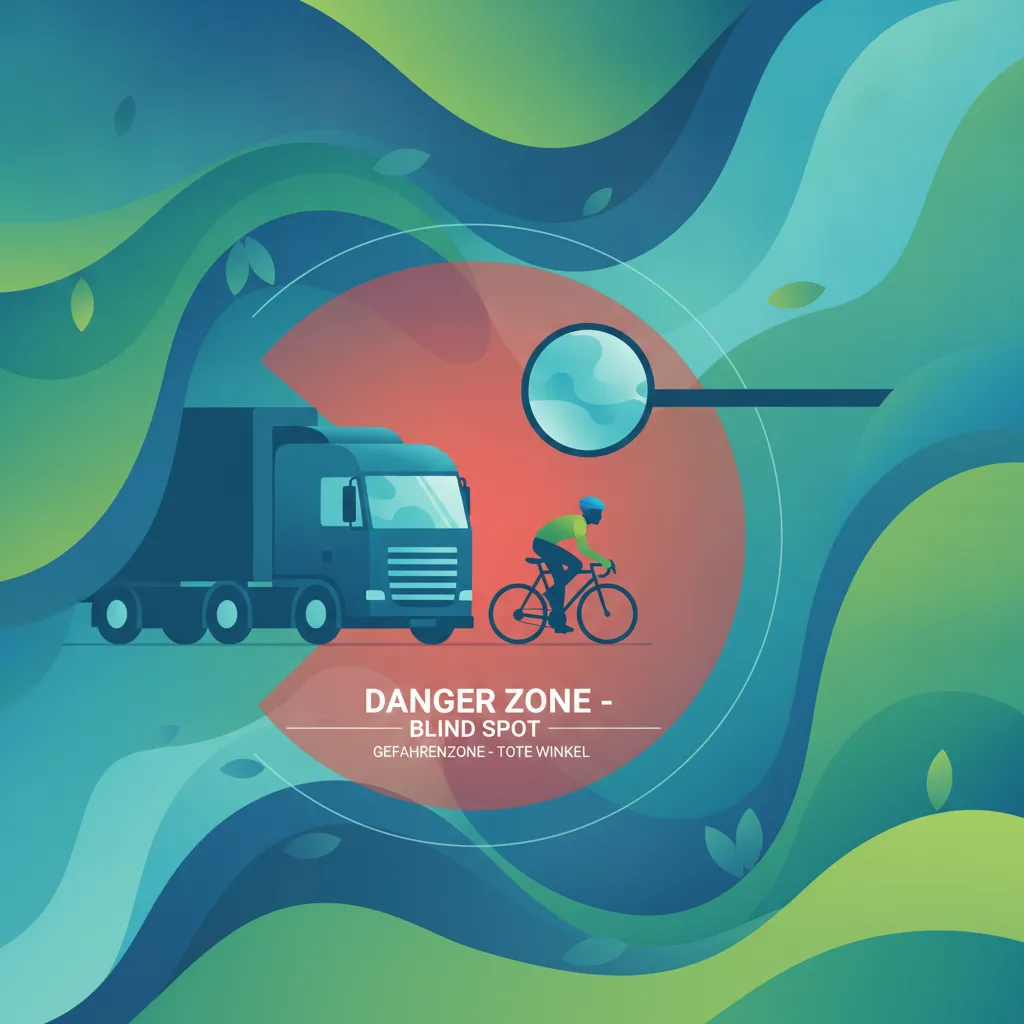
This lesson highlights the significant danger posed by the large blind spots of HGVs and buses. You will learn to identify these hazardous areas around a vehicle where the driver cannot see you. The lesson provides practical strategies for staying out of these zones, especially at junctions and when overtaking, to prevent serious accidents.

This lesson focuses on the unique risks faced by motorcyclists and scooter riders when sharing the road with HGVs. It explains how their small size and rapid acceleration can make them difficult to see, especially when they are filtering through traffic. Drivers will learn the importance of making extra mirror checks—'look twice'—before any maneuver and giving motorcyclists extra space, as they can be more affected by wind buffeting and road surface imperfections.

This lesson provides essential techniques for safe riding during nighttime and in poor visibility conditions like dawn or dusk. It covers the correct use of your headlamp's main and dipped beams, strategies for reducing glare from oncoming traffic, and the critical role of reflective clothing. You will also learn how to identify common nighttime hazards and manage fatigue, ensuring you can navigate British roads safely after dark while complying with all relevant road rules.
This lesson explains the function of warning signs, which are mostly triangular and alert road users to potential dangers ahead. You will learn to identify signs for bends, junctions, slippery surfaces, and other hazards particularly relevant to motorcyclists. Acting on these warnings allows a rider to adjust speed and position proactively, enhancing safety.
Find clear answers to common questions learners have about Understanding Rider Vulnerability. Learn how the lesson is structured, which driving theory objectives it supports, and how it fits into the overall learning path of units and curriculum progression in Great Britain. These explanations help you understand key concepts, lesson flow, and exam focused study goals.
Unlike car drivers, motorcyclists have no physical shell to protect them in a collision. Furthermore, their smaller profile makes them harder for other road users to see, increasing the likelihood of accidents at junctions and in heavy traffic.
The exam often uses multiple-choice questions focusing on your ability to anticipate hazards and your understanding of vehicle blind spots. You may be asked how to position your bike to remain visible to drivers waiting at junctions.
The key is anticipation. Always assume you haven't been seen by other drivers, keep your distance, maintain a clear view, and adjust your speed and lane position to provide yourself with an escape route if a hazard develops.
Yes, the Highway Code emphasizes that all road users should take extra care when pulling out at junctions, as it is often difficult to judge a motorcycle's speed and distance. As a rider, your responsibility is to position yourself to be as visible as possible to these drivers.
Dive into our comprehensive question bank to find exactly what you need for your Great Britain theory test. Use our advanced filters to pinpoint specific subjects or test your knowledge on challenging areas, ensuring you're fully prepared for success.