
This lesson breaks down the critical components of stopping distance, an essential concept for every motorcycle rider in Great Britain. You will learn to differentiate between thinking distance and braking distance, understanding how speed and road conditions impact your ability to stop safely in a range of scenarios.
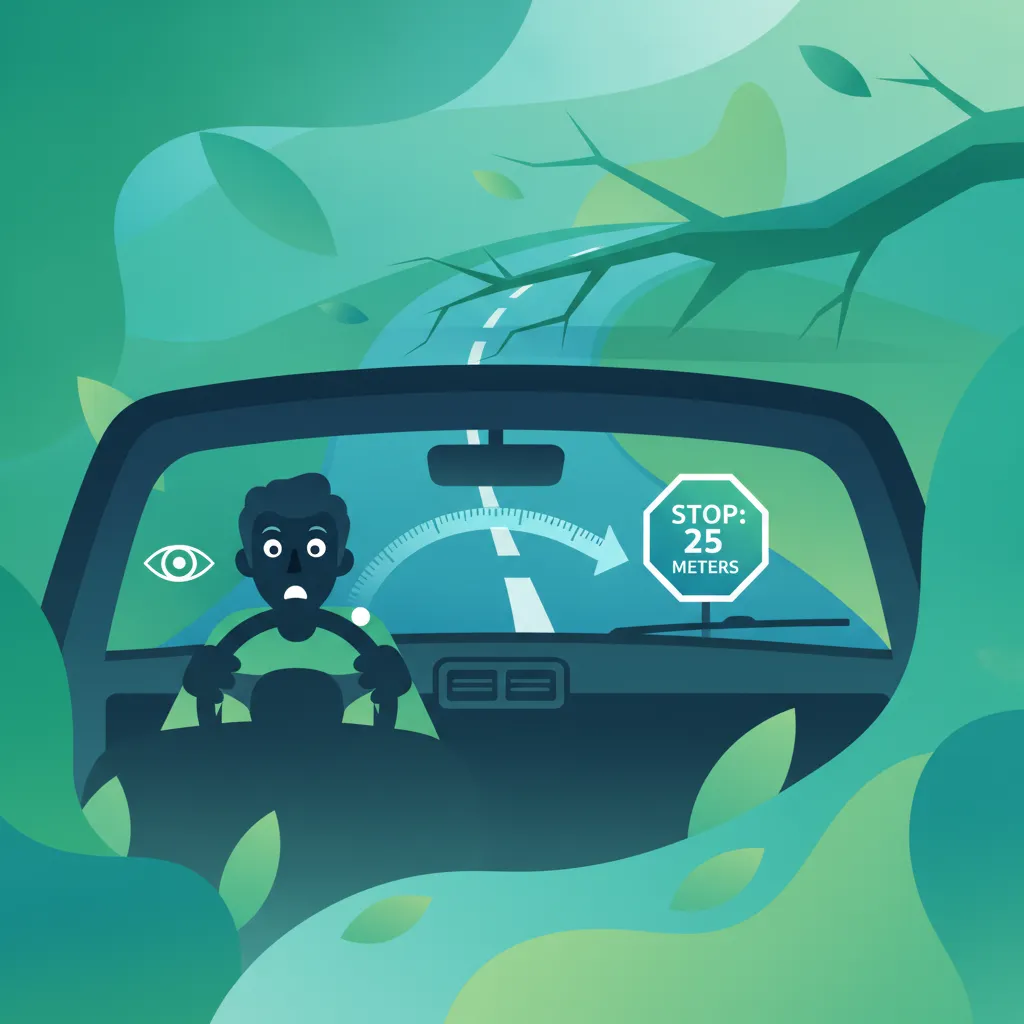
Lesson content overview
Anticipating how long it takes to bring your motorcycle to a complete stop is one of the most fundamental skills for any rider. This knowledge is not just theoretical; it's a critical component of hazard perception, maintaining safe following distances, and ultimately, avoiding collisions. The ability to accurately judge stopping distances under various conditions is essential for safe riding on the roads of Great Britain, aligning with DVSA standards for the Motorcycle Theory Course (A, A1, A2).
This lesson will break down the concept of total stopping distance, exploring the distinct phases involved and the numerous factors that can influence them. By understanding these dynamics, you'll be better equipped to make informed decisions about your speed, positioning, and braking technique, ensuring you remain a safe and responsible rider.
When you need to stop your motorcycle, the entire process isn't instantaneous. It involves two distinct phases: the time it takes for you to react to a hazard and the time it takes for your motorcycle's brakes to bring you to a halt. These two phases combine to form your total stopping distance.
Total stopping distance (TSD) is the complete distance your motorcycle travels from the moment you first perceive a hazard until it comes to a complete standstill. It is the sum of two primary components: thinking distance (TD) and braking distance (BD). TSD provides a comprehensive metric to gauge the safe following gap you should maintain behind other vehicles and objects. Riders must continuously assess TSD for any speed and condition scenario, particularly before maneuvers like overtaking or when approaching junctions.
Thinking distance (TD) is the distance your motorcycle travels from the exact moment you perceive a hazard until you physically begin to apply the brakes. This interval accounts for your human cognitive processing time and neuromuscular reaction. For an attentive, sober rider, average reaction time is approximately 1.0 to 1.5 seconds. During this time, your brain processes the information, decides on a course of action, and sends the signals to your muscles to initiate braking.
The distance covered during this reaction time directly relates to your speed. For instance, at 30 mph (approximately 48 km/h), your thinking distance is roughly 9 metres (30 feet). At 60 mph (approximately 96 km/h), this distance doubles to around 18 metres (60 feet) because you cover twice the distance in the same amount of reaction time. It's crucial not to underestimate thinking distance, especially at higher speeds where it becomes a significant contributor to your total stopping distance.
Several factors can significantly lengthen a rider's thinking distance, thereby increasing the total stopping distance required. These include:
Always be aware of your physical and mental state before and during a ride. If you feel fatigued or distracted, take a break or postpone your journey. A clear mind directly contributes to a shorter thinking distance.
Braking distance (BD) is the distance your motorcycle covers from the moment you physically apply the brakes until it comes to a complete stop. This phase is governed by the principles of physics, primarily the kinetic energy of your moving motorcycle and the frictional forces at play between your tyres and the road surface. Braking dissipates the motorcycle's kinetic energy, converting it into heat and sound through friction.
At 60 mph (96 km/h) on a dry asphalt road, the typical braking distance for a motorcycle is approximately 43 metres (140 feet). However, this distance can fluctuate significantly based on various conditions. While front brakes generally provide the majority of deceleration, proper front and rear brake coordination is vital for stability and efficient stopping, as detailed in related lessons.
The friction coefficient (μ) is a crucial factor determining how effectively your motorcycle can brake. It represents the ratio of the frictional force between your tyres and the road surface to the normal load (weight) pressing the tyres onto the road. A higher friction coefficient means more grip and, therefore, a shorter braking distance.
Typical friction coefficient values vary widely depending on the surface:
A lower friction coefficient dramatically lengthens braking distance because the maximum achievable deceleration is reduced. This is why a wet road requires a significantly longer distance to stop than a dry one. Understanding these values helps riders anticipate braking limitations in different environments.
The dimensionless ratio describing the resistance to motion between two surfaces in contact. A higher coefficient indicates greater friction and grip.
Deceleration capability (often denoted as 'a' for acceleration, but negative in this context) refers to the maximum negative acceleration your motorcycle can achieve under ideal braking. It is quantified as a = μ × g, where 'g' is the acceleration due to gravity (approximately 9.81 m/s²). For instance, with a friction coefficient (μ) of 0.8 on dry asphalt, the theoretical maximum deceleration is around 7.8 m/s². However, real-world practical deceleration might be slightly lower due to factors like brake fade, tyre slip, and rider technique.
Riders need to appreciate the limits of their motorcycle's braking capacity. While applying more brake pressure might seem to lead to faster stopping, excessive pressure can cause a wheel to lock, which actually reduces the friction coefficient (from static to kinetic) and can lead to a skid, extending braking distance and causing loss of control. DVSA guidelines expect riders to modulate braking to prevent wheel lock and maintain control.
Perhaps the most critical factor influencing total stopping distance is speed. The relationship between speed and stopping distance is not linear; it is exponential, making speed management paramount for rider safety.
The relationship between speed and stopping distance can be understood as follows:
This quadratic relationship for braking distance is why even small increases in speed lead to disproportionately longer stopping distances. For example, reducing your speed from 60 mph to 30 mph on a dry road can reduce your braking distance from approximately 43 metres (140 feet) to around 11 metres (35 feet) – a substantial 75% reduction.
Underestimating how dramatically braking distance grows with speed is a common mistake among road users. Speed limits represent the legal maximum, but they are not always a safe optimum. Riders must adjust their speed based on the prevailing conditions to ensure they can stop safely within the visible road ahead.
Always ride at a speed that allows you to stop safely within the distance you can see to be clear. This is a fundamental principle of defensive riding.
On motorways or faster roads, the exponential increase in braking distance means much larger following distances are required. At 70 mph (112 km/h) on a wet surface, your total stopping distance could be over 80 metres (270 feet) – equivalent to roughly 20 car lengths – significantly longer than the dry equivalent.
Beyond rider reaction and speed, various environmental and vehicle-specific factors play a significant role in determining your total stopping distance. Being aware of these elements allows for proactive adjustment of your riding strategy.
The characteristics of the road surface are primary determinants of the friction coefficient and, consequently, your braking distance.
Riders must constantly scan the road ahead for changes in surface conditions and be prepared to modulate their braking and reduce speed accordingly. Unexpected reductions in friction are a common cause of motorcycle accidents.
Atmospheric conditions directly modify surface friction and can also affect rider perception, further impacting total stopping distance.
On wet or icy roads, the Highway Code advises significantly increasing your following distance, often recommending a 4-second gap in the wet and up to a 10-second gap on ice. This provides a crucial safety buffer.
The weight your motorcycle carries—including the rider, a passenger, luggage, or panniers—can affect stopping distances.
Riders must always consider the total load when determining safe speeds and following distances, particularly on unfamiliar roads or adverse conditions.
Anti-Lock Braking Systems (ABS), if fitted to your motorcycle, are a significant safety feature. ABS modulates brake pressure rapidly to prevent the wheels from locking up during heavy braking. By preventing wheel lock, ABS helps maintain the maximum static friction between the tyres and the road, which is generally higher than kinetic (sliding) friction.
Benefits of ABS:
While ABS is a powerful aid, it does not eliminate the need for proper braking technique or the rider's duty to maintain a safe following distance. It assists, but does not replace, rider skill and judgment.
Understanding the physics of stopping distances is crucial, but equally important is adhering to the legal framework and adopting safe riding practices that stem from this knowledge.
The Driver and Vehicle Standards Agency (DVSA) and the Highway Code provide clear guidance and mandatory rules regarding safe stopping.
Many accidents occur due to misjudging stopping distances. Here are common errors and their consequences:
| Violation | Why Wrong | Correct Behaviour | Consequence |
|---|---|---|---|
| Overtaking with insufficient TSD | Underestimates braking distance, especially at higher speeds, leading to insufficient space to stop if the overtaken vehicle slows or other hazards appear. | Calculate TSD for current speed and conditions; ensure a significant safety margin before committing to an overtake. | Near-miss or collision; possible prosecution for dangerous driving. |
| Braking on a wet surface without reducing speed | Fails to account for reduced friction, leading to a much longer braking distance than anticipated. | Reduce speed proportionally to the expected reduction in friction (e.g., 20-30% in rain) before braking. | Skid, loss of control, potential crash. |
| Relying solely on ABS in icy conditions | ABS cannot compensate for extremely low friction; while it prevents wheel lock, stopping distance will still be very long. | Reduce speed far below the limit before entering icy areas; use extremely gentle, progressive braking and avoid abrupt maneuvers. | Slide despite ABS, possible collision due to extended stopping distance. |
| Riding with impaired perception (e.g., after alcohol) | Alcohol, drugs, or severe fatigue dramatically increase thinking distance. | Avoid riding when impaired. If unavoidable, significantly increase following distance and reduce speed. | Legal prosecution, increased crash risk, severe injuries. |
| Carrying heavy load without adjusting speed | Increases inertia and affects weight distribution during braking, extending braking distance. | Adjust speed downward for additional load, especially on low-grip surfaces or when descending hills. | Extended stopping distance, possible rear-wheel lock or instability. |
| Ignoring slippery road markings when wet | Painted lines can become very slick when wet, unexpectedly reducing grip. | Adjust speed and avoid braking or leaning heavily on painted road markings during rain. | Unexpected loss of grip, skidding, fall. |
Safe riders continuously adapt their stopping distance judgment based on the context of their environment:
Understanding and correctly applying the principles of total stopping distance is a cornerstone of safe motorcycle riding. It allows you to anticipate hazards, make informed decisions, and react effectively to unforeseen circumstances on the road.
By internalising these concepts and consistently applying them in your riding, you will develop a stronger sense of hazard perception, maintain safer gaps, and significantly reduce your risk of collisions, becoming a more confident and responsible motorcyclist.
Explore all units and lessons included in this driving theory course.
Lesson content overview
Explore all units and lessons included in this driving theory course.
Explore search topics learners often look for when studying Understanding Braking Distance and Stops. These topics reflect common questions about road rules, driving situations, safety guidance, and lesson level theory preparation for learners in Great Britain.
Browse additional driving theory lessons that cover connected traffic rules, road signs, and common driving situations related to this topic. Improve your understanding of how different rules interact across everyday traffic scenarios.
Explore the key factors that influence your total stopping distance on a motorcycle, including speed, road conditions, weather, and rider fatigue. Learn how these elements impact thinking and braking distances for safer riding in the UK.
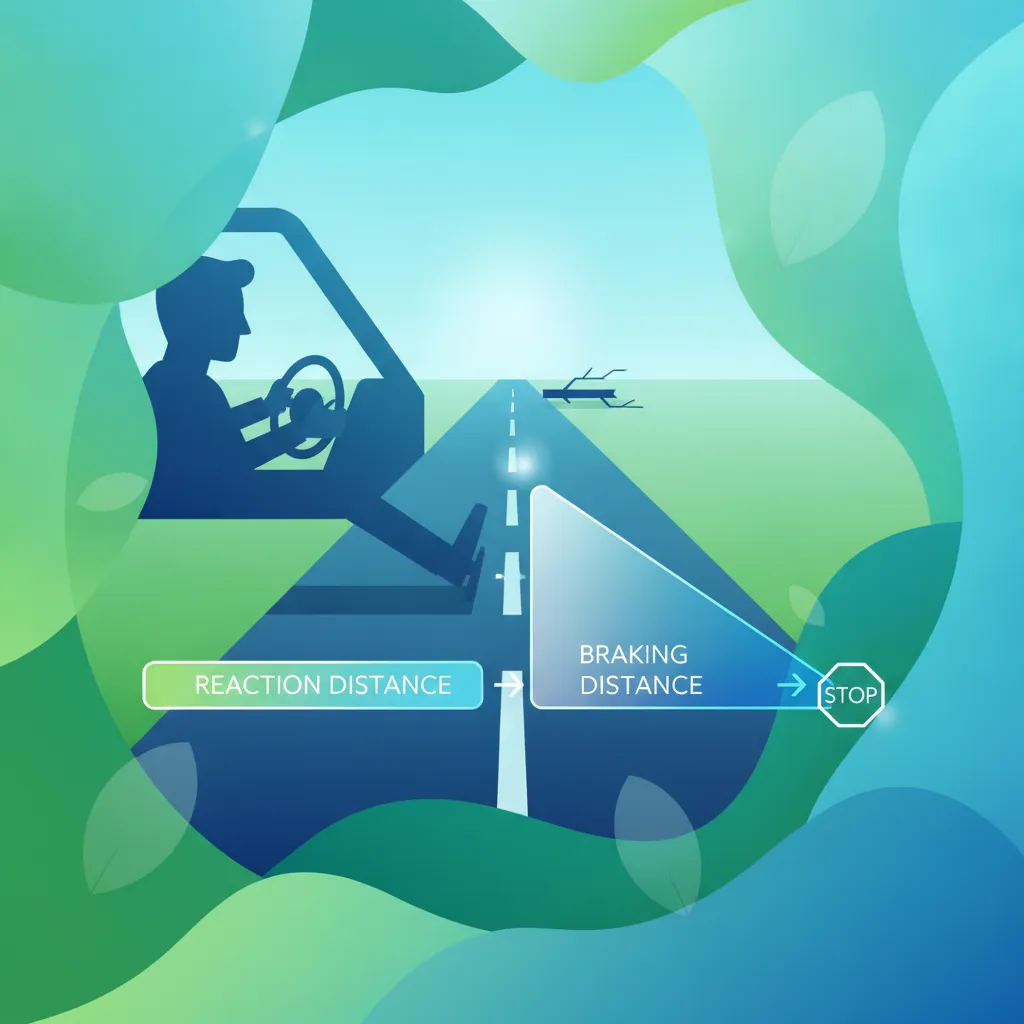
This lesson breaks down the concept of stopping distance into its two key parts. Thinking distance is the distance travelled while you react to a hazard, while braking distance is the distance the car travels after you apply the brakes. You will learn how speed, weather, and vehicle condition influence these distances.
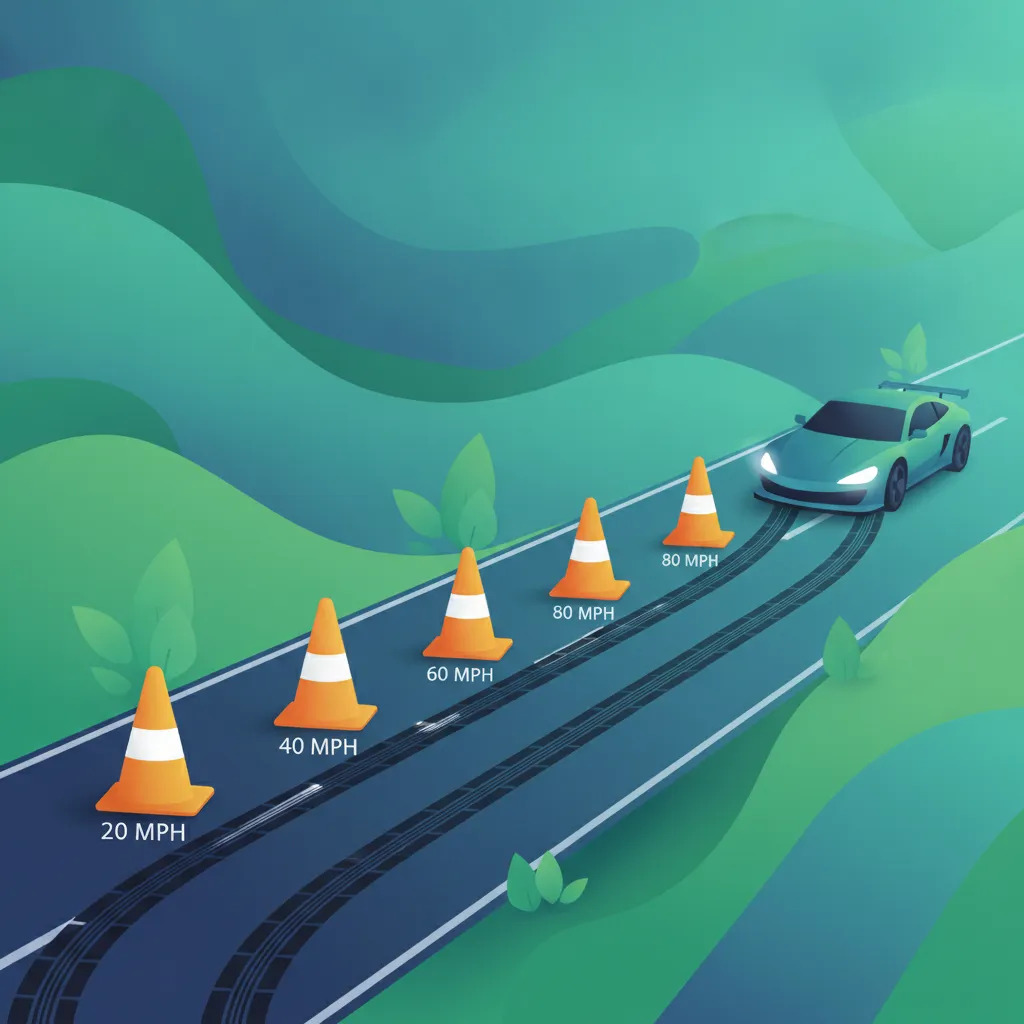
This lesson focuses on effective braking strategies, including brake modulation, ABS usage, and emergency braking procedures for large vehicles. Learners will understand how to calculate total stopping distances, taking into account perception-reaction time, vehicle mass, speed, and road conditions. The discussion also reviews brake wear, proper maintenance, and the effect of passenger load on braking performance. Mastering these concepts is crucial for reducing stopping distances and increasing safety margins.
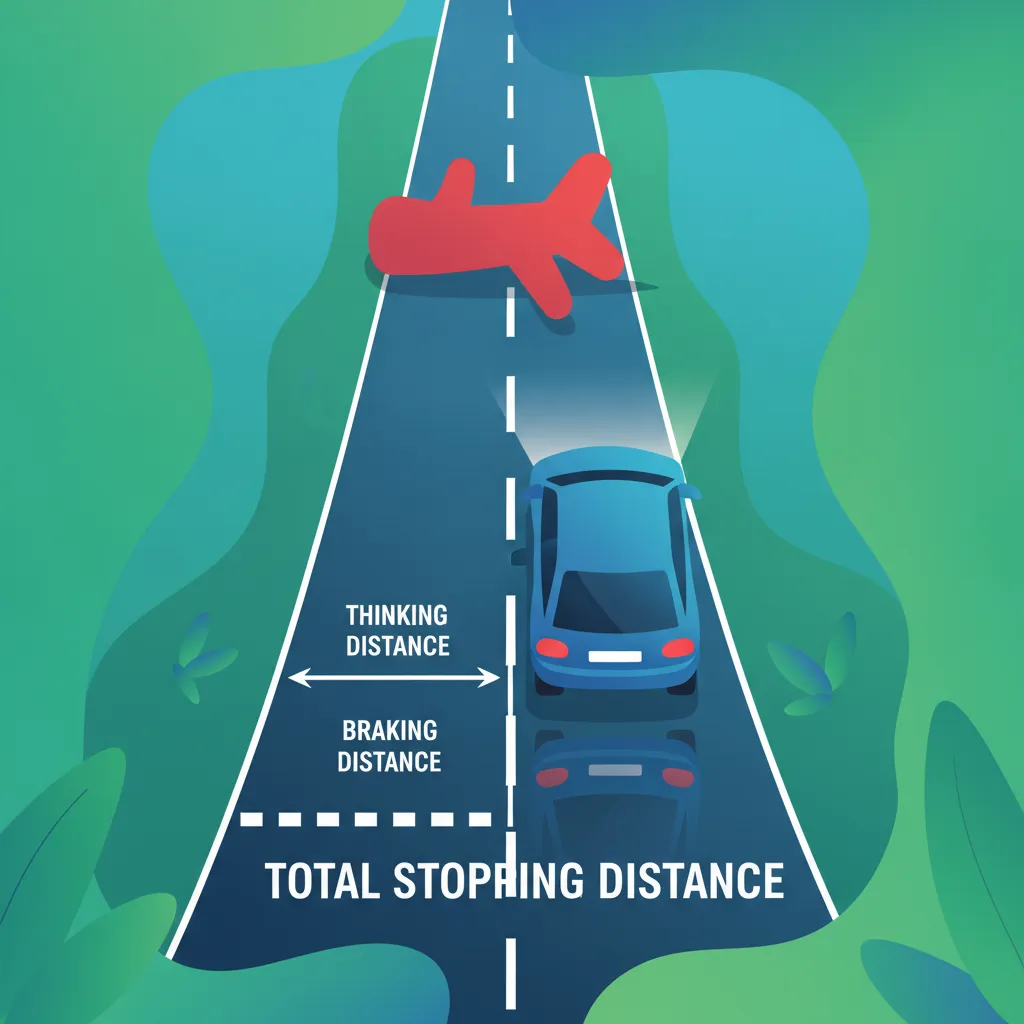
This lesson provides a detailed examination of the powerful air braking systems found on most heavy goods vehicles, including ABS and EBS. It explains the components of total stopping distance—thinking distance and braking distance—and how they are affected by speed, mass, and road conditions. The concept of brake fade, its causes, and prevention methods are also covered, along with the importance of regular brake inspections for maintaining safety.
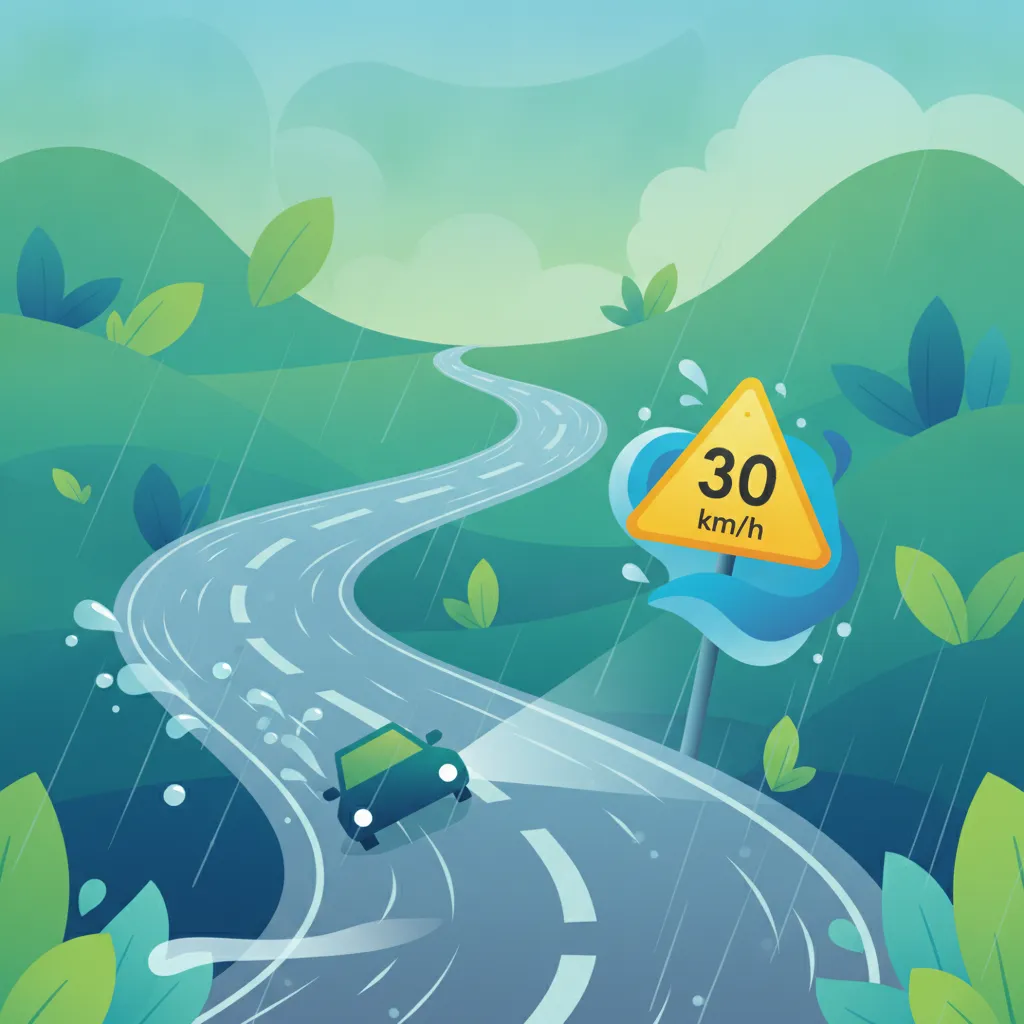
This lesson explains that safe driving often requires travelling at a speed lower than the legal limit. It covers how to adjust your speed for adverse conditions such as rain, which can double your stopping distance, or fog, which severely reduces visibility. The goal is to always be able to stop safely in the distance you can see to be clear.
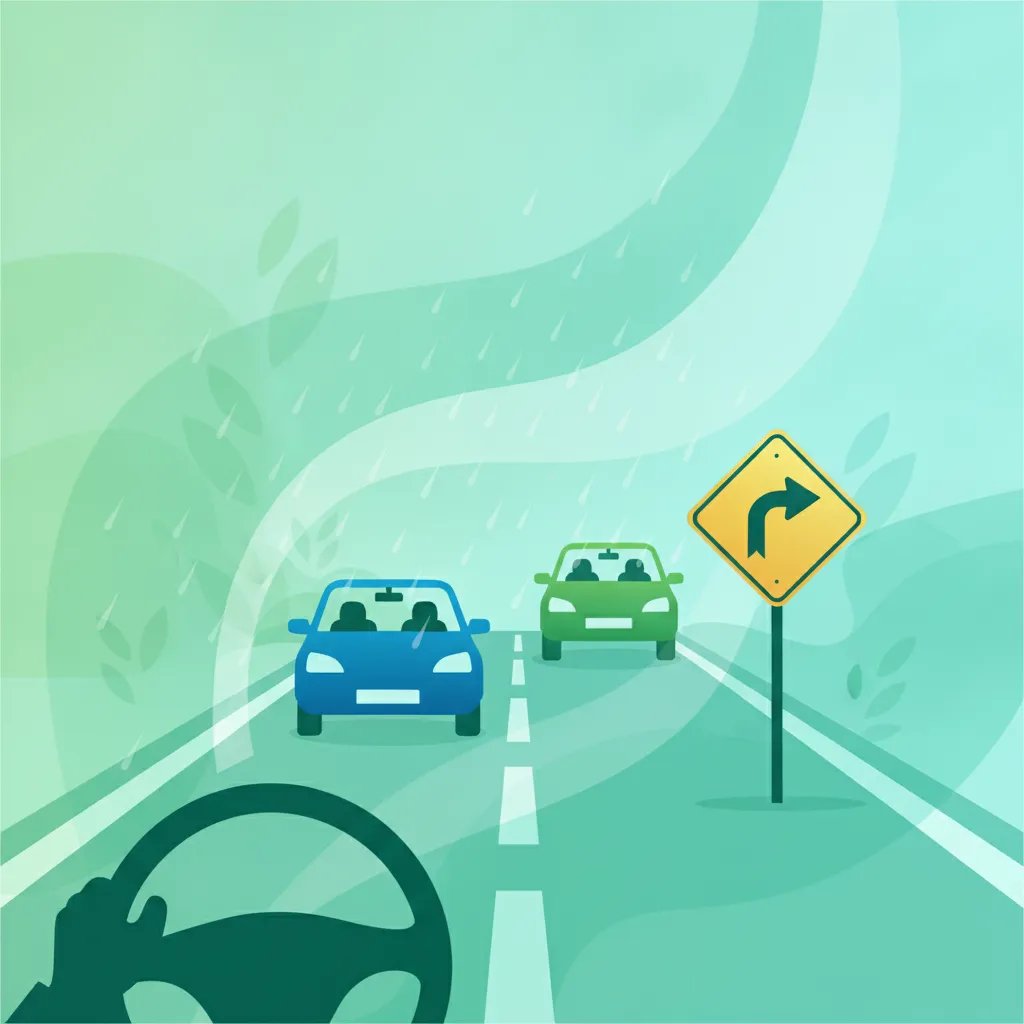
This lesson teaches a practical method for maintaining a safe distance from the vehicle in front. The 'two-second rule' provides a minimum time gap in dry conditions, which should be doubled to four seconds in the wet. Adhering to this rule gives you sufficient time to react and brake safely if the vehicle ahead stops suddenly.

This lesson clarifies the roles of the front and rear brakes on a motorcycle. You will learn that the front brake is responsible for around 70-80% of your braking power due to weight transfer during deceleration. The lesson teaches how to apply both brakes progressively and smoothly for controlled, stable stops in various situations.

This lesson teaches effective and safe braking techniques tailored for mopeds and light quadricycles. It explains how to balance the use of the front and rear brakes for optimal stopping power and stability. You will learn the concept of progressive braking for smooth, controlled stops and the correct procedure for performing an emergency stop while maintaining control and minimizing skid risk, a critical skill for every rider.
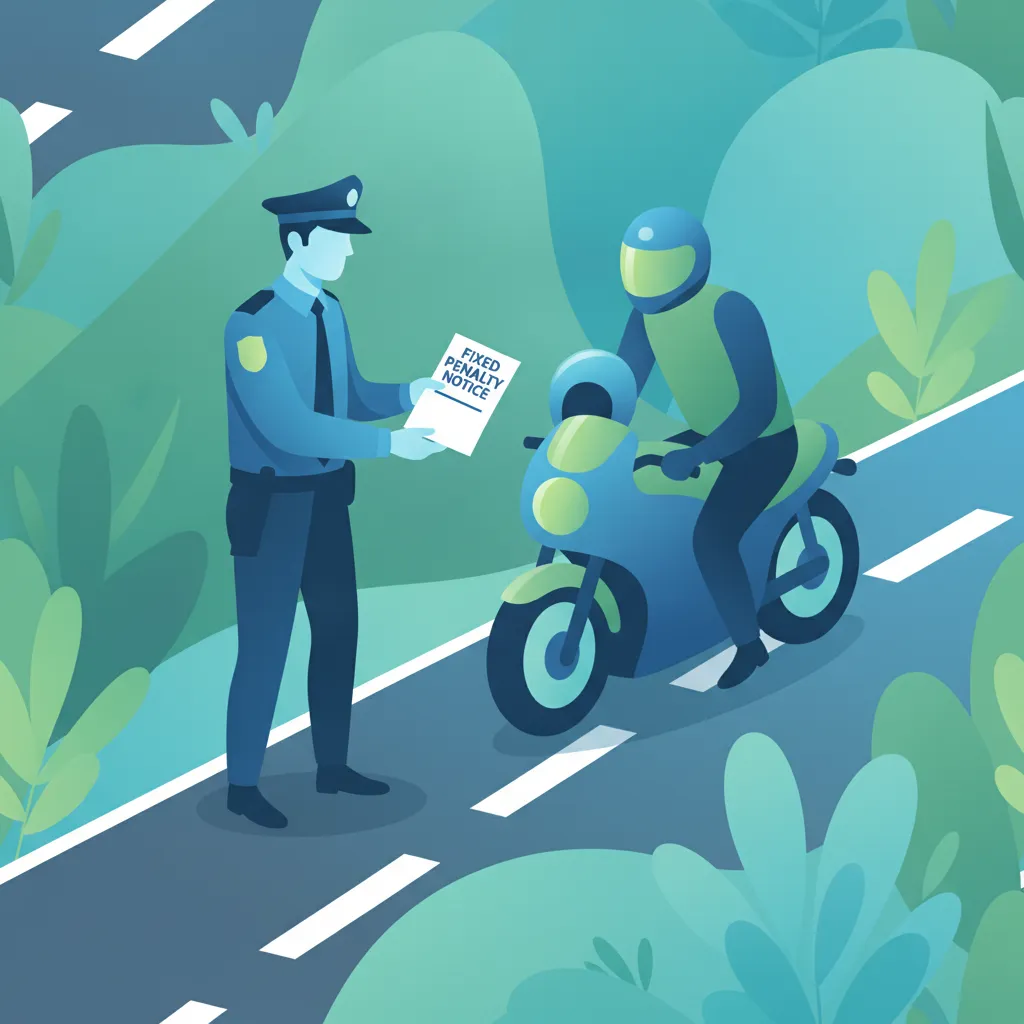
This lesson explains the legal consequences of committing traffic offences. It covers how the penalty points system works, the number of points for common offences like speeding, and how accumulating 12 points can lead to disqualification under the 'totting-up' procedure. You will also learn about the specific rules for new riders, who can have their licence revoked with just 6 points.
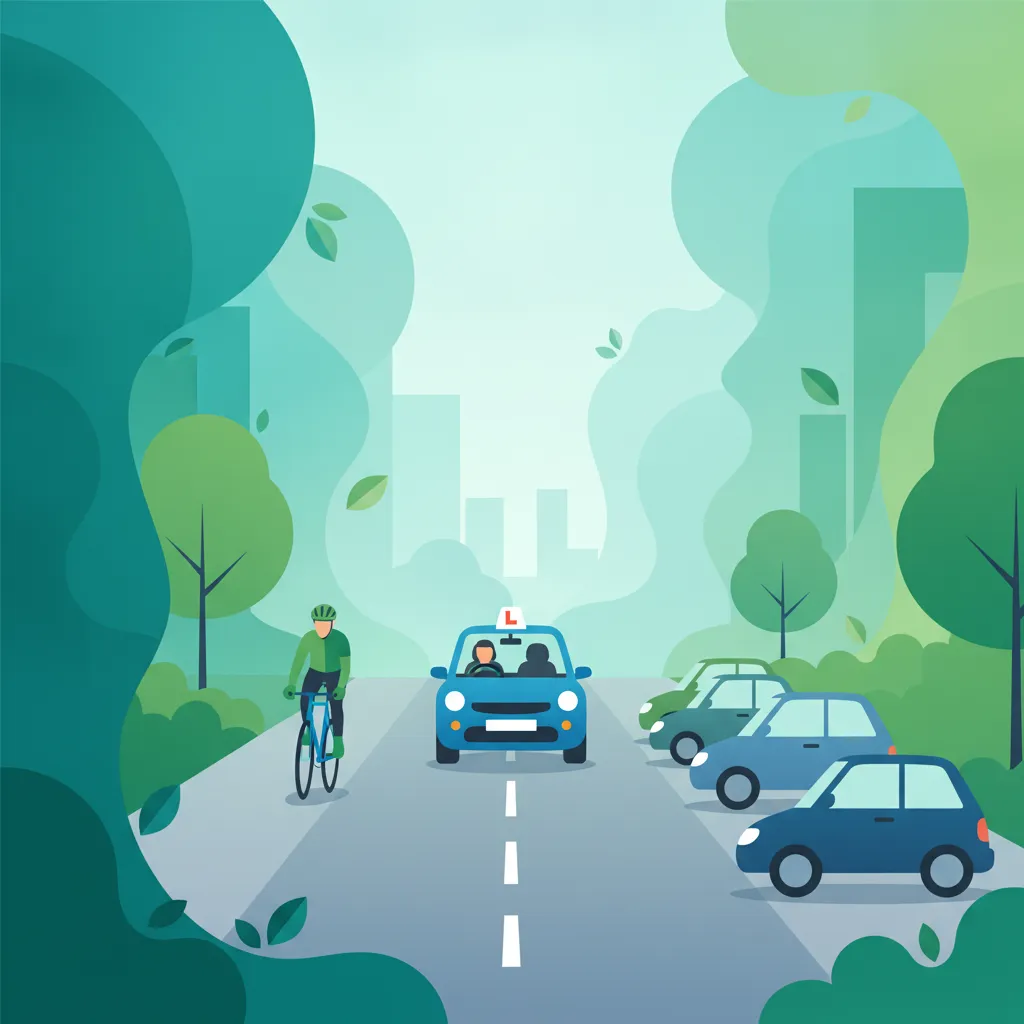
This lesson introduces the concept of managing the space around you as a primary defensive riding technique. It explains how to apply the two-second rule to maintain a safe following distance, and how to adjust this for poor weather. You will also learn the importance of maintaining adequate space from parked cars and other roadside objects.
This lesson explains the function of warning signs, which are mostly triangular and alert road users to potential dangers ahead. You will learn to identify signs for bends, junctions, slippery surfaces, and other hazards particularly relevant to motorcyclists. Acting on these warnings allows a rider to adjust speed and position proactively, enhancing safety.
Understand the physics behind motorcycle stopping distances, focusing on the exponential relationship between speed and braking distance. Learn how kinetic energy and road friction dictate how quickly you can stop on UK roads.
This lesson breaks down the concept of stopping distance into its two key parts. Thinking distance is the distance travelled while you react to a hazard, while braking distance is the distance the car travels after you apply the brakes. You will learn how speed, weather, and vehicle condition influence these distances.
This lesson clarifies the roles of the front and rear brakes on a motorcycle. You will learn that the front brake is responsible for around 70-80% of your braking power due to weight transfer during deceleration. The lesson teaches how to apply both brakes progressively and smoothly for controlled, stable stops in various situations.
This lesson teaches effective and safe braking techniques tailored for mopeds and light quadricycles. It explains how to balance the use of the front and rear brakes for optimal stopping power and stability. You will learn the concept of progressive braking for smooth, controlled stops and the correct procedure for performing an emergency stop while maintaining control and minimizing skid risk, a critical skill for every rider.
Find clear answers to common questions learners have about Understanding Braking Distance and Stops. Learn how the lesson is structured, which driving theory objectives it supports, and how it fits into the overall learning path of units and curriculum progression in Great Britain. These explanations help you understand key concepts, lesson flow, and exam focused study goals.
Thinking distance is the distance your motorcycle travels during the time it takes for you to notice a hazard and react. Braking distance is the distance covered once the brakes are applied until the bike comes to a full stop.
In the UK theory test, you must remember that doubling your speed results in a four-fold increase in your braking distance. This is due to the physics of kinetic energy increasing by the square of the speed.
Yes. Wet, icy, or loose road surfaces significantly increase your braking distance because they reduce the friction available for your tyres. You should increase your following distance by at least double in wet conditions.
While Anti-lock Braking Systems (ABS) prevent wheel lock-up, the theory test focuses on the fundamental concepts of stopping distance related to speed and road conditions, which remain constant regardless of ABS technology.
Dive into our comprehensive question bank to find exactly what you need for your Great Britain theory test. Use our advanced filters to pinpoint specific subjects or test your knowledge on challenging areas, ensuring you're fully prepared for success.