
This lesson explores how your road positioning directly impacts your safety as an AM licence rider. By learning where to place your vehicle, you will increase your visibility to other drivers, reduce blind spot risks, and better prepare for the hazard perception and theory test.
Lesson content overview
Riding a moped or light quadricycle on Great Britain's roads requires not only skill and adherence to traffic laws but also a proactive approach to safety. One of the most fundamental aspects of defensive riding is strategic road positioning, specifically designed to maximise your visibility to other road users and minimise collision risks. This lesson, part of your Great Britain AM Licence Theory Course, will provide an exhaustive conceptual framework for ensuring you are seen, understood, and safe on every journey.
Effective rider positioning is a cornerstone of defensive riding. It involves placing your moped or light quadricycle strategically within your lane to ensure that you remain visible within the sightlines of surrounding drivers, particularly those in larger vehicles. The rationale behind this strategy is rooted in both human perception and the physics of vehicle interaction. Human visual perception has limitations, and proper positioning actively reduces the likelihood of a rider being hidden from a driver's field of view. Additionally, smart lateral positioning can mitigate the impact of aerodynamic turbulence generated by larger vehicles, which might otherwise affect your stability and visibility.
The Highway Code explicitly mandates riders to position themselves so they can be seen, reflecting a policy of mutual visibility that underscores road safety. Understanding and applying these principles is crucial for preparing for your UK Category AM theory test and for building a strong foundation for safe riding practices throughout your time on the road.
The straight, unobstructed visual path between a driver’s eye and the rider’s body or reflective equipment.
Line of Sight (LOS) is a fundamental concept in road safety. It represents the direct, clear visual path that must exist between a driver and you, the rider. Conversely, it also refers to your ability to see other road users clearly. If a driver cannot see you, they cannot react to your presence, leading to potential hazards. This principle extends beyond merely being "on the road"; it demands active positioning to ensure you are within the cone of visibility that extends from a driver’s eyes.
LOS can be categorised into two main types:
Practically, riders must consciously stay within the areas where drivers are likely to look. A common misunderstanding is assuming that riding on the far left or right edge of a lane automatically provides good LOS. In reality, drivers often focus on the central area of the road, and you may become less visible if you are too far to the periphery. Highway Code Rule 65 explicitly states that riders must position themselves so they can be seen, reinforcing the importance of maintaining a clear LOS.
Blind spots are areas around any vehicle where the driver's view is obstructed, either directly or via mirrors. For riders of mopeds and light quadricycles, understanding and actively avoiding these zones is paramount, as you are much smaller and can easily disappear from a driver's perception. Positioning yourself outside these geometric areas prevents collisions that occur when drivers are simply unaware of your presence.
Large vehicles, such as lorries, buses, and large vans, have significantly larger and more numerous blind spots than cars. These zones are often categorised to help riders understand where the danger lies:
The practical meaning of blind spot avoidance is simple: do not ride within these zones for longer than a split second. If you find yourself in a blind spot, you must immediately adjust your position. The safest strategy is to either accelerate and move ahead of the vehicle, establishing a clear line of sight, or slow down and drop back, maintaining a safe following distance.
Never assume a driver has seen you, even if you can see their vehicle in your mirrors. Always strive to make yourself visible to them.
Highway Code Rule 71 specifically advises riders to avoid riding in the blind spots of large vehicles. Believing it is safe to ride near a large vehicle just because its mirrors are visible to you is a dangerous misconception; you may see the mirrors, but the driver may not see you within them, particularly if you are close to the vehicle's side.
A predictable trajectory means maintaining a riding line that other road users can anticipate based on lane markings, traffic flow, and typical vehicle movements. This principle is vital because unpredictability is a major cause of accidents. When you ride predictably, you make it easier for other drivers to understand your intentions, plan their actions, and react safely.
Riders should avoid unnecessary weaving through traffic or making abrupt changes in lateral position without warning. Such actions increase the likelihood of surprise interactions, leading to sudden braking or swerving from other road users. Highway Code Rule 274 advises giving clear signals and avoiding unnecessary lane changes, reinforcing the importance of predictable riding.
The active creation and preservation of lateral and longitudinal gaps around the rider, providing a reaction zone for unexpected events.
Space cushion management is the active creation and maintenance of safe distances around your moped or light quadricycle. This cushion provides you and other road users with critical reaction time to respond to unexpected hazards. It's about having enough room to brake, swerve, or adjust your speed safely.
Space cushions are considered in two dimensions:
Tailgating, or riding too close to the vehicle in front, is a common error that severely compromises your longitudinal cushion. While some riders might mistakenly believe that close proximity to a larger vehicle offers some "visibility benefit," it actually reduces your reaction time and puts you directly in the vehicle's rear blind spot.
Effective visual communication complements good positioning by explicitly conveying your intentions to other road users. It reduces ambiguity and allows others to anticipate your actions, thereby enhancing overall safety.
Making eye contact with other drivers, especially at junctions or when interacting with cross-traffic, is a powerful form of visual communication. It confirms that you have seen them and, crucially, that they have seen you. If you cannot make eye contact, you should assume the driver has not seen you and proceed with extreme caution, being prepared to take evasive action. This mutual acknowledgement is critical for avoiding misinterpretations of priority, which often lead to accidents.
A shoulder check (or head check) is a quick glance over your shoulder to verify your line of sight and confirm the absence of vehicles in your blind spot immediately before changing direction or lane position. It's an indispensable habit for every rider.
Signal Your Intentions: Before any lateral movement, activate your indicators well in advance.
Check Mirrors: Scan your mirrors to assess traffic behind and to your sides.
Perform the Head Check: Quickly turn your head to glance over the shoulder in the direction you intend to move. This covers the areas your mirrors cannot.
Move Safely: Once you have confirmed the path is clear, execute your manoeuvre smoothly and gradually.
Relying solely on mirrors or hand signals without verifying LOS via a shoulder check is a significant risk. Highway Code Rule 292 states that signals should be shown well in advance and be clear, reinforcing the need for comprehensive visual communication.
The Highway Code provides explicit rules governing rider behaviour and positioning, designed to enhance safety for all road users, particularly vulnerable ones like moped and light quadricycle riders.
Statement: Riders must position themselves so that they can be seen by, and can see, other road users. Applicability: This rule applies in all road situations, at all times of day and night. Rationale: It underpins the principle of mutual awareness, which is fundamental to preventing collisions. If you are not seen, you are at risk. Application Example:
Statement: Riders should avoid riding in the blind spots of large vehicles, especially lorries and buses. Applicability: This rule is crucial whenever you are riding near vehicles that are significantly larger or have large overhangs (e.g., typically vehicles over 2,500 kg). Rationale: Drivers of large vehicles have severely restricted fields of vision. Staying in a blind spot means you are effectively invisible to them, drastically increasing the risk of a collision if they change lanes or manoeuvre. Application Example:
Statement: Riders must maintain a stopping distance that allows safe braking in all conditions. Applicability: This rule applies at all speeds and on all types of roads. The recommended minimum is a 2-second gap in good conditions, extending to 3-4 seconds or more in wet or icy weather. Rationale: Maintaining an adequate gap provides crucial reaction time and space to avoid rear-end collisions if the vehicle ahead brakes suddenly. It also ensures you have space to manoeuvre around hazards. Application Example:
Statement: Riders should ride in the centre of their chosen lane and only deviate when required for safety, to pass, or to turn. Applicability: This applies to all multi-lane roads and whenever a clear lane is available. Rationale: Consistent lane positioning makes your presence and intentions predictable to other road users, reducing confusion and the likelihood of sudden manoeuvres. Application Example:
Statement: Riders must show signals well in advance, clearly, and for long enough to inform other road users of their intentions. Applicability: Before any change in direction, speed, or lane position. Rationale: Clear and timely signalling allows other drivers ample time to react to your planned movements, contributing to a smoother and safer flow of traffic. Application Example:
Even experienced riders can sometimes fall into habits that compromise their visibility and safety. Recognising these common errors is the first step towards correcting them and becoming a safer rider.
Riding in the rear blind spot of a lorry for more than a few seconds.
Riding too close to the kerb or parked cars in bright daylight.
Sudden lane change without signalling or a shoulder check.
Tailgating a bus during stop-and-go traffic.
Failing to make eye contact at a junction, especially with turning vehicles.
Optimal rider positioning is not static; it must be dynamically adjusted based on prevailing conditions and the surrounding environment.
Let's consider how these principles apply in everyday riding situations:
Scenario 1: Urban Road – Approaching a Junction with Parked Cars
Scenario 2: A-Road – Overtaking a Large Van in Wet Weather
Strategic rider positioning is a fundamental skill for any moped or light quadricycle rider in Great Britain. By consistently applying the principles discussed, you significantly enhance your visibility to other road users, reduce the likelihood of being involved in a collision, and contribute to a safer road environment for everyone.
Remember these core tenets:
By integrating these strategies into every ride, you will not only be better prepared for your AM Licence theory test but, more importantly, you will cultivate a lifelong habit of defensive riding that prioritises your safety and the safety of others on British roads.
Explore all units and lessons included in this driving theory course.
Lesson content overview
Explore all units and lessons included in this driving theory course.
Explore search topics learners often look for when studying Rider Positioning for Maximum Visibility. These topics reflect common questions about road rules, driving situations, safety guidance, and lesson level theory preparation for learners in Great Britain.
Browse additional driving theory lessons that cover connected traffic rules, road signs, and common driving situations related to this topic. Improve your understanding of how different rules interact across everyday traffic scenarios.
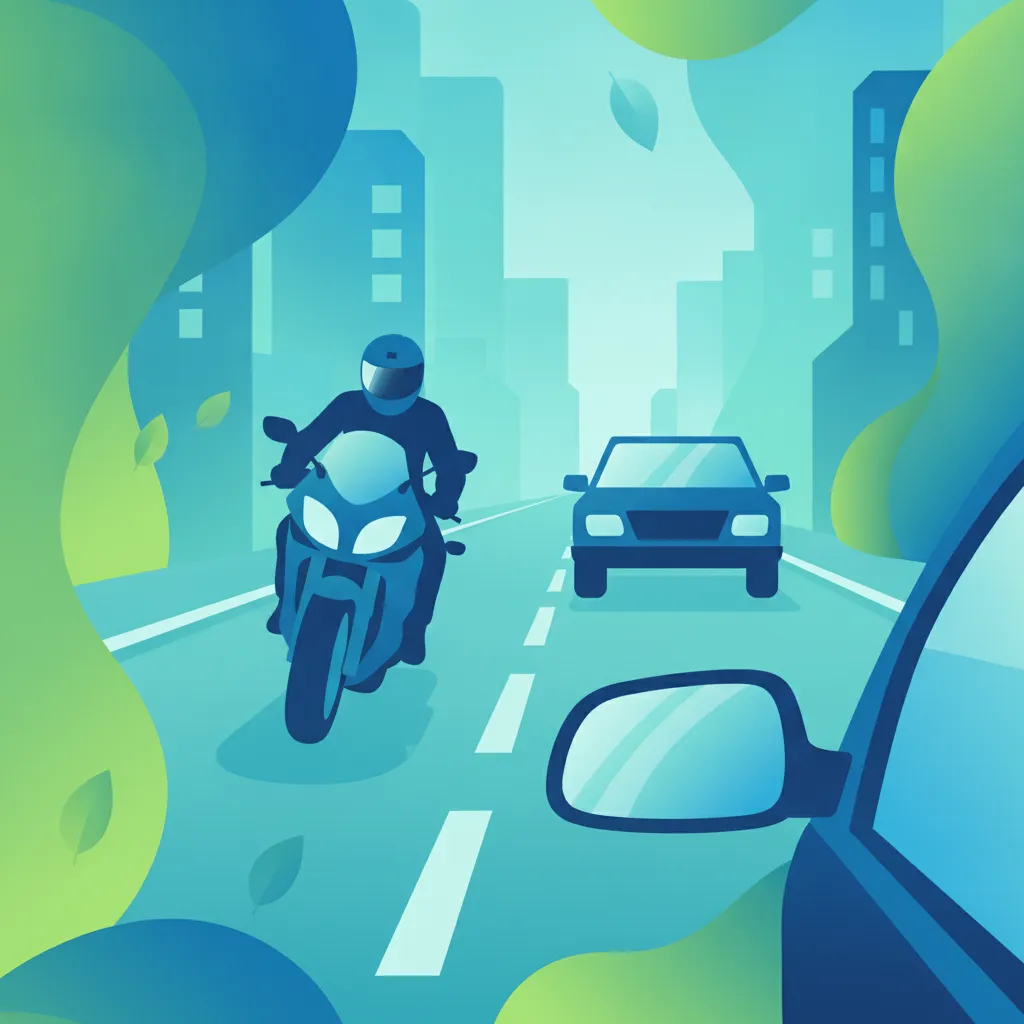
Learn to identify and avoid blind spots around large vehicles. This lesson focuses on strategic rider positioning to maximise your visibility and safety on Great Britain's roads, crucial for your AM licence theory.
This lesson teaches riders how to be constantly aware of blind spots to prevent collisions. You will learn the importance of the 'lifesaver' shoulder check before changing position, turning, or moving off. The content emphasizes active visual scanning of the road ahead and around you, along with developing the judgment needed to accurately assess traffic speed and create safe gaps for maneuvering in various traffic situations.

This lesson focuses on the critical skill of positioning your AM vehicle safely in relation to larger vehicles and roadside hazards like parked cars. You will learn to identify and stay out of the extensive blind spots of lorries and buses, especially at junctions. The content also provides strategies for maintaining a safe 'space cushion' around your vehicle and navigating narrow gaps or filtering in traffic without compromising your safety.
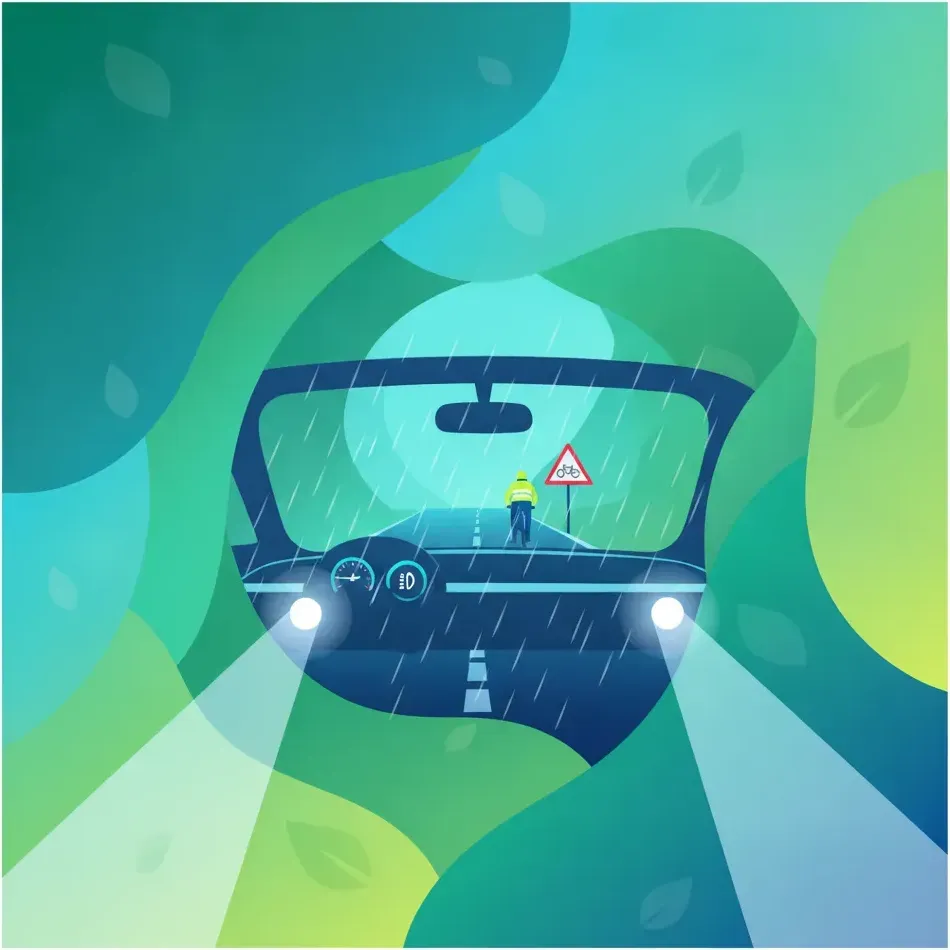
This lesson details the legal requirements and best practices for using lights and reflectors on your moped or light quadricycle. It covers the correct operation of headlamps, daytime running lights, brake lights, and indicators to communicate your intentions clearly to other road users. You will also learn how to enhance your visibility further with strategically placed reflectors and reflective tape, ensuring you remain conspicuous in low-light conditions and compliant with British lighting regulations.

This lesson focuses on the challenges of riding when you can't see or be seen clearly. It covers the correct use of lights in fog, rain, and at night to maximize both your vision and your visibility to others. You will learn why reducing speed is critical, how to use reflective clothing effectively, and strategies for dealing with the glare from other vehicles' headlights to ensure you can navigate safely in all lighting conditions.

This lesson teaches effective and safe braking techniques tailored for mopeds and light quadricycles. It explains how to balance the use of the front and rear brakes for optimal stopping power and stability. You will learn the concept of progressive braking for smooth, controlled stops and the correct procedure for performing an emergency stop while maintaining control and minimizing skid risk, a critical skill for every rider.
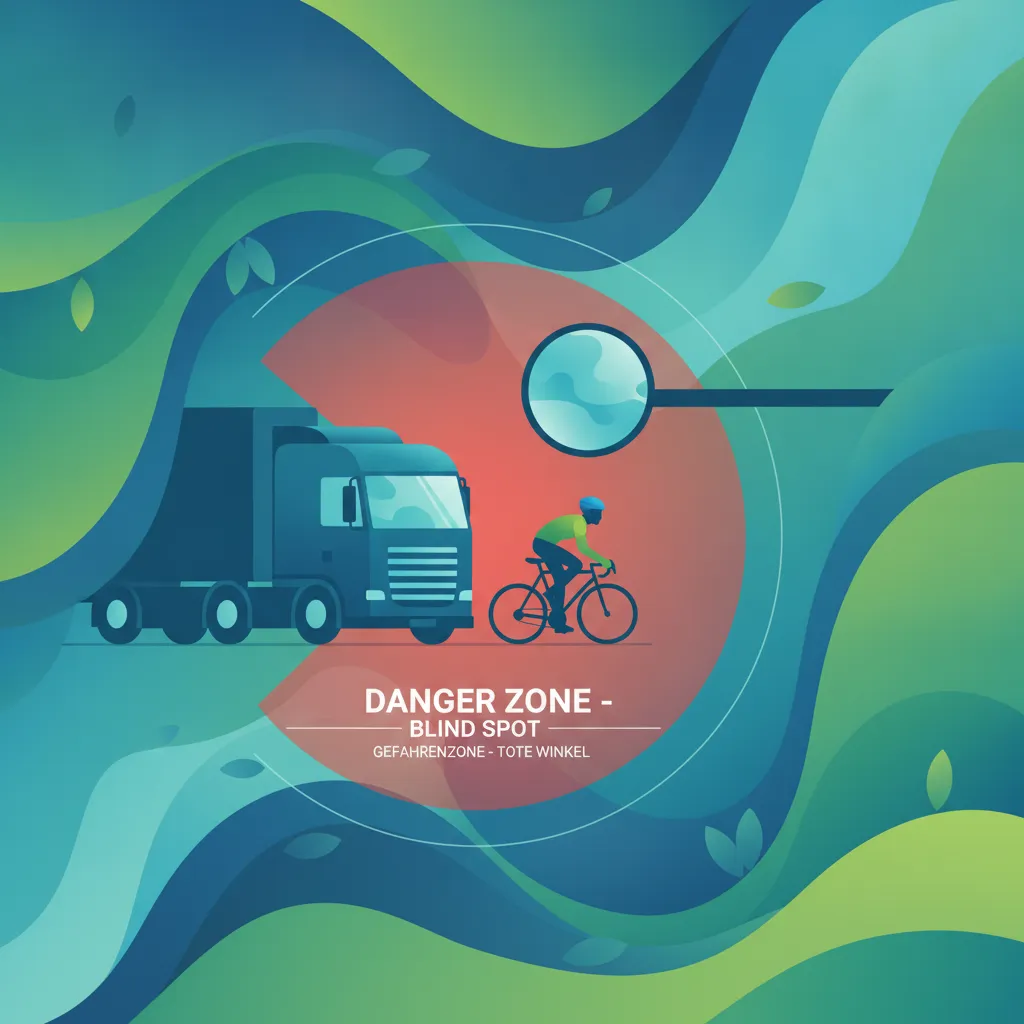
This lesson highlights the significant danger posed by the large blind spots of HGVs and buses. You will learn to identify these hazardous areas around a vehicle where the driver cannot see you. The lesson provides practical strategies for staying out of these zones, especially at junctions and when overtaking, to prevent serious accidents.

This lesson provides essential techniques for safe riding during nighttime and in poor visibility conditions like dawn or dusk. It covers the correct use of your headlamp's main and dipped beams, strategies for reducing glare from oncoming traffic, and the critical role of reflective clothing. You will also learn how to identify common nighttime hazards and manage fatigue, ensuring you can navigate British roads safely after dark while complying with all relevant road rules.

This lesson explains how to adapt your driving around different vehicles. You will learn to look out for motorcyclists, who are often hard to see, especially at junctions. It also covers the challenges of sharing the road with large vehicles, such as their extended blind spots, wider turning circles, and the wind turbulence they can create.
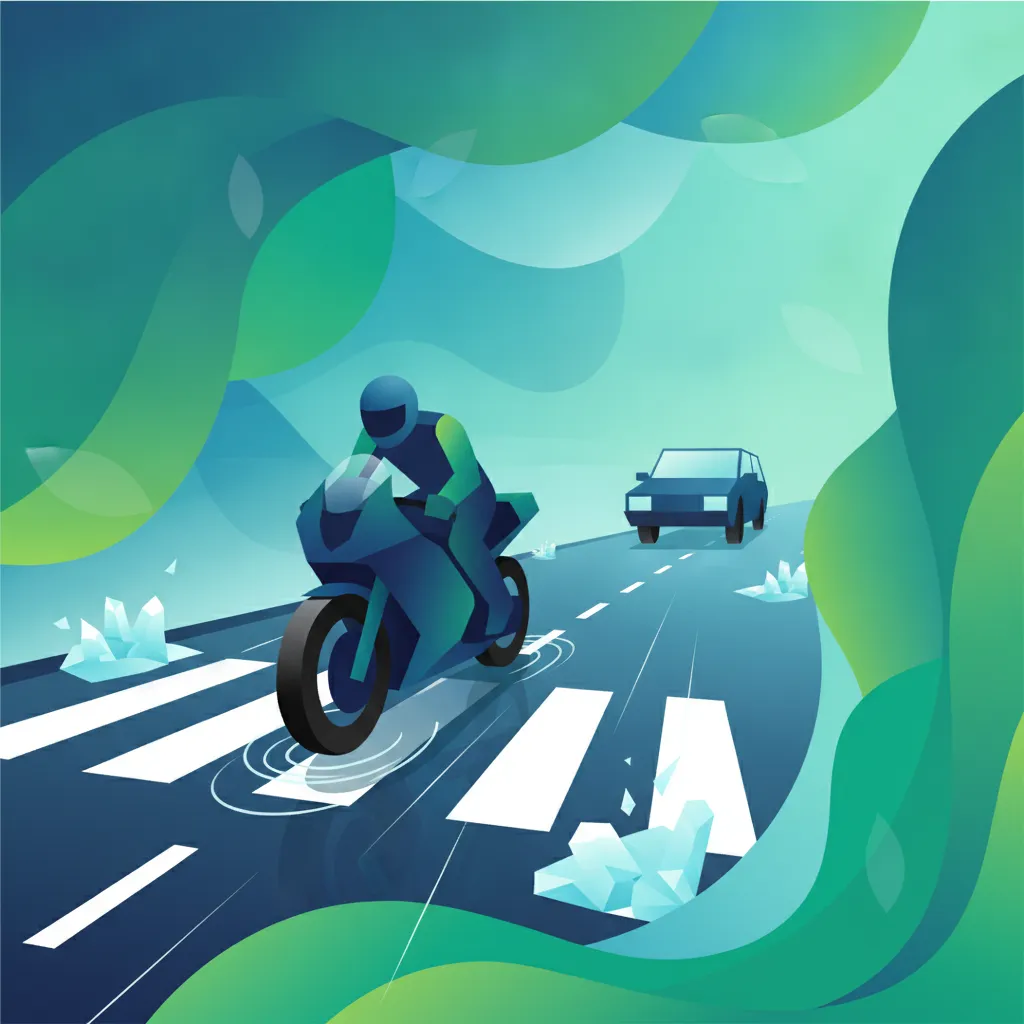
This lesson provides essential advice for riding safely in adverse weather conditions that reduce tyre grip. You will learn how rain, ice, and wet leaves dramatically increase braking distances and affect handling. Key strategies covered include reducing speed, increasing following distances, making smooth control inputs, and anticipating slippery areas to maintain control and avoid skidding on compromised road surfaces.

A key aspect of motorcycle safety is being seen by others. This lesson teaches techniques to increase your conspicuity on the road. Topics include the strategic use of high-visibility and reflective clothing, correct use of headlights and daytime running lights, and adopting lane positions that place you in the direct line of sight of other drivers.
Discover how to maintain a predictable riding path and manage your space cushion effectively. Essential theory for AM licence holders on communicating intentions and ensuring safety in traffic on UK roads.

This lesson introduces the concept of managing the space around you as a primary defensive riding technique. It explains how to apply the two-second rule to maintain a safe following distance, and how to adjust this for poor weather. You will also learn the importance of maintaining adequate space from parked cars and other roadside objects.
This lesson teaches effective and safe braking techniques tailored for mopeds and light quadricycles. It explains how to balance the use of the front and rear brakes for optimal stopping power and stability. You will learn the concept of progressive braking for smooth, controlled stops and the correct procedure for performing an emergency stop while maintaining control and minimizing skid risk, a critical skill for every rider.
This lesson teaches riders how to be constantly aware of blind spots to prevent collisions. You will learn the importance of the 'lifesaver' shoulder check before changing position, turning, or moving off. The content emphasizes active visual scanning of the road ahead and around you, along with developing the judgment needed to accurately assess traffic speed and create safe gaps for maneuvering in various traffic situations.
This lesson provides essential advice for riding safely in adverse weather conditions that reduce tyre grip. You will learn how rain, ice, and wet leaves dramatically increase braking distances and affect handling. Key strategies covered include reducing speed, increasing following distances, making smooth control inputs, and anticipating slippery areas to maintain control and avoid skidding on compromised road surfaces.

This lesson provides foundational knowledge on managing the speed of a low-powered vehicle through smooth and deliberate control inputs. You will learn proper throttle control for gradual acceleration, how to decelerate using both brakes and engine braking, and the principles of timely gear selection. Achieving smoothness in these actions is key to maintaining balance, traction, and overall stability, particularly in challenging conditions.

This lesson explores the crucial concept of tyre grip and how it is affected by various road surfaces and conditions. You will learn to identify potential hazards that reduce traction, such as wet leaves, manhole covers, oil spills, and loose gravel. The content provides strategies for adjusting your riding style, including speed and lean angle, to safely navigate these surfaces and prevent a loss of control.
This lesson focuses on the challenges of riding when you can't see or be seen clearly. It covers the correct use of lights in fog, rain, and at night to maximize both your vision and your visibility to others. You will learn why reducing speed is critical, how to use reflective clothing effectively, and strategies for dealing with the glare from other vehicles' headlights to ensure you can navigate safely in all lighting conditions.
This lesson focuses on the critical skill of positioning your AM vehicle safely in relation to larger vehicles and roadside hazards like parked cars. You will learn to identify and stay out of the extensive blind spots of lorries and buses, especially at junctions. The content also provides strategies for maintaining a safe 'space cushion' around your vehicle and navigating narrow gaps or filtering in traffic without compromising your safety.
This lesson focuses on developing advanced hazard perception skills and using them to manage your speed proactively. You will learn to constantly scan the road for potential dangers, anticipate the actions of other road users, and adjust your speed to give yourself more time to react. This defensive approach to speed management is fundamental to staying safe and avoiding emergency situations while riding in complex traffic environments.

Defensive riding is the practice of actively anticipating potential hazards rather than just reacting to them. This lesson teaches you how to scan for clues, predict the actions of other road users, and position yourself to avoid trouble. By developing strong anticipation skills, you can significantly reduce your risk of being taken by surprise on the road.
Find clear answers to common questions learners have about Rider Positioning for Maximum Visibility. Learn how the lesson is structured, which driving theory objectives it supports, and how it fits into the overall learning path of units and curriculum progression in Great Britain. These explanations help you understand key concepts, lesson flow, and exam focused study goals.
Because your vehicle is smaller than a car, you can easily be hidden from other drivers. Correct positioning ensures you are visible in mirrors and directly in front of drivers, significantly reducing the risk of being overlooked at junctions.
Avoid riding alongside or just behind larger vehicles for extended periods. If you cannot see the driver's face in their door mirror, they likely cannot see you; stay either well behind or ahead of them when safe.
Filtering requires extreme caution. You must ensure you are visible and that the movement is safe. This lesson teaches you that positioning is about being predictable, which means avoiding sudden maneuvers through gaps where you might disappear from view.
Yes, while the theory test is computer-based, many questions on hazard perception and road safety scenarios require you to understand the principles of defensive positioning to select the correct answer.
Dive into our comprehensive question bank to find exactly what you need for your Great Britain theory test. Use our advanced filters to pinpoint specific subjects or test your knowledge on challenging areas, ensuring you're fully prepared for success.