
Defensive riding is the cornerstone of safe motorcycling in Great Britain, teaching you to anticipate hazards rather than simply reacting to them. This lesson builds on your knowledge of traffic rules and road markings by showing you how to scan the environment and predict the behaviour of other road users. You will develop the analytical skills necessary to navigate complex traffic situations safely and confidently during your test and beyond.

Lesson content overview
Defensive riding is a crucial skill for every motorcyclist, transforming your approach from merely reacting to actively anticipating potential hazards. This comprehensive lesson, part of the Great Britain Motorcycle Theory Course (A, A1, A2), will equip you with the mental and practical tools to identify risks early, predict the actions of other road users, and position yourself strategically to avoid dangerous situations. By mastering these anticipation skills, you can significantly reduce your risk of being caught by surprise on the road, enhancing your safety and the safety of others.
This lesson builds upon foundational knowledge from earlier sections, including rider responsibility, protective equipment, road signs, lane positioning, braking, and cornering. It integrates these elements into a proactive framework for safe motorcycle operation.
Defensive riding is built upon several interconnected principles that work together to create a robust safety strategy. Understanding these principles is key to developing a proactive mindset on the road.
Scanning involves a continuous, systematic visual sweep of the entire road environment. This includes using your forward vision, peripheral vision, mirrors, and head movements. The purpose is to acquire early information about potential hazards, allowing you more time to react and make smoother, more controlled manoeuvres. Effective scanning increases your warning time, which is vital for motorcycle safety.
Hazard anticipation is the cognitive process of predicting the likely future actions of other road users and identifying potential dangers before they fully manifest. By interpreting early cues and understanding common patterns, you can transition from being a reactive rider to a proactive one. This skill enables you to take early corrective actions, such as gently adjusting speed or position, rather than being forced into abrupt emergency responses.
Space management means consciously maintaining a safe distance and buffer zone around your motorcycle from surrounding vehicles and obstacles. Its purpose is to preserve vital manoeuvring room and prevent your motorcycle from being trapped in another vehicle's blind spot. Effective space management influences your lane choice, creates opportunities for safe overtaking, and ensures you have escape routes in emergencies.
Positioning refers to selecting the most advantageous lane position relative to traffic flow, road geometry, and potential hazards. The goal is to maximise your visibility to other road users while enhancing your own stability and safety. Your chosen position affects your exposure to blind spots, the safety of your lane changes, and how well you are seen by others.
Speed adjustment is the practice of modulating your speed to accurately reflect current road conditions, traffic density, and the proximity of potential hazards. This ensures you always have adequate stopping distance and reaction capability. Speed directly links to your braking distances, cornering grip, and overall rider workload, so intelligent speed choice is fundamental to control.
Predictive decision-making involves choosing your actions based on an assessment of anticipated future road states, rather than just reacting to the immediate present. This proactive approach helps reduce the need for abrupt manoeuvres that could destabilise your motorcycle or surprise other road users. It supports smoother cornering, safer overtaking, and the avoidance of sudden lane changes.
Risk assessment is the ongoing process of evaluating the severity and likelihood of identified hazards. This allows you to prioritise your actions and allocate your attention effectively, focusing on the most critical threats. It determines whether you can maintain your current course, need to adjust your strategy, or must withdraw from a hazardous situation entirely.
The avoidance margin is the minimum safe gap required for a rider to execute an evasive manoeuvre without losing control or stability. This critical buffer guarantees your ability to escape hazards while preserving your motorcycle's balance. It directly influences your choices regarding lane positioning and appropriate speed.
Effective defensive riding integrates these core principles through specific techniques and understandings.
Scanning is not just looking; it's a systematic pattern of eye and head movements designed to gather maximum information.
Hazard anticipation is the ability to interpret subtle cues and predict potential dangers before they become immediate threats.
Maintaining a safe buffer zone is critical for a motorcyclist's survival on the road.
The 2-Second Rule (and 4-Second Rule): To measure your following distance, pick a fixed point on the road (e.g., a lamppost). When the vehicle ahead passes that point, start counting "one thousand one, one thousand two." If you reach the point before finishing your count, you're too close. Double this count (to "one thousand four") in wet weather, low visibility, or on challenging surfaces.
Your position in the lane is a powerful tool for safety.
Appropriate speed is fundamental to maintaining control and safety.
This concept moves beyond simply anticipating to actively choosing actions based on future possibilities.
Riding involves constant decision-making under uncertainty, making risk assessment paramount.
Your avoidance margin is your personal safety buffer.
Defensive riding principles are often enshrined in law and the Highway Code, making them not just good practice but legal requirements.
| Regulation / Rule | Statement | Applicability | Legal Status | Rationale |
|---|---|---|---|---|
| Highway Code 166 | Riders must maintain a safe distance from the vehicle ahead to allow for adequate braking. | All road types, normal conditions. | Mandatory | Prevents rear-end collisions and provides stopping time. |
| Highway Code 167 | Riders must keep a distance of at least 2 seconds from the vehicle ahead; increase to 4 seconds in adverse weather. | Good weather vs. rain, fog, snow, ice. | Mandatory | Accounts for longer stopping distances and reduced grip in poor conditions. |
| Highway Code 168 | Riders should position themselves to give maximum visibility to other road users, especially at junctions. | Junctions, roundabouts, intersections. | Mandatory | Reduces surprise, potential conflict, and improves rider safety. |
| Road Vehicles (C&U) Regulations 1986, Reg. 12 | Riders must ensure mirrors are correctly adjusted and used before overtaking or changing lanes. | Before any lane change/overtake. | Mandatory | Ensures awareness of surrounding traffic, especially in blind spots. |
| Highway Code 163 | Overtaking must only be done when it is safe and legal, with clear visibility and space, and without causing inconvenience to others. | Overtaking any vehicle. | Mandatory | Prevents unsafe passes and collisions with oncoming traffic or vehicles turning. |
| Road Traffic Act 1988, Section 19 | Riders must ride with reasonable skill and care, taking all relevant hazards into account (Duty of Care). | Throughout all riding activities. | Mandatory (Statutory Duty) | Establishes a legal standard of riding to avoid negligence and harm. |
| Highway Code 160 | Riders must be aware of blind spots of other road users and avoid staying in them for extended periods. | All road scenarios, especially near larger vehicles. | Mandatory | Prevents other users from being unaware of the rider during manoeuvres. |
Understanding common mistakes helps you avoid them. These often stem from a lapse in applying defensive riding principles.
Following Too Closely in Wet Conditions:
Riding in the Blind Spot of a Large Vehicle:
Filtering Where Not Permitted or Unsafe:
Late Hazard Anticipation at a Blind Bend:
Overtaking on a Curved Road with Limited Visibility:
Riding Too Near the Kerb on Wet Asphalt:
Failure to Adjust Speed for Reduced Visibility (e.g., Fog):
Neglecting Mirror and Head Checks before Lane Changes in Urban Traffic:
Defensive riding is not a rigid set of rules; it's a dynamic process that adapts to changing conditions.
| Condition | Principle Variation | Reasoning |
|---|---|---|
| Adverse Weather (rain, snow, ice) | Significantly increase following distance, reduce speed, shift to centre lane, avoid road markings (often slippery). | Traction loss leads to much longer braking distances; ground spray reduces visibility. |
| Night Riding | Use dipped beam (not high beam in traffic); avoid glare; stay out of blind spots; maintain wider lateral clearance. | Reduced visual detection by others; increased glare for oncoming traffic; heightened need for visibility of self. |
| Urban Congestion | Frequent scanning; early lane changes; positioning for frequent stops; anticipate frequent stops and cyclist movements. | Higher density of road users, more unpredictable manoeuvres, and frequent door openings. |
| Motorway Riding | Maintain higher speed with proportionally larger avoidance margins; prioritize lane centre; beware of large vehicle blind spots and high-speed differentials. | Higher kinetic energy means longer stopping distances; reduced reaction times; larger blind spots from other vehicles. |
| Residential Areas | Reduce speed significantly; anticipate children and pets; use mirrors regularly to detect parked vehicle openings. | High presence of vulnerable non-motorised road users and unpredictable behaviour. |
| Heavy Load or Towing | Reduce speed, increase following distance, avoid rapid direction changes and sharp braking. | Altered handling dynamics and significantly increased braking distances. |
| Motorcycle with Low Ground Clearance | Increased scanning for road surface anomalies (potholes, debris); avoid uneven surfaces; position to maintain stability. | Low ground clearance can lead to damage or instability on rough terrain. |
| Interacting with Vulnerable Road Users | Position to increase visibility, maintain longer lateral clearance (1m from cyclists, 1.5m from horses where possible). | Vulnerable users have limited protection; increased risk of severe injury in a collision. |
| Blind Spot of Large Vehicles | Do not ride directly alongside large vehicles; maintain clear visibility; pass outside their extensive blind spots swiftly. | Large vehicles have extensive blind spots; the driver may not see the motorcycle. |
| Road Works | Adjust positioning for temporary lane markings; prepare for unexpected stops; increase distance from construction traffic. | Construction zones often have irregular patterns, changing surfaces, and higher hazard probability. |
Every action (or inaction) on the road has a consequence. Defensive riding aims to ensure these consequences are always positive for safety.
| Cause (Action/Principle) | Effect (Result) | Explanation |
|---|---|---|
| Consistent scanning and scanning hierarchy | Early hazard detection | Allows early decision-making, increasing reaction time and reducing the need for emergency braking or swerving. |
| Maintaining adequate following distance | Ability to stop safely without colliding | Provides sufficient space for braking, accounting for perception-reaction time and the motorcycle's deceleration capabilities. |
| Positioning centrally within the lane (where safe) | Enhanced visibility to others and reduced exposure to road edges | Maximises the rider’s visibility to oncoming traffic and reduces the risk of encountering road debris or surface irregularities. |
| Reducing speed before complex manoeuvres | Improved stability and grip | Lower speed reduces lateral forces, allowing better tyre traction and preventing sliding or loss of control during corners or sudden changes. |
| Anticipating other road users’ intentions | Smoother overtaking and lane changes | Reduces surprise, enables early planning, and prevents abrupt vehicle actions that could destabilise the motorcycle or lead to collisions. |
| Ignoring blind spots | Increased risk of collision | Other road users may change lanes or manoeuvre without seeing the motorcycle, leading to side-impact collisions. |
| Failure to adjust for weather conditions | Extended stopping distances and reduced control | Wet or icy surfaces drastically reduce tyre friction, requiring a much longer distance to safely stop and significantly impairing handling. |
| Riding on the edge of the lane in low-visibility | Greater chance of being overlooked and hitting obstacles | Edge riding reduces your visibility to other drivers and exposes the rider to road-surface variations, debris, or poor drainage. |
| Aggressive overtaking | Potential head-on or side collisions | Overtaking where visibility is poor, space is insufficient, or at excessive speed drastically increases the likelihood of colliding with oncoming traffic or vehicles turning. |
| Late braking before a bend | Loss of traction and possible off-track incidents | Braking sharply while already leaned into a corner reduces tyre grip, leading to a slide, front-wheel lock-up, or running wide. |
Human Factors in Motorcycle Safety: The average perception-reaction time for a motorcyclist is typically around 1.5 seconds, which is longer than for a car driver due to the motorcycle's inherent instability and the rider's greater exposure. Defensive strategies are designed to expand this critical decision window, providing crucial extra milliseconds. DVSA data suggests that riders employing defensive techniques can reduce their crash involvement rate significantly, particularly on urban roads.
Defensive riding is a cornerstone of motorcycle safety, moving beyond basic road rules to a proactive mindset. It is about actively seeking out potential dangers and planning your actions to mitigate them before they become an immediate threat.
At its core, defensive riding for motorcycles involves:
Adhering to legal obligations and Highway Code rules, such as those governing following distances, mirror usage, and safe overtaking, is an integral part of this strategy. By applying these principles consistently, you significantly reduce your risk on the road, contributing to your personal safety and the safety of everyone around you within the Great Britain traffic system.
This lesson forms a vital foundation for more advanced modules, including practical hazard perception tests and emergency control techniques, reinforcing the mental and physical preparedness required for confident and safe motorcycling.
This lesson teaches motorcyclists to adopt a proactive defensive riding approach built on eight interconnected principles: systematic scanning, hazard anticipation, space management, optimal positioning, intelligent speed adjustment, predictive decision-making, continuous risk assessment, and maintaining an avoidance margin. These principles work together to expand your critical decision window and reduce crash risk by helping you identify developing hazards early, predict other road users' actions, and position yourself safely. The content aligns with specific Highway Code rules and Road Traffic Act duties that form part of the GB theory test, making these skills essential for both exam preparation and safe real-world riding.
A short set of high-value points that capture the most important learning from this lesson.
Defensive riding means actively anticipating hazards before they become immediate threats, not simply reacting to them
Systematic scanning requires continuous forward vision, peripheral glances, mirror checks, and head-over-shoulder looks to gather maximum road information
Space management involves maintaining safe longitudinal distances (2-second rule normally, 4 seconds in adverse conditions) and adequate lateral clearance from other vehicles
Optimal lane positioning maximizes your visibility to other road users while minimizing exposure to blind spots of larger vehicles
Continuous risk assessment helps you prioritize hazards by evaluating both their severity and likelihood of occurrence
Explore all units and lessons included in this driving theory course.
The 2-second following distance (or 4-second rule in wet, foggy, icy, or low-grip conditions) is a Highway Code requirement under Rules 166 and 167
Head-over-shoulder checks are mandatory before any lane change or overtake because mirrors cannot show blind spots, per Road Vehicles C&U Regulations 1986, Regulation 12
Riders have a legal duty of care under Road Traffic Act 1988, Section 19, requiring reasonable skill and attention to all relevant hazards
Position yourself centrally within your lane to maximize visibility and avoid road debris commonly found at lane edges
Your avoidance margin is the minimum space needed to execute an evasive manoeuvre safely without losing motorcycle stability or control
Assuming a single forward glance is sufficient and neglecting regular mirror checks, particularly when filtering or about to be overtaken
Maintaining a 2-second gap in wet or slippery conditions when 4 seconds or more is required due to significantly increased stopping distances
Riding alongside large vehicles (lorries, buses) in their extensive blind spots for extended periods instead of either staying ahead or behind them
Filtering where prohibited by solid white lines or attempting to filter at speeds inappropriate for stationary traffic
Failing to reduce speed sufficiently for adverse weather, reduced visibility, or complex road layouts, believing posted limits are always appropriate
Lesson content overview
A short set of high-value points that capture the most important learning from this lesson.
Defensive riding means actively anticipating hazards before they become immediate threats, not simply reacting to them
Systematic scanning requires continuous forward vision, peripheral glances, mirror checks, and head-over-shoulder looks to gather maximum road information
Space management involves maintaining safe longitudinal distances (2-second rule normally, 4 seconds in adverse conditions) and adequate lateral clearance from other vehicles
Optimal lane positioning maximizes your visibility to other road users while minimizing exposure to blind spots of larger vehicles
Continuous risk assessment helps you prioritize hazards by evaluating both their severity and likelihood of occurrence
Explore all units and lessons included in this driving theory course.
The 2-second following distance (or 4-second rule in wet, foggy, icy, or low-grip conditions) is a Highway Code requirement under Rules 166 and 167
Head-over-shoulder checks are mandatory before any lane change or overtake because mirrors cannot show blind spots, per Road Vehicles C&U Regulations 1986, Regulation 12
Riders have a legal duty of care under Road Traffic Act 1988, Section 19, requiring reasonable skill and attention to all relevant hazards
Position yourself centrally within your lane to maximize visibility and avoid road debris commonly found at lane edges
Your avoidance margin is the minimum space needed to execute an evasive manoeuvre safely without losing motorcycle stability or control
Assuming a single forward glance is sufficient and neglecting regular mirror checks, particularly when filtering or about to be overtaken
Maintaining a 2-second gap in wet or slippery conditions when 4 seconds or more is required due to significantly increased stopping distances
Riding alongside large vehicles (lorries, buses) in their extensive blind spots for extended periods instead of either staying ahead or behind them
Filtering where prohibited by solid white lines or attempting to filter at speeds inappropriate for stationary traffic
Failing to reduce speed sufficiently for adverse weather, reduced visibility, or complex road layouts, believing posted limits are always appropriate
Explore search topics learners often look for when studying Defensive Riding Strategies and Anticipation Skills. These topics reflect common questions about road rules, driving situations, safety guidance, and lesson level theory preparation for learners in Great Britain.
Browse additional driving theory lessons that cover connected traffic rules, road signs, and common driving situations related to this topic. Improve your understanding of how different rules interact across everyday traffic scenarios.
Explore advanced techniques for defensive motorcycle riding, focusing on systematic scanning, predictive decision-making, and space management to proactively avoid hazards. Learn to anticipate and manage complex road scenarios for improved safety in Great Britain.
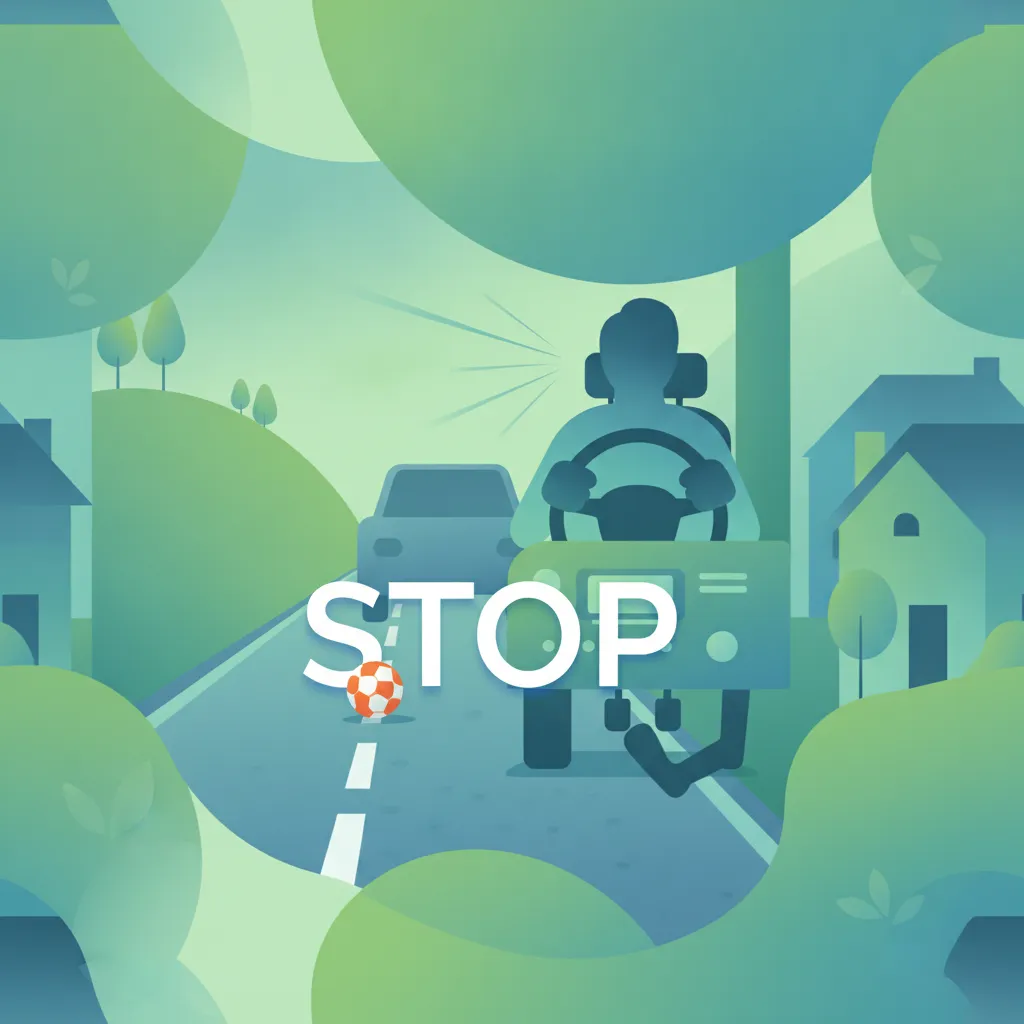
This lesson focuses on developing advanced hazard perception skills and using them to manage your speed proactively. You will learn to constantly scan the road for potential dangers, anticipate the actions of other road users, and adjust your speed to give yourself more time to react. This defensive approach to speed management is fundamental to staying safe and avoiding emergency situations while riding in complex traffic environments.
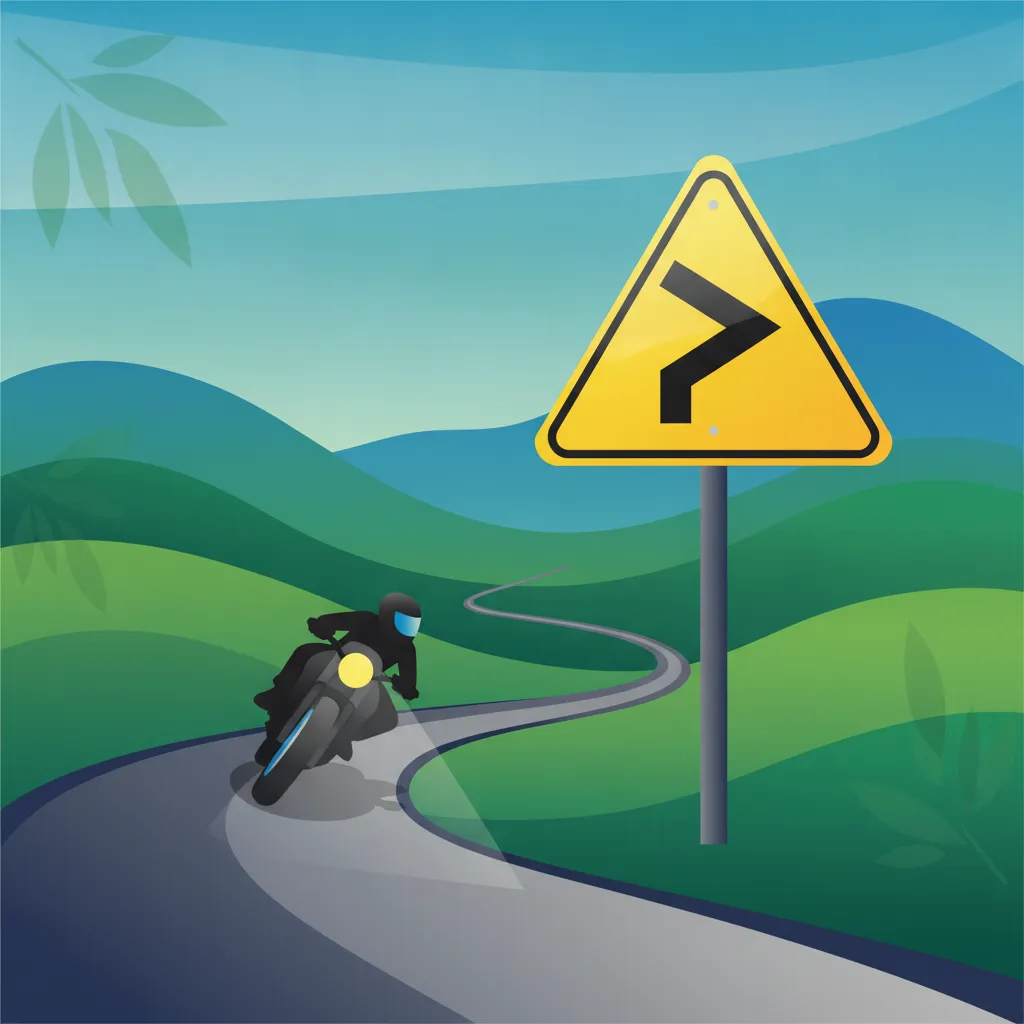
This lesson explains the function of warning signs, which are mostly triangular and alert road users to potential dangers ahead. You will learn to identify signs for bends, junctions, slippery surfaces, and other hazards particularly relevant to motorcyclists. Acting on these warnings allows a rider to adjust speed and position proactively, enhancing safety.

This lesson highlights why motorcyclists are considered vulnerable road users. It covers the increased risk of serious injury in a collision due to lack of physical protection compared to car occupants. You will learn about common visibility challenges and how to adopt proactive, defensive strategies to mitigate risks and anticipate potential hazards on the road.

This lesson teaches you to interpret warning signs, which are typically triangular and designed to alert you to potential hazards ahead. You will learn the meanings of common signs indicating sharp curves, slippery surfaces, roadworks, or areas with frequent pedestrian or animal crossings. Understanding these signs is crucial for anticipating dangers and adjusting your speed and position defensively, which is especially important for vulnerable riders of AM vehicles.
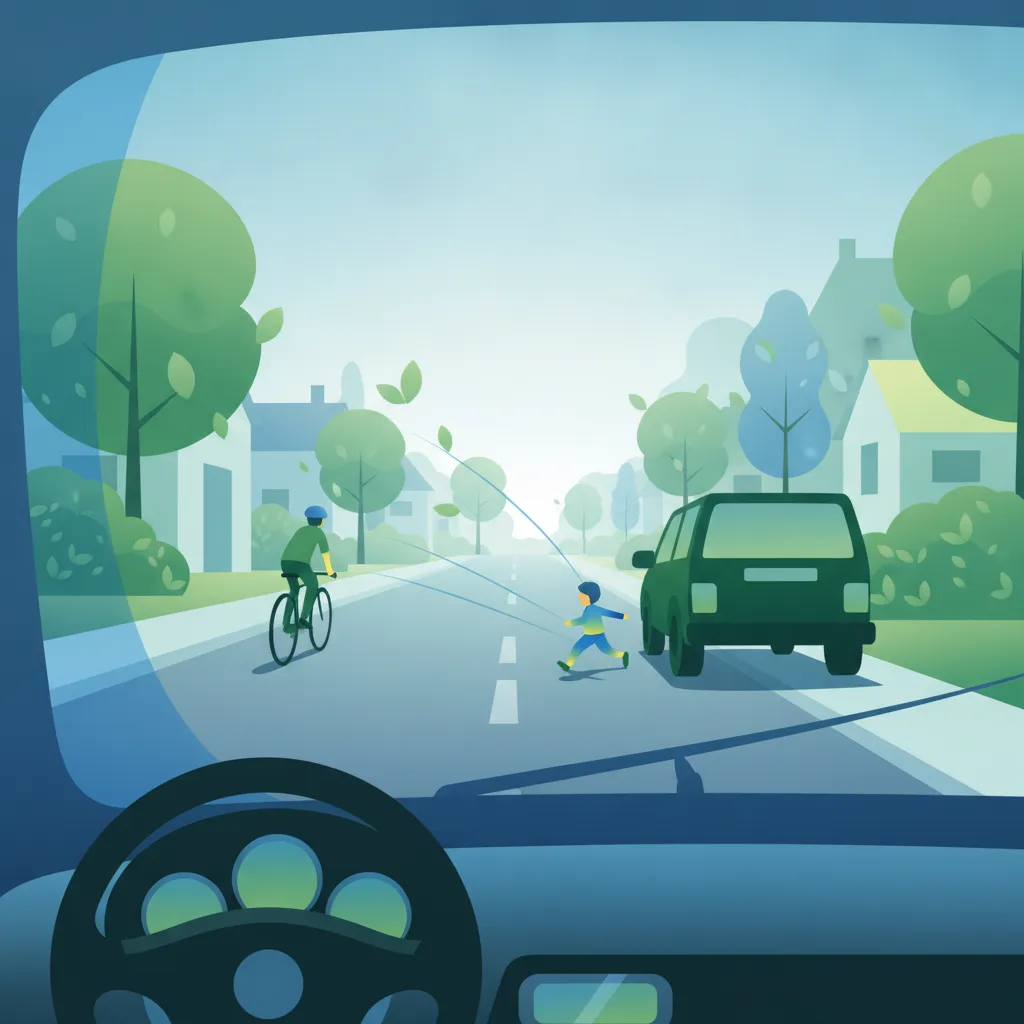
This lesson introduces the skill of hazard perception, a critical component of the official theory test and safe driving. It teaches you to actively scan your environment for potential dangers, such as a pedestrian about to cross or a car waiting to emerge from a junction. By identifying these situations early, you can take action to avoid them turning into actual dangers.

This lesson teaches strategic road positioning techniques to maximize your visibility and safety in traffic. You will learn how to choose the correct lane position to avoid the blind spots of larger vehicles and how to communicate your intentions through predictable riding. Key skills covered include effective use of shoulder checks, making eye contact with drivers, and maintaining a safe following distance, all of which are crucial for defensive riding on British roads.

A key aspect of motorcycle safety is being seen by others. This lesson teaches techniques to increase your conspicuity on the road. Topics include the strategic use of high-visibility and reflective clothing, correct use of headlights and daytime running lights, and adopting lane positions that place you in the direct line of sight of other drivers.

This lesson identifies behaviours that significantly increase a rider's risk of being involved in a collision. It explains the dangers of excessive speed, following too closely, and aggressive riding. You will learn how a rider's attitude and choices directly contribute to their safety and the legal penalties associated with these offences.

This lesson teaches riders how to be constantly aware of blind spots to prevent collisions. You will learn the importance of the 'lifesaver' shoulder check before changing position, turning, or moving off. The content emphasizes active visual scanning of the road ahead and around you, along with developing the judgment needed to accurately assess traffic speed and create safe gaps for maneuvering in various traffic situations.

This lesson introduces the concept of managing the space around you as a primary defensive riding technique. It explains how to apply the two-second rule to maintain a safe following distance, and how to adjust this for poor weather. You will also learn the importance of maintaining adequate space from parked cars and other roadside objects.
Understand the crucial role of optimal lane positioning and rider visibility in defensive riding. Learn how to position your motorcycle to be seen by others and to maximise your own safety and control on Great Britain roads.

This lesson explains that your lane is more than just a single track. You will learn how to move within your lane to a position of safety, whether it's to be more visible in another driver's mirrors, to avoid road surface hazards, or to set up for a corner. This proactive approach to positioning is a key defensive riding skill.
This lesson teaches strategic road positioning techniques to maximize your visibility and safety in traffic. You will learn how to choose the correct lane position to avoid the blind spots of larger vehicles and how to communicate your intentions through predictable riding. Key skills covered include effective use of shoulder checks, making eye contact with drivers, and maintaining a safe following distance, all of which are crucial for defensive riding on British roads.
A key aspect of motorcycle safety is being seen by others. This lesson teaches techniques to increase your conspicuity on the road. Topics include the strategic use of high-visibility and reflective clothing, correct use of headlights and daytime running lights, and adopting lane positions that place you in the direct line of sight of other drivers.

This lesson provides a step-by-step guide to dealing with roundabouts. It covers how to choose the correct lane on approach based on your destination, when and how to signal your intentions, and how to safely enter and exit the roundabout. Emphasis is placed on maintaining good observation and anticipating the actions of other drivers.
This lesson highlights why motorcyclists are considered vulnerable road users. It covers the increased risk of serious injury in a collision due to lack of physical protection compared to car occupants. You will learn about common visibility challenges and how to adopt proactive, defensive strategies to mitigate risks and anticipate potential hazards on the road.

This lesson decodes the language of road markings painted on the road surface. You will learn the rules associated with solid and broken white lines, double white lines that restrict overtaking, and yellow lines controlling parking. Proper understanding of these markings is crucial for maintaining correct lane discipline and riding legally.
This lesson explains the function of warning signs, which are mostly triangular and alert road users to potential dangers ahead. You will learn to identify signs for bends, junctions, slippery surfaces, and other hazards particularly relevant to motorcyclists. Acting on these warnings allows a rider to adjust speed and position proactively, enhancing safety.
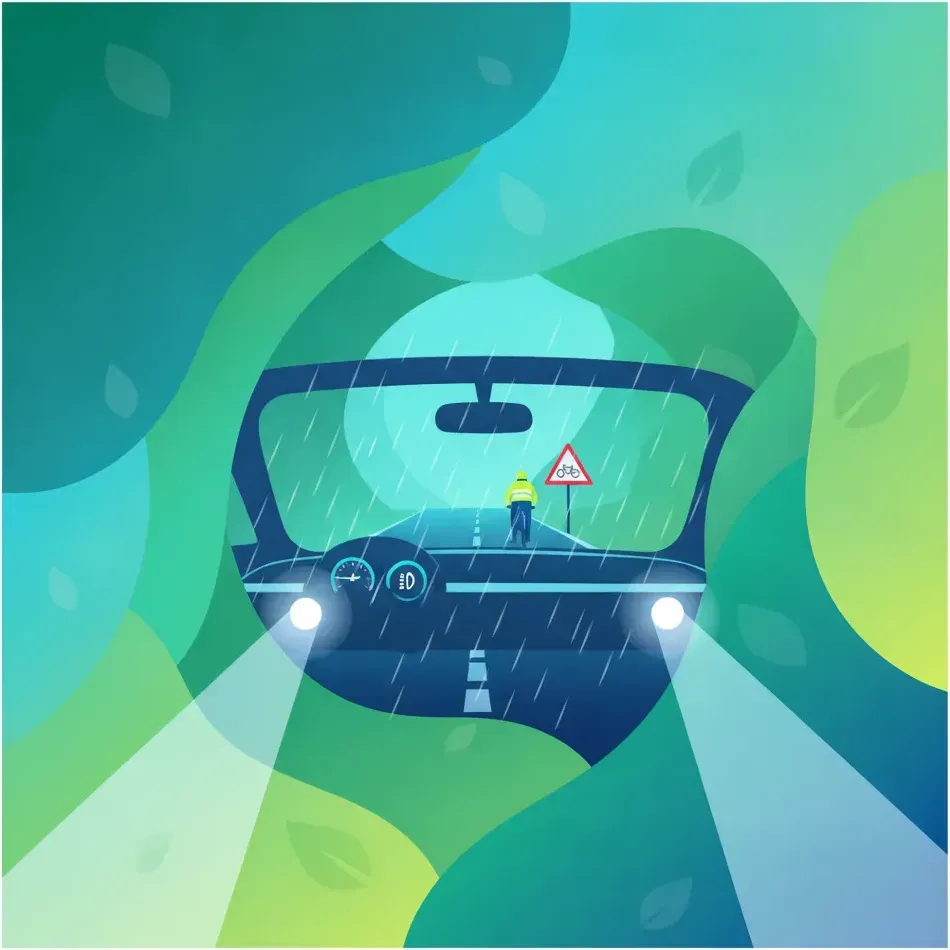
This lesson details the legal requirements and best practices for using lights and reflectors on your moped or light quadricycle. It covers the correct operation of headlamps, daytime running lights, brake lights, and indicators to communicate your intentions clearly to other road users. You will also learn how to enhance your visibility further with strategically placed reflectors and reflective tape, ensuring you remain conspicuous in low-light conditions and compliant with British lighting regulations.
This lesson introduces the concept of managing the space around you as a primary defensive riding technique. It explains how to apply the two-second rule to maintain a safe following distance, and how to adjust this for poor weather. You will also learn the importance of maintaining adequate space from parked cars and other roadside objects.

This lesson focuses on the critical skill of positioning your AM vehicle safely in relation to larger vehicles and roadside hazards like parked cars. You will learn to identify and stay out of the extensive blind spots of lorries and buses, especially at junctions. The content also provides strategies for maintaining a safe 'space cushion' around your vehicle and navigating narrow gaps or filtering in traffic without compromising your safety.
Find clear answers to common questions learners have about Defensive Riding Strategies and Anticipation Skills. Learn how the lesson is structured, which driving theory objectives it supports, and how it fits into the overall learning path of units and curriculum progression in Great Britain. These explanations help you understand key concepts, lesson flow, and exam focused study goals.
Because motorcycles are smaller and less visible than cars, defensive riding allows you to position yourself to be seen and always have an 'out' if another driver makes a mistake.
The Hazard Perception Test requires you to spot 'developing' hazards; this lesson trains your eyes to scan further ahead, which is exactly the skill the test assesses.
No, it means riding at an appropriate speed for the conditions that allows you enough time and space to react to potential threats.
An escape route is an clear path or space you have identified that you can steer towards if the vehicle in front brakes suddenly or an object falls into your path.
Dive into our comprehensive question bank to find exactly what you need for your Great Britain theory test. Use our advanced filters to pinpoint specific subjects or test your knowledge on challenging areas, ensuring you're fully prepared for success.