
This lesson guides you through the essential safety techniques for riding your moped or light quadricycle in low light or darkness. It builds on your understanding of vehicle visibility to ensure you can confidently navigate British roads from dawn until dusk while meeting all DVSA theory requirements.
Lesson content overview
Riding a moped or light quadricycle on British roads during periods of low light, such as dawn, dusk, or throughout the night, presents unique challenges and significantly increases collision risk. As a rider preparing for your Great Britain AM Licence Theory Course, understanding how to manage visibility, enhance your conspicuity, and comply with all relevant Highway Code rules is crucial for your safety and the safety of others. This comprehensive lesson will equip you with the essential techniques and knowledge needed to ride safely and confidently after dark.
Reduced visibility makes it harder for you to see hazards and for other road users to see you. Your smaller vehicle size and the lower seating position mean you are inherently less conspicuous than cars or larger vehicles. Therefore, mastering night riding practices is not just about passing your theory test; it is about drastically improving your safety on the road.
Effective use of your moped or light quadricycle's lighting system is fundamental to safe night riding. The two primary headlamp settings are the main beam and the dipped beam, each designed for specific conditions to maximise visibility without dazzling other road users.
The main beam, often referred to as high beam, is the high-intensity headlamp setting that projects a powerful, long-range light pattern. Its primary purpose is to provide maximum illumination of the road ahead, revealing hazards much further down the road than your dipped beam. This makes it particularly useful on dark, unlit roads where there is no oncoming traffic and no vehicles ahead within a certain distance.
On rural or dual-carriageway roads without street lighting, the main beam allows you to spot potential dangers like animals, potholes, or sharp bends well in advance. However, its use is strictly regulated to prevent glare to other road users. According to the Highway Code, you must switch to your dipped beam when you are approaching oncoming traffic within 150 metres (Rule 92). Similarly, if you are following another vehicle, you must dim your main beam when within 60 metres (Rule 94) to avoid dazzling the driver ahead. It is also not permissible to use your main beam on any road where the road surface is clearly illuminated by street lighting, as this causes unnecessary glare and offers no practical benefit.
The dipped beam, also known as low beam, is your standard headlamp setting. It delivers a lower-intensity, shorter-range light pattern specifically designed to illuminate the road ahead without causing glare to other road users. This is the beam you will use most often when riding in low light conditions.
Mandatory Use: The dipped beam is legally mandatory from sunset until sunrise (Rule 81) and at any other time when visibility falls below 100 metres – for instance, during heavy rain, fog, or mist. It must always be used when following another vehicle within 60 metres, when overtaking, and on any illuminated roads, such as urban streets with streetlights. The purpose is to ensure you can see without impairing the vision of others.
Failure to switch to dipped beam in time when approaching oncoming traffic, or using it incorrectly in specific weather conditions, can lead to dangerous situations. For example, using your main beam in fog actually worsens your visibility by reflecting light back into your eyes, creating a 'whiteout' effect. In such conditions, the dipped beam is essential, and fog lights (if fitted) should only be used when visibility is less than 50 metres (Rule 96).
Glare is the excessive light that impairs an observer's vision. For moped and light quadricycle riders, glare can come from your own vehicle's lighting (self-glare) or from other road users' headlights and streetlights (external glare). Managing glare effectively is vital for maintaining your ability to see hazards and ensuring you do not compromise the vision of others.
The most critical aspect of glare management is the proper use of your headlamps. As discussed, you must dim your main beam to dipped beam when an oncoming vehicle is within 150 metres (Rule 92). This quick action prevents temporary blindness for the oncoming driver, which could lead to them drifting into your lane or misjudging your position and speed. Similarly, when following another vehicle, keeping your headlights on dipped beam avoids dazzling the driver in their mirrors.
Headlamp alignment is another crucial factor. Your headlamps must be correctly aligned to ensure the beam illuminates the road ahead without pointing too high and dazzling other road users (Rule 84). Regularly checking your headlamp alignment, particularly if you've carried heavy loads, helps maintain this crucial safety standard. Avoid staring directly into oncoming headlights; instead, focus on the left-hand edge of your lane to preserve your night vision.
While your vehicle's lights help you see, enhancing your conspicuity—how easily other road users can see you—is equally important, especially for smaller vehicles like mopeds and light quadricycles. Reflective clothing and functional rear lighting significantly improve your visibility.
Reflective clothing and equipment are high-visibility garments and accessories that contain retro-reflective material. This material reflects light directly back towards its source, making you much more visible to drivers whose headlights shine upon you. While not strictly mandatory by law for all riders in the UK, the Highway Code strongly recommends the use of reflective clothing at night or in poor visibility (Rule 88).
Types of Reflective Gear:
Wearing a combination of fluorescent material (for daytime and twilight visibility) and reflective material (for night-time visibility) offers the best all-around protection. Do not assume your moped's lights are sufficient on their own; reflective gear provides an essential passive layer of visibility.
Your moped or light quadricycle must have a functional red rear-visibility light that illuminates whenever your headlamps are switched on (Rule 83). This static light significantly increases your detectability from behind, allowing following drivers to recognise your presence and judge your distance and speed.
It is illegal to use a flashing rear light on a moped in the UK, as these are typically reserved for pedal cycles. Before every night ride, always perform a quick check to ensure your rear light is working correctly and is clean and unobstructed. A non-functional rear light is a serious safety hazard and a legal violation.
Night riding, especially during the late night or early morning hours, can be more fatiguing than daytime riding. This is due to the body's natural circadian rhythm, which causes a significant dip in alertness and cognitive performance, typically between 00:00 and 04:00. This reduced alertness can severely impact your reaction times, decision-making abilities, and visual acuity, increasing your risk of an accident.
The Highway Code recommends avoiding riding between 00:00 and 04:00 where possible (Rule 86). If you must ride at night, it is crucial to manage fatigue proactively. Plan your journey to include regular rest breaks every 1 to 2 hours, even if you do not feel tired. Use these breaks to stretch, get some fresh air, and rehydrate.
Recognise the early signs of fatigue, such as yawning, struggling to keep your eyes open, or drifting within your lane. Pushing through these symptoms significantly compromises your safety.
Adverse weather conditions further reduce visibility and complicate night riding. Rain, fog, mist, and snow each present unique challenges that require specific adjustments to your riding technique and lighting use.
Your road positioning significantly impacts both your visibility to others and your ability to see hazards at night. While the Highway Code generally advises keeping as far to the left as is practical (Rule 63), riding too close to the kerb at night can be dangerous. This is because you might become obscured by parked cars or roadside furniture, and you also risk hitting unseen obstacles such as potholes, drains, or debris close to the edge of the road.
At night, it's often safer to maintain a more central position within your lane. This provides several benefits:
Avoid riding just off the kerb solely to avoid glare from oncoming traffic. While glare is uncomfortable, compromising your visibility and safety by riding too close to potential hazards is not the solution. Instead, manage glare by dimming your headlights appropriately and briefly shifting your gaze to the left edge of your lane.
Adhering to the specific rules in the Highway Code is a legal obligation for all riders in Great Britain and forms a critical part of safe night riding. Here are the most pertinent rules:
Rule 81 – Headlamp Use: You must use your headlights from sunset to sunrise, and at any other time when visibility falls below 100 metres (e.g., in fog or heavy rain).
Rule 82 – Headlamp Colours: Only white or yellow light is permitted for front lamps on your vehicle. Other colours are illegal and confusing to other road users.
Rule 83 – Rear-visibility Light: Your moped or light quadricycle must have a red rear light that is illuminated whenever your headlamp is on. This light must be visible from a distance of at least 50 metres from behind.
Rule 84 – Headlamp Alignment: Your headlamps must be correctly aligned to prevent dazzling other road users and to effectively illuminate the road.
Rule 92 – Use of Main Beam: You must switch off your main beam and use dipped beam when an oncoming vehicle is within 150 metres, or when following another vehicle within 60 metres. Never use main beam on roads with street lighting.
Rule 94 – Use of Dipped Beam: You must use dipped beam when following within 60 metres of another vehicle or when overtaking. This ensures you do not dazzle the driver ahead.
Rule 96 – Fog Lights: If your vehicle is fitted with fog lights, they may only be used when visibility is less than 50 metres. Once visibility improves, you must switch them off.
Rule 86 – Safety Recommendations for Night Riding: It is recommended to avoid riding between 00:00 and 04:00 where possible, and to take 15-minute rest intervals every 1-2 hours if riding at night.
Rule 88 – Reflective Clothing: The use of high-visibility (fluorescent) and reflective apparel is strongly recommended for all riders, especially at night or in poor visibility.
Ignoring the principles of safe night riding can lead to several common violations and dangerous situations. Riders often:
Beyond these violations, unique hazards emerge at night. Potholes and road debris are harder to spot. Pedestrians and cyclists, especially those without lights or reflective clothing, can blend into the darkness. Animals, particularly in rural areas, are more active and harder to see. Always ride defensively, maintain a safe speed, and constantly scan the road ahead for unexpected dangers.
Safe riding in low light and at night is a critical skill for all moped and light quadricycle riders taking the Great Britain AM Licence Theory Course. By consistently applying the following principles, you will significantly enhance your safety and compliance:
Mastering these techniques will not only help you pass your theory test but will also build a strong foundation for a lifetime of safe riding on British roads, protecting yourself and others when navigating after dark.
Explore all units and lessons included in this driving theory course.
Lesson content overview
Explore all units and lessons included in this driving theory course.
Explore search topics learners often look for when studying Dealing with Low Light and Nighttime Riding. These topics reflect common questions about road rules, driving situations, safety guidance, and lesson level theory preparation for learners in Great Britain.
Browse additional driving theory lessons that cover connected traffic rules, road signs, and common driving situations related to this topic. Improve your understanding of how different rules interact across everyday traffic scenarios.
Understand the challenges of riding mopeds and light quadricycles at night in the UK. Learn about essential lighting rules, enhancing your visibility, and identifying common hazards to improve your safety on the road after dark.
This lesson explains the functions and legal requirements for all exterior vehicle lights. You will learn when it is appropriate to use dipped and main beam headlights, the specific conditions for using fog lights, and the correct application of hazard warning lights. Proper use of lighting is vital for seeing and being seen by other road users.
This lesson addresses the increased risks associated with driving after dark. It explains when to switch between dipped and main beam headlights to maximise your own vision without dazzling other drivers. Techniques for reducing glare and spotting hazards like cyclists or pedestrians with poor visibility are also covered.
This lesson focuses on the challenges of riding when you can't see or be seen clearly. It covers the correct use of lights in fog, rain, and at night to maximize both your vision and your visibility to others. You will learn why reducing speed is critical, how to use reflective clothing effectively, and strategies for dealing with the glare from other vehicles' headlights to ensure you can navigate safely in all lighting conditions.
This lesson details the legal requirements and best practices for using lights and reflectors on your moped or light quadricycle. It covers the correct operation of headlamps, daytime running lights, brake lights, and indicators to communicate your intentions clearly to other road users. You will also learn how to enhance your visibility further with strategically placed reflectors and reflective tape, ensuring you remain conspicuous in low-light conditions and compliant with British lighting regulations.
Riding at night requires different skills, as visibility is limited to the reach of your headlights. This lesson teaches you how and when to use main beam and dipped beam lights effectively. It also discusses the increased risk from fatigue and nocturnal animals, and emphasizes the importance of a clean visor and reflective gear for safety.
A key aspect of motorcycle safety is being seen by others. This lesson teaches techniques to increase your conspicuity on the road. Topics include the strategic use of high-visibility and reflective clothing, correct use of headlights and daytime running lights, and adopting lane positions that place you in the direct line of sight of other drivers.
Fog dramatically reduces how far you can see and be seen. This lesson explains why you must reduce your speed and increase your following distance in foggy conditions. It also covers the legal requirements and best practices for using your headlights and fog lights to maximize your visibility to others without dazzling them.
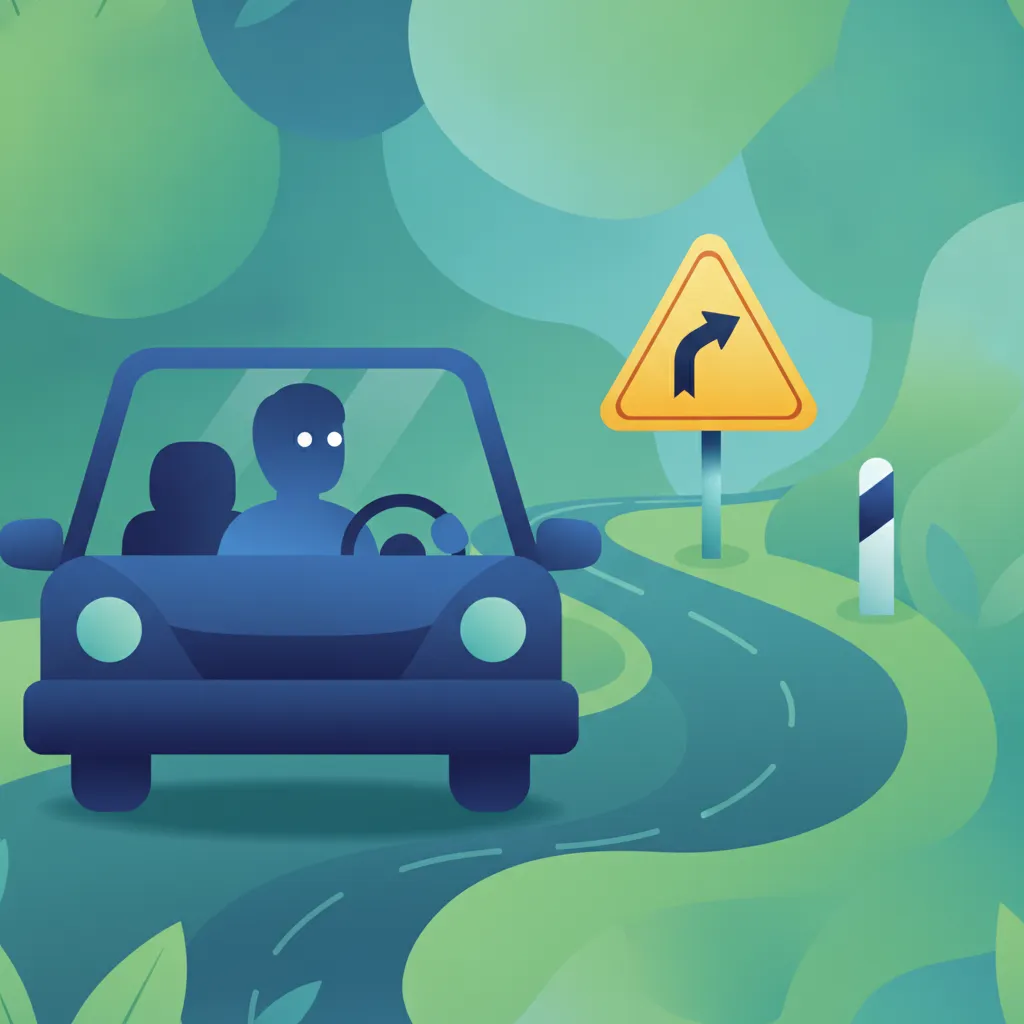
This lesson teaches you to interpret warning signs, which are typically triangular and designed to alert you to potential hazards ahead. You will learn the meanings of common signs indicating sharp curves, slippery surfaces, roadworks, or areas with frequent pedestrian or animal crossings. Understanding these signs is crucial for anticipating dangers and adjusting your speed and position defensively, which is especially important for vulnerable riders of AM vehicles.
This lesson provides essential advice for driving when weather conditions are poor. It explains how rain can cause aquaplaning and why you must double your following distance. You will also learn techniques for driving in icy conditions, including gentle use of controls to avoid skidding, and the correct use of lights in fog.
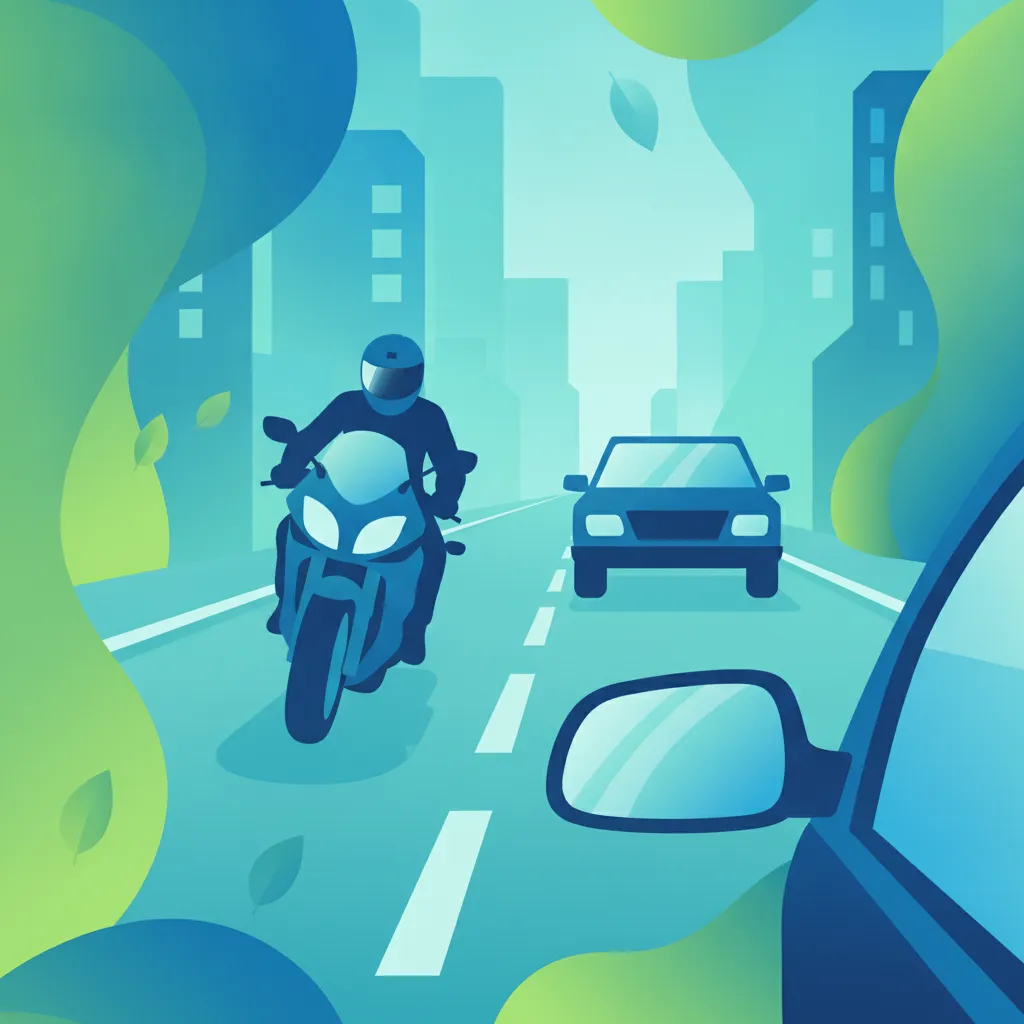
This lesson teaches strategic road positioning techniques to maximize your visibility and safety in traffic. You will learn how to choose the correct lane position to avoid the blind spots of larger vehicles and how to communicate your intentions through predictable riding. Key skills covered include effective use of shoulder checks, making eye contact with drivers, and maintaining a safe following distance, all of which are crucial for defensive riding on British roads.
Master the Highway Code rules for riding safely in low light and darkness. This lesson covers mandatory lighting, recommended reflective gear, managing fatigue during night rides, and optimal road positioning for AM licence holders in Great Britain.
Riding at night requires different skills, as visibility is limited to the reach of your headlights. This lesson teaches you how and when to use main beam and dipped beam lights effectively. It also discusses the increased risk from fatigue and nocturnal animals, and emphasizes the importance of a clean visor and reflective gear for safety.
This lesson addresses the increased risks associated with driving after dark. It explains when to switch between dipped and main beam headlights to maximise your own vision without dazzling other drivers. Techniques for reducing glare and spotting hazards like cyclists or pedestrians with poor visibility are also covered.
This lesson focuses on the challenges of riding when you can't see or be seen clearly. It covers the correct use of lights in fog, rain, and at night to maximize both your vision and your visibility to others. You will learn why reducing speed is critical, how to use reflective clothing effectively, and strategies for dealing with the glare from other vehicles' headlights to ensure you can navigate safely in all lighting conditions.
This lesson details the legal requirements and best practices for using lights and reflectors on your moped or light quadricycle. It covers the correct operation of headlamps, daytime running lights, brake lights, and indicators to communicate your intentions clearly to other road users. You will also learn how to enhance your visibility further with strategically placed reflectors and reflective tape, ensuring you remain conspicuous in low-light conditions and compliant with British lighting regulations.
This lesson explains the functions and legal requirements for all exterior vehicle lights. You will learn when it is appropriate to use dipped and main beam headlights, the specific conditions for using fog lights, and the correct application of hazard warning lights. Proper use of lighting is vital for seeing and being seen by other road users.
Fog dramatically reduces how far you can see and be seen. This lesson explains why you must reduce your speed and increase your following distance in foggy conditions. It also covers the legal requirements and best practices for using your headlights and fog lights to maximize your visibility to others without dazzling them.

This lesson explains that driving while tired can be as dangerous as drink driving, significantly slowing your reactions and reducing concentration. It teaches you to recognise the signs of fatigue, such as yawning or wandering thoughts. The only real cure for tiredness is sleep, so the lesson stresses the importance of taking proper breaks—at least 15 minutes for every two hours of driving.
This lesson addresses the serious danger of driver fatigue, a major cause of incidents involving commercial vehicles. It details the complex EU and GB domestic rules on drivers' hours, including driving limits and required rest periods. Learners will be taught to recognize the physical and mental signs of fatigue and understand the importance of taking quality rest to maintain alertness and ensure their own safety and that of others.
A key aspect of motorcycle safety is being seen by others. This lesson teaches techniques to increase your conspicuity on the road. Topics include the strategic use of high-visibility and reflective clothing, correct use of headlights and daytime running lights, and adopting lane positions that place you in the direct line of sight of other drivers.
This lesson teaches strategic road positioning techniques to maximize your visibility and safety in traffic. You will learn how to choose the correct lane position to avoid the blind spots of larger vehicles and how to communicate your intentions through predictable riding. Key skills covered include effective use of shoulder checks, making eye contact with drivers, and maintaining a safe following distance, all of which are crucial for defensive riding on British roads.
Find clear answers to common questions learners have about Dealing with Low Light and Nighttime Riding. Learn how the lesson is structured, which driving theory objectives it supports, and how it fits into the overall learning path of units and curriculum progression in Great Britain. These explanations help you understand key concepts, lesson flow, and exam focused study goals.
You must switch to dipped beams when following another vehicle closely or when meeting oncoming traffic to avoid dazzling the other driver. On narrow, unlit roads, use main beams to see further ahead, but be ready to dip them immediately when you see another road user.
AM vehicles are often smaller and harder for other drivers to spot. Reflective clothing bounces light back to the source, making you significantly more visible to car and lorry drivers at night, which is a key safety measure for small vehicle riders.
At night, your ability to judge speed and distance is reduced, and your field of vision is limited to what your lights illuminate. You should ride at a speed that allows you to stop safely within the distance you can clearly see to be clear.
Yes. It is a legal requirement to have working lights. Driving with faulty lights can result in a fixed penalty notice, points on your licence, or even a vehicle prohibition, as it poses a significant safety risk to you and others.
Dive into our comprehensive question bank to find exactly what you need for your Great Britain theory test. Use our advanced filters to pinpoint specific subjects or test your knowledge on challenging areas, ensuring you're fully prepared for success.