
This lesson guides you through the essential traffic light sequences and signal phases required for your Category AM theory test. You will learn how to interpret every light state, manage your position at the stop line, and navigate signalised junctions safely on your moped or light quadricycle.
Lesson content overview
Traffic lights are fundamental to road safety and efficient traffic flow in the United Kingdom. As an AM licence holder, mastering the interpretation of these signals is crucial for navigating junctions safely, avoiding collisions, and ensuring you comply with the Highway Code. This lesson will provide a detailed explanation of the UK traffic light system, covering everything from basic colour sequences to specific signals for turning and pedestrian crossings.
Traffic lights serve as the primary means of controlling vehicle and pedestrian movements at intersections. Their purpose is to manage conflicting traffic streams, reduce the potential for collisions, and enhance safety for all road users, particularly vulnerable ones like pedestrians and those on mopeds or light quadricycles. By providing clear, universally understood visual cues, traffic lights prevent chaos and ensure a predictable flow of traffic, which is vital for safe riding.
The consistent and predictable phasing of traffic lights minimises the chance of simultaneous conflicting movements, making junctions safer. Their deterministic phase sequence, from red to green and back again, allows road users to anticipate changes and react appropriately. This system is not just about stopping and going; it's a sophisticated method for managing right-of-way, balancing vehicle throughput, and prioritising different road users at various times.
The standard traffic light sequence in the UK is designed to provide a predictable and safe transition between stopping and proceeding. Understanding each phase is essential for all drivers, including those riding mopeds and light quadricycles. The sequence typically follows: Red → Red and Amber → Green → Amber → Red. Each stage carries specific instructions that must be strictly followed.
When a red circular light (or a red arrow for a specific direction) is displayed, it indicates a mandatory stop. All vehicles must come to a complete halt behind the stop line and remain stationary. This rule is absolute and overrides all other priority considerations, such as those that might arise from road markings or general give way rules. Stopping behind the stop line is critical to prevent obstructing cross-traffic or encroaching on pedestrian crossing areas.
Ignoring a red light is a serious offence that can lead to severe penalties, including fines and penalty points, and significantly increases the risk of a dangerous collision with cross-traffic or pedestrians.
The red and amber signal appears simultaneously, directly after the red light, and signals that the green light is imminent. This phase acts as a warning to drivers, allowing them to prepare to move. However, it is crucial to understand that you must not start moving during this phase. Vehicles must remain stationary behind the stop line. Moving off prematurely can lead to collisions, especially with traffic still clearing the junction from a previous phase.
This preparatory phase helps to improve traffic flow by giving drivers a moment to engage their gears and release their brakes, reducing abrupt starts when the light finally changes to green. For AM licence holders, this means having your moped or light quadricycle ready to move smoothly and safely.
A green circular light (or a green arrow for a specific direction) indicates that drivers may proceed. You can move forward, turn left, or turn right, provided that the way is clear and you do not endanger other road users. However, a green light does not automatically grant absolute right-of-way in all situations. You must still be aware of and yield to:
Always check your surroundings carefully before moving off on a green light, scanning for potential hazards and confirming the path is clear.
The amber signal appears after green and before red. Its primary instruction is to stop, unless you are so close to the stop line or already in the junction that stopping safely would mean braking harshly or causing a rear-end collision.
An illuminated circular amber light that indicates the signal is about to change to red. Drivers must stop unless they have already entered the junction or are so close to the stop line that stopping safely cannot be achieved. It also allows completion of a right turn if already commenced.
If the amber light appears and you can safely stop before the stop line, you must do so. However, if stopping would require sudden, harsh braking, you should proceed with caution to clear the junction. This is a crucial distinction and requires good judgment. You are generally not permitted to accelerate to "beat" the red light.
When an amber light appears, glance in your mirrors to assess the following traffic. This helps you make a safe decision on whether to stop or proceed, preventing rear-end collisions.
At many complex junctions, traffic lights may include separate filter arrows to manage specific turning movements. These arrows allow certain directions of traffic to proceed while other movements are held by a red signal. Understanding filter arrows is vital for smooth and safe navigation through busy intersections.
An amber filter arrow, often displayed with a red circular background, grants permission for a specific turning movement even when the main circular light is red. For example, an amber right-turn arrow means you may turn right, while through traffic might still be held by the red light.
When an amber filter arrow is displayed, you may proceed in the direction indicated by the arrow without stopping, provided your path is clear. It is critical to remember that while the arrow gives you permission, you must still yield to any pedestrians who may be crossing your path and to any other road users who may have priority. The filter arrow overrides the red background only for the specific movement it indicates; you cannot go straight if only a turn arrow is lit.
Filter arrows can indicate permission for left turns, right turns, or even straight-through movements in specific lane configurations.
Always pay close attention to the direction of the arrow. Attempting to proceed in a direction not indicated by a filter arrow, especially against a red main light, is a serious violation.
Many traffic light junctions also incorporate signals for pedestrians to ensure their safety. These signals are often synchronised with vehicle traffic lights, but drivers must understand their independent meaning and priority.
Pedestrian crossing signals typically consist of:
Even if your vehicle traffic light turns green, you must still give way to any pedestrians who are already on the crossing or who have a green walking figure displayed. Pedestrian signals generally take priority over vehicle signals when there is a conflict.
Never proceed if a green walking figure is displayed for the crossing you are about to enter, even if your vehicle light is green. This is a common cause of accidents involving vulnerable road users.
At crossings like Pelican crossings, after the vehicle red light, a flashing amber light may appear. This allows you to proceed if the crossing is completely clear of pedestrians, but you must be prepared to stop if pedestrians are still crossing. Newer Puffin crossings are designed to detect pedestrians and will not change to vehicle green until the crossing is clear.
The stop line is a thick white line painted across the carriageway, aligned with the traffic light. It marks the precise point where vehicles must stop when faced with a red or amber signal.
Respecting the stop line is crucial for several reasons:
Always aim to stop smoothly and completely before the stop line. If there is an advanced stop line for cyclists, AM licence holders may sometimes use this if it is safe and appropriate, but generally, mopeds and light quadricycles should use the primary stop line.
The Highway Code provides specific rules governing how drivers must interact with traffic lights. These rules are legally binding, and non-compliance can result in penalties.
Highway Code Rule 105: "Red means stop. You must stop behind the stop line."
This rule is mandatory. You must bring your vehicle to a complete halt before the stop line when a red light is displayed, regardless of whether you can see clear road ahead or not. The only exception is if a green arrow (filter arrow) is displayed for a specific turn you intend to make, which overrides the red for that direction only.
Highway Code Rule 105: "Red and amber together also mean stop. Do not pass the stop line. The set of lights is about to change to green."
Again, this is a mandatory stop. While it indicates the green light is coming, you must not move until the green light is fully illuminated. This phase is for preparation, not for beginning movement.
Highway Code Rule 108: "Amber means stop at the stop line. You may go on only if the amber appears after you have crossed the stop line or are so close to it that to stop safely would involve an emergency stop. If you are turning right and have entered the junction, you may complete the turn, provided it is safe to do so."
This rule highlights a specific exception for right turns. If you have already entered the junction to make a right turn and the light changes to amber, you may complete your turn, assuming it is safe and does not endanger other road users or pedestrians. However, you should not start a right turn from a standstill on amber unless a filter arrow specifically permits it.
Highway Code Rule 110: "A green arrow may be shown with the red light. This means that you may go in the direction of the arrow even if the main red light is showing. You must, however, give way to any pedestrians who are crossing or who have started to cross the road into which you are turning."
This rule clarifies that filter arrows grant specific permissions. When an amber or green arrow is displayed, you may proceed in that direction, even if other lights are red. However, the obligation to yield to pedestrians is paramount.
Highway Code Rule 134 (for Pelican Crossings): "When the amber light is flashing, you must give way to any pedestrians on the crossing. If the crossing is clear, you may proceed."
While Rule 105 covers general traffic light behaviour, Rule 134 specifically addresses Pelican crossings. It's crucial to understand that even when a vehicle light is green, if a pedestrian green walking figure is displayed for the crossing you intend to enter, you must stop and allow pedestrians to cross.
Highway Code Rule 104: "The stop line is the first line at which you should stop if required to do so by a traffic light or a STOP sign."
This rule reinforces the importance of the stop line as the legal stopping point. Exceeding it prematurely can result in penalties and create dangerous situations.
Highway Code Rule 105: "Green means you may go on if the way is clear. Give way to any pedestrians who are crossing or who have started to cross the road into which you are turning. Do not obstruct the path of other road users when proceeding on green."
This rule provides the permission to proceed on green but critically reminds drivers of their ongoing responsibility to ensure the path is clear and to yield to pedestrians.
Misinterpreting or disobeying traffic signals is a leading cause of collisions at junctions. Awareness of these common errors can help AM licence holders avoid dangerous situations.
Traffic lights provide clear instructions, but real-world conditions often require drivers to adapt their interpretation and actions.
Traffic lights are meticulously designed with safety at their core. Each phase and rule has a specific reasoning:
This lesson covers the complete UK traffic light system essential for AM licence theory preparation, explaining each phase from red through to green and back, including the preparatory red-and-amber stage. It details how filter arrows grant specific turning permissions, the rules for completing right turns on amber, and the critical importance of yielding to pedestrians even when vehicle signals permit movement. The content also addresses safe stopping procedures at the stop line, weather-related adaptations, and the safety logic behind signal phasing, with specific references to Highway Code Rules 104, 105, 108, 110, and 134.
A short set of high-value points that capture the most important learning from this lesson.
The standard UK traffic light sequence is Red → Red and Amber → Green → Amber → Red, with each phase having specific mandatory or conditional instructions.
A green light grants permission to proceed but does not override the requirement to yield to pedestrians, vehicles already in the junction, and emergency vehicles.
Red and amber together means prepare to move but you must not cross the stop line until green appears.
Filter arrows grant specific turning permissions even when the main circular light is red, but pedestrians still have priority over turning traffic.
At pedestrian crossings, drivers must always yield to pedestrians with a green walking figure, even if their own vehicle light is green.
Explore all units and lessons included in this driving theory course.
You may complete a right turn on amber only if you have already entered the junction; starting a right turn from the stop line on amber is not permitted without a filter arrow.
The amber signal requires you to stop unless you are already so close to the stop line that stopping safely would cause an emergency stop.
The stop line is the legal stopping point; crossing it prematurely blocks the junction and is a traffic offence.
On flashing amber at Pelican crossings, you may proceed only if the crossing is completely clear of pedestrians.
When traffic lights fail completely, treat the junction as uncontrolled and give way to traffic from your right.
Moving off on red and amber before the green light appears, risking collision with vehicles still clearing the junction.
Starting a right turn from the stop line when amber appears, rather than completing a turn already in progress.
Proceeding through a green light without checking for pedestrians who have a green walking figure at the crossing.
Going straight when only a filter arrow for a turn is displayed, obstructing other traffic and violating the signal.
Failing to check mirrors before stopping on amber, which can lead to rear-end collisions with following vehicles.
Lesson content overview
A short set of high-value points that capture the most important learning from this lesson.
The standard UK traffic light sequence is Red → Red and Amber → Green → Amber → Red, with each phase having specific mandatory or conditional instructions.
A green light grants permission to proceed but does not override the requirement to yield to pedestrians, vehicles already in the junction, and emergency vehicles.
Red and amber together means prepare to move but you must not cross the stop line until green appears.
Filter arrows grant specific turning permissions even when the main circular light is red, but pedestrians still have priority over turning traffic.
At pedestrian crossings, drivers must always yield to pedestrians with a green walking figure, even if their own vehicle light is green.
Explore all units and lessons included in this driving theory course.
You may complete a right turn on amber only if you have already entered the junction; starting a right turn from the stop line on amber is not permitted without a filter arrow.
The amber signal requires you to stop unless you are already so close to the stop line that stopping safely would cause an emergency stop.
The stop line is the legal stopping point; crossing it prematurely blocks the junction and is a traffic offence.
On flashing amber at Pelican crossings, you may proceed only if the crossing is completely clear of pedestrians.
When traffic lights fail completely, treat the junction as uncontrolled and give way to traffic from your right.
Moving off on red and amber before the green light appears, risking collision with vehicles still clearing the junction.
Starting a right turn from the stop line when amber appears, rather than completing a turn already in progress.
Proceeding through a green light without checking for pedestrians who have a green walking figure at the crossing.
Going straight when only a filter arrow for a turn is displayed, obstructing other traffic and violating the signal.
Failing to check mirrors before stopping on amber, which can lead to rear-end collisions with following vehicles.
Explore search topics learners often look for when studying Traffic Lights and Signal Phases. These topics reflect common questions about road rules, driving situations, safety guidance, and lesson level theory preparation for learners in Great Britain.
Browse additional driving theory lessons that cover connected traffic rules, road signs, and common driving situations related to this topic. Improve your understanding of how different rules interact across everyday traffic scenarios.
Deepen your understanding of complex traffic light sequences, including filter arrows, pedestrian crossing signals, and specific junction layouts. Learn how to safely navigate challenging signalised intersections for your AM licence theory.
This lesson details how to safely navigate junctions controlled by traffic signals. It explains the meaning of filter arrows, which allow you to proceed in a specific direction even if the main light is red. You will also learn about respecting advanced stop lines for cyclists and how to approach a junction when the traffic lights are not working.
This lesson details the operation of traffic lights in Great Britain, including the red-and-amber phase before green. It clarifies the rules for proceeding at a green light, stopping for red, and preparing to stop for a steady amber light. You will also learn about green filter arrows and the flashing amber lights used at certain pedestrian crossings.
This lesson covers the operation of traffic light signals and the rules for approaching them safely. It also provides a detailed explanation of different pedestrian crossings, such as zebra, pelican, and toucan crossings, clarifying the specific rules and priority for each. You will learn to anticipate the actions of pedestrians and other vulnerable road users at these locations.
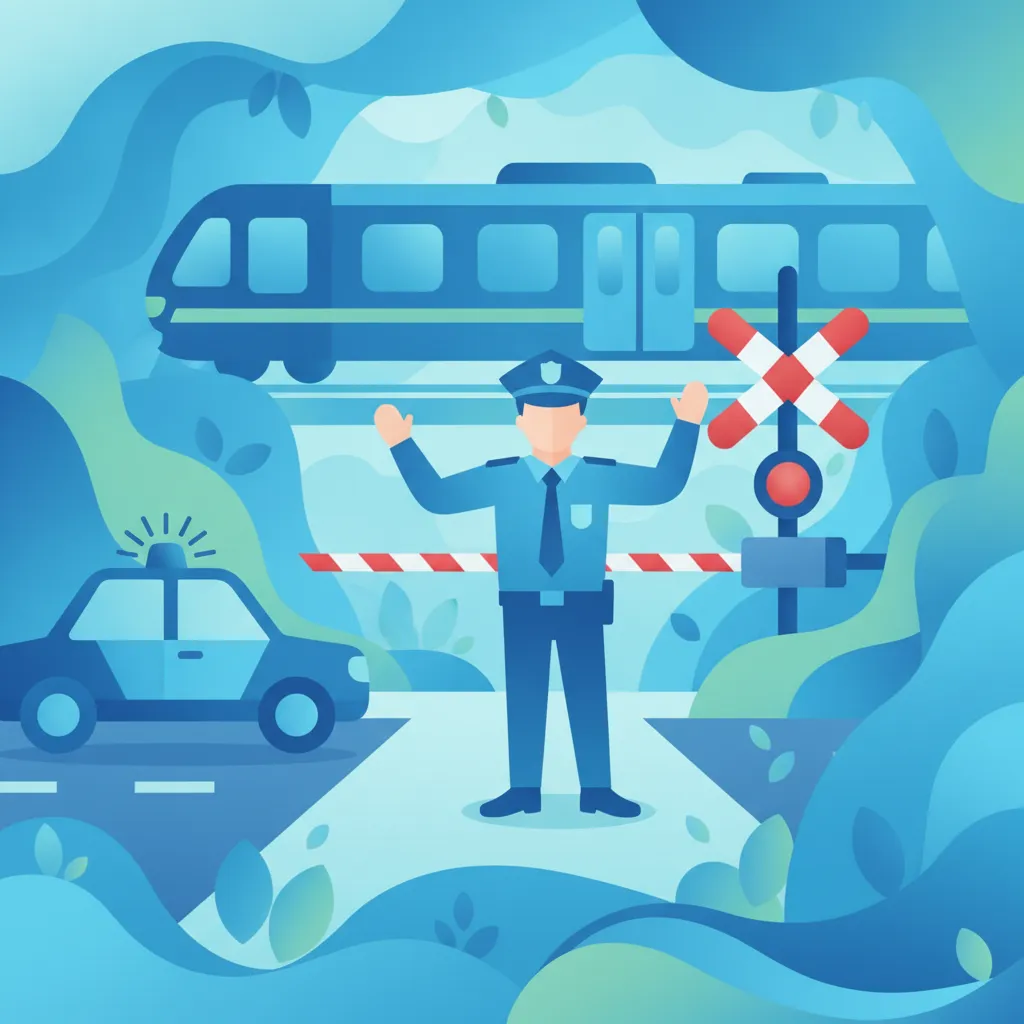
This lesson covers signals that require an immediate and specific response from drivers. You will learn the meaning of hand signals given by police officers and how to give way safely to emergency vehicles with flashing lights or sirens. It also explains the warning light system at railway level crossings, where you must stop when signalled to do so.
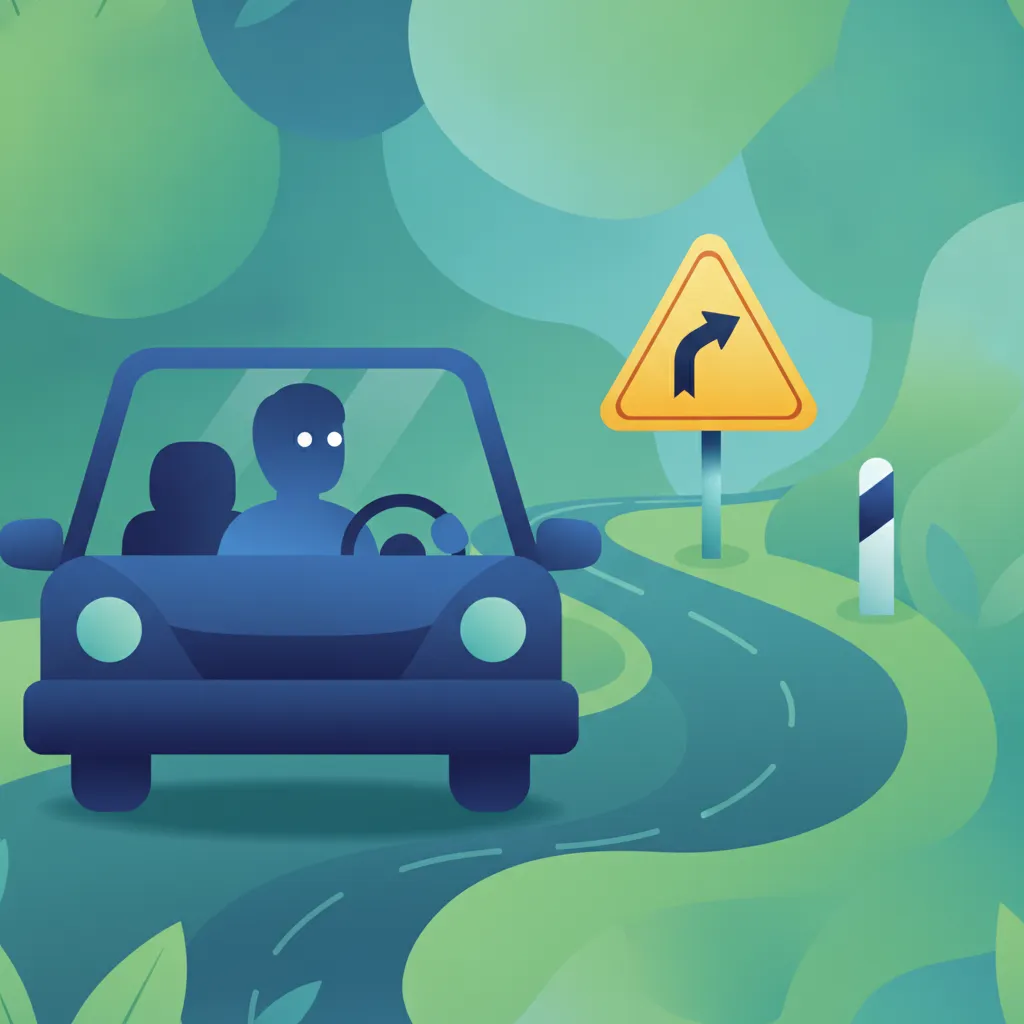
This lesson teaches you to interpret warning signs, which are typically triangular and designed to alert you to potential hazards ahead. You will learn the meanings of common signs indicating sharp curves, slippery surfaces, roadworks, or areas with frequent pedestrian or animal crossings. Understanding these signs is crucial for anticipating dangers and adjusting your speed and position defensively, which is especially important for vulnerable riders of AM vehicles.
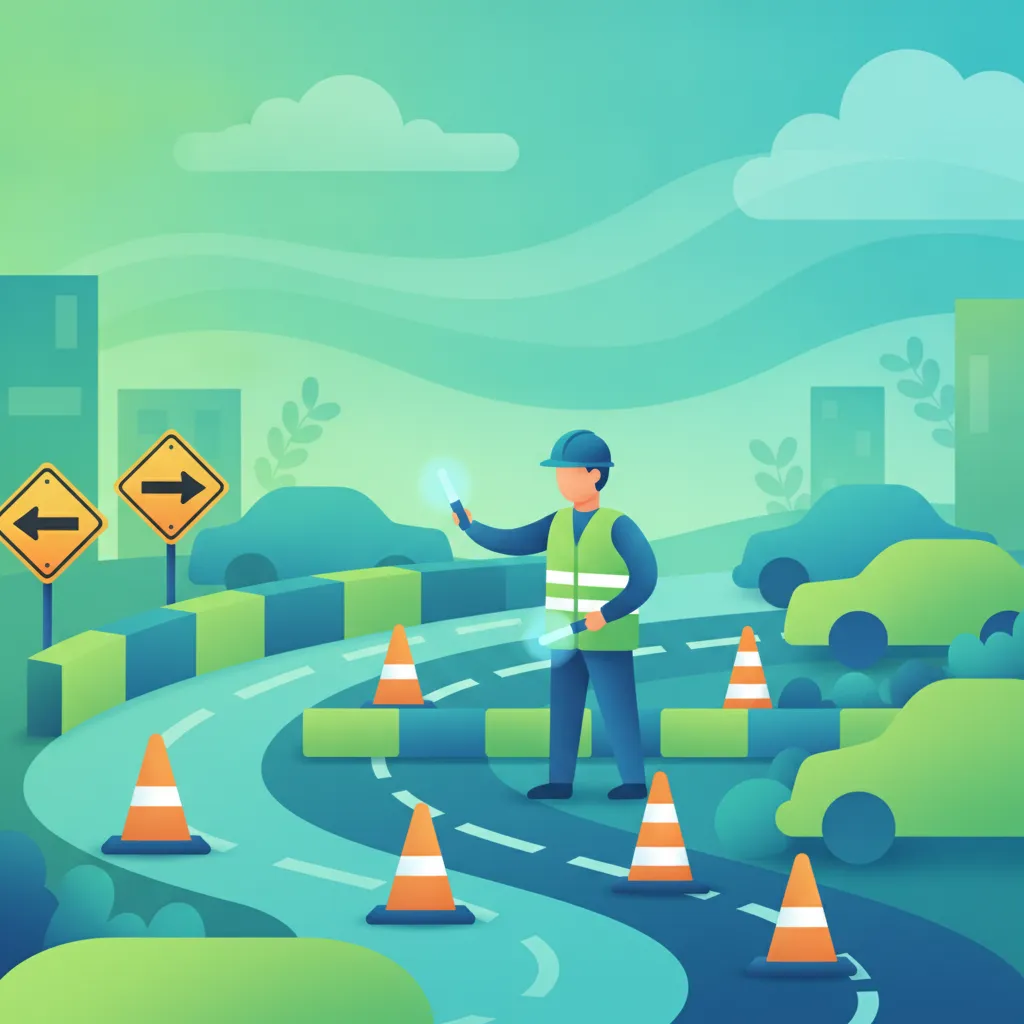
This lesson explains how to drive safely through areas where roadworks are taking place. It stresses the importance of obeying all temporary signs, especially mandatory speed limits, which are in place for your safety and the safety of road workers. You will learn about navigating narrow lanes, contraflow systems, and how to follow official diversion signs.
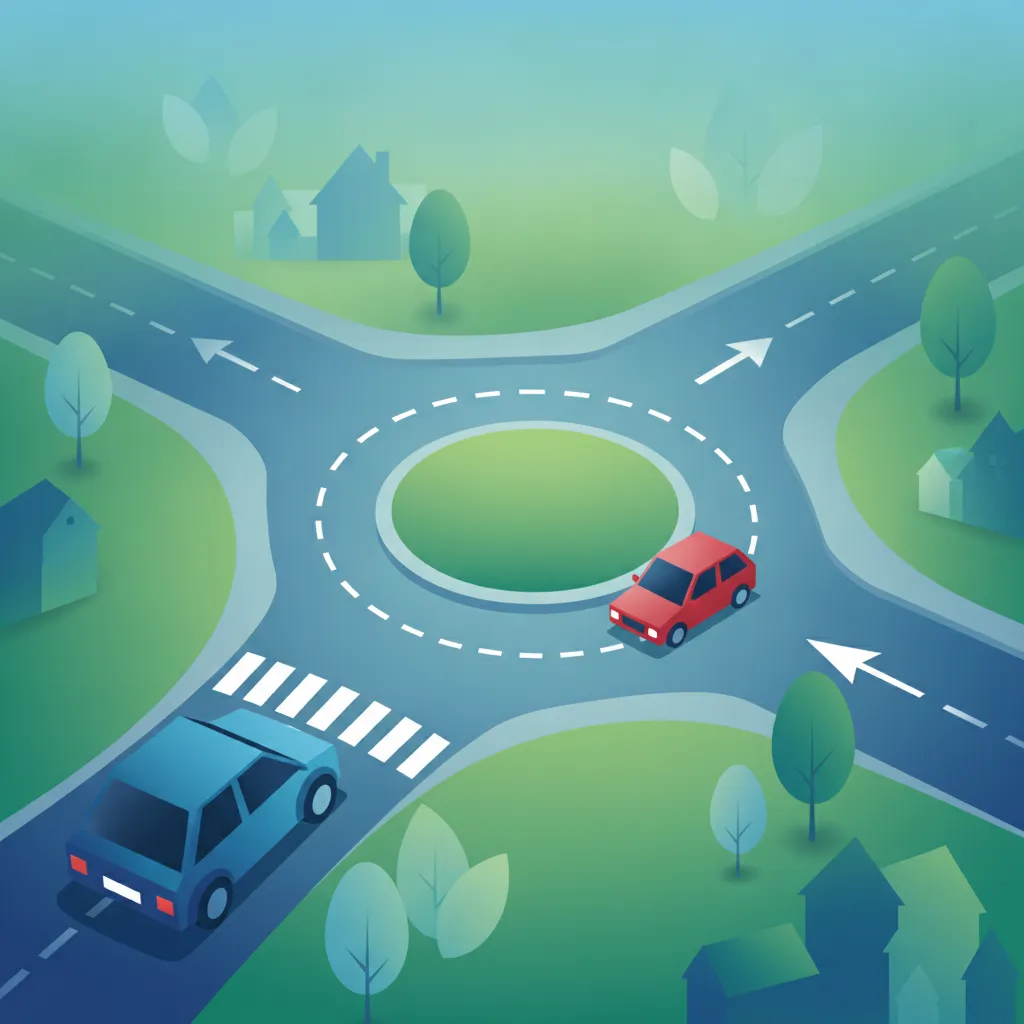
This lesson explains how to handle mini-roundabouts, which are common in urban and residential areas. The primary rule is to approach with caution and give priority to any traffic approaching from your right. You will also learn about correct signalling and the importance of being aware of cyclists and motorcyclists who may be harder to see.
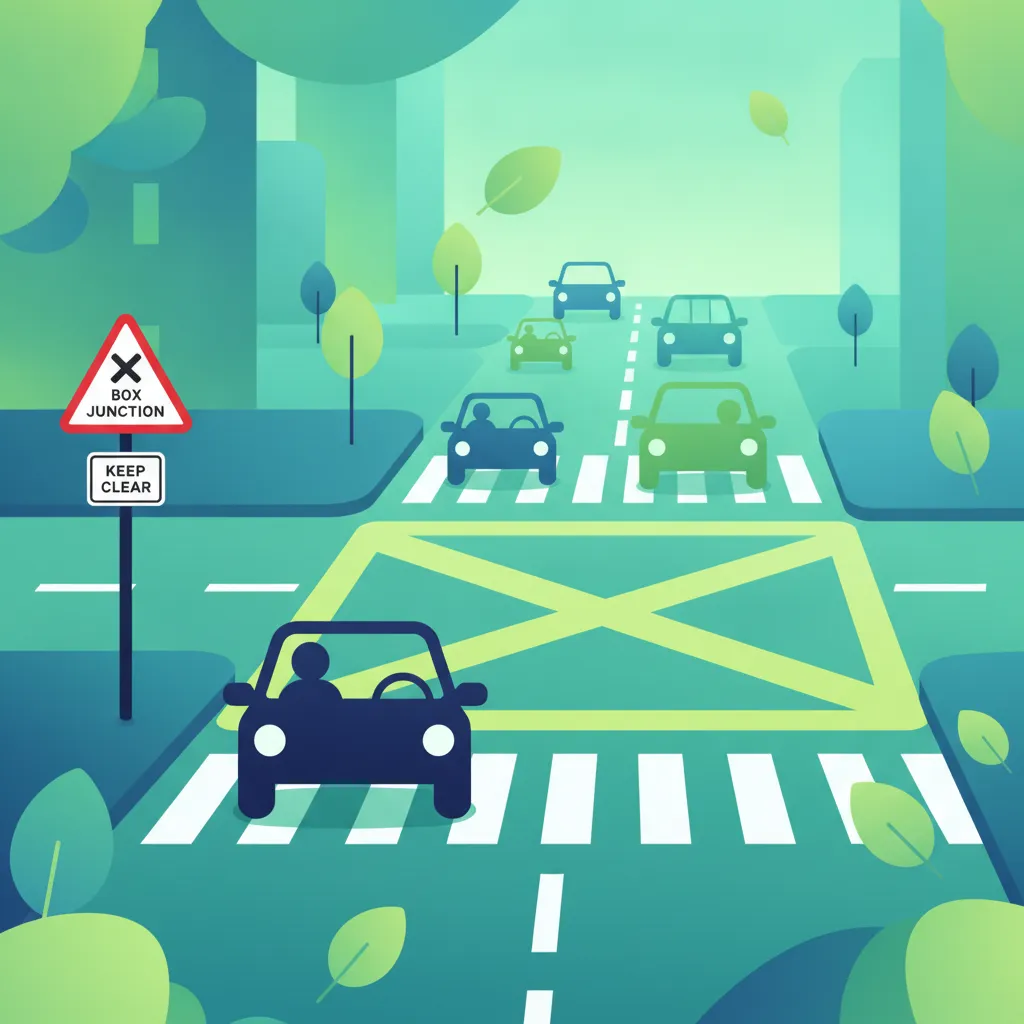
This lesson focuses on the markings that control traffic at intersections. It explains the primary rule of a yellow box junction: do not enter unless your exit is clear. You will also learn the difference between the solid white 'Stop' line and the broken 'Give Way' line, which dictate your priority over other traffic.
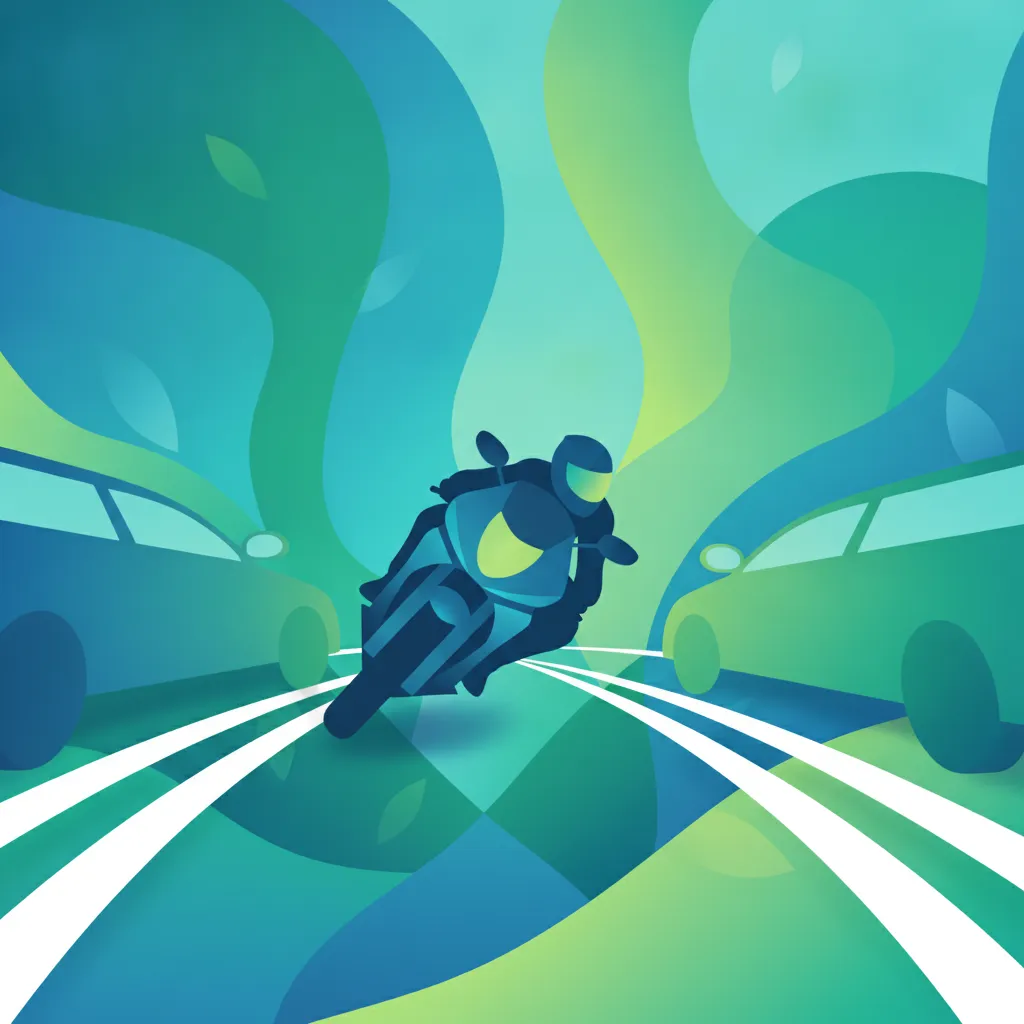
Filtering through traffic can be an efficient way to ride, but it carries risks. This lesson explains when it is appropriate to filter, the importance of maintaining a low speed differential, and how to watch out for potential hazards like changing lanes, opening doors, and pedestrians. Safe filtering requires heightened awareness and excellent machine control.
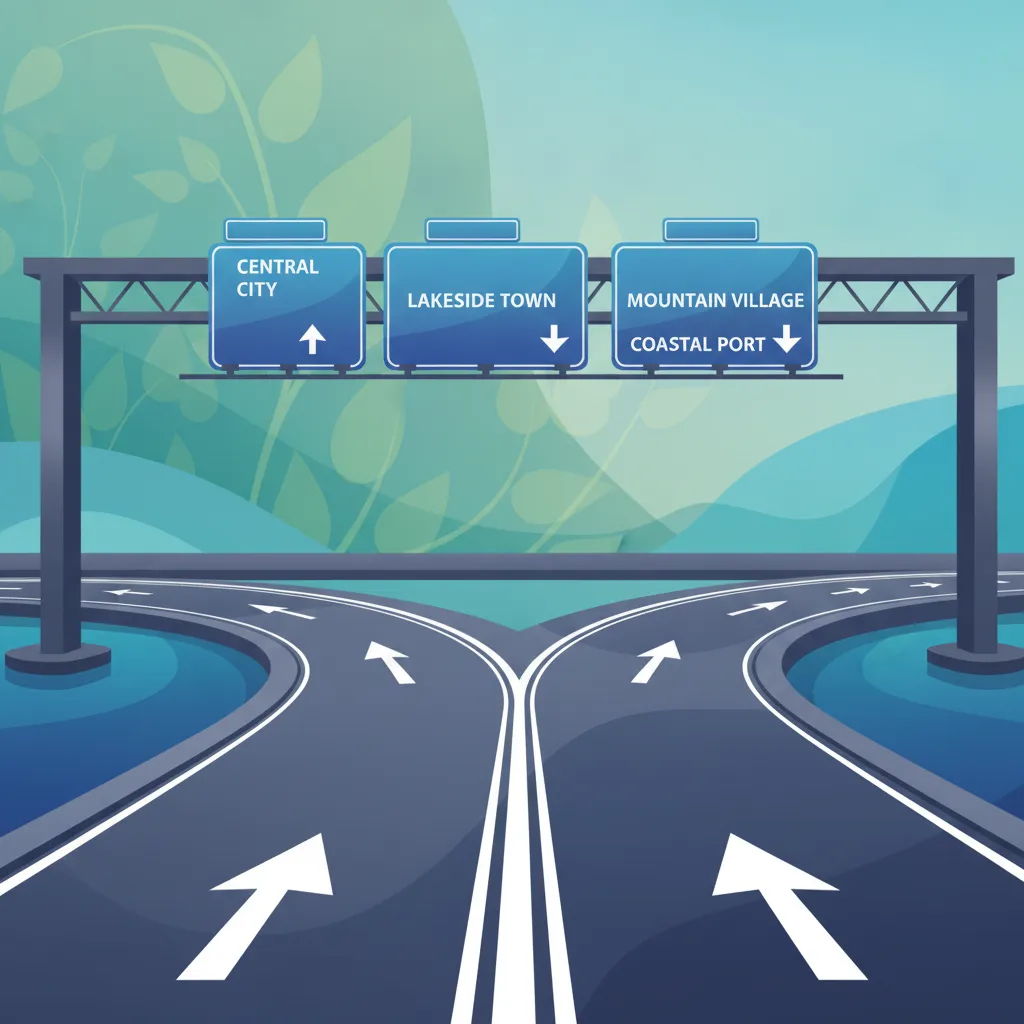
This lesson covers the signs that help you navigate your journey effectively. It explains how sign colours indicate the type of road—blue for motorways, green for primary routes, and white for non-primary routes. You will also learn to interpret signs for tourist attractions, services, and lane information at complex junctions.
Understand typical errors and violations drivers make at traffic lights, including misinterpreting amber, ignoring filter arrows, and failing to yield to pedestrians. Avoid these pitfalls to improve your road safety and theory knowledge.
This lesson details how to safely navigate junctions controlled by traffic signals. It explains the meaning of filter arrows, which allow you to proceed in a specific direction even if the main light is red. You will also learn about respecting advanced stop lines for cyclists and how to approach a junction when the traffic lights are not working.
This lesson details the operation of traffic lights in Great Britain, including the red-and-amber phase before green. It clarifies the rules for proceeding at a green light, stopping for red, and preparing to stop for a steady amber light. You will also learn about green filter arrows and the flashing amber lights used at certain pedestrian crossings.
This lesson covers signals that require an immediate and specific response from drivers. You will learn the meaning of hand signals given by police officers and how to give way safely to emergency vehicles with flashing lights or sirens. It also explains the warning light system at railway level crossings, where you must stop when signalled to do so.
This lesson covers the operation of traffic light signals and the rules for approaching them safely. It also provides a detailed explanation of different pedestrian crossings, such as zebra, pelican, and toucan crossings, clarifying the specific rules and priority for each. You will learn to anticipate the actions of pedestrians and other vulnerable road users at these locations.
This lesson explains how to handle mini-roundabouts, which are common in urban and residential areas. The primary rule is to approach with caution and give priority to any traffic approaching from your right. You will also learn about correct signalling and the importance of being aware of cyclists and motorcyclists who may be harder to see.

This lesson explains the functions and legal requirements for all exterior vehicle lights. You will learn when it is appropriate to use dipped and main beam headlights, the specific conditions for using fog lights, and the correct application of hazard warning lights. Proper use of lighting is vital for seeing and being seen by other road users.
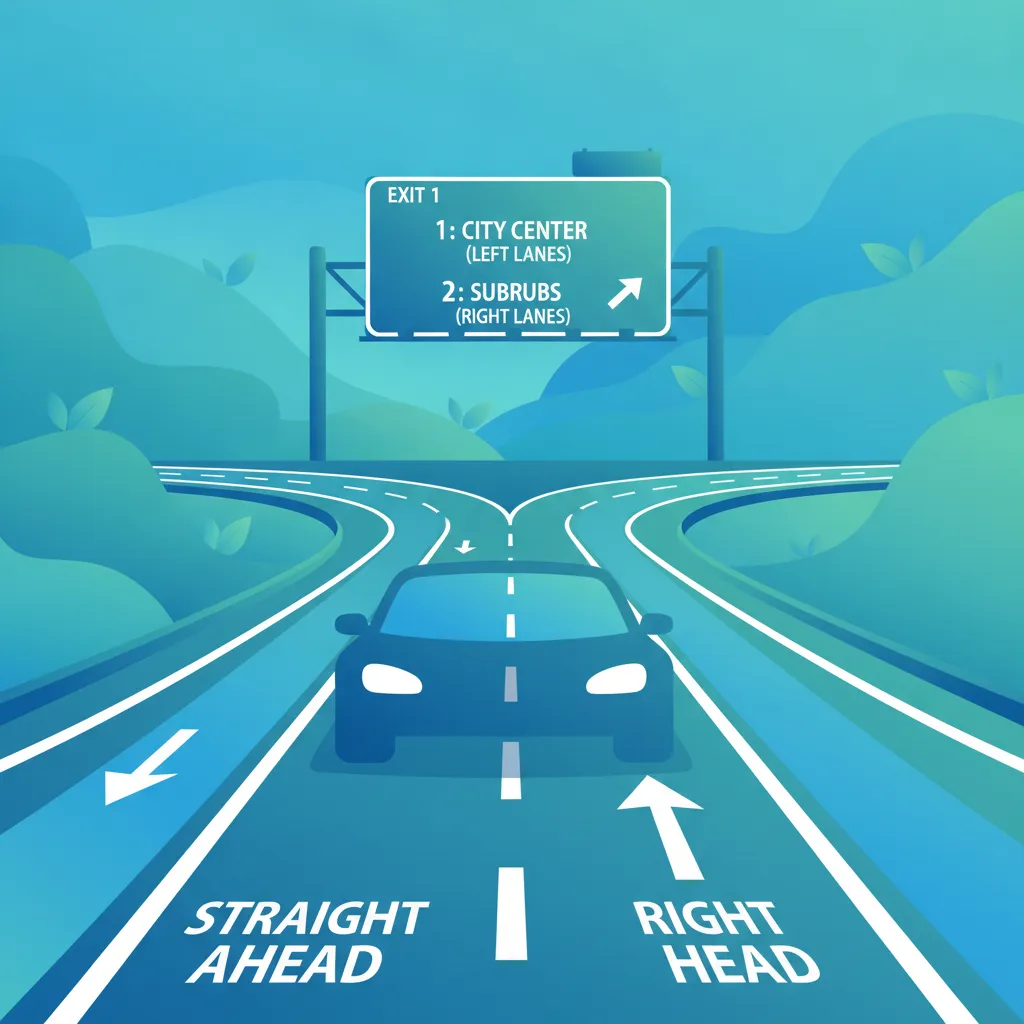
This lesson focuses on the rules conveyed by road markings, such as solid and broken white lines that dictate overtaking rules and lane boundaries. You will learn to interpret waiting and stopping restrictions indicated by yellow and red lines, and understand markings for specific road users like bus and cycle lanes. Maintaining correct lane discipline based on these markings is a fundamental skill for safe navigation and compliance with the Highway Code.
This lesson focuses on the markings that control traffic at intersections. It explains the primary rule of a yellow box junction: do not enter unless your exit is clear. You will also learn the difference between the solid white 'Stop' line and the broken 'Give Way' line, which dictate your priority over other traffic.
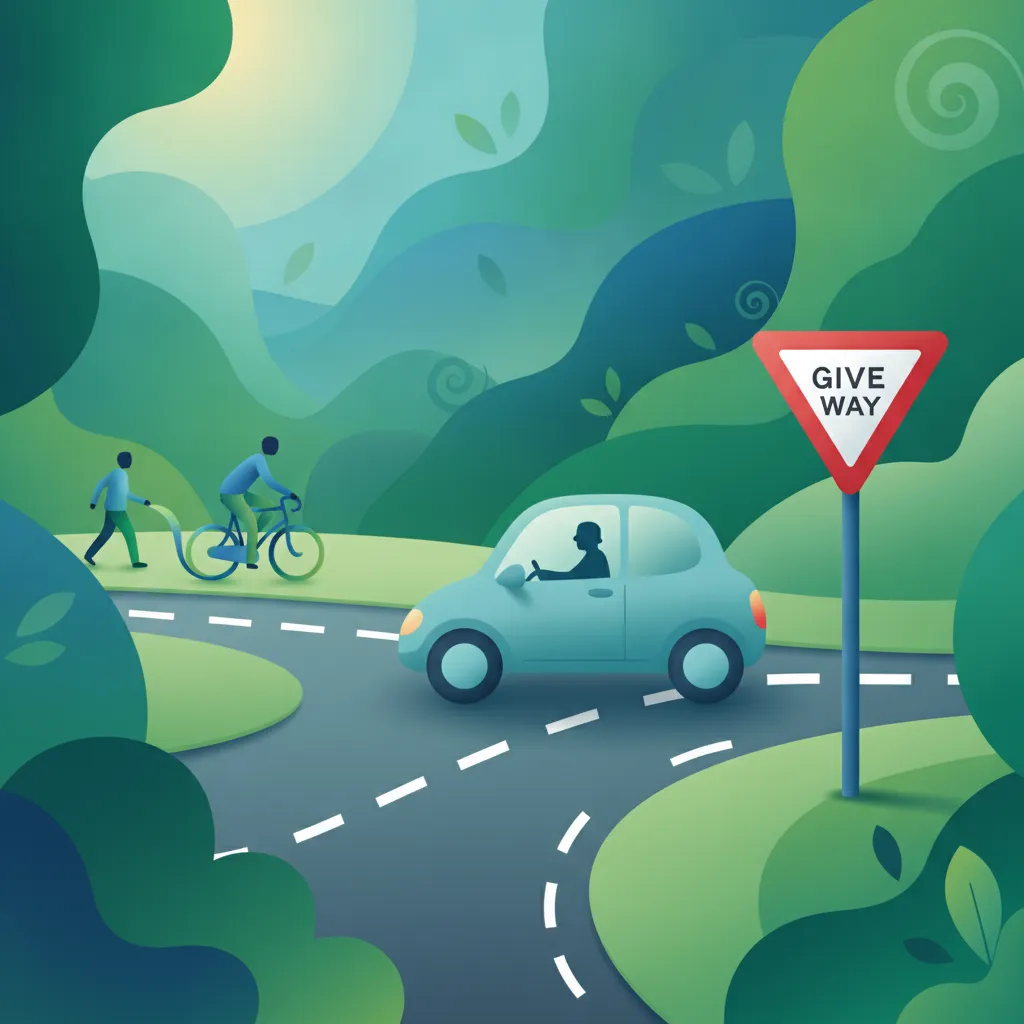
This lesson explains the critical rules of priority that govern traffic flow at junctions, roundabouts, and crossings throughout Great Britain. You will learn how to determine who has right-of-way at both marked and unmarked intersections, and the specific rules for giving way to traffic on roundabouts. The lesson also reinforces the hierarchy of road users from the Highway Code, ensuring you understand when to yield to pedestrians and other vulnerable users.
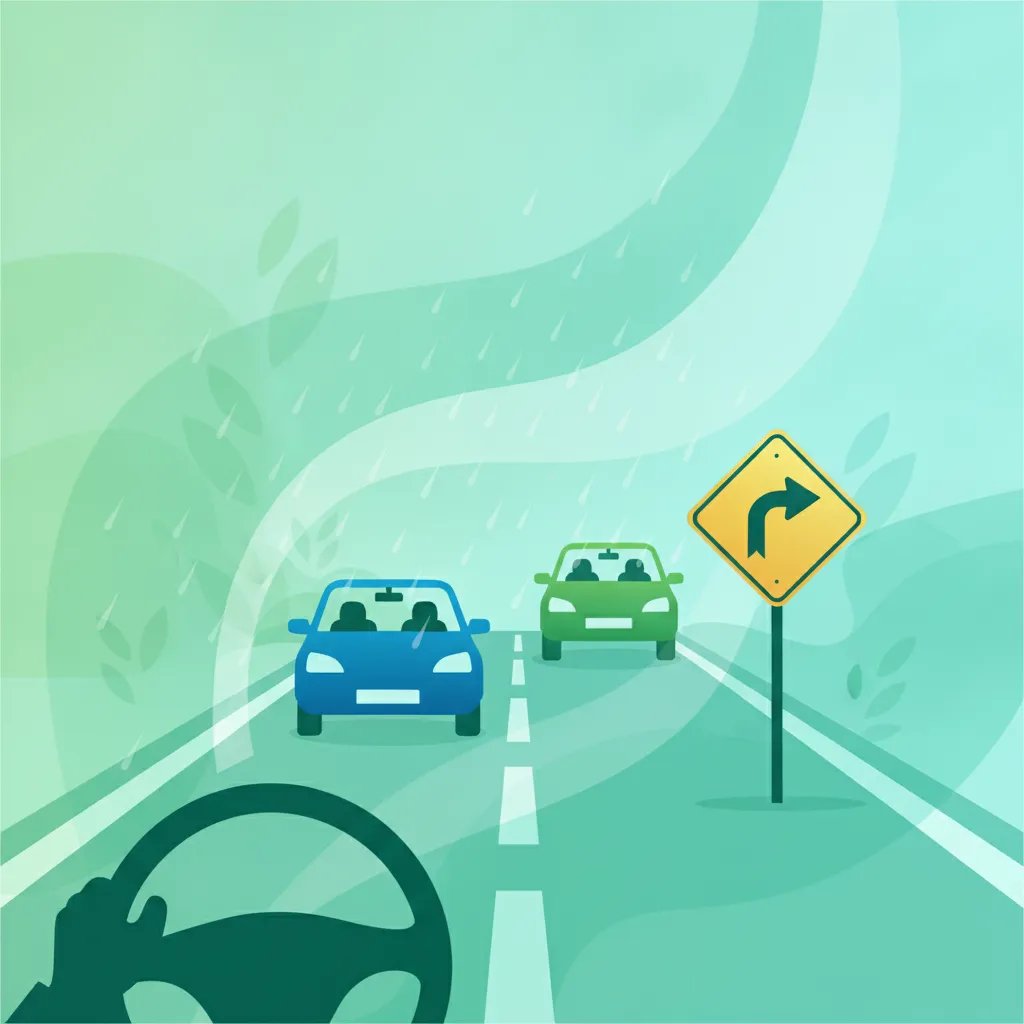
This lesson teaches a practical method for maintaining a safe distance from the vehicle in front. The 'two-second rule' provides a minimum time gap in dry conditions, which should be doubled to four seconds in the wet. Adhering to this rule gives you sufficient time to react and brake safely if the vehicle ahead stops suddenly.
Find clear answers to common questions learners have about Traffic Lights and Signal Phases. Learn how the lesson is structured, which driving theory objectives it supports, and how it fits into the overall learning path of units and curriculum progression in Great Britain. These explanations help you understand key concepts, lesson flow, and exam focused study goals.
The red-and-amber light means you must stop at the stop line. You should not proceed through the junction, as this signal indicates that the green light is about to appear, but the junction may still be occupied by other traffic.
Yes, if a green filter arrow is illuminated, you may move in the direction of the arrow even if the main light is red. Always ensure your path is clear before proceeding.
You should stop at the stop line. If there is an Advanced Stop Line (ASL) for cyclists, you must stop at the first line, as the second line is reserved for bicycles.
Yes, traffic light rules under the Highway Code apply to all road vehicles, including mopeds and light quadricycles. The laws regarding stopping and signalling are consistent for all motor vehicles.
Dive into our comprehensive question bank to find exactly what you need for your Great Britain theory test. Use our advanced filters to pinpoint specific subjects or test your knowledge on challenging areas, ensuring you're fully prepared for success.