
This lesson teaches you how to identify and manage the blind spots inherent to riding a moped or light quadricycle. Building on the visibility concepts from Unit 2, you will learn the precise moment to perform shoulder checks and how to judge traffic speed to create and maintain safe gaps during your journeys.

Lesson content overview
Navigating the roads safely on a moped or light quadricycle (Category AM licence) requires constant vigilance and skilled judgment. Two critical elements for preventing collisions are understanding and actively managing blind spots, and accurately assessing and creating safe gaps in traffic. This lesson delves into these essential safety practices, equipping you with the knowledge to ride defensively and confidently on Great Britain's roads.
A blind spot refers to any area around a vehicle that cannot be seen by the driver either directly through the windows or indirectly through mirrors. For moped and light quadricycle riders, understanding blind spots is paramount, as other, larger vehicles often have significant blind zones where a smaller vehicle can be completely invisible.
Blind spots are inherent to every vehicle, regardless of size. They are zones where your line of sight, even with properly adjusted mirrors, simply cannot reach. For larger vehicles like lorries, buses, or even cars, these blind spots can be extensive, making it easy for a moped or light quadricycle to disappear from the driver's view.
Being aware of these hidden areas is crucial because if you are in another vehicle's blind spot, their driver may not see you when they attempt to change lanes, turn, or maneuver. This dramatically increases the risk of a collision. As an AM rider, you must always assume that if you cannot see the driver of another vehicle in their mirrors, they likely cannot see you.
Blind spots can be categorised based on their nature:
Always be mindful of both static blind spots (like those around parked lorries) and dynamic blind spots (when you are alongside a moving bus). Your position relative to other vehicles dictates whether you are in their blind spot.
Ignoring blind spots is a common cause of accidents, particularly for vulnerable road users like moped and light quadricycle riders. When a larger vehicle changes lanes without seeing you in its blind spot, you could be crushed or forced off the road.
Common dangerous scenarios include:
As a rider, it is your responsibility to actively manage these risks by staying out of other vehicles' blind spots whenever possible, and always checking your own before making any lateral movement.
The lifesaver shoulder check is a critical defensive riding technique specifically designed to overcome blind spots. It is a quick, deliberate glance over your shoulder to confirm that the blind spot is clear before initiating any lateral movement.
A lifesaver shoulder check is not merely a quick peek; it is a decisive head turn that allows you to see what your mirrors cannot.
Prepare: Before checking, ensure you are in a stable riding position and can maintain control of your moped or light quadricycle.
Check Mirrors First: Always begin by checking your relevant mirror (left mirror for a left movement, right mirror for a right movement) to identify any larger, rapidly approaching vehicles.
Quick Head Turn: Quickly turn your head to glance over your shoulder in the direction you intend to move. This means looking directly into the area of your blind spot.
Scan and Confirm: Your eyes should quickly scan the blind spot area for any hidden vehicles, cyclists, or pedestrians.
Return and Act: Once you have confirmed the blind spot is clear, return your head to face forward and immediately execute your maneuver, provided the path is safe and you have signalled.
When to perform a lifesaver check:
Never perform a lifesaver check for too long. It should be a quick, decisive glance (no more than half a second) to avoid drifting or losing focus on the road ahead.
Mopeds and light quadricycles are smaller and less visible than cars, making them particularly susceptible to being overlooked by other drivers. The lifesaver check is your primary defence against being caught unaware in another vehicle's blind spot, or having another vehicle enter your blind spot without your knowledge.
It complements your mirror checks by providing a direct visual confirmation that your immediate surroundings are clear. This proactive step significantly reduces collision risk and is a fundamental skill expected for the Great Britain AM Licence.
Beyond blind spot awareness, successfully navigating traffic requires the ability to identify and create safe gaps. A safe gap is the necessary temporal and spatial distance between your vehicle and others that allows you to complete a maneuver without endangering yourself or others.
Safe gaps are not just about distance; they are fundamentally about time. A gap that looks large enough in a queue of stationary traffic might be dangerously small if vehicles are moving at speed.
The length of a safe gap is highly variable and depends on several factors:
As a general rule for longitudinal gaps, aim for a minimum two-second gap in good conditions. Double this to four seconds in wet weather, and increase it further in adverse conditions or at higher speeds.
Speed perception is the cognitive skill of accurately judging the speed of other road users. Gap assessment is the process of using this perception to calculate whether a specific gap in traffic is safe for your intended maneuver. These skills are vital for safe riding.
To effectively assess a gap, you must:
Many riders misjudge gaps by underestimating the closing speed of faster traffic or overestimating the distance covered by slower vehicles. Practicing these judgments in varied traffic conditions will sharpen your perception and lead to safer decisions.
Effective blind spot awareness and gap creation are underpinned by active scanning – the continuous, systematic movement of your eyes and head to gather visual information from all relevant areas of the road. This constant observation builds situational awareness, allowing you to anticipate hazards and make informed decisions.
Riding a moped or light quadricycle requires more than just looking straight ahead. You need to constantly check:
This systematic scanning pattern prevents you from focusing too narrowly on one area, which can lead to "tunnel vision."
Tunnel vision occurs when your focus narrows to a single point, causing you to miss critical information in your periphery. This is particularly dangerous for riders, as small vehicles can be easily missed.
To avoid tunnel vision:
By maintaining a broad and active visual scan, you significantly enhance your ability to detect hazards early, understand the traffic situation, and react appropriately.
Adhering to the Highway Code is not just about passing your theory test; it's about embedding safe riding practices that protect you and others. Several rules directly address blind spot awareness and safe gap creation.
Failure to adhere to these rules can have serious legal repercussions. Dangerous driving, which can include causing an accident due to not checking blind spots or moving into an unsafe gap, is a serious offence under the Road Traffic Act 1988. It can lead to:
Beyond legal penalties, the human cost of a collision due to negligence is immeasurable. Your safety, and the safety of others, depends on your diligence.
Let's explore common riding situations where blind spot awareness and safe gap creation are critical.
Scenario: You are riding your moped at 40 mph on the right-hand lane of a dual carriageway. Ahead, traffic is slowing down, and you wish to move into the left-hand lane to continue at a consistent speed or to prepare for an exit.
Correct Behavior:
Incorrect Behavior: Signalling and moving across after only checking your mirror, failing to spot a car that was in your blind spot. This could lead to a side-swipe collision.
Scenario: You are approaching a left-turn junction on a residential street with moderate oncoming traffic. You need to turn left, but there might be cyclists or pedestrians on your left side.
Correct Behavior:
Incorrect Behavior: Turning without a shoulder check, hitting a cyclist who was alongside you; or misjudging the speed of oncoming traffic, turning into their path, and causing them to brake sharply.
Scenario: You are riding on a city street and encounter a row of parked cars on your left. You need to pass them safely.
Correct Behavior:
Incorrect Behavior: Riding too close to the parked cars (insufficient lateral gap) or passing without checking for traffic behind you, risking a collision if you need to swerve suddenly.
Safe riding is dynamic; your approach to blind spots and gap assessment must adapt to changing conditions.
Pedestrians and cyclists are often less visible and less predictable.
Mastering blind spot awareness and safe gap creation is fundamental for obtaining your AM licence and, more importantly, for a lifetime of safe riding.
Here’s a summary of the core principles:
By consistently applying these principles, you will become a safer, more confident, and more responsible rider on Great Britain's roads.
Explore all units and lessons included in this driving theory course.
Lesson content overview
Explore all units and lessons included in this driving theory course.
Explore search topics learners often look for when studying Blind Spot Awareness and Safe Gap Creation. These topics reflect common questions about road rules, driving situations, safety guidance, and lesson level theory preparation for learners in Great Britain.
Browse additional driving theory lessons that cover connected traffic rules, road signs, and common driving situations related to this topic. Improve your understanding of how different rules interact across everyday traffic scenarios.
Understand critical road positioning and safe manoeuvring techniques, including lane changes and gap creation. Essential theory for confident and safe riding on Great Britain roads.
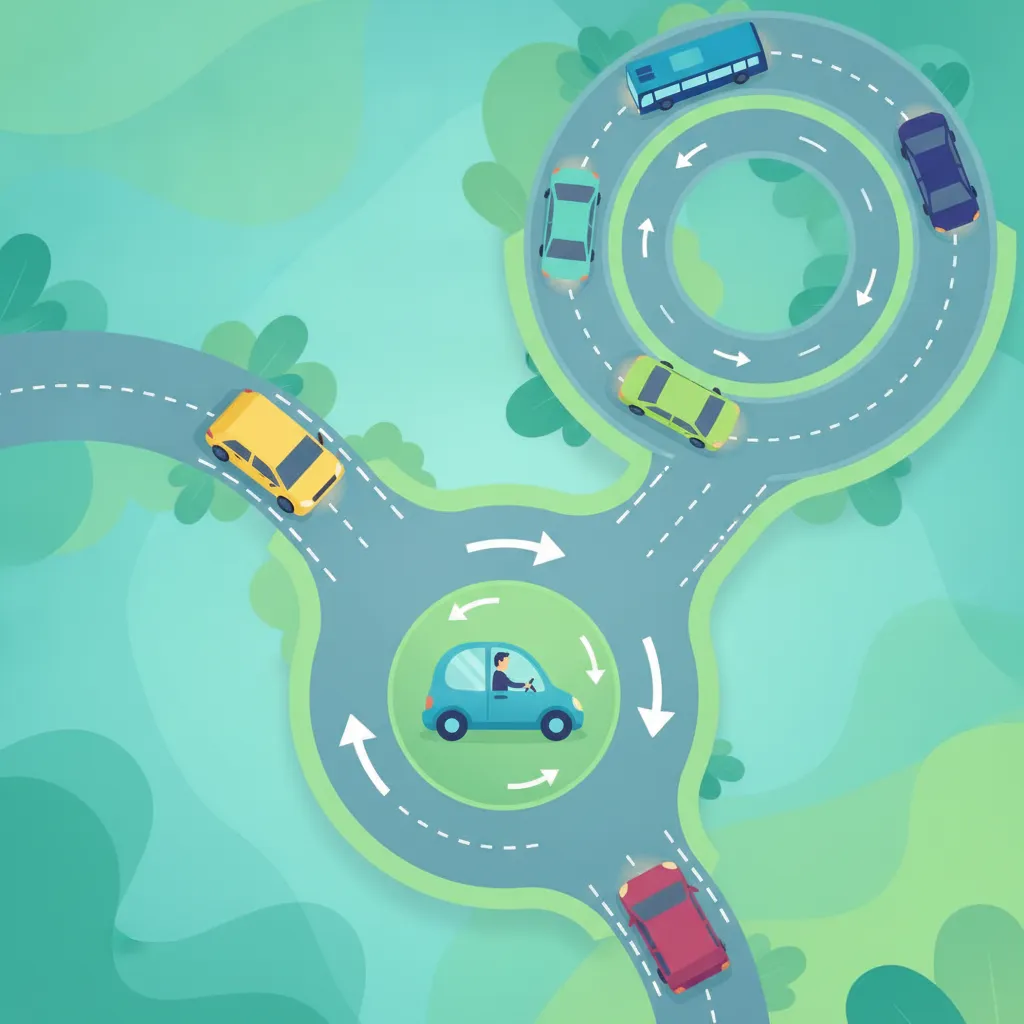
This lesson provides specific techniques for safely navigating the two main types of roundabouts in Great Britain. For multi-lane roundabouts, it covers how to choose the correct lane on approach, maintain your lane while circulating, and signal your exit correctly. It also explains the unique rules for mini-roundabouts, emphasizing the importance of giving way to traffic from the right and navigating them with caution due to their small size.

This lesson focuses on the correct procedure for moving from one lane to another. It highlights the critical safety steps of checking your interior and side mirrors, signalling in good time, and performing a final head check into your blind spot. This ensures the space you intend to move into is clear before you begin the manoeuvre.
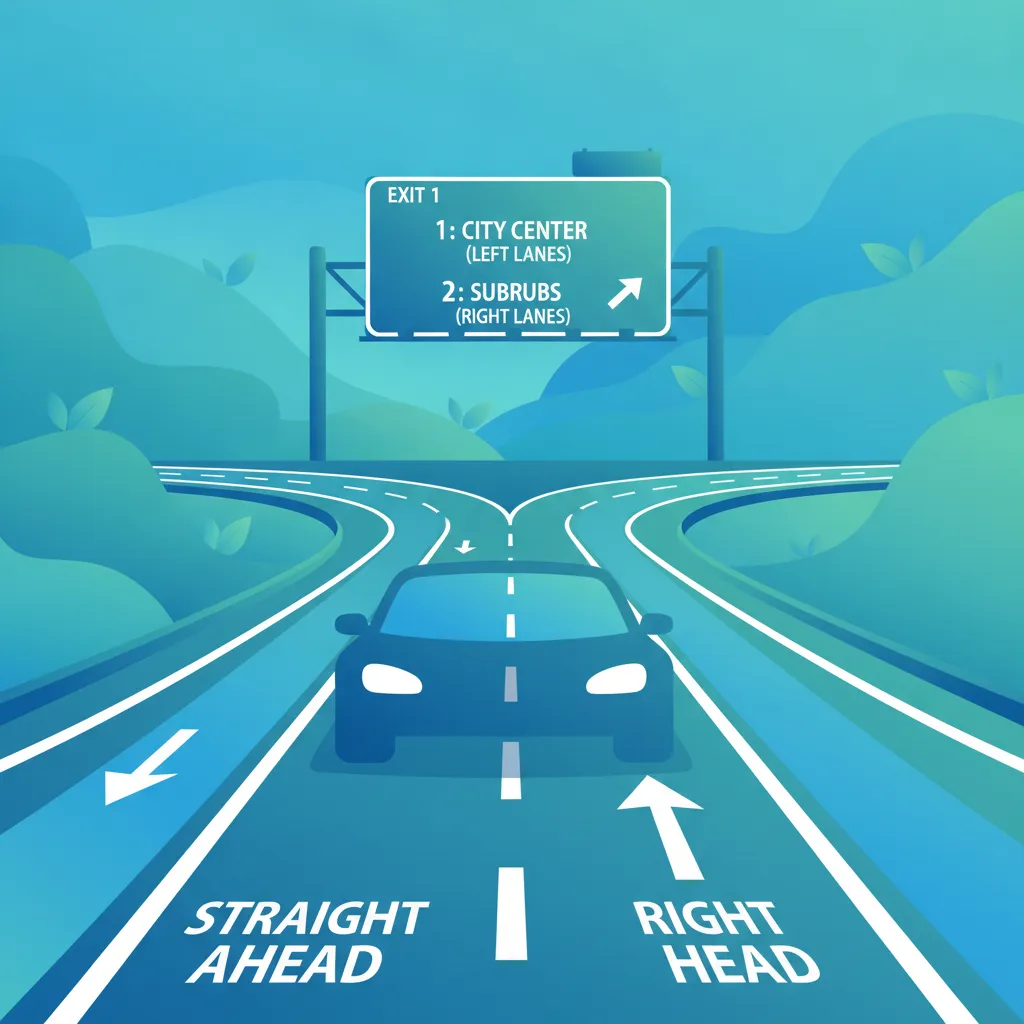
This lesson focuses on the rules conveyed by road markings, such as solid and broken white lines that dictate overtaking rules and lane boundaries. You will learn to interpret waiting and stopping restrictions indicated by yellow and red lines, and understand markings for specific road users like bus and cycle lanes. Maintaining correct lane discipline based on these markings is a fundamental skill for safe navigation and compliance with the Highway Code.

This lesson teaches strategic road positioning techniques to maximize your visibility and safety in traffic. You will learn how to choose the correct lane position to avoid the blind spots of larger vehicles and how to communicate your intentions through predictable riding. Key skills covered include effective use of shoulder checks, making eye contact with drivers, and maintaining a safe following distance, all of which are crucial for defensive riding on British roads.
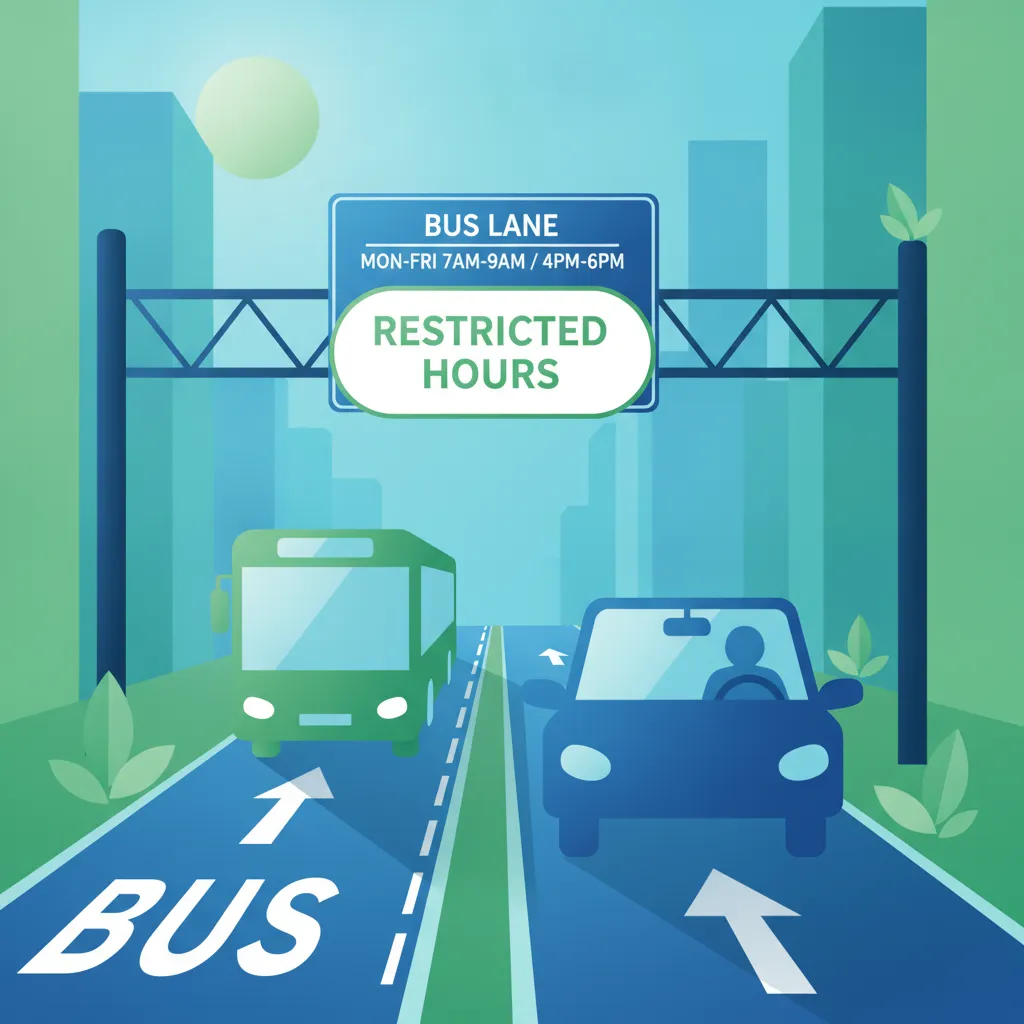
This lesson covers the importance of maintaining correct lane discipline when driving a large passenger vehicle. It details how to position your vehicle safely within a lane on various road types, including multi-lane carriageways and motorways. You will learn the specific rules governing bus lanes, including how to interpret markings, adhere to operating times, and understand the exemptions and penalties associated with their use to ensure legal and efficient driving.

This lesson tackles the complexities of large roundabouts, which often have multiple lanes and exits. It stresses the importance of reading signs on the approach to select the correct lane for your destination. You will learn about maintaining lane discipline while on the roundabout and signalling correctly as you pass exits and prepare to leave.

This lesson focuses on the critical skill of positioning your AM vehicle safely in relation to larger vehicles and roadside hazards like parked cars. You will learn to identify and stay out of the extensive blind spots of lorries and buses, especially at junctions. The content also provides strategies for maintaining a safe 'space cushion' around your vehicle and navigating narrow gaps or filtering in traffic without compromising your safety.

This lesson explains that your lane is more than just a single track. You will learn how to move within your lane to a position of safety, whether it's to be more visible in another driver's mirrors, to avoid road surface hazards, or to set up for a corner. This proactive approach to positioning is a key defensive riding skill.

This lesson focuses on the importance of excellent lane discipline for drivers of large vehicles. It details the rules and best practices for lane selection on motorways and dual carriageways, emphasizing the need to stay in the appropriate lane and signal intentions early. Correct positioning within a lane to maximize safety margins and visibility, especially around vulnerable road users, is a key focus for maintaining professional driving standards.
This lesson details all the necessary documentation required at each stage of the AM licensing process, from applying for a provisional licence to attending your theory and practical tests. You will learn about the required forms of identification, proof of insurance, and vehicle registration documents. The lesson also provides a clear overview of the DVSA test procedures, explaining the format of the multiple-choice theory test, the hazard perception section, and the criteria for the practical assessment.
Develop hazard perception skills focusing on blind spots and safe interactions with vulnerable road users. Key theory for anticipating and avoiding dangers on UK roads.
This lesson teaches you to interpret warning signs, which are typically triangular and designed to alert you to potential hazards ahead. You will learn the meanings of common signs indicating sharp curves, slippery surfaces, roadworks, or areas with frequent pedestrian or animal crossings. Understanding these signs is crucial for anticipating dangers and adjusting your speed and position defensively, which is especially important for vulnerable riders of AM vehicles.
This lesson focuses on the critical skill of positioning your AM vehicle safely in relation to larger vehicles and roadside hazards like parked cars. You will learn to identify and stay out of the extensive blind spots of lorries and buses, especially at junctions. The content also provides strategies for maintaining a safe 'space cushion' around your vehicle and navigating narrow gaps or filtering in traffic without compromising your safety.
This lesson teaches drivers how to identify various types of vulnerable road users and anticipate their potential actions to prevent conflicts. It covers the specific risks associated with pedestrians, cyclists, motorcyclists, children, and elderly or disabled individuals. Emphasis is placed on heightened awareness and defensive driving techniques required to share the road safely. Understanding their perspectives and typical behaviours is key to protecting them and maintaining safety for everyone.
This lesson introduces the skill of hazard perception, a critical component of the official theory test and safe driving. It teaches you to actively scan your environment for potential dangers, such as a pedestrian about to cross or a car waiting to emerge from a junction. By identifying these situations early, you can take action to avoid them turning into actual dangers.

This lesson is dedicated to the safe interaction between large vehicles and the most vulnerable road users: pedestrians and cyclists. It highlights high-risk scenarios, such as left turns at junctions, where cyclists can be hidden in nearside blind spots. The content stresses the importance of anticipation, using signals clearly, and providing generous space at crossings, in cycle lanes, and within pedestrianized zones to prevent tragic accidents.
This lesson focuses on developing advanced hazard perception skills and using them to manage your speed proactively. You will learn to constantly scan the road for potential dangers, anticipate the actions of other road users, and adjust your speed to give yourself more time to react. This defensive approach to speed management is fundamental to staying safe and avoiding emergency situations while riding in complex traffic environments.

This lesson explains how to adapt your driving around different vehicles. You will learn to look out for motorcyclists, who are often hard to see, especially at junctions. It also covers the challenges of sharing the road with large vehicles, such as their extended blind spots, wider turning circles, and the wind turbulence they can create.
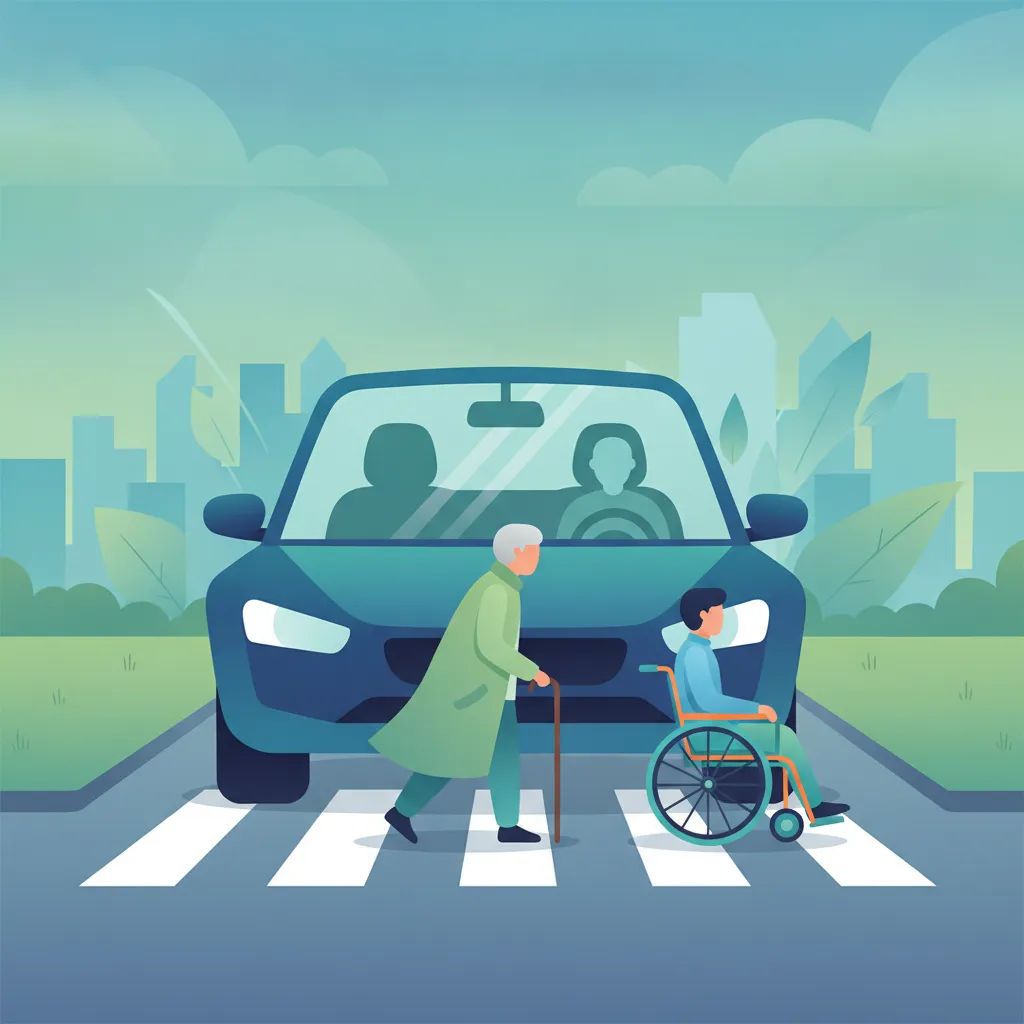
This lesson focuses on developing a proactive and patient approach towards elderly and disabled road users. It explains how to recognize and provide additional time and space for individuals with slower movement, mobility scooters, or sensory impairments. The content emphasizes the importance of driver attitude, patience at crossings, and anticipating the needs of these vulnerable individuals. Understanding these factors is crucial for preventing accidents and demonstrating a high level of professional care and responsibility.

This lesson focuses on the critical skill of managing the large blind spots inherent to buses and coaches. It details the purpose of different mirror classes (e.g., wide-angle and kerb-view) and how to use them effectively. Learners will develop a systematic scanning and mirror-checking routine to maintain constant awareness of their surroundings, particularly looking for cyclists and pedestrians who may be hidden from direct view, thereby minimizing the risk of a collision.

This lesson highlights why motorcyclists are considered vulnerable road users. It covers the increased risk of serious injury in a collision due to lack of physical protection compared to car occupants. You will learn about common visibility challenges and how to adopt proactive, defensive strategies to mitigate risks and anticipate potential hazards on the road.
Find clear answers to common questions learners have about Blind Spot Awareness and Safe Gap Creation. Learn how the lesson is structured, which driving theory objectives it supports, and how it fits into the overall learning path of units and curriculum progression in Great Britain. These explanations help you understand key concepts, lesson flow, and exam focused study goals.
It is called a lifesaver because it reveals vehicles or cyclists hidden in your blind spot that your mirrors cannot see. Failing to perform this check before moving off or turning is a leading cause of collisions for small vehicle riders.
You must perform a shoulder check every time you change your road position. This includes moving off from the kerb, turning left or right, changing lanes, or overtaking. Always check the blind spot immediately before initiating the maneuver.
Use the two-second rule as a base, then increase it in wet or slippery conditions. When maneuvering, look for a clear space that allows you to accelerate smoothly without forcing other drivers to brake or change direction.
Yes. Even with high-quality mirrors, there are areas immediately to the side and rear-diagonal of your vehicle that mirrors cannot cover. The physical shoulder check is the only way to ensure these areas are clear.
Dive into our comprehensive question bank to find exactly what you need for your Great Britain theory test. Use our advanced filters to pinpoint specific subjects or test your knowledge on challenging areas, ensuring you're fully prepared for success.