
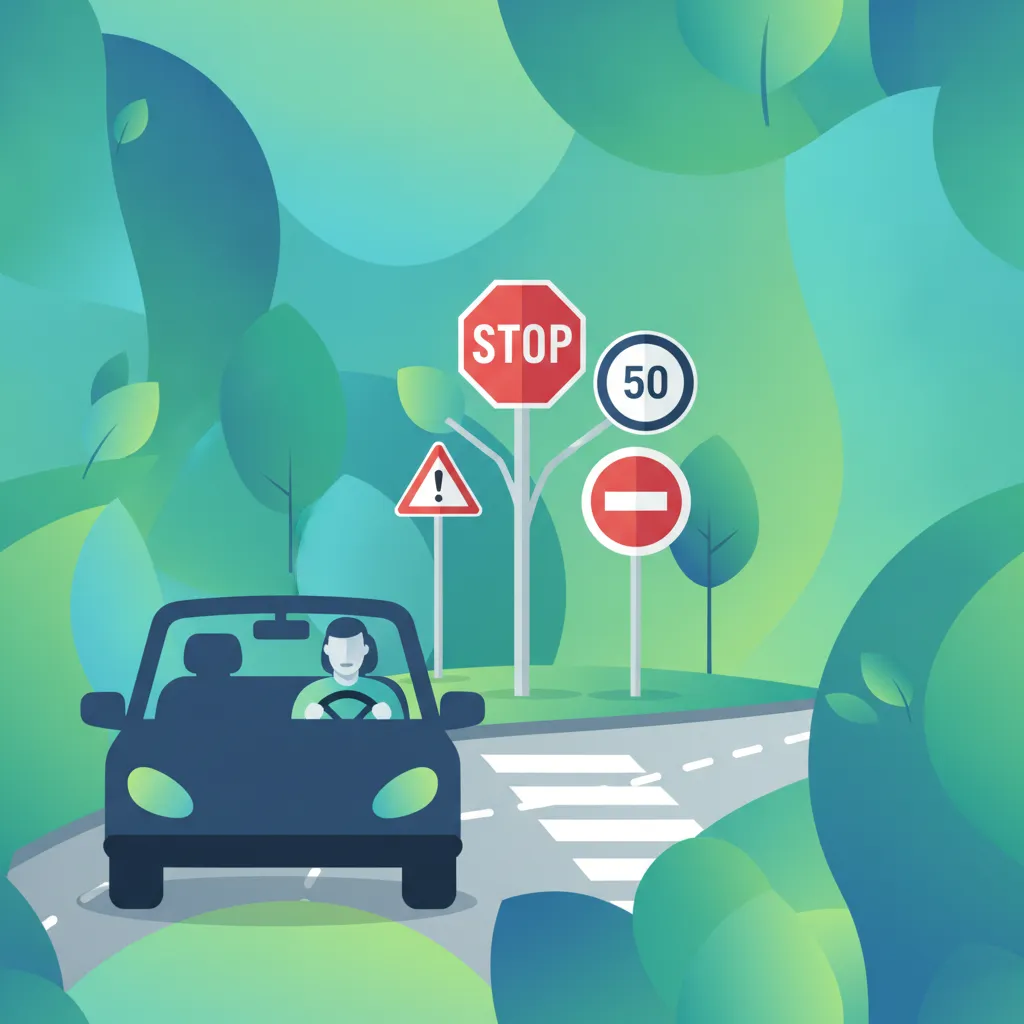
This lesson provides an essential overview of regulatory signs in Great Britain, which carry legal weight and must be obeyed. You will learn to distinguish between prohibitory signs that restrict your actions and mandatory signs that dictate specific manoeuvres. Understanding these signs is a cornerstone of the Category B theory syllabus and crucial for safe, law-abiding driving.
Lesson content overview
Welcome to this essential lesson on regulatory road signs, a fundamental part of preparing for your Great Britain Category B driving theory test. Regulatory signs are not merely suggestions; they are legally binding instructions that all road users must obey. Disregarding them can lead to serious consequences, including legal penalties, points on your licence, or an increased risk of accidents. Mastering their design, meaning, and application is crucial for safe and lawful driving on UK roads.
This chapter will delve into the comprehensive breakdown of UK regulatory signs, exploring their categories, design principles, and practical interpretations. We will cover prohibitory signs, which indicate actions that are forbidden, and mandatory signs, which dictate required actions. Understanding these signs is not only vital for passing your theory test but also for ensuring smooth traffic flow and protecting all road users.
Regulatory signs are a critical component of traffic management in the UK, designed to control driver behaviour and maintain safety. Unlike advisory or informative signs, regulatory signs impose legal obligations. Non-compliance is considered a legal offence and can result in fines, penalty points, or even prosecution, depending on the severity of the infraction.
These signs are derived from established traffic engineering principles. Their primary purpose is to regulate traffic flow, protect vulnerable road users such as pedestrians and cyclists, and minimise the risk of collisions. The legal enforceability of these signs ensures a uniform response from drivers, which is essential for predictability and safety on the roads. For instance, a speed limit sign requires all drivers to adhere to a maximum speed, ensuring consistency and reducing the potential for high-speed impacts.
The knowledge you gain from this lesson directly underpins other aspects of the driving curriculum, such as understanding priority rules, executing safe manoeuvres, and comprehending the penalties for various driving offences. It is impossible to safely navigate UK roads without a thorough understanding of regulatory signs.
To effectively interpret and obey regulatory signs, it is important to understand the fundamental principles guiding their design and application. These principles ensure clarity, consistency, and legal authority across the road network.
The most crucial principle of regulatory signs is their legal enforceability. Every instruction conveyed by a regulatory sign must be obeyed by road users. Failure to comply is a statutory offence under UK law. This principle ensures that safety-critical behaviours, such as adhering to speed limits or obeying "No Entry" instructions, are uniformly followed. Drivers must understand that these are not recommendations but strict directives, with penalties such as fines, points on a licence, or even prosecution for non-compliance.
Regulatory signs in the UK utilise a standardised design to enable rapid visual processing, especially in high-speed or low-visibility conditions. They primarily feature distinctive shapes and colours:
This consistency allows drivers to quickly recognise a sign's regulatory status and immediately infer its general meaning before processing the specific symbol or number.
On occasion, multiple signs or road markings may appear to give conflicting instructions. In such cases, there is a hierarchy of significance. For example, a "No Entry" sign will always override any other sign that might suggest a particular manoeuvre is allowed. This prevents contradictory instructions from confusing road users and ensures that the most restrictive or safety-critical regulation takes precedence. Drivers must always apply the most restrictive applicable sign or rule.
The application of regulatory signs can vary based on the specific location and prevailing conditions. For instance, a speed limit on a motorway might be different from one in a residential area, reflecting varying risk levels and road environments. Temporary signs, often with yellow or orange backgrounds, can also alter normal regulations for specific periods, such as during roadworks or special events. Drivers must be vigilant and aware of these location-specific or situation-specific exceptions.
Many regulatory signs are permanent fixtures, but some have temporary or variable validity. Temporary signs are commonly used for roadworks, diversions, or special events, often featuring a yellow or orange background. These signs are enforced for the duration indicated or until they are removed. Furthermore, modern motorways increasingly use variable speed limit signs displayed on electronic gantries, which can change in real-time based on traffic flow or weather conditions. Drivers must pay close attention to these modifications and obey them instantly.
Regulatory signs are broadly categorised into prohibitory signs and mandatory signs, each conveying a distinct type of legal instruction.
Prohibitory signs are circular with a red border and typically a white background. They indicate actions or behaviours that are forbidden. It is crucial to understand that performing a prohibited action constitutes a legal offence.
These signs restrict vehicle access to certain roads or areas.
Disobeying a 'No Entry' sign can lead to a head-on collision or serious traffic disruption, as you would be driving against the flow of traffic, often on a one-way street.
These signs set the maximum lawful speed for a road segment.
These signs dictate how lanes may or may not be used.
These signs forbid specific turns or movements.
Mandatory signs are blue and circular with white symbols or arrows. They indicate actions that drivers must take. Failing to follow these instructions is also a legal offence.
These signs specify the direction of travel that must be followed.
These signs dictate which lane must be used for a specific manoeuvre or for certain vehicle types.
Always check the times of operation for bus lanes, as some are only active during peak hours, while others operate 24/7.
Let's look at some key regulatory signs in more detail, understanding their practical meaning and associated Highway Code rules.
Speed limit signs are among the most frequently encountered regulatory signs. They are white circles with a red border, displaying a numeric value in miles per hour (mph).
The "No Entry" sign is one of the most critical prohibitory signs, signifying an absolute ban on entering a road or area from the direction it faces. It is a red circular sign with a horizontal white bar.
The "No Overtaking" sign is a red circular sign featuring two black cars with a red diagonal slash through them.
These are blue circular signs with white arrows or symbols, dictating specific lane usage.
Temporary regulatory signs have a distinctive yellow or orange background, often with black text or symbols. They are used to indicate temporary restrictions or instructions, typically for roadworks, diversions, or special events.
Adherence to regulatory signs is explicitly detailed in the Highway Code, which provides the legal framework for their enforcement. Key rules include:
Always refer to the latest edition of The Highway Code for the most up-to-date and specific wording of these rules.
Despite their clear nature, regulatory signs are frequently violated, often due to inattention, misunderstanding, or deliberate disregard.
The effectiveness and interpretation of regulatory signs can be influenced by various external factors. Drivers must adapt their behaviour accordingly.
Understanding the 'why' behind regulatory signs enhances compliance and promotes safer driving habits.
For Great Britain Category B learner drivers, mastering regulatory signs is non-negotiable for safe and lawful driving.
Explore all units and lessons included in this driving theory course.
Lesson content overview
Explore all units and lessons included in this driving theory course.
Explore search topics learners often look for when studying Regulatory Signs Overview. These topics reflect common questions about road rules, driving situations, safety guidance, and lesson level theory preparation for learners in Great Britain.
Browse additional driving theory lessons that cover connected traffic rules, road signs, and common driving situations related to this topic. Improve your understanding of how different rules interact across everyday traffic scenarios.
Understand the legal basis and mandatory nature of regulatory road signs in Great Britain. Learn about Highway Code rules, common violations, and the consequences of non-compliance for Category B drivers. Essential for driving theory.
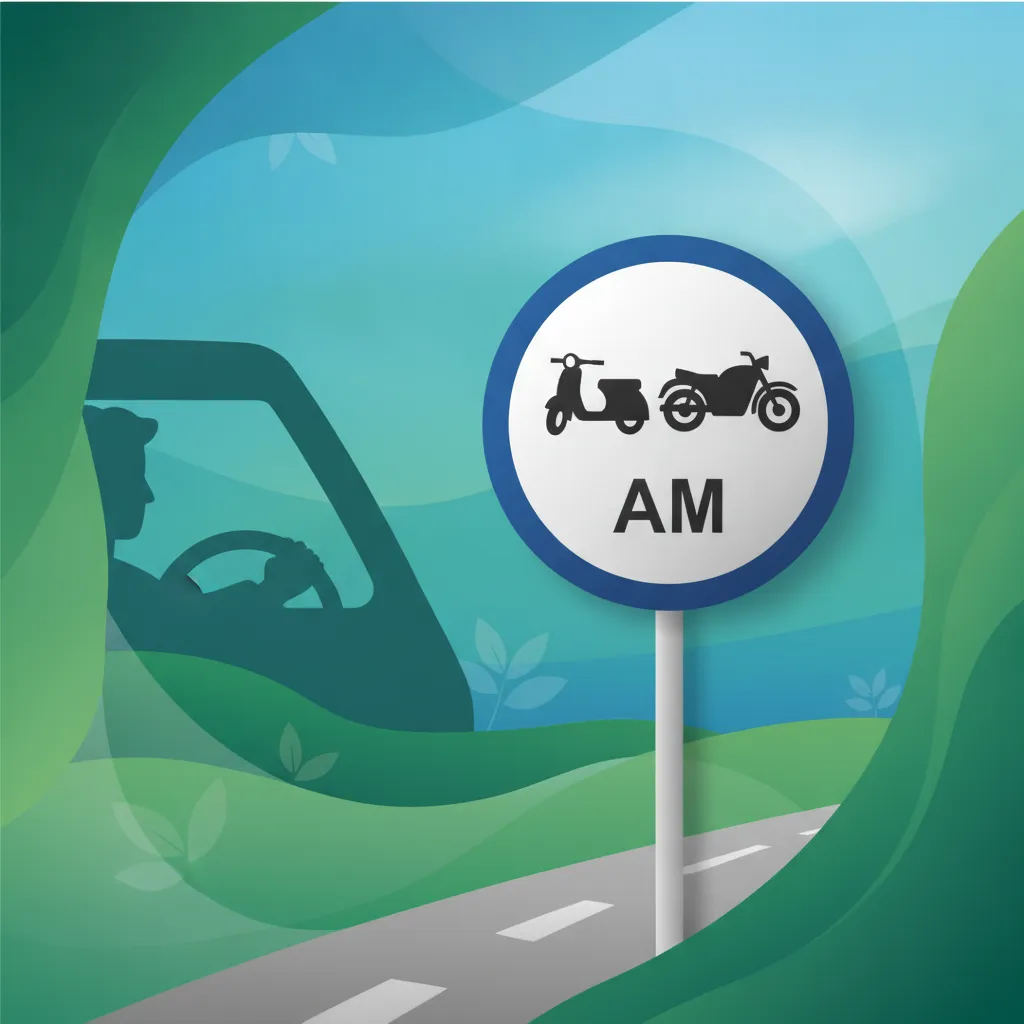
This lesson focuses on regulatory road signs, which convey legally enforceable instructions that all road users must follow. You will learn to identify and understand signs dictating speed limits, prohibited actions like 'no entry' or 'no overtaking', and mandatory directions at junctions. The content explains the distinct shapes and colours used for these signs, ensuring you can comply with their instructions correctly and avoid penalties while riding your AM vehicle.

This lesson focuses on regulatory signs, which are legally enforceable and typically circular in shape. You will learn the meaning of signs with red borders that prohibit actions and blue signs that give a mandatory instruction. Understanding these signs, such as speed limits and 'no entry', is essential for lawful and safe riding.
This lesson covers the full range of road signs encountered by passenger vehicle drivers, focusing on regulatory, warning, and informational signs. It explains the visual characteristics of sign shapes, colors, and symbols, particularly those associated with bus lane usage and priority rules. By mastering sign hierarchy and meaning, drivers can quickly interpret the sign's intent and adjust their driving behaviour accordingly, ensuring full compliance with the Highway Code and enhancing road safety.

This lesson covers the signs that help you navigate your journey effectively. It explains how sign colours indicate the type of road—blue for motorways, green for primary routes, and white for non-primary routes. You will also learn to interpret signs for tourist attractions, services, and lane information at complex junctions.

Gain a comprehensive understanding of the legal repercussions for violating goods vehicle regulations, which can range from civil penalties to criminal prosecution. This lesson details the fines, penalty points, and potential vehicle seizure enforced by authorities like the DVSA and the police. It clarifies how serious offences are handled in court and how repeated infractions can lead to escalating sanctions, impacting both your licence and professional career.

This lesson explains how to drive safely through areas where roadworks are taking place. It stresses the importance of obeying all temporary signs, especially mandatory speed limits, which are in place for your safety and the safety of road workers. You will learn about navigating narrow lanes, contraflow systems, and how to follow official diversion signs.
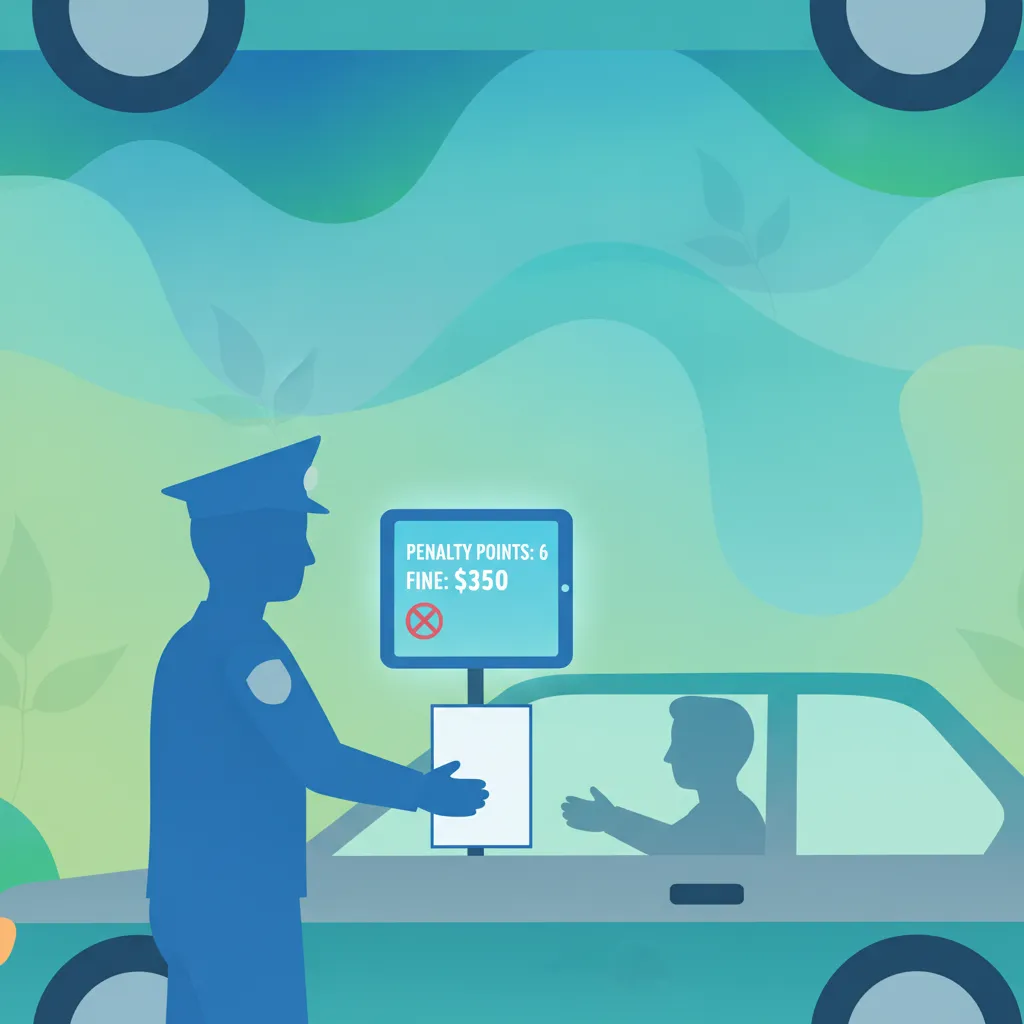
This lesson outlines the serious consequences of failing to comply with road transport law. It details the graduated system of fines and penalties that can be issued by the DVSA and police for offences ranging from drivers' hours violations to vehicle defects. The lesson also explains more severe sanctions, such as vehicle prohibition, licence suspension, and referral to the Traffic Commissioner, which can impact both the driver and their employer.
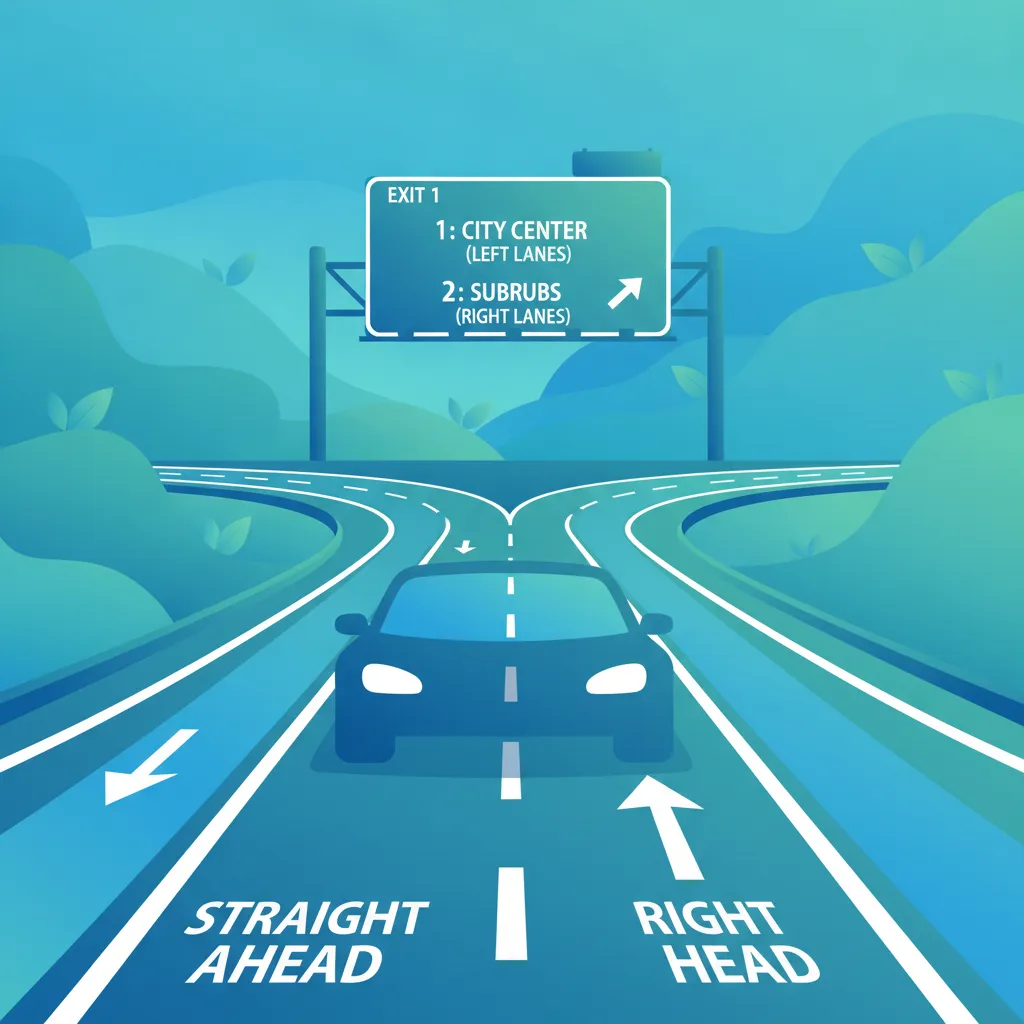
This lesson focuses on the rules conveyed by road markings, such as solid and broken white lines that dictate overtaking rules and lane boundaries. You will learn to interpret waiting and stopping restrictions indicated by yellow and red lines, and understand markings for specific road users like bus and cycle lanes. Maintaining correct lane discipline based on these markings is a fundamental skill for safe navigation and compliance with the Highway Code.
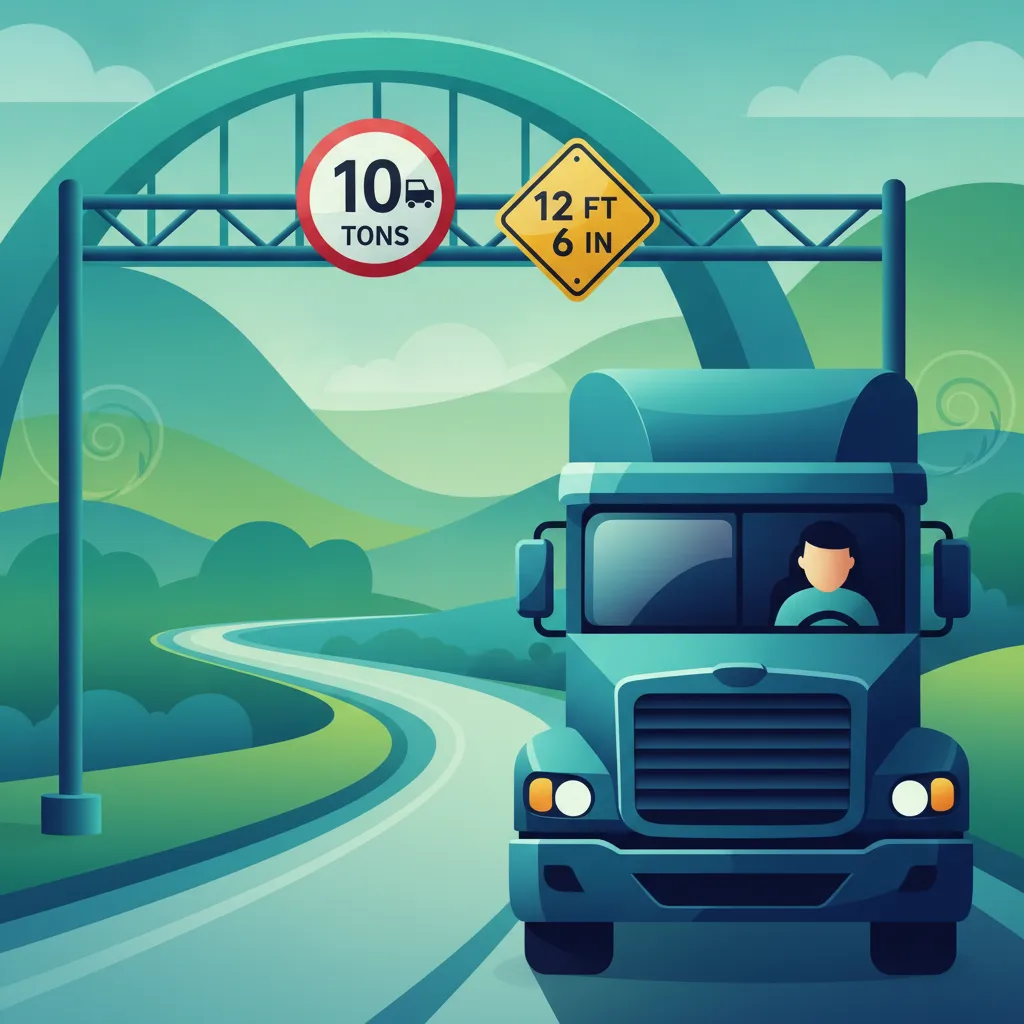
This lesson provides a detailed focus on the specific road signs that directly affect drivers of large goods vehicles. You will learn to accurately interpret mandatory signs for weight, height, and width restrictions, as well as signs indicating lane usage and prohibited routes. Understanding these signs is not optional; it is a legal requirement for avoiding fines, preventing accidents, and ensuring the safe passage of your vehicle through the road network.
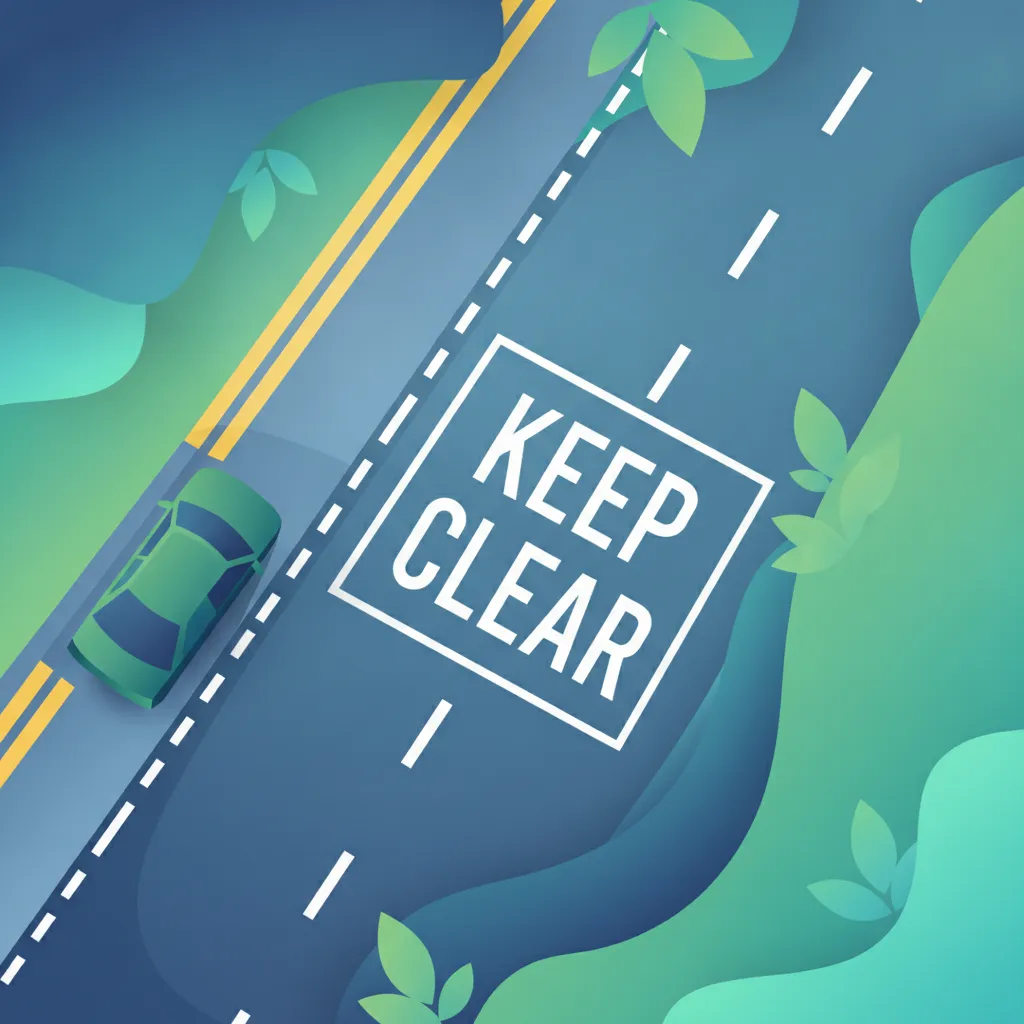
This lesson explains markings found at the side of the road that regulate parking and stopping. You will learn the meaning of single and double yellow lines, and the stricter rules associated with red lines on 'Red Routes'. The lesson also covers markings for parking bays, loading zones, and hatched areas that are designed to separate traffic.
Explore how weather, road type, and temporary conditions affect the interpretation and application of regulatory road signs in Great Britain. Learn about mandatory rules for motorways, rural roads, and roadworks zones.
This lesson explains how to drive safely through areas where roadworks are taking place. It stresses the importance of obeying all temporary signs, especially mandatory speed limits, which are in place for your safety and the safety of road workers. You will learn about navigating narrow lanes, contraflow systems, and how to follow official diversion signs.

This lesson prepares you for the challenges of countryside driving. It emphasizes that the national speed limit on these roads is often too fast for the conditions. You will learn how to approach sharp bends, use passing places on single-track roads, and anticipate hazards like slow-moving tractors, horse riders, or mud on the road surface.

This lesson provides essential advice for driving when weather conditions are poor. It explains how rain can cause aquaplaning and why you must double your following distance. You will also learn techniques for driving in icy conditions, including gentle use of controls to avoid skidding, and the correct use of lights in fog.
This lesson covers the signs that help you navigate your journey effectively. It explains how sign colours indicate the type of road—blue for motorways, green for primary routes, and white for non-primary routes. You will also learn to interpret signs for tourist attractions, services, and lane information at complex junctions.
This lesson covers the full range of road signs encountered by passenger vehicle drivers, focusing on regulatory, warning, and informational signs. It explains the visual characteristics of sign shapes, colors, and symbols, particularly those associated with bus lane usage and priority rules. By mastering sign hierarchy and meaning, drivers can quickly interpret the sign's intent and adjust their driving behaviour accordingly, ensuring full compliance with the Highway Code and enhancing road safety.

This lesson teaches you to interpret warning signs, which are typically triangular and designed to alert you to potential hazards ahead. You will learn the meanings of common signs indicating sharp curves, slippery surfaces, roadworks, or areas with frequent pedestrian or animal crossings. Understanding these signs is crucial for anticipating dangers and adjusting your speed and position defensively, which is especially important for vulnerable riders of AM vehicles.

This lesson teaches you to interpret warning signs, which are typically triangular with a red border. These signs are crucial for anticipating potential dangers, from changes in road layout to the presence of pedestrians or animals. By understanding these warnings, you can adjust your driving to safely navigate upcoming hazards.
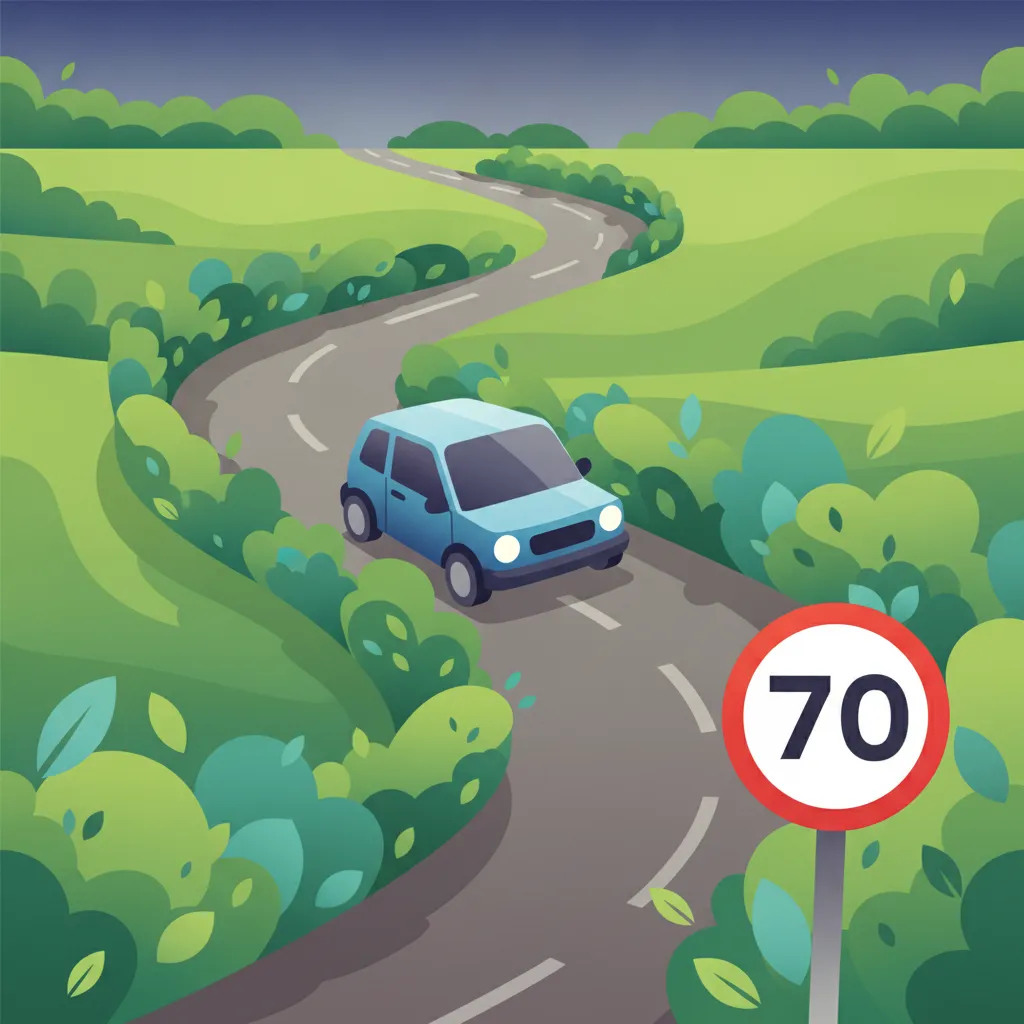
This lesson addresses the unique set of challenges that rural roads present to HGV drivers. It covers how to safely navigate narrow and winding lanes, the importance of anticipating hazards like slow-moving agricultural machinery, mud on the road, and wildlife. You will learn how the national speed limit applies to your vehicle on these roads and why it is often necessary to travel at a much lower speed to ensure safety.

This lesson provides guidance on how to safely and compliantly navigate through roadworks, which are a common feature of the road network. It covers the interpretation of temporary signs, strict adherence to reduced speed limits, and how to maneuver through narrow lanes and contraflow systems. The paramount importance of protecting road workers by driving with extra care and attention is a central theme of this lesson.

This lesson prepares you for the specific challenges of driving in the countryside. It explains the correct procedure for overtaking horse riders: slow down and pass wide, ensuring you do not spook the animal. You will also learn how to anticipate and safely manage encounters with slow-moving tractors and other farm machinery.
Find clear answers to common questions learners have about Regulatory Signs Overview. Learn how the lesson is structured, which driving theory objectives it supports, and how it fits into the overall learning path of units and curriculum progression in Great Britain. These explanations help you understand key concepts, lesson flow, and exam focused study goals.
Prohibitory signs generally have a red circular border and tell you what you must not do, such as 'No Entry' or 'No Right Turn'. Mandatory signs are usually blue circles and tell you what you must do, such as 'Turn Left' or 'Mini-roundabout' (keep left).
Yes, in the Great Britain highway system, circular signs are primarily used to provide instructions or orders that are legally enforceable. Prohibitory signs use red borders, while mandatory signs use a blue background.
No, the theory test focuses on your ability to recognise the sign, understand its meaning, and know how to react to it in traffic. You do not need to memorise the technical dimensions or manufacturing standards of the signs.
Most do, but some include text, speed limit numbers, or specific symbols like arrows. Regardless of the content, the shape and colour scheme are the primary indicators that the sign is a regulatory one that you must obey.
Dive into our comprehensive question bank to find exactly what you need for your Great Britain theory test. Use our advanced filters to pinpoint specific subjects or test your knowledge on challenging areas, ensuring you're fully prepared for success.