
This lesson provides an essential guide to the pedestrian crossings and road markings you will encounter on Great Britain roads. It builds on your knowledge of traffic signals and road signs to ensure you understand your legal obligations when approaching designated crossing points. Mastery of these rules is vital for both your Category B theory test and developing safe, responsible driving habits.

Lesson content overview
Navigating the roads safely and responsibly is paramount for all drivers, especially when interacting with pedestrians, who are among the most vulnerable road users. This comprehensive lesson, tailored for Great Britain Category B learner drivers, delves into the specific types of pedestrian crossings and the critical road markings that govern driver behaviour at these points. Understanding these rules is not merely about passing your theory test; it's about fostering safe driving habits, preventing accidents, and complying with the law.
Pedestrian crossings are specially designated areas designed to provide pedestrians with a safe and clear path to cross a road. They are engineered with specific markings and often signals to manage the flow of both vehicle and foot traffic, aiming to minimise conflict and enhance safety. Your ability to correctly identify, interpret, and react to these crossings and their associated markings is a fundamental aspect of responsible driving.
The fundamental principle at all pedestrian crossings is the safety of those on foot. Drivers have a legal and ethical obligation to prioritise pedestrians, particularly at designated crossing points. These crossings fall into two broad categories: uncontrolled, where pedestrians primarily rely on driver awareness, and controlled, where traffic signals regulate movement.
Zebra crossings are perhaps the most iconic type of pedestrian crossing, easily recognisable by their bold, alternating black and white stripes painted across the road surface. These markings give the crossing its name, resembling a zebra's coat. At each side of the crossing, you will find a tall, amber-coloured pole topped with a flashing light, known as a Belisha beacon, which enhances the crossing's visibility, especially during poor light conditions or at night.
Driver Obligations at Zebra Crossings: Drivers must always be prepared to stop at a zebra crossing. The Highway Code mandates that you must give way to any pedestrian who is on the crossing or waiting to cross. This means if you see someone waiting at the kerb with the clear intention of crossing, you should stop before the white stop line (if present) or the crossing itself, and allow them to cross. It is illegal to proceed if a pedestrian is on the crossing, even if they are on the opposite side of the road.
Common Misunderstandings: A frequent error drivers make is only stopping if a pedestrian is directly in their path or halfway across the road. The rule applies from the moment a pedestrian indicates an intention to cross. You should also be vigilant and check both sides of the crossing for pedestrians, as they may approach quickly. Never wave pedestrians across, as this could be misinterpreted by other drivers and cause an accident.
Controlled crossings use traffic light signals to regulate when vehicles stop and when pedestrians can cross. These are typically found on busier roads where vehicle speeds and volumes necessitate a more structured approach to managing traffic flow.
Pelican crossings are a common type of signal-controlled crossing. They feature standard traffic lights for vehicles (red, amber, green) and separate 'red man' and 'green man' signals for pedestrians, activated by a push-button.
Signal Sequence for Drivers:
Common Misunderstandings: Many drivers misinterpret the flashing amber as a general 'go' signal, even if pedestrians are still on the crossing or just stepping off. It is imperative to ensure the crossing is entirely clear before moving off on a flashing amber light. Proceeding while pedestrians are still crossing is illegal and highly dangerous.
Puffin crossings represent a more modern and 'intelligent' design compared to pelican crossings. While they also have push-button controls and 'red man' / 'green man' signals for pedestrians, their key distinction lies in the use of pedestrian detectors (usually infrared or pressure pads). These sensors monitor whether pedestrians are waiting to cross and, more importantly, whether they are still on the crossing itself.
Signal Sequence for Drivers:
Benefits of Puffin Crossings: The pedestrian detection system means the 'green man' phase for pedestrians can be held longer if needed, or cancelled if pedestrians press the button but then decide not to cross. This makes traffic flow more efficient and safer for pedestrians, as drivers only get a green light when the crossing is genuinely clear.
Common Misunderstandings: Drivers often confuse puffin crossings with pelican crossings and mistakenly expect a flashing amber phase. This can lead to frustration or dangerous assumptions. Always remember: if there's no flashing amber, it's likely a puffin crossing, and you must wait for the solid green light before proceeding.
Toucan crossings are named to imply "two-can" cross – both pedestrians and cyclists. They are signalised crossings, similar to puffins, but with wider crossing areas to accommodate both types of users. The pedestrian signal display includes both a 'green man' and a 'green bicycle' symbol, indicating when both can cross.
Driver Obligations and Signal Sequence: Drivers must obey the standard traffic light sequence (red, amber, green) at a toucan crossing, identical to a puffin crossing. There is no flashing amber phase. Cyclists using the crossing must also obey the signals; they must not proceed on a red light or when the 'red man' / 'red bicycle' is displayed.
Key Differences:
Common Misunderstandings: Cyclists sometimes treat toucan crossings as extensions of cycle lanes and may be tempted to cross on a red signal, assuming they have priority. This is incorrect and highly dangerous. Both cyclists and drivers must strictly adhere to the traffic signals.
Beyond the various types of crossings themselves, several specific road markings and signals play a vital role in ensuring safety and clarity at these points.
White zig-zag lines are a critical safety feature preceding all types of pedestrian crossings, whether zebra, pelican, puffin, or toucan. These lines serve several crucial purposes:
The length of the zig-zag zone can vary, typically extending up to 15 metres before the stop line at the crossing. On dual carriageways or roads with higher speed limits, this zone may be longer (up to 30 metres) to provide adequate warning and stopping distance.
At all controlled crossings and often at zebra crossings, you will find a solid white line painted across your lane(s) on the approach to the crossing. This is the legal stop line. When you are required to stop – whether due to a red signal, a flashing amber signal (at a pelican crossing with pedestrians present), or to give way to pedestrians at a zebra crossing – you must stop fully behind this line.
Stopping beyond the stop line and encroaching onto the crossing area is illegal and dangerous. It reduces the safe space for pedestrians, potentially forcing them to step into moving traffic, and can also obscure the view of other drivers.
Belisha beacons are exclusive to zebra crossings and play a vital role in making these uncontrolled crossings more conspicuous, especially during hours of darkness or adverse weather. Their continuous amber flashing draws attention to the presence of a crossing, prompting drivers to slow down and be prepared to stop for pedestrians. The beacons are typically positioned at a height of 2 to 2.3 metres from the ground.
Pedestrian signal displays, found at pelican, puffin, and toucan crossings, use symbolic figures to guide pedestrians:
Adhering to the Highway Code rules at pedestrian crossings is not optional; it is a legal requirement. Violations can lead to severe penalties, including fines, penalty points on your licence, and potentially prosecution for dangerous driving in the event of an accident.
Here are the core rules:
You must give way to pedestrians on a zebra crossing. This includes anyone who has stepped onto the crossing or is waiting at the kerb with the clear intention to cross. If a vehicle has stopped at a zebra crossing to allow pedestrians to cross, you must not overtake it.
You must obey the traffic light signals.
You must obey the traffic light signals (red, amber, green). There is no flashing amber phase. When the light turns green, ensure the crossing is clear of pedestrians before proceeding.
Similar to puffin crossings, you must obey the traffic light signals. Both pedestrians and cyclists share the crossing and must obey the 'red man' / 'green man' and 'red bicycle' / 'green bicycle' signals. Drivers must ensure the crossing is clear before proceeding on a green light.
You must not overtake the moving vehicle nearest the crossing, or a vehicle that has stopped to give way to pedestrians, within the area marked by the white zig-zag lines on the approach to any pedestrian crossing. You also must not park or stop on these lines.
When required to stop at any controlled or uncontrolled crossing with a stop line, you must stop fully behind the white stop line. Do not partially block the crossing or stop on the zig-zag lines.
Understanding the rules is the first step; applying them correctly in real-world scenarios is essential. Many collisions at pedestrian crossings stem from common driver errors.
Why Wrong: Directly violates the mandatory give-way rule, putting pedestrians at immediate risk of serious injury or fatality. Correct Behaviour: Always anticipate pedestrians at zebra crossings. Slow down, look carefully, and stop fully behind the stop line if a pedestrian is waiting or crossing. Consequence: High risk of collision, fine, penalty points, potential prosecution for dangerous driving or causing death by dangerous driving.
Why Wrong: This action blinds you to pedestrians and blinds pedestrians to your vehicle. If a vehicle ahead has stopped for a pedestrian, overtaking it means you'll enter the crossing at speed without knowing a pedestrian is there. Correct Behaviour: Stay in your lane within the zig-zag zone. If a vehicle ahead slows or stops, assume it's for a pedestrian and be prepared to stop yourself. Consequence: Fine, penalty points, high risk of severe collision.
Why Wrong: Proceeding on flashing amber when pedestrians are still on the crossing is a leading cause of collisions at these crossings. Correct Behaviour: The flashing amber means "give way to pedestrians on the crossing." Only proceed if the crossing is completely clear. Be especially aware of children, elderly, or those with mobility issues who may take longer to cross. Consequence: Risk of side-impact collision, fine, penalty points.
Why Wrong: This encroaches into the pedestrian's safe space, potentially forcing them to walk further into the road to pass your vehicle, increasing their risk from other traffic. Correct Behaviour: Aim to stop with adequate space behind the stop line. If you overshoot slightly, it's safer to remain stationary than to try to reverse, especially in busy traffic. Consequence: Fine, penalty points, safety risk.
Why Wrong: While puffin and toucan crossings have detectors, these are not infallible. A pedestrian may have moved out of detection range or a system error might occur. Correct Behaviour: Always perform a final visual check to ensure the crossing is absolutely clear before moving off on a green light, especially at puffin and toucan crossings. Consequence: Collision risk, particularly with vulnerable pedestrians who might still be on the crossing.
Safe driving at pedestrian crossings requires constant vigilance and adaptation to various conditions.
By thoroughly understanding and consistently applying these principles, you will be a safer and more responsible driver, contributing to the safety of all road users in Great Britain.
Explore all units and lessons included in this driving theory course.
Lesson content overview
Explore all units and lessons included in this driving theory course.
Explore search topics learners often look for when studying Pedestrian Crossings and Pedestrian Markings. These topics reflect common questions about road rules, driving situations, safety guidance, and lesson level theory preparation for learners in Great Britain.
Browse additional driving theory lessons that cover connected traffic rules, road signs, and common driving situations related to this topic. Improve your understanding of how different rules interact across everyday traffic scenarios.
Understand the crucial road markings like zig-zag lines and stop lines that govern driver behaviour at all types of pedestrian crossings in Great Britain. Learn what they mean and how to act on them to ensure pedestrian safety.
This lesson provides a detailed guide to various pedestrian crossings and their specific rules. You will learn to identify each type by its markings and signals, from the black and white stripes of a zebra crossing to the sensor-controlled lights of a puffin crossing. The focus is on knowing when and how to stop to ensure pedestrian safety.
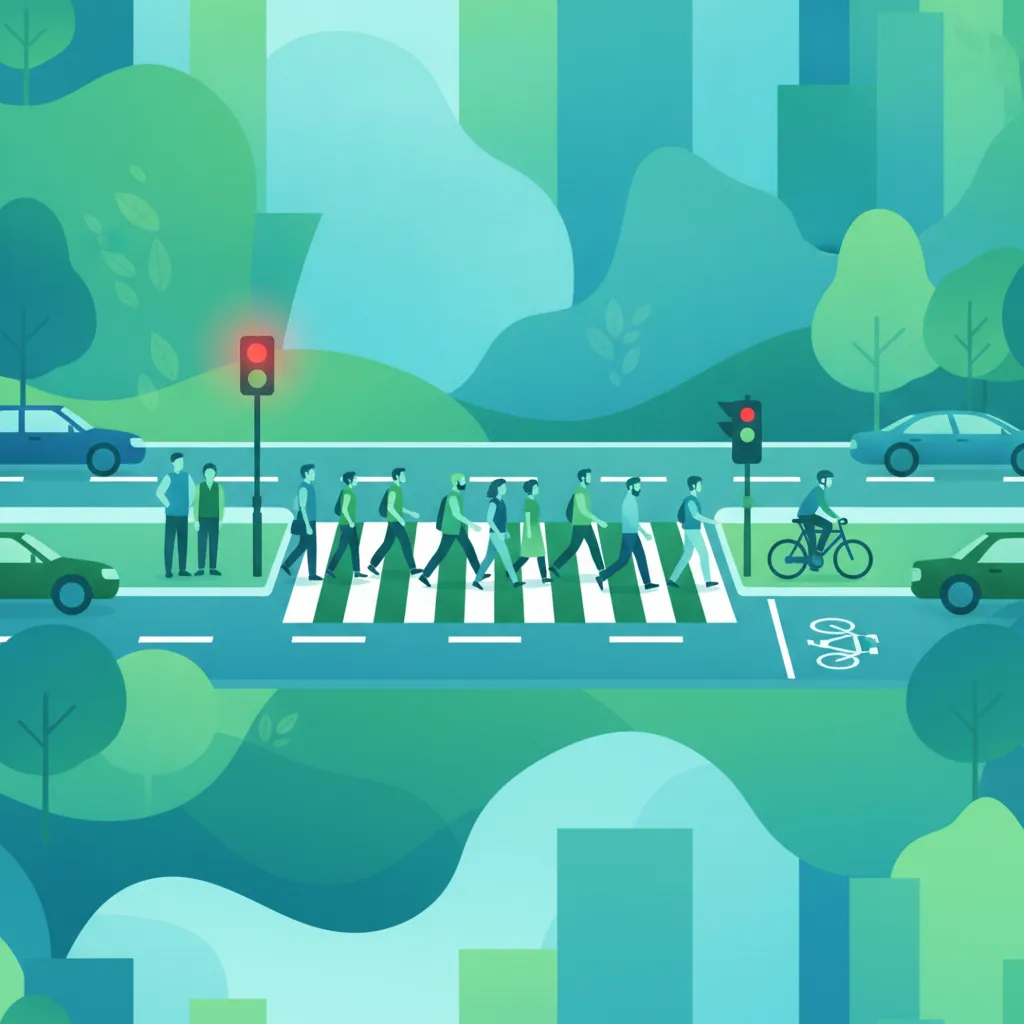
This lesson provides a detailed guide to the various types of pedestrian crossings found on British roads. You will learn the specific rules for each, including the absolute priority of pedestrians at zebra crossings and how to respond to the light signals at pelican, puffin, and toucan crossings. Understanding these rules is essential for protecting vulnerable road users and ensuring you are compliant with the Highway Code.
This lesson explains markings found at the side of the road that regulate parking and stopping. You will learn the meaning of single and double yellow lines, and the stricter rules associated with red lines on 'Red Routes'. The lesson also covers markings for parking bays, loading zones, and hatched areas that are designed to separate traffic.
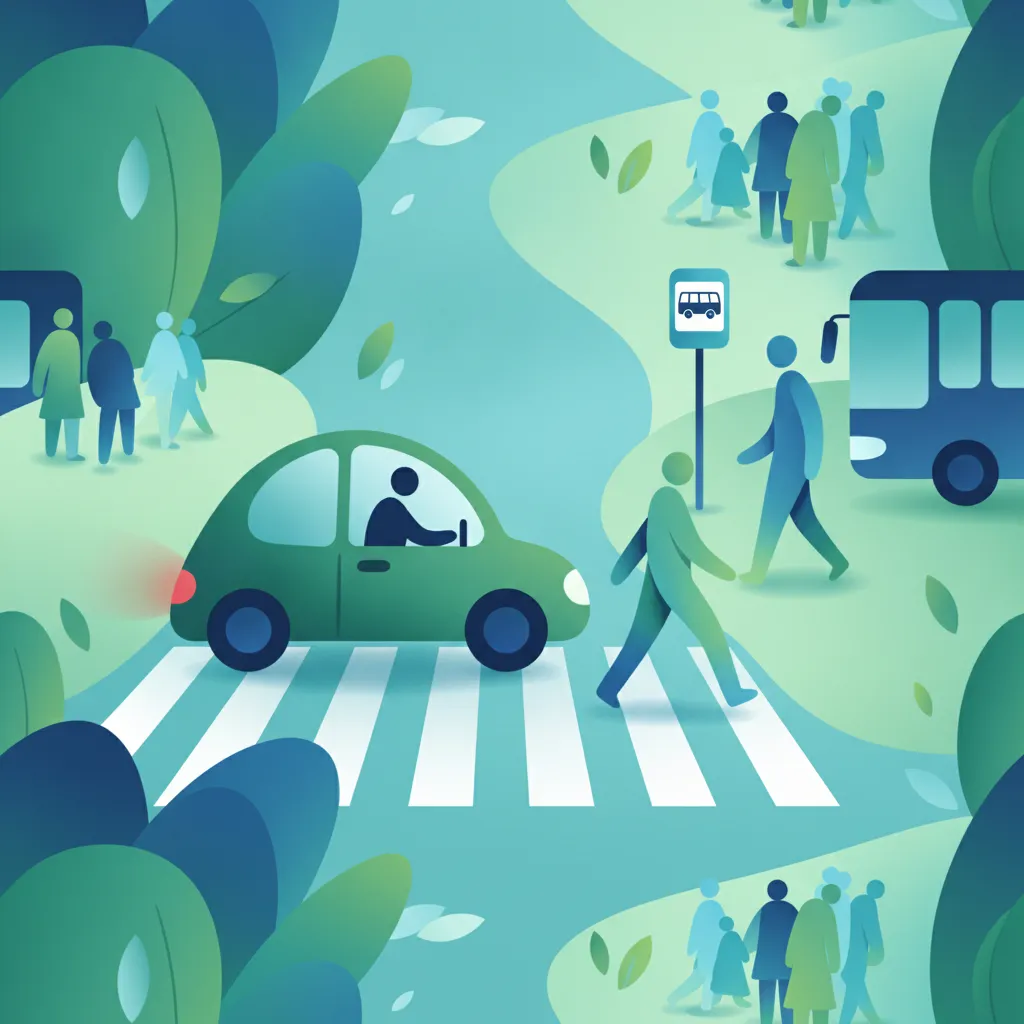
This lesson provides detailed guidance on protecting pedestrians in high-risk areas like bus stops and formal crossings. It covers the specific rules and driver obligations at zebra, pelican, toucan, and puffin crossings, as well as when approaching a school crossing patrol. The content emphasizes the importance of vigilance, anticipating pedestrian movements, especially those who may be distracted or emerge from behind the bus, and always being prepared to stop to prevent accidents.
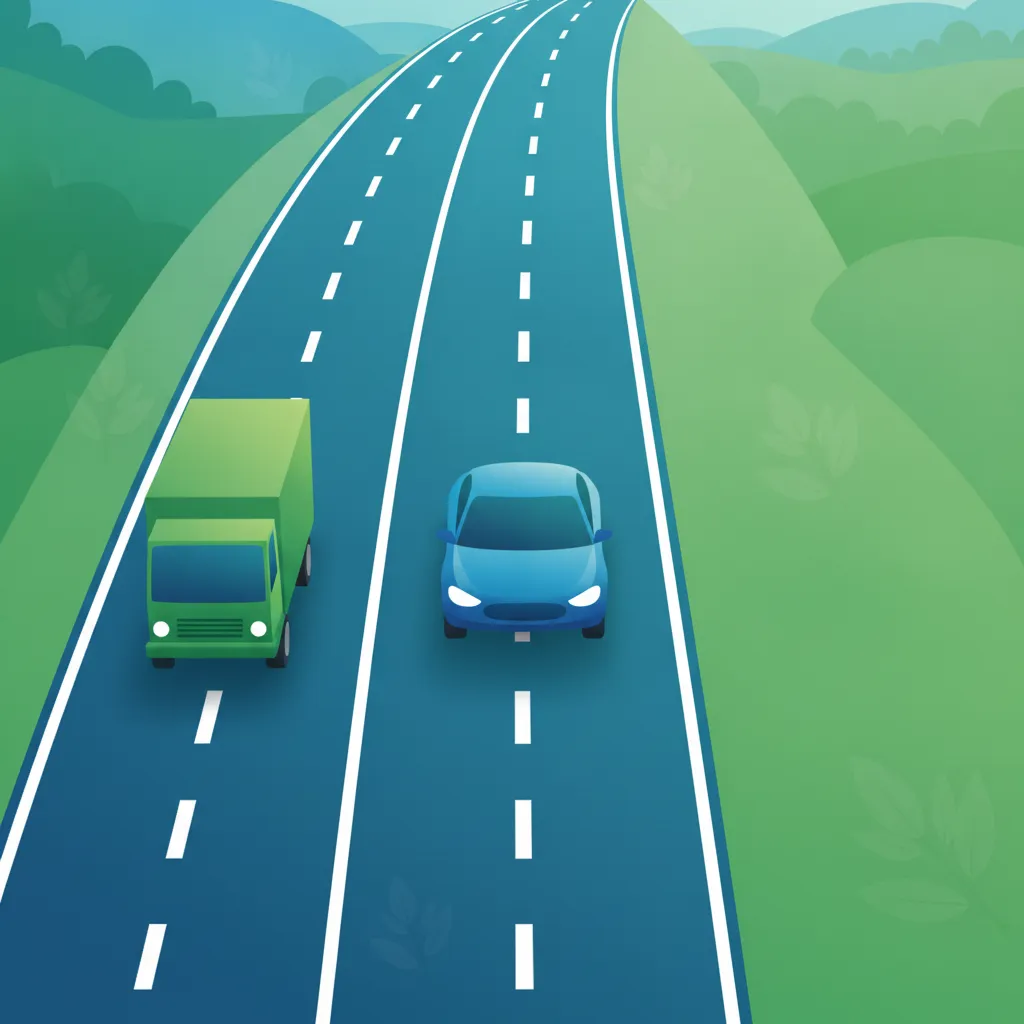
This lesson explains how lines running parallel to the kerb control traffic movement. You will learn that broken white lines divide lanes, while solid white lines generally prohibit crossing them. The specific rules for double white lines, including when you are permitted to cross, are also covered in detail to ensure safe overtaking.
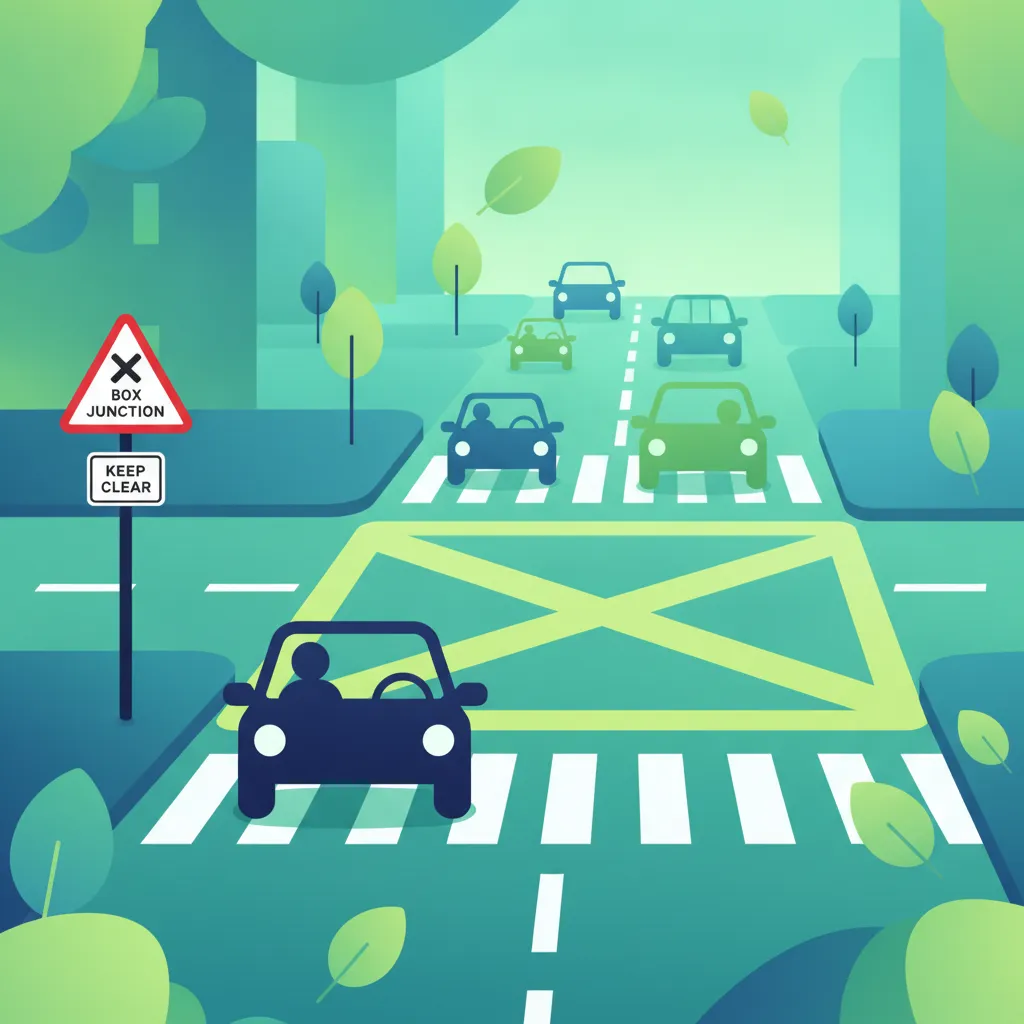
This lesson focuses on the markings that control traffic at intersections. It explains the primary rule of a yellow box junction: do not enter unless your exit is clear. You will also learn the difference between the solid white 'Stop' line and the broken 'Give Way' line, which dictate your priority over other traffic.
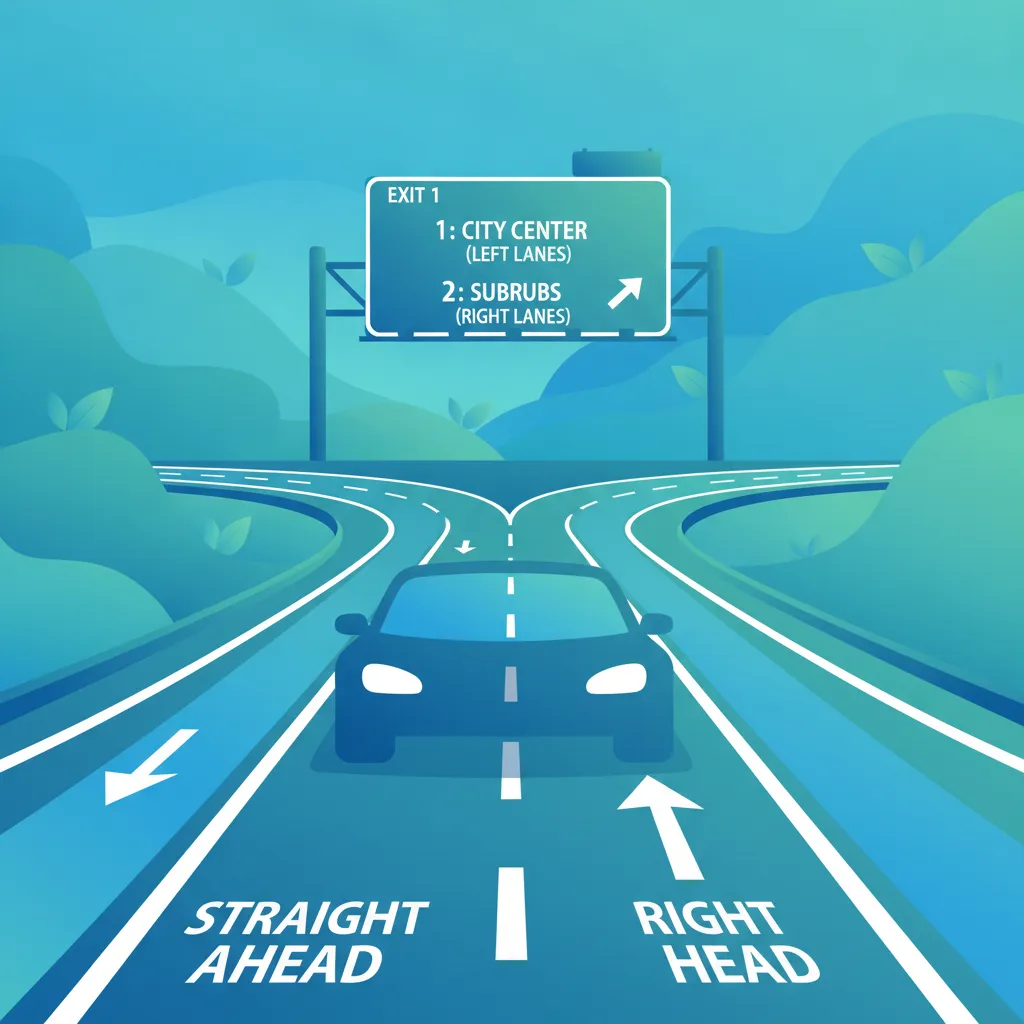
This lesson focuses on the rules conveyed by road markings, such as solid and broken white lines that dictate overtaking rules and lane boundaries. You will learn to interpret waiting and stopping restrictions indicated by yellow and red lines, and understand markings for specific road users like bus and cycle lanes. Maintaining correct lane discipline based on these markings is a fundamental skill for safe navigation and compliance with the Highway Code.
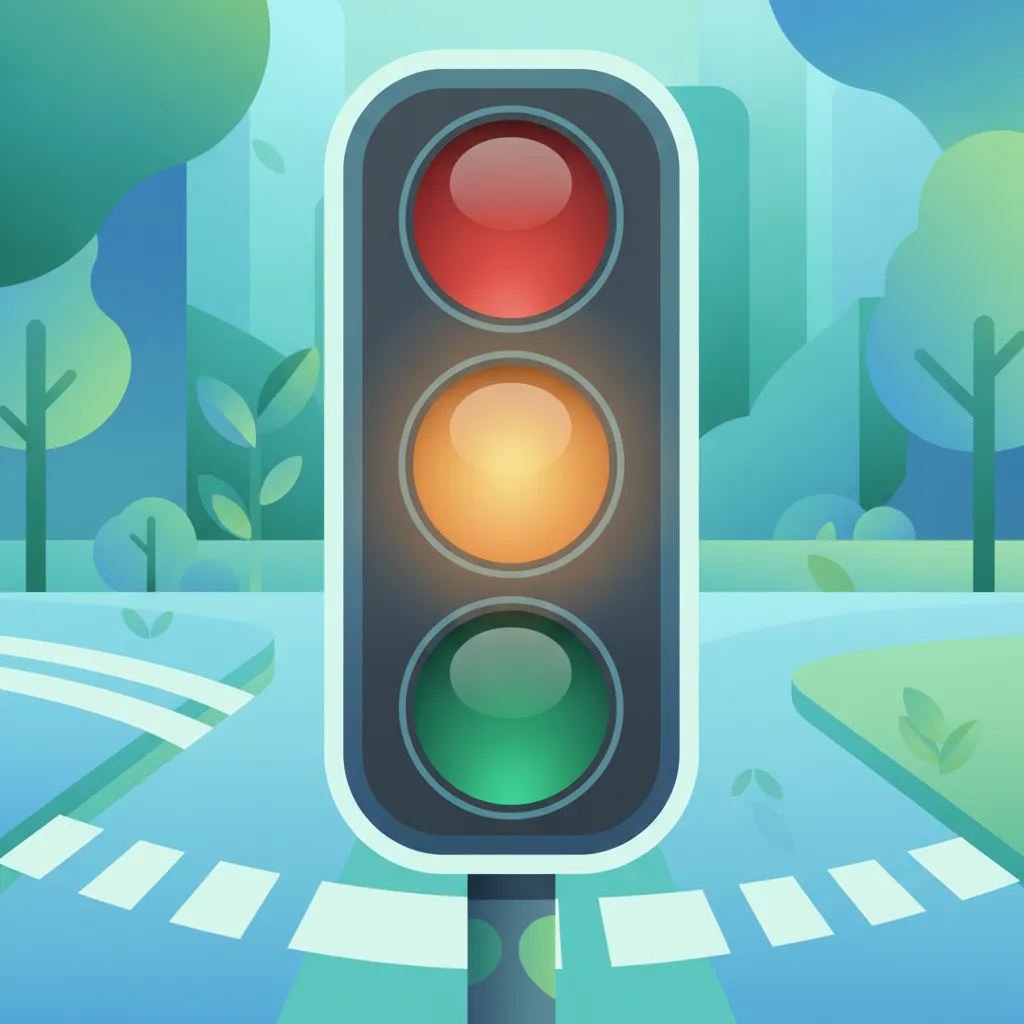
This lesson details the operation of traffic lights in Great Britain, including the red-and-amber phase before green. It clarifies the rules for proceeding at a green light, stopping for red, and preparing to stop for a steady amber light. You will also learn about green filter arrows and the flashing amber lights used at certain pedestrian crossings.
This lesson details how to safely navigate junctions controlled by traffic signals. It explains the meaning of filter arrows, which allow you to proceed in a specific direction even if the main light is red. You will also learn about respecting advanced stop lines for cyclists and how to approach a junction when the traffic lights are not working.
This lesson decodes the language of road markings painted on the road surface. You will learn the rules associated with solid and broken white lines, double white lines that restrict overtaking, and yellow lines controlling parking. Proper understanding of these markings is crucial for maintaining correct lane discipline and riding legally.
Learn to distinguish between Pelican, Puffin, and Toucan controlled pedestrian crossings. This lesson clarifies the specific traffic signal sequences and driver obligations for each type in Great Britain.
This lesson provides a detailed guide to the various types of pedestrian crossings found on British roads. You will learn the specific rules for each, including the absolute priority of pedestrians at zebra crossings and how to respond to the light signals at pelican, puffin, and toucan crossings. Understanding these rules is essential for protecting vulnerable road users and ensuring you are compliant with the Highway Code.
This lesson provides a detailed guide to various pedestrian crossings and their specific rules. You will learn to identify each type by its markings and signals, from the black and white stripes of a zebra crossing to the sensor-controlled lights of a puffin crossing. The focus is on knowing when and how to stop to ensure pedestrian safety.
This lesson provides detailed guidance on protecting pedestrians in high-risk areas like bus stops and formal crossings. It covers the specific rules and driver obligations at zebra, pelican, toucan, and puffin crossings, as well as when approaching a school crossing patrol. The content emphasizes the importance of vigilance, anticipating pedestrian movements, especially those who may be distracted or emerge from behind the bus, and always being prepared to stop to prevent accidents.
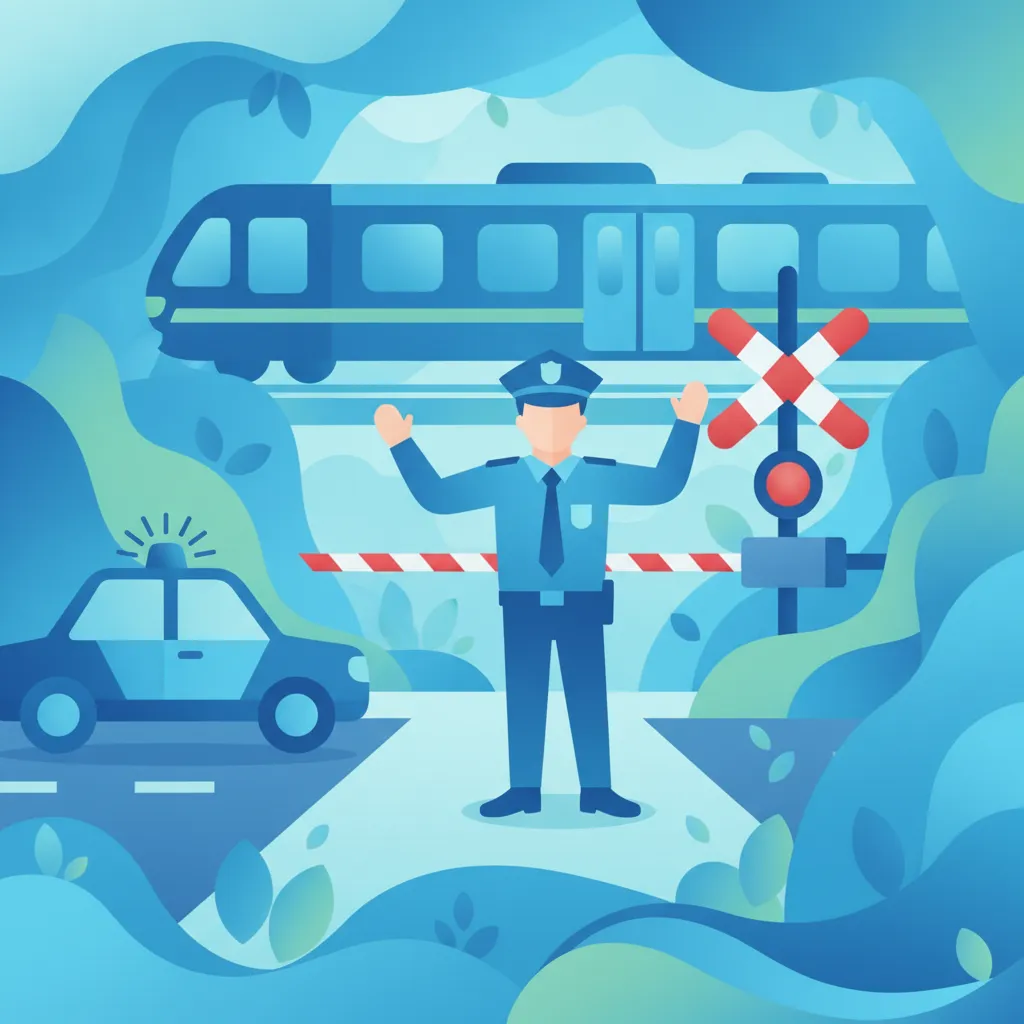
This lesson covers signals that require an immediate and specific response from drivers. You will learn the meaning of hand signals given by police officers and how to give way safely to emergency vehicles with flashing lights or sirens. It also explains the warning light system at railway level crossings, where you must stop when signalled to do so.
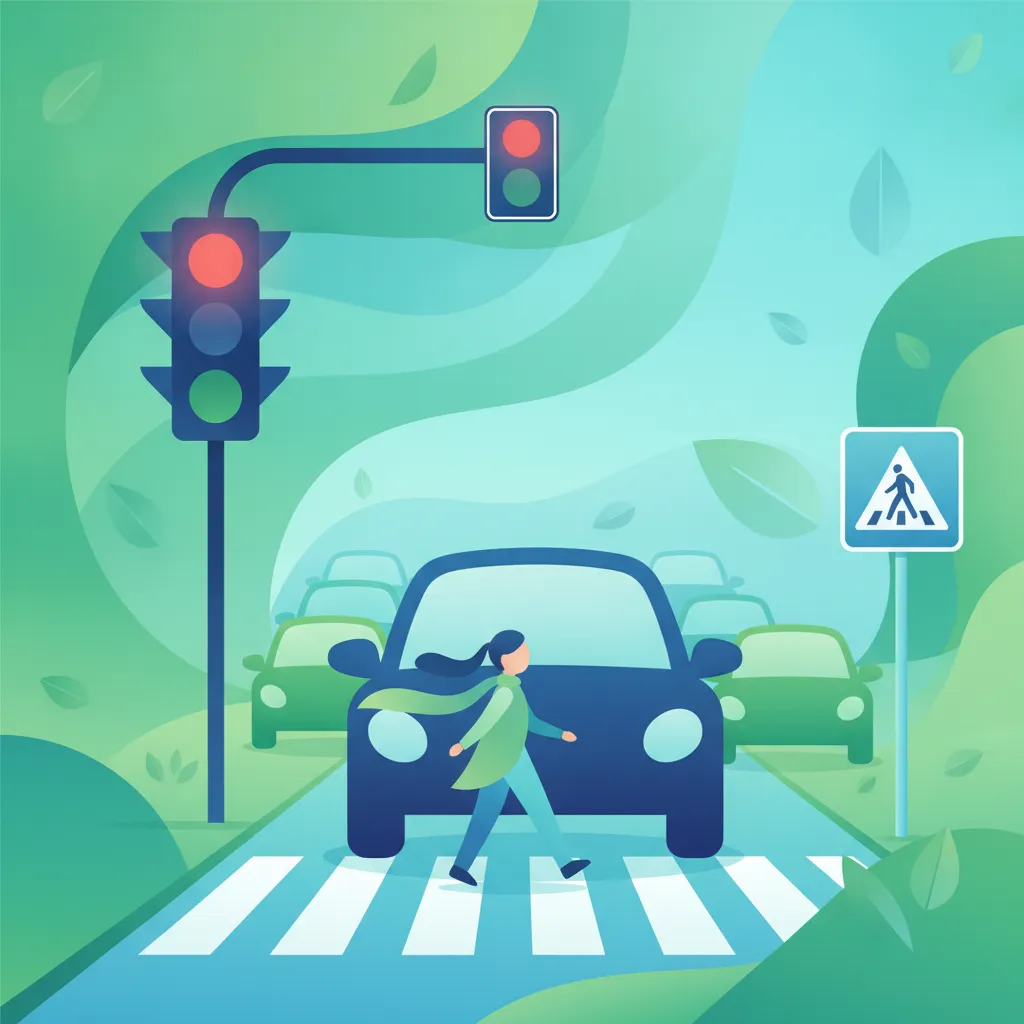
This lesson covers the operation of traffic light signals and the rules for approaching them safely. It also provides a detailed explanation of different pedestrian crossings, such as zebra, pelican, and toucan crossings, clarifying the specific rules and priority for each. You will learn to anticipate the actions of pedestrians and other vulnerable road users at these locations.
Find clear answers to common questions learners have about Pedestrian Crossings and Pedestrian Markings. Learn how the lesson is structured, which driving theory objectives it supports, and how it fits into the overall learning path of units and curriculum progression in Great Britain. These explanations help you understand key concepts, lesson flow, and exam focused study goals.
The white zig-zag lines indicate that you must not park your vehicle or overtake any moving vehicle in that area. They are there to keep the approach and exit of the crossing clear so that both drivers and pedestrians have a clear, unobstructed view of each other.
You must stop if a pedestrian has moved onto the crossing or is clearly waiting to cross. If there is nobody on or waiting at the zebra crossing, you may continue, but always be prepared to stop if someone steps out.
Pelican crossings have a flashing amber phase for drivers after the red light, meaning you must give way to pedestrians still on the crossing. Puffin crossings use sensors to detect pedestrians and do not have a flashing amber phase; the lights stay red until the crossing is clear.
No, you must never park or wait on zig-zag lines near a pedestrian crossing. This is illegal and creates a serious safety hazard by blocking visibility for other road users and pedestrians.
Dive into our comprehensive question bank to find exactly what you need for your Great Britain theory test. Use our advanced filters to pinpoint specific subjects or test your knowledge on challenging areas, ensuring you're fully prepared for success.